




As Denver mulls $70 million price tag, backers point to study saying women’s soccer stadium will bring in $2.2 billion
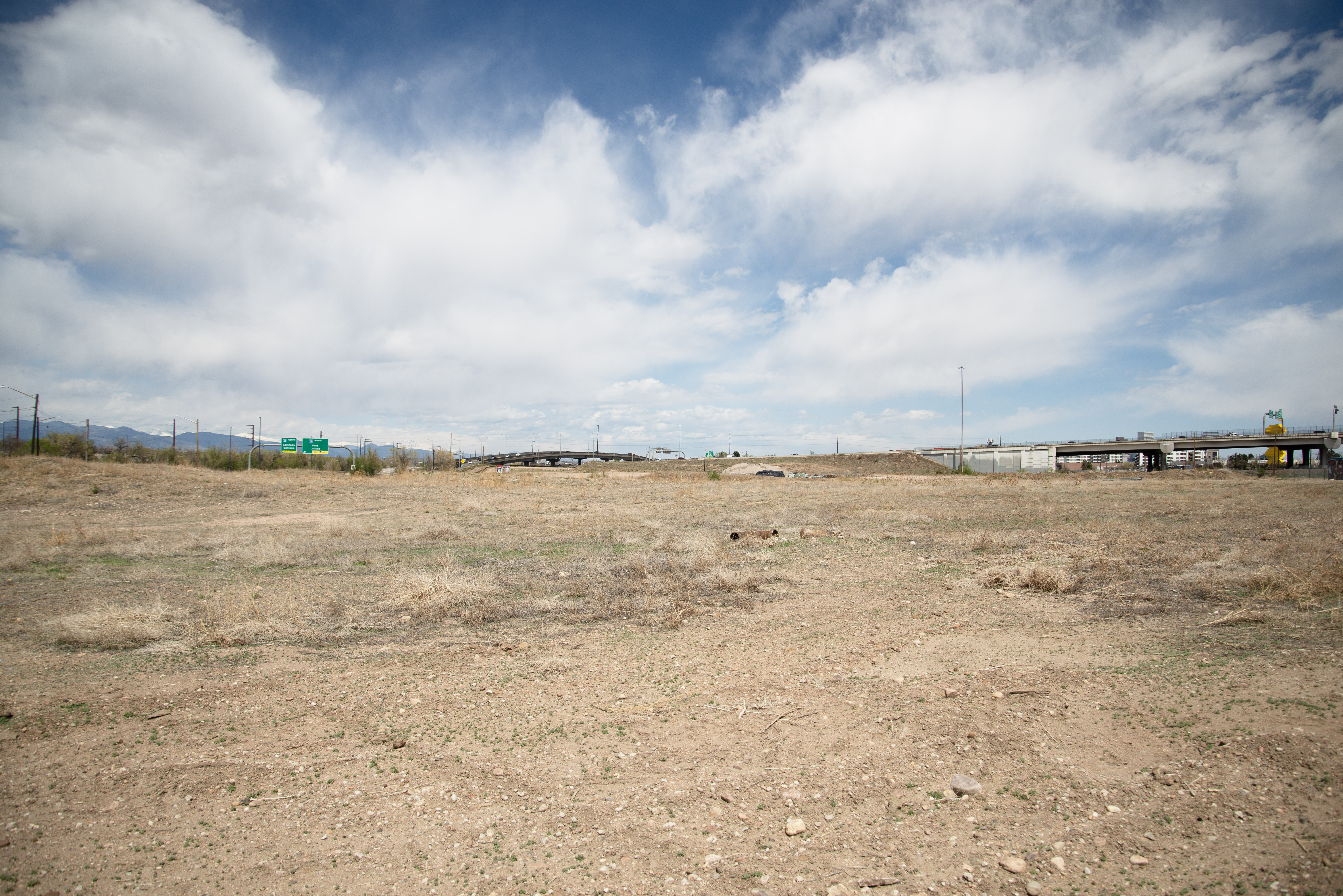
As Denver’s elected officials weigh a push for $70 million in spending along Interstate 25 and Broadway Avenue, economists and business leaders hope the buzz around the city’s new National Women’s Soccer League team rubs off on councilmembers who have pushed back on the project’s price tag.
Supporters argued that the proposed stadium would serve as a major economic “jolt” to South Broadway, while councilmembers are worried about shrinking revenues and redirecting interest money originally slated for a slew of projects funded by a bond voters approved a few years ago.
City economists published a 19-page economic impact study last week, projecting that a 14,500-seat stadium and entertainment district could generate $2.2 billion in economic output over a 30-year timeframe.
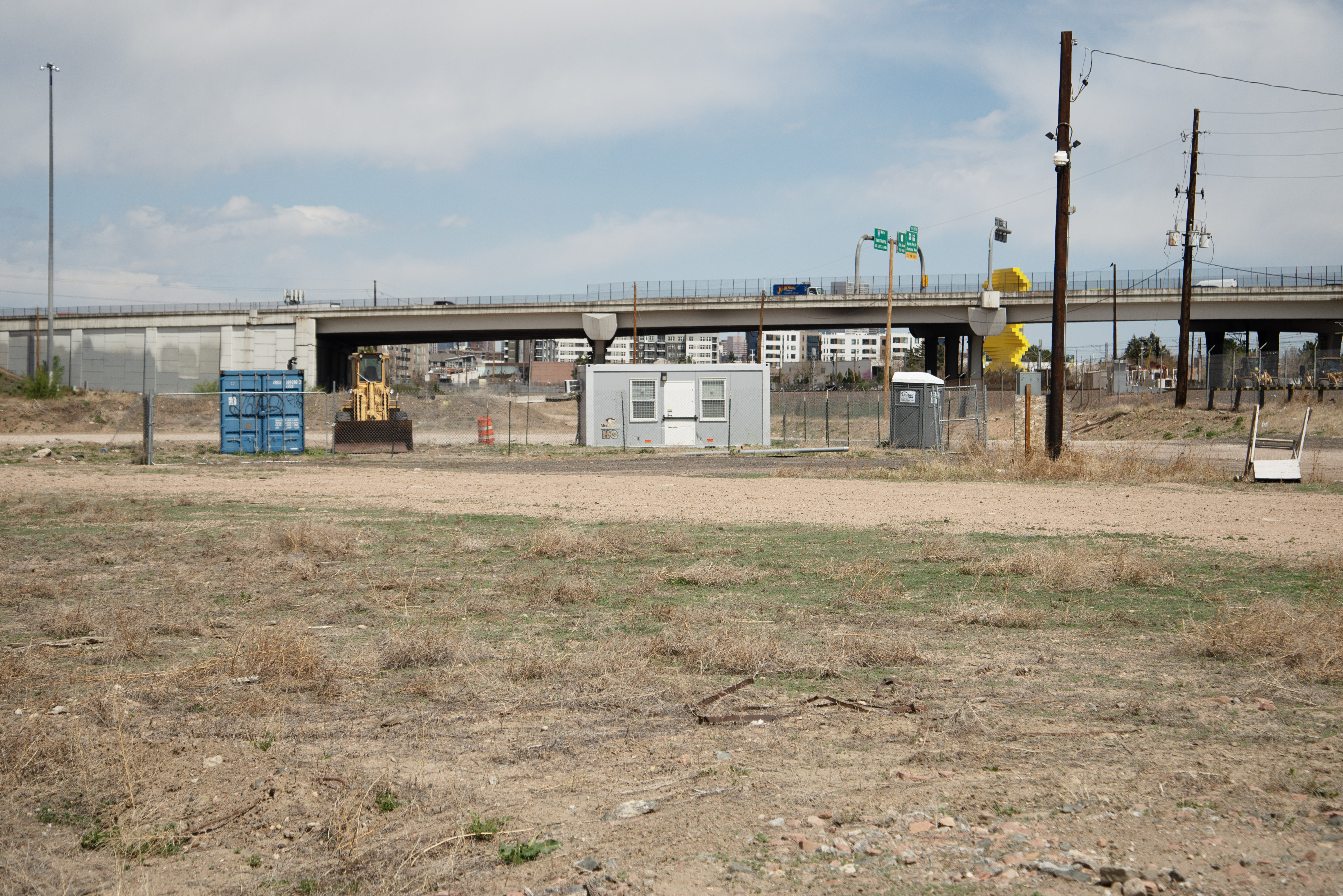
The Santa Fe Yards, as the stadium project is known, has the potential to jump-start development across the 41-acre former Gates manufacturing site, according to the study, driving construction and infrastructure development in the Broadway Station area, creating more than 1,000 jobs and delivering an estimated $82 million annually in direct, indirect and induced economic activity.
The report was produced by Denver Chief Economist and Data Scientist Lisa-Martinez Templeton to help the city calculate the worth and cost of the proposed investment, said Jon Ewing, spokesperson for Mayor Mike Johnston’s office.
Under a proposal presented to the South Platte River Committee, the city and the Broadway Station Metropolitan District would enter an intergovernmental agreement (IGA) that would provide as much as $70 million to acquire land for the stadium, connect adjacent neighborhoods and make public improvements to the bike, pedestrian and park infrastructure.
Of that amount, $50 million would be earmarked for land acquisition and $20 million for off-site stadium improvements.
The ownership group, led by IMA Financial Group CEO Robert Cohen, would pay up to $200 million for the construction of the stadium, which is still in the design phase.
City officials said the money for the project would not affect the city’s general fund, but rather come through the city’s Capital Improvement Program and use the “positive interest performance” from the existing Elevate Denver general obligation bond passed in 2017.
Some councilmembers raised questions about the $70 million price tag for taxpayers.
District 5 Councilmember Amanda Sawyer pushed back on team ownership and the city’s chief strategy officer, Jeff Dolan, during a recent committee meeting, pointing out that some Elevate Denver bond projects were reduced in scope due to economic concerns during the pandemic years.
To tell voters that the city has millions in bond interest surplus to put toward something other than designated bond projects would send mixed messages to taxpayers, Sawyer said.
At-large Councilmember Sarah Parady is also concerned with the project’s sticker price and the shrinking growth of the city’s general fund.
“We’ve already dipped into the general fund reserves to balance last year’s budget. our reserves are below our 15% target, we’re under a city-wide hiring freeze that is impacting things like our response to overdose deaths, and we had 16,000 evictions last year,” Parody said. “So, we really have to be careful about dollars.”
The push for the $70 million in stadium-related spending came after taxpayers last year rejected a $100 million tax increase earmarked for housing programs. Voters, in the same election, approved $70 million to help Denver Health. The tax hike proposals took place as the city spent $80 million on the illegal immigration crisis that hit Denver over the last two years.
“We share (the) City Council’s belief that all city dollars should be spent in a thoughtful, impactful manner and feel strongly that this project meets that high standard,” a Johnston spokesperson told The Denver Gazette in an email. “The redevelopment of Denver’s Santa Fe Yards represents a record-setting level of private investment in a women’s sports franchise and will provide a major jolt in energy and economic activity to South Broadway.”
In a joint letter to the Denver City Council, executives from the Denver Metro Chamber of Commerce, Metro Denver Economic Development Corporation, Downtown Denver Partnership, Visit Denver and Colorado Concern urged councilmembers to vote in favor of the intergovernmental agreement supporting the stadium site project.
“Supporting this stadium is an investment in infrastructure, but also in equity, in youth, in aspiration — and in positioning Denver at the forefront of a transformative moment in sports and society,” the April 21 letter read. “Denver has faced inflection points before. Following the energy bust of the 1980s, leaders made bold moves — investing in the convention center, building a new airport, and constructing Coors Field in the heart of downtown. Mayor Federico Peña’s vision proved correct: people came, businesses followed, and LoDo became an economic engine.”
The proposed stadium project site has a history of ups and downs.
Once home to the Gates Rubber Co., one of the largest manufacturers of rubber goods, tires, belts, hoses and other automotive parts, the site provided jobs for more than 5,000 people at its height.
Years later, it was discovered that the land was environmentally contaminated and needed heavy cleanup. In 2003, the Denver City Council and the Denver Urban Renewal Authority (DURA) approved the Cherokee Urban Renewal Area before approving a General Development Plan in 2005.
The developers had plans to clean the abandoned factory and build an urban community around the light rail. It would have included about 3,000 residential units and about 1.75 million square feet for office, retail and entertainment.
Construction was scheduled to begin in 2007, when some demolition work was done. But as the Great Recession hit, Cherokee faced financial issues and sold the property back to Gates in 2009, according to Denver Urban Renewal Authority.
Neighboring business owners hope the stadium project will breathe life into a struggling area.
“South Broadway restaurants are hurting, and we just need a boost,” Reed Sparks, owner of BurnDown Denver, a four-story restaurant and music venue on South Broadway, told council members on Monday afternoon. “It’s a great investment, and I think tax revenue will cover that over the years. So, let’s get this stadium built.”
Baker historic district homeowner Caitlin Braun told city councilmembers that the new stadium could entice new businesses to fill the vacancies along “the mile-long no man’s land along Broadway from Alameda to Arizona.”
Braun added: “It’s also my understanding that this piece of land is contaminated from the rubber factory, and the type of projects that would be safe to execute have a very limited scope — so if we do not pursue this stadium, what is the alternative for a vacant lot that will continue to be a blight on our community for decades more to come?”
City officials are adamant that the stadium project is necessary to salvage the property.
“I would say there’s a huge risk for the city if we don’t move forward with this particular project, with the private investment that has been committed, that this land will sit vacant for another several decades,” Dolan said.
“We’re being asked to invest $70 million in a time of economic hardship,” City Council President Amanda Sandoval said.
Under the agreement, if the stadium is not built, the city would still own the land.
Other councilmembers suggested getting the money in other ways, such as a voter-approved sales tax.
The matter returns to the South Platte River Committee on Wednesday.


Get OutThere
Signup today for free and be the first to get notified on new updates.
PREV
PREVIOUS

Minutes away from a 2-0 series lead, Avalanche ponder changes ahead of Game 3
Do the Avalanche feel like they let a great opportunity slip away late in Game 2? A little bit. “I think, given the circumstances of the game, we feel as though we would have liked a better outcome,” Logan O’Connor said on Tuesday. “We went in there, got one win. It’s great. Would love to […]
Raja Krishnamoorthi pens letter to Speaker Johnson calling for vote to ban stock trading
EXCLUSIVE — Speaker Mike Johnson (R-LA) is being pressed by a House Democrat to call up legislation to ban members of Congress and their families from trading stocks, an issue that has received broad support from both sides of the aisle. Rep. Raja Krishnamoorthi (D-IL) sent a letter, obtained exclusively by the Washington Examiner, to […]