Denver passes citywide gas station restrictions
City officials passed a pair of bills Tuesday night to limit the number of new gas stations that can be built in Denver despite pushback from legal experts and real estate developers who say the move is not only unconstitutional but creates market instability that could cost investors millions of dollars.
The vote was 12 to 1, with District 7 Councilmember Flor Alvidrez holding the only dissenting vote.
“I would view this as yet another straw that’s breaking the camel’s back of commercial real estate in the city and county of Denver,” said Kathie Barstnar of NAIOP Colorado, representing the residential and commercial real estate industry.
For investors and developers, the biggest sticking point with the new text amendments is the city’s provision to make the restrictions retroactive to May 13, 2024.
They assert the move is unconstitutional and impairs property rights.
City attorneys say they have reviewed that claim and disagree.
Barstnar points to a current Colorado Supreme Court precedent that states zoning ordinances cannot legally set an effective date prior to the date of their adoption.
She said the precedent the council has set is “very chilling” and will create market instability, discouraging future investors from doing business in the city.
“The amendments will not be a mere procedural or remedial action by the city,” wrote Denver land use attorney David William Foster in a letter to city attorneys. “The amendments are substantive changes to law that will retrospectively attach a new disability to the use of property.”
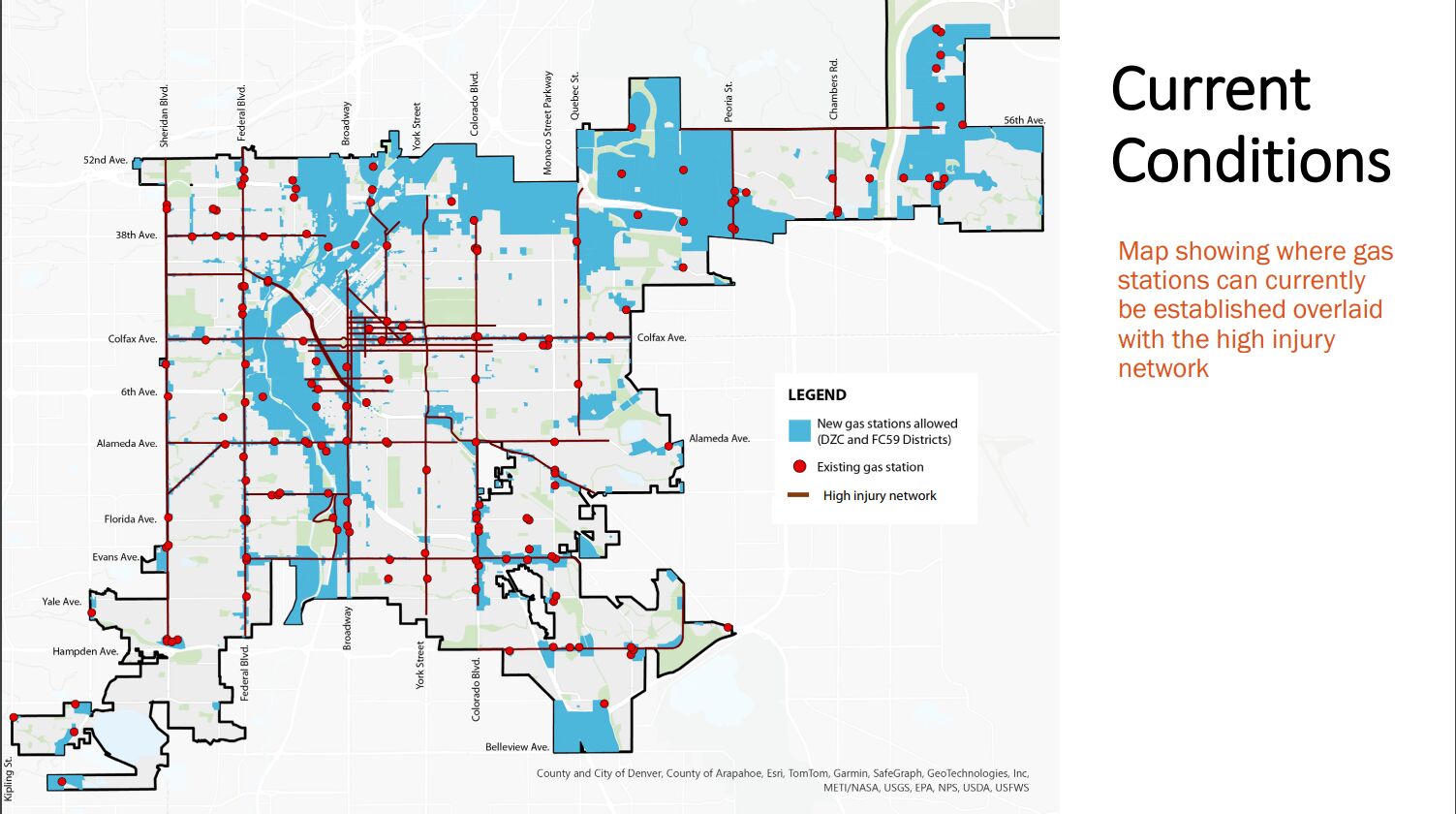
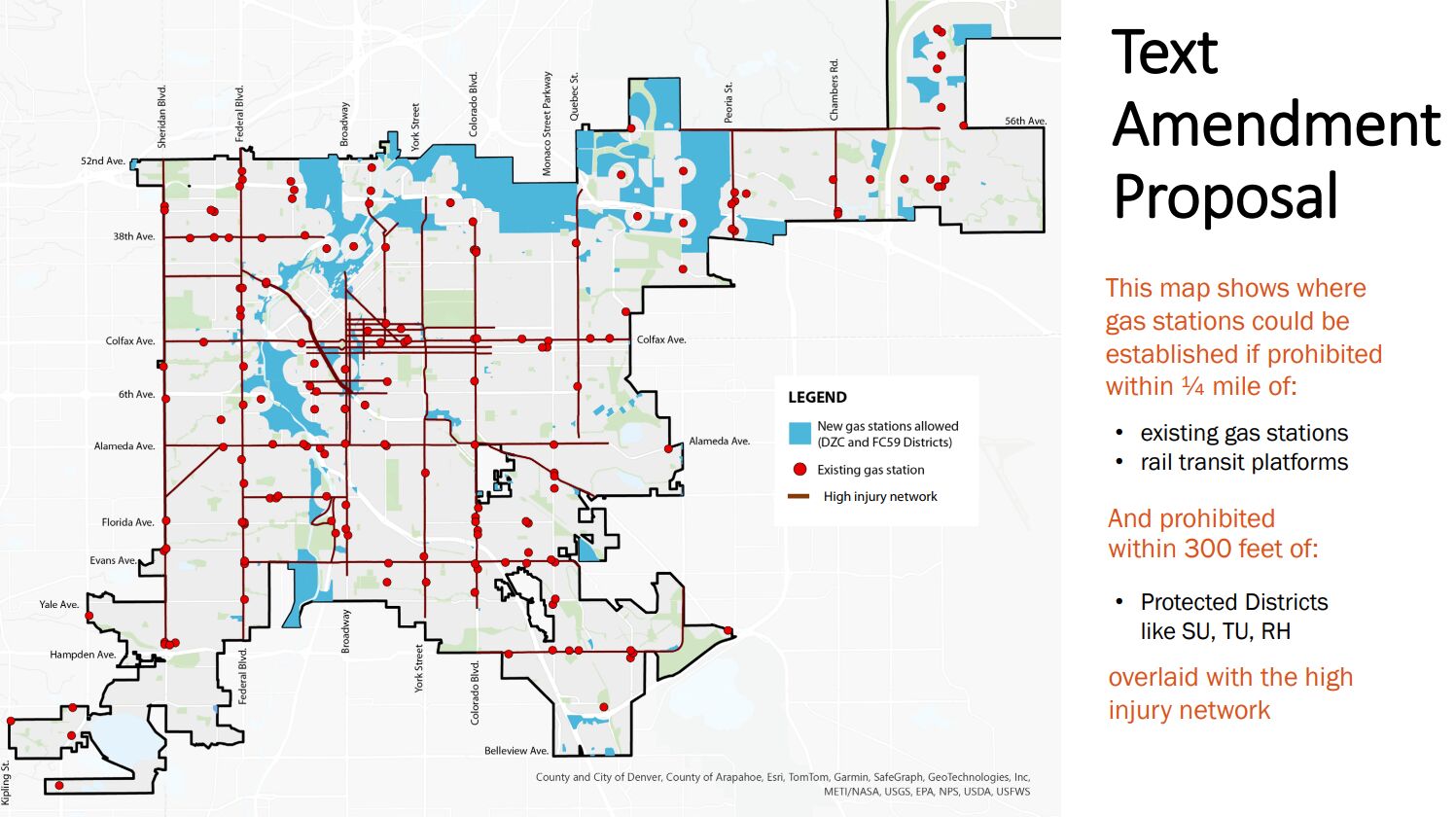
The amendment of the city’s current zoning code prohibits new retail gas stations from being built within 1/4 mile of an existing retail station, 1/4 mile of light rail stations, and within 300 feet of a protected or “low-density” residential neighborhood.
Limitations would not apply to gas stations that aren’t open to the public, such as fuel services for government fleets, transit vehicles, or rental car agencies.
New stations built alongside large retail developments, such as Costco or Sam’s Club that sell groceries, home goods and other products that could serve neighboring residents could be exempt from some restrictions.
Existing gas stations would also be prohibited from adding additional gas pumps unless the expansion included electric vehicle charging equipment.
Foster, whose firm represents Oklahoma-based QuikTrip, added: “Put simply, an applicant for a gas station within one of these regional categories will, under the amendments, go from having a viable project to a prohibited project. They will lose their entire project.”
Others say the city is opening itself up to future legal action.
“Developers and their lawyers are an interesting breed,” said District 6 Councilmember Paul Kashmann. “They tell compelling stories about property rights and stealing my investment, but they build projects not caring at all about its effect on adjacent properties. They build projects that the neighborhood doesn’t want. They build projects that block sunlight, create noise, create traffic. None of these gas stations are the result of community meetings where people said, ‘Yeah, we want a gas station.’”
Kashmann added: “These bills are simply a response to the voracious, insatiable appetite of gasoline retailers and developers to gorge on valuable Denver land with no regard for community need, but only for their own profits.”
QuikTrip is under contract to purchase three pieces of property and to lease another, all within the city of Denver, to develop gas stations.
“Many applicants, including QuikTrip, have made significant investments based on existing zoning rules, including purchasing land and preparing detailed proposals,” said QuikTrip Real Estate Project Manager Jessica Glavas. “Predictability is so important for family- and employee-owned businesses like ours, and setting this retroactive date will create unnecessary friction with good companies wanting to do business in Denver.”
Amendment sponsors Diana Romero Campbell (District 4), Amanda Sawyer (District 5), and Kashmann (District 6) assert the restriction on gas station development, which goes into effect Feb. 25, prioritizes Denver’s adopted plans and policies for walkable, mixed‐use, sustainable development with affordable housing.”
A staff report produced in December of 2024 by the city’s own Community Planning and Development Department notes the restrictions “would likely have a neutral impact on expanding housing opportunities and job diversity.”
Opponents of the new restriction say it sends a strong signal that investors in Denver can’t be assured that property purchased according to today’s rules and regulations will not change.
“Investment in Denver is lessening, almost as we speak,” Barstnar said. “There have been so many rules and regulations in Denver, specifically, in the state in general, that are unfriendly to commercial real estate that it’s making it nearly impossible to be able to do business here.”
Sawyer thanked industry groups that engaged with the city regarding the restrictions.
“I know that it is not the bill that you were hoping for because the bill you were hoping for was that the bill doesn’t exist at all,” she said. “I think that this is a balanced approach that allows us to identify the real need in our city, which is housing, and where that housing should go along transit corridors, but it cannot go there if every available parcel in our city is being snatched up for gas stations.”
Opponents caution that without investment, construction jobs will continue to decline.
“These companies think of one thing – their bottom line, and they’re relentless in that pursuit,” Kashmann said. “Let civic well-being be damned. It is up to the government to bring a social conscience into the mix, and that’s what we’re doing here.”