Families accuse ex-Colorado Springs evaluator of tainting bitter custody case with biased testimony
Some of the cases involve allegations of sex assault and drug abuse.
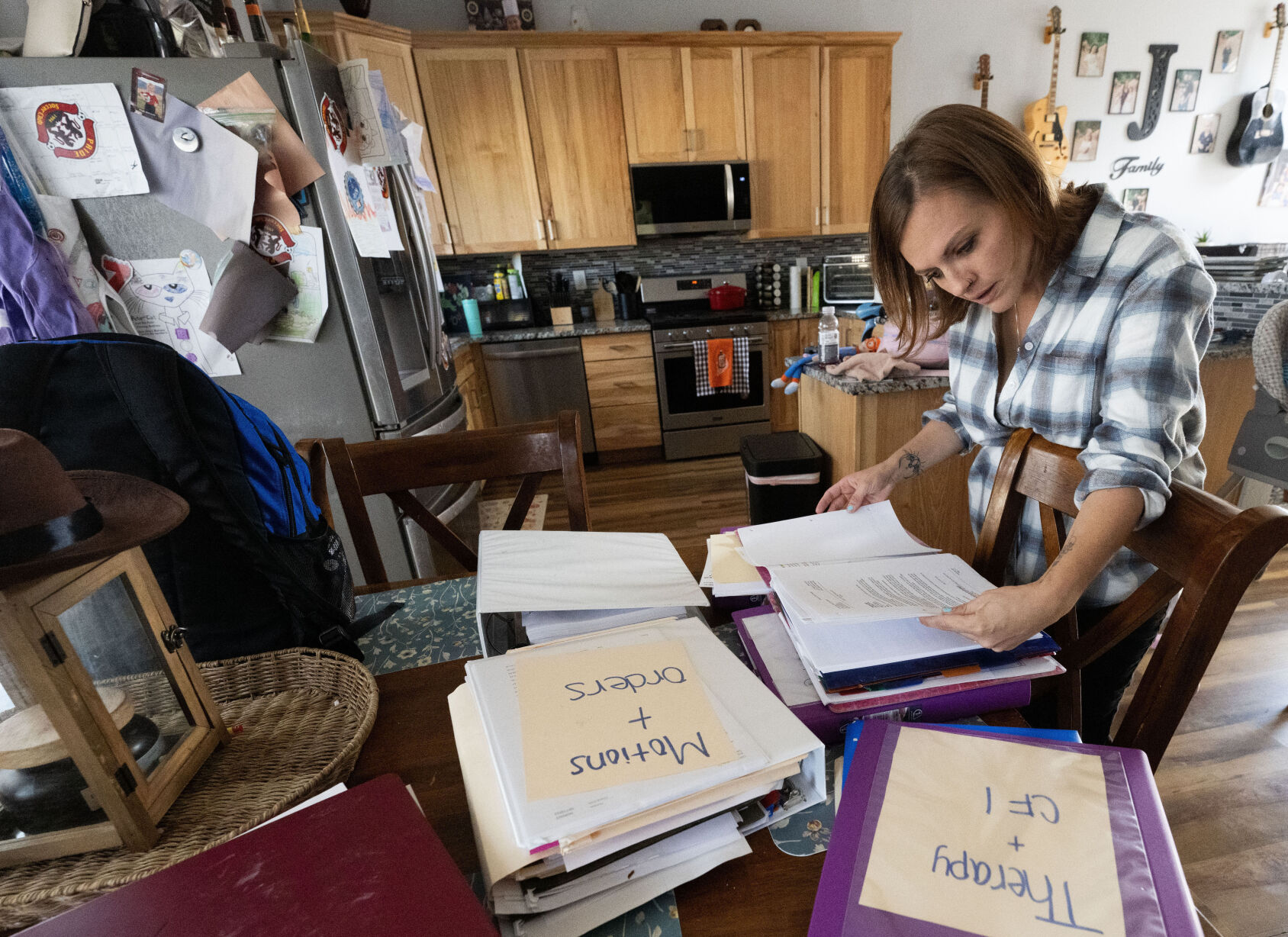
A father’s unsupervised parenting of his 5-year-old daughter should continue, a Colorado magistrate ruled last month, despite the child alleging during therapy that the father had sexually abused her and struck her in the forehead with his elbow.
Testifying for the Colorado Springs father on Aug. 13 was Joyce Miller, a controversial former parental evaluator accused by nearly a dozen parents who spoke to The Gazette of tainting their court cases through biased custody recommendations.
On July 19, less than a month before Miller took the witness stand in that case, the Colorado State Court Administrator’s Office barred her from accepting court appointments as a parental evaluator due to violating standards of practice.
Her termination from the statewide roster of parental evaluators followed a string of complaints, including from at least two lawyers who contend in court filings they caught Miller in outright falsehoods during court proceedings — contentions Miller vigorously disputes.
Yet, El Paso County District Court Magistrate Sarah Zane still allowed Miller to testify for the father accused of child sexual abuse. In that role, Miller testified that the father feared his ex and the child’s two half-sisters from another marriage coached the child to make false allegations against him.
Miller, in an interview, defended her testimony, stressing that she had not done a full custody evaluation in the case and only had been called on to relay the father’s concerns of alleged coaching and her recommendations to him on how he should handle those concerns.
But a review of Miller’s past court appointments as a parenting evaluator shows it wasn’t the first time a mother seeking protection for a child has objected to Miller’s testimony.
In one case last year, Miller was unconvinced by reports of domestic violence, including that a father of an 8-year-old girl had threatened to shoot his wife and his three stepchildren. The mother told Miller she had to block her ex from getting his gun during that alleged violent incident, which resulted in a mandatory protection order against her ex-husband, according to notes in Miller’s case file.
Miller in her report she submitted to the judge found no “credible evidence of domestic violence” but came to that conclusion without ever interviewing the mother’s witnesses who confirmed they personally had seen the abuse, one court filing alleged.
Miller recommended that the child relocate to live with the father, now in Texas, citing concerns over the child’s frequent absences at school, which the mother said stemmed from medical issues. Miller testified that she had reached out to interview the child’s pediatrician, which her court appointment required her to do, to help her conclude the child was in peril with the mother.
But the doctor testified that she didn’t even know who Miller was, had never talked to her, and also could find no record that Miller had contacted the doctor’s office. When Miller testified that she must have talked to the physician assistant instead, the doctor testified that the physician assistant Miller named hadn’t even been hired at the time of the supposed discussion.
Miller in an interview said that case was particularly contentious and claimed she had reached out to the doctor. “I don’t know why that pediatrician testified that I did not contact their office regarding a question about their treatment for that child,” Miller said. “I deny that there was any false or inaccurate testimony.”
‘Devoted to helping children’
Miller has become one of three parental evaluators — technically, they are called parental responsibility evaluators — barred from accepting court appointments in the past two years in the wake of investigative reports by The Gazette.
Miller, in a letter to Erin Sokol, chief judge of the 4th Judicial District, denied any wrongdoing in her evaluation work and asked that the judge allow her to complete custody cases she had already started.
“My entire career has been devoted to helping children and families,” Miller said in the letter.
In an interview, she said the findings of an El Paso County district court judge and a court administrator that she had violated multiple standards of practice had been flawed. She further objected to the lack of an appeal process for evaluators terminated from the statewide roster for evaluators.
“I think that the public is very skeptical at this point in time regarding court-appointed professionals that have the authority to do investigations,” said Miller, adding that recent disclosures of problematic evaluators have heightened alarms.
She said she knows of parental evaluation work so poor, that she believes there should be criminal prosecutions, but she said, “I’m not one of those people. This is not about that.”
She added: “I always strive for what is best for the kids, and I don’t use my personal opinion. I use the statutes. I always, always strive for what is best for the kids. There’s always a parent that doesn’t agree, that thinks there is a better way.”
Judges, at the request of parents involved in high-conflict custody disputes, appoint parental evaluators to help them make custody recommendations. Their reports can cost parents tens of thousands of dollars, and they can significantly influence the custody rulings of judges.
But controversies over the work of parental evaluators revealed in investigative reports by The Gazette prompted lawmakers three years in a row to place family court reform at the top of the legislative agenda, requiring new domestic violence and child abuse training for parental evaluators.
A new law also is meant to protect parents who raise valid claims of child and sexual abuse during custody disputes, barring judges from restricting the parenting time of protective parents solely to improve a child’s relationship with an abusive parent.
Appellate judge incredulous
Now, controversy over Miller’s work has reached the Colorado Court of Appeals.
A lawyer for the mother who lost primary custody of her child last year when 4th Judicial District Judge David Prince adopted Miller’s parenting recommendations argued to the appellate court this month that Miller and other evaluators have wielded too much power in Colorado’s custody cases.
“There’s a controversy in the state right now over the use of PREs, and the deference that is given to their findings,” said Paige Murray, the lawyer. “It’s causing damage to children and families. So, we owe it to these children to give meaningful review to PRE findings. We need guidelines.”
During that hearing, the three-judge appellate court panel expressed unease with Miller’s finding, which the judge accepted, that a 5-year-old boy was in danger of suffering significant impairment of emotional development in the mother’s care even though Miller also reported the child was thriving with the mother.
The father, three weeks after the divorce was finalized, filed to reverse the divorce settlement, which had given the mother primary custody and allowed her to move back to her hometown in New Hampshire to live with her parents. The father persuaded Prince, primarily through Miller’s custody recommendations, to reverse the parenting arrangement so that the father had primary custody and sole decision making, requiring the son to move back to Colorado.
Miller, in her parenting evaluation report, took exception with what she said was enmeshment between the child and his maternal grandmother, taking issue at one point in her report with the grandmother’s ability to soothe the child and remove a splinter from his finger.
Miller in her report also said she feared the grandmother and mother were trying to turn the child against the father, citing as one example a “Welcome Home” party they threw for the child after he returned to New Hampshire from a visit with his dad in Colorado.
Miller had declined to order a substance-use evaluation on the father, despite the father reporting on a questionnaire he submitted that he was not always able to “stop drinking and drugging.” Miller, in an interview, said she stands by her recommendations in that case, maintaining the grandmother was inappropriately denigrating the father while the child was present.
When the father’s lawyer, Leigh Horton, raised during the appellate court hearing the splinter incident as an example of how the grandmother was endangering the child through undue influence, Colorado Appeals Court Judge Karl Schock interrupted.
“Doesn’t that concern you, though?” Schock interjected. “I mean that feels kind of uncomfortable to say that the kid gets hurt, asks his grandma for help and, all of a sudden, when she helps him, then the kid is endangered.”
Still, Schock later in the hearing said even if the appellate judges were uncomfortable with the finding, he wasn’t sure they could do anything about it, since the appellate court is supposed to give the original trial judge deference in deciding the facts of a case.
“Even if we wanted to, how could we say that the over-involvement of the grandmother did not significantly impair this child’s development when the (parental evaluator) and district court both found that it did?” Schock asked.
On Thursday, the three-judge panel of the Colorado Court of Appeals upheld the district court judge’s ruling that gave primary custody and sole decision making to the father, stating in an opinion that it was up to the district court judge, not the appellate court, to weigh conflicting evidence.
The child’s mom, Stephanie Barrett, said she finds her child distraught when she travels from New Hampshire to Colorado to see him, which she’s allowed to do for a single weekend every month, at her own cost on an annual salary of $28,000.
“He’s borderline hysterical. When I have to return him back to his dad at his house, he just screams and cries,” Barrett said. “One time he tried punching him, because he just did not want to go back. It’s insane. It’s not right. It’s insane, and there’s nothing I can do about it.”
Father admits to cocaine use
Miller claimed in another parenting evaluation report that she agreed with a judge’s finding that a mother of an 8-year-old boy “did perpetrate fraud” upon the court by claiming she was relocating to California so she could receive cancer treatment near her family. Miller was not convinced the father would be a risk despite the father’s own admission that he once held a gun to his own neck. The father denied the mother’s claim that he also pointed the gun at her.
Based largely on Miller’s parenting evaluation report, 4th Judicial District Court Judge Chad Miller in 2021 awarded primary custody of the child to the father despite the father also admitting to cocaine use.
The mother now lives in California, where she is undergoing treatment for her cancer. She only receives parenting time during her son’s summer breaks and one week in the winter, and every other year for her son’s spring and Thanksgiving breaks.
In another case, another mother, Megan Jakusz, alleged that in 2019, Miller, working as a reunification therapist, put Jakusz’ then 3-year-old daughter in jeopardy by rushing to recommend unsupervised visits for a father struggling with an addiction to heroin and meth who had a history of three drug-related arrests, all of which resulted in probation. During one therapy session, Miller’s dog, Gracie, bit the toddler, according to the mother.
Jakusz filed a complaint with the Colorado Department of Regulatory Agencies, which eventually resulted in the state board that licenses professional counselors in Colorado admonishing Miller for “failing to provide clients mandatory disclosure statements.”
The father filed a motion to find Jakusz in contempt of court, citing an email from Miller that stated Jakusz was “doing everything to sabotage” the reintegration therapy intended to repair his relationship with his daughter. He eventually dropped his push for contempt after Jakusz agreed to reunification therapy with another provider.
Miller defended her work in that case and said custodial parents often raise objections to such reunification therapy, which is aimed at breaking down a child’s resistance to an estranged parent. “There’s often issues with one parent thinking it is going too fast, another parent thinking it is going too slow,” Miller said. “It’s a very difficult therapy.”
Court records show the father’s efforts for 50-50 custody finally ended in 2023 when he failed to attend a court hearing he had requested. By that time, he had been convicted of domestic violence in connection with his new girlfriend, court records show.
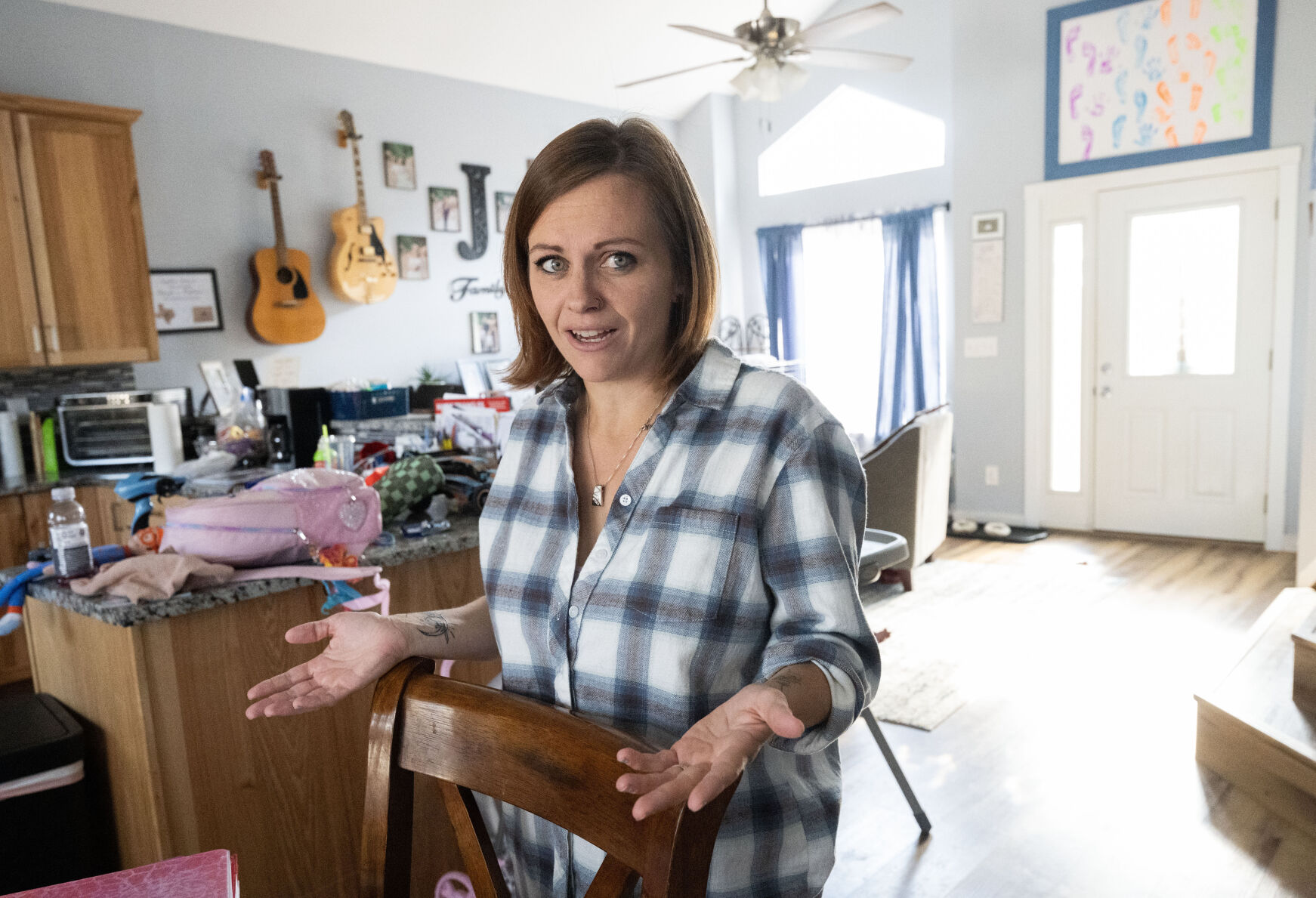
“The court wants to respect his rights as a parent, but his addiction issues mean that he cannot parent,” ruled 4th Judicial District Court Judge Samuel Evig, adding, “The case on paper does not do justice to how bad father’s behavior has been throughout the years.”
Evaluator untruthful and lacked candor
Another mother — whose ex-husband subjected her to extreme domestic violence, including alleged an strangulation attempt, according to a domestic violence assessment — stopped going to Miller’s court-ordered co-parenting classes with her ex-husband after Miller failed to show up for one scheduled session in 2016.
The ex-husband violently threatened the mother when both parents showed up for the session that Miller forgot to attend, according to accounts of the encounter as described in emails and texts the mother sent reviewed by The Gazette. Miller didn’t respond to the accusations the mother had been placed in peril, but Miller in her own email apologized and said she had “totally spaced out” and forgotten the appointment.
“She didn’t show up,” the mother recalled. “So, I was stuck in the building with my abuser, and she wasn’t there. It was just me and him. It was dark outside, and he started to get into it with me and tried to attack me.”
She recalled fleeing down a hallway and finding safety behind a door with a deadbolt she locked as her ex-husband pounded against the door. She said she found protection in the office of another therapist in the building. Her father, who had taken her to the co-parenting session, drove her away from the building. No criminal charges were filed.
Miller reported in a letter to the judge overseeing that custody dispute that the mom had become “oppositional and argumentative” and had stopped attending the co-parenting classes for no valid reason.
The mother said her ex used the letter against her in court, but his efforts to find her in contempt of court for refusing to attend Miller’s co-parenting classes eventually failed. A judge this year halted co-parenting and reunification therapy sessions with another therapist for their 11-year-old daughter after finding the father had been emotionally abusive to the child.
The Colorado State Court Administrator’s Office in July removed Miller from the roster of parental evaluators eligible for court appointments, bringing an end to Miller’s 10-year career as a Colorado Springs parental evaluator.
Lawyers in a Facebook legal chat group have rushed to Miller’s defense. One lawyer wrote in a post that Miller told him that her removal from the statewide roster for parental evaluators stemmed from mixing up two clients and accidentally sending information to the wrong lawyer. The lawyer, in that online post, characterized Miller as responsible for the type of mistake “most of us have probably made once or twice in our legal career.”
The exact details behind Miller’s removal from the roster for evaluators remain secret, under the rules of the Court Administrator’s Office, which will only reveal the violations of standards of practice that resulted in an evaluator’s removal. An official in that office found Miller violated standards of practice in connection with two custody cases after reviewing an earlier judicial finding that found Miller’s work deficient.
Miller was untruthful and lacked candor in her assessment of domestic violence in a custody case and violated standards of practice related to professionalism and to serving as an adequate investigative arm of the court, according to the findings of Jaime Watman, the coordinator of the parental evaluation program for the Court Administrator’s Office.
“I adamantly and fervently deny the allegations of lack of candor to the court and truthfulness,” Miller wrote in her letter to the presiding judge of 4th Judicial District Court.
Miller defends her work
Watman also found that Miller had served inconsistent dual roles in custody cases, which evaluators are barred from doing because doing so could impair objectivity. She also failed to develop written polices and procedures for parents she was evaluating, Watman found.
Records show that Miller in her parental evaluation reports has recommended that judges order the parents to attend a “Level III high-conflict co-parenting class” like those offered at “Front Range Collaborative Co-Parenting.” Front Range is Miller’s own business. It advertises itself as the only Level III co-parenting class in Colorado Springs. The course costs each parent a minimum of $1,160.
Miller said another therapist in the office, whom she said is paid for the classes, does the individual skills building sessions, though Miller leads group seminar lectures. She denied a judge’s finding that she also inappropriately acted as a reunification therapist while acting as parental evaluator.
Miller also divulged health information protected from disclosure by federal law when she mixed up two of her clients and then failed to follow standards for how to handle the breach, according to additional findings of that judge forwarded to Watman.
Randi Rivera, a Monument mother whose custody case was one of two cases that prompted Miller’s removal from the roster, said she fears Miller is publicly minimizing to lawyers and judges her violations, which Rivera said she feared could complicate her efforts if she seeks new legal representation.
Fourth Judicial District Court Judge Laura Findorff found that Miller in Rivera’s custody case violated five professional standards, including failing to adequately investigate “claims of child abuse” allegedly perpetrated by the father, who had been arrested once on a domestic violence charge.
“She’s the whole reason I don’t trust the justice system anymore,” Rivera said of Miller.
Rivera said she spent more than $100,000 — all her retirement savings — on the custody case and still ended up with a 50-50 custody arrangement and joint decision making for the children despite her ex-husband being arrested during the marriage for domestic violence.
Police arrested Rivera’s ex after she alleged that he threatened to get a gun and choked her, while the children struggled to deescalate the situation. Two independent domestic violence experts told Miller that Rivera’s ex had perpetrated spousal abuse in the presence of their children, then ages 6 and 8. Miller still recommended equal parenting time, pointing to the eventual dismissal of the criminal charges. The ex-husband, Coire Rivera, in an interviewed denied the alleged physical violence and said Miller had done a thorough evaluation.
Miller defended her work on the case, saying she was penalized for neglecting to relay in her report the findings of one of the domestic violence experts the mother had picked that Miller feared could be biased. Another expert Miller referred the parents to also found the father engaged in domestic violence, but that expert had a “broader picture of the family dynamic,” Miller added.
‘There is a God issue’
Before her removal from the roster of evaluators, Miller became a go-to parental evaluator that had earned the trust of judges in the 4th District, said Stephanie Randall, a lawyer who handles custody disputes in Colorado Springs.
Judges typically give each side battling in family court just 90 minutes to present their case, not nearly enough time to decide complex allegations of domestic violence and even alleged child sexual abuse, Randall said. Once a parental evaluator gets established through a significant number of court appointments, judges can develop “expert blindness” and develop an overreliance on an evaluator’s custody recommendations, she added.
“Once a judicial district says, ‘Oh, this person does a good job,’ it’s like there is a God issue from that point forward, where they (the evaluators) are no longer considered a piece of the evidence that the court is supposed to be considering,’” Randall said. “Instead, they’re heavily influencing everything that happens in the case. Sometimes, it’s like the judges just punt and adopt a parental evaluator’s recommendations instead of considering everything that is going on.”
Jessica Peck, a lawyer on one custody case involving Miller, said her case languished for more than two years, primarily because Miller had gone for months with no meaningful contact with the parents for her custody evaluation, resulting in multiple continuances.
She said Miller during a status conference and in a filing with the court falsely claimed her report was late because the mother revoked consent to using a mental health evaluation in the custody report, which both lawyers on the case repeatedly had insisted to Miller in emails was not true. Miller still has not corrected the record for the court despite admitting in an email to Peck that she was wrong, Peck said.
“I have handled over 500 cases,” Peck said. “This is one I’ll never forget. It’s incredible to see how the courage of dozens of parents have individually spoken up to help protect future families from similar abuses.”
While Miller no longer can accept new court appointments as an evaluator, her removal from her existing cases remains at the discretion of individual judges hearing those cases, Peck said. “Imagine a surgeon being permitted to perform surgery months after being stripped of a medical license,” said Peck, adding that parents on those cases remain fearful Miller could turn adversarial against them if they object to her continuing to work on their cases.
Miller denied she was the cause for the delay in that case, adding that the judge overseeing the custody dispute had not found her evaluation work a problem. She also denied misrepresenting during the status conference and in her reports to the court the reason for the delay in her evaluation. “The attorneys don’t like to lose and don’t like to have to deal with their clients when they do,” she said.
Mother ‘credible’ in accounts of abuse
In the case of Hector Moreno, the man accused of sexually abusing his daughter, Miller testified that the father believed the 5-year-old girl’s two older half-sisters — his children from a previous marriage — may have coached the girl when they came to visit her, to falsely accuse him of sexually abusing her.
“I told him not to let them take her and be alone with her,” Miller testified.
The father has denied the accusations of child sexual abuse in court filings. He maintained in an interview that he is falsely accused. In a court hearing held in September in California, he and his lawyer pointed out that child-protective services in that state had found the allegations inconclusive, though law enforcement authorities in Colorado Springs, where the father lives, still at that point had an open investigation ongoing.
Miller agreed to testify for the father because she also had been appointed a reunification therapist in a previous custody dispute the father was involved in in 2021 from another marriage. In that role, Miller’s therapy was supposed to repair the father’s relationship with two daughters from the previous marriage.
The daughters — then ages 17 and 14 — objected to the 2021 court-ordered reunification therapy with their father because they claimed they had witnessed their father hit their stepmother, and he had been emotionally abusive to them. He has denied those allegations in interviews and in court filings. The children said they felt compelled to keep attending the reunification therapy due to a judge ordering it and Miller warning that their mother could be jailed, or they could end up in foster care if they didn’t cooperate.
“Foster care and putting my mom in jail were two big things she liked to throw around when me or my sister were behaving in a way that she didn’t like or were arguing back with her,” recalled the oldest daughter, Alexandra Organa, now 20. “The entire process was very traumatic.”

Fourth Judicial District Court Judge William Trujillo, indeed, jailed Organa’s mother for two nights in March 2022 after he ruled that text messages she had sent violated a court order barring her from disparaging her ex in front of their children with his new wife, who was alleging domestic violence.
Their mother and her lawyer argued without success during the hearing that the texts actually were sent before the court order barring her and the new wife from disparagement.
“In this case, I can certainly share with them the reality that, you know, mom has made some poor choices here and now she is dealing with those consequences,” Miller testified during the hearing. “That this has little to do with dad.”
Court records show their stepmother fled with her then 2-year-old daughter to California to live near her family in December 2020, alleging domestic violence.
In 2021, El Paso County District Court Magistrate Gail Warkentin permitted their stepmother and her child to remain in California after finding that she was credible in her accounts that her ex had struck her “full force” in the face while she was holding their child. She also had testified her ex would drink alcohol from dinnertime to 5 a.m. nightly, and that she found he had been surreptitiously recording her with a web camera partially concealed on a kitchen cabinet.
After Organa turned 18, Organa was allowed to stop going to the reunification therapy because she was no longer a minor, but her sister had to keep attending and going to her father’s home for his parenting time. Organa’s sister reported she felt uncomfortable there since her stepmother had moved to California, and she alleged grooming behavior from her father.
At age17, that daughter in 2023 fled during one visitation with her father after he declined her request that he take her for a mental health checkup. She checked herself into an emergency room.
A psychiatrist conducted a trauma assessment on the girl and found she was suffering from post-traumatic stress disorder after the girl claimed her father was engaging in grooming behavior with her — such as sleeping in her bed when she was gone and touching her on her thigh — and had emotionally abused her and had engaged in domestic violence she witnessed as well as animal cruelty.
The psychiatrist warned the 17-year-old daughter would suffer a “psychological breakdown” if she continued with the week on, week off parenting time with her father.
Judge Evig allowed the girl — now eight months shy of her 18th birthday — to stop going to her father’s and to stop attending reunification therapy sessions with Miller. The two sisters would return to their father’s house only to check on their 5-year-old half-sister when she came for her weekly child custody visitation with her father every month, Organa said.
Their father has maintained that he fears his older children began coaching the 5-year-old to make false sexual abuse allegations against him. Miller testified during the hearing in Colorado Springs, held in August, that she told the father he shouldn’t let the 5-year-old leave alone with her stepsisters to avoid any potential coaching. Miller claimed she knew the family dynamics because of her earlier reunification therapy sessions.
The lawyer representing the mother of the 5-year-old during a court hearing in August confronted Miller over her recommendation to the father that he isolate the child from her now adult sisters, arguing that the vulnerable child would be left with no protection from a potentially sexually abusive father.
“So, if something was occurring,” the lawyer asked during the hearing, “And she couldn’t be alone with anybody, she would have nobody to report that to here in Colorado, correct?”
“I suppose not,” Miller testified.
During the hearing, the 5-year-old girl’s personal therapist, Sally Nasrat, testified that she did not believe the child was safe with the father due to the child alleging during therapy that her father at night was inserting his finger in her vagina and had struck her in the forehead with his elbow.
“I believe it because it’s the same story each time,” the therapist testified. “It’s the same story each time, and my history with her, every time she returns from Dad I try to — I try to get the positive out of her, and there’s always a negative reaction.”
Magistrate Sarah Zane said she gave little weight to Miller’s testimony and didn’t find it relevant. “The court really is not clear what role she plays in regards to Mr. Moreno,” she said from the bench.
Still, she found the mother hadn’t met her burden that the 5-year-old was endangered when spending unsupervised visitation with the father, despite the testimony of sexual abuse disclosures from her.
“The court’s really not sure what happened,” the magistrate continued. “And it’s not necessary for this court to determine if the disclosure made by the child happened or didn’t happen.”
She added: “While the court is concerned that this statement was made, especially by the age of the child, the court just really wasn’t provided the information it needs in order to move forward and restrict parenting time.”
Zane noted that a protection order remained active in California barring contact between the 5-year-old and her father.
The judge in California that will decide whether to make that protection order permanent said at a hearing held on Sept. 23 that she didn’t know if she could rule on the matter since the magistrate in Colorado already had weighed in. That California judge rescheduled the hearing on the protection order for later this month so she could research whether she still retained jurisdiction over the matter.