







Light therapy company XTi Technologies targets sleep disorders
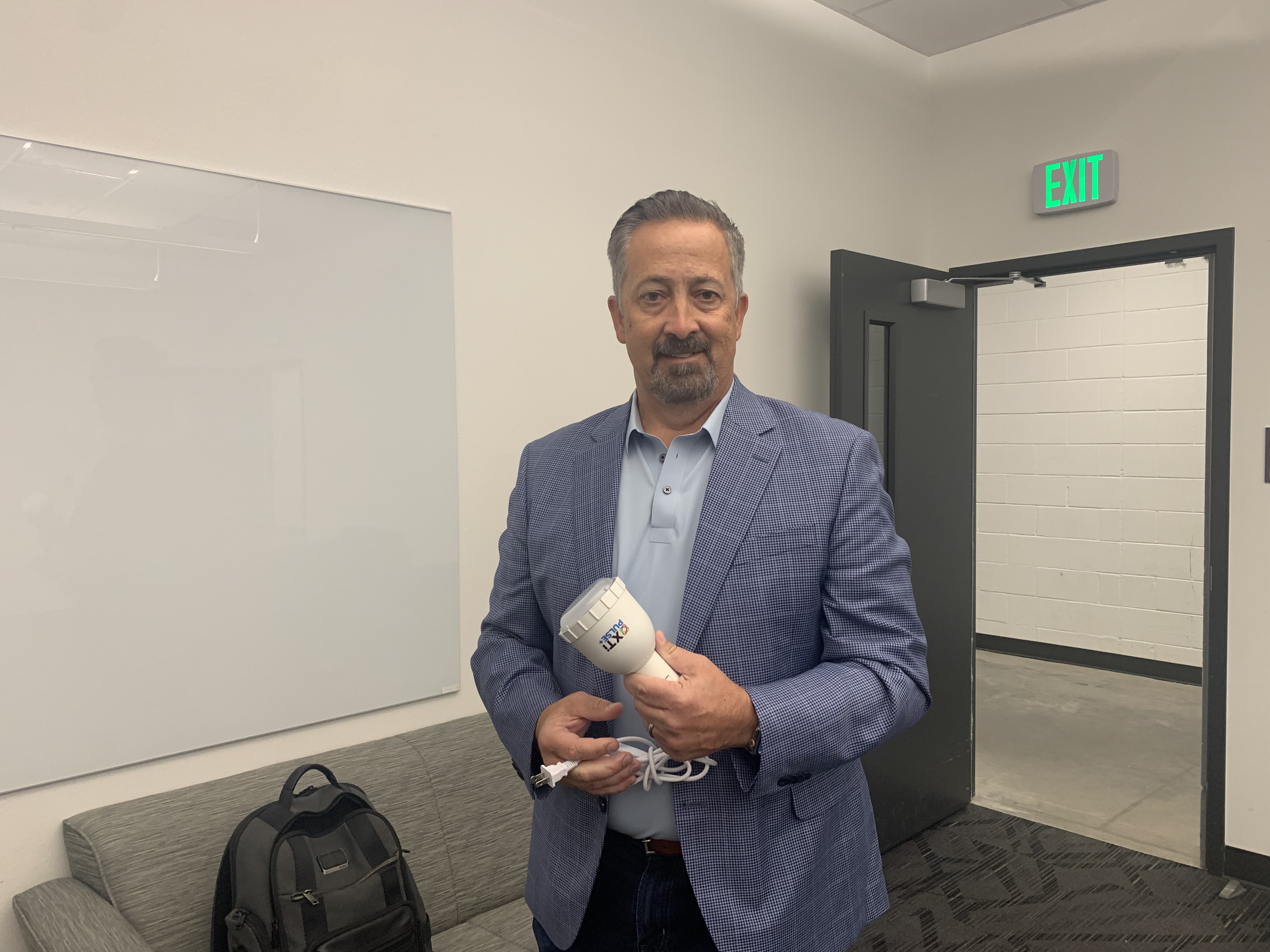
Could a new form of light therapy help people suffering from sleep disorders?
A Greeley-based company, XTi Technologies, is working on it, and its co-founder discussed it on Thursday at the University of Northern Colorado during the fourth annual Energy and Environmental Leadership Symposium. The gathering draws leaders in the energy industry and provides an opportunity to discuss innovations in all kinds of energy, including human energy.
According to the Centers for Disease Control, almost 40% of Americans don’t get enough sleep. In Colorado, at the lower end of the range, about 30% don’t get at least 7 hours of sleep in 24 hours. Nationally, men struggle with sleep more than women, and people in the 45- to 64-year-old age range also have more trouble sleeping than other age groups.
The effects of poor sleep and poor sleep quality are well-documented: the Cleveland Clinic points to 13 different effects of poor sleep, such as stress, weight gain, memory problems, poor balance, mood changes, and even physical changes in your face – swollen or puffy eyelids, red eyes, and pale skin.
Attempting to address the problem: XTi has been around since 2014 and was started by two brothers, Jason and Darren Suntych. Both earned undergraduate degrees in biochemistry, but their paths diverged. Jason worked in the financial sector and, after a short time at 3M in Minnesota, returned to the University of Wyoming for graduate work.
His focus was listening to plants breathe using laser light. Jason Suntych told Colorado Politics that he learned that pulsing light to a plant could result in exponential growth with a fraction of the power.
When they started the company, they were only focused on plant efficiencies. but then, “We had an opportunity with a local poultry producer who asked the question, ‘If you’re able to do that with plants, what can you do with animals?'”
That started experimentation with poultry, which showed gains in animal health, productivity, and “feed conversion improvements,” which are basically the amount of feed an animal needs.
It also worked with cattle, to improve their performance, and the company has now moved on to multiple research studies on people, including around sleep, in conjunction with the human performance lab at Colorado State University.
The Suntych brothers, both chronic insomniacs, were the first to try the system.
“We recognized the benefit very early from this technology in helping us to sleep. We knew that the human application would always be the largest application of this technology, but we didn’t want to go to the market with something that sounded like a new gadget,” Suntych told Colorado Politics. “We wanted pure science behind this. And so that’s why we’ve spent 10 years in the research and development phase, so that when we went to the human market, which we’re in the midst of doing right now, this was something that we could back with science as opposed to being just a new idea.”
How it works
It starts with a “biolight,” which shows a red light operated by an app for sleep. For now, the app is only available on iPhones, but an Android version is just a few weeks away.
For the sleep function, Suntych said they recommend 45 minutes at night, which can be controlled by a timer on the app. He sleeps with the light on because “if you do wake up, it’s easier to get back to sleep.”
He said the sleep study will show the benefits of the light, but the concept is based on retraining the body’s circadian rhythm.
Thursday, Suntych asked the audience a basic question: When was the last time you were outside at sunrise and sunset?
The answer has to do with people’s changing relationship with sunlight. For many millennia, people were hunters and gatherers. You got up with the sun and went to sleep when it did, he said.
That relationship began to change with the invention of the light bulb in 1879 and further with the creation of the computer in 1981.
Then came the cell phone in 1987. Suntech said people spend, on average, 8.5 hours a day with a lighted screen, and people spend 92% of their day indoors, detached from natural light sources.
“Our health is only as good as the light we live in,” Suntych told the audience. The perpetuation of an “indoor generation” is the biggest cost to human potential, he added.
The XTi biotech light provides “pulsed, alternative wavelengths” to replace natural light cues the body needs. It focuses on the part of the brain that controls circadian rhythm, the body’s natural 24-hour clock. The “Suprachiasmatic nucleus” is part of the hypothalamus, which is the body’s principal circadian “pacemaker.”
That, in turn, regulates hormones such as melatonin, which deals with sleep; cortisol, which regulates blood pressure and metabolism; and two hormones that impact appetite.
Suntych later told Colorado Politics the body has an amazing ability to heal itself, but when it doesn’t produce the correct hormones to do that healing, you can’t sleep well or perform well. He added that being in front of a screen all day adds “insult to injury” to the body. “We’ve come up with a scalpel approach to lighting where we’re going after the human physiology to maximize the benefits of light inputs and our body’s response to that.”
Outside of sleep, collegiate and professional football teams have used the biotech light to address performance. Suntych explained to the audience that they’re also working on trials with first responders in Colorado, such as firefighters, who often work 48 hours on, 96 hours off. Trial participants reported 70% improved response to stress, 90% improvement in going to sleep, and 80% improvement in sleep quality. Concentration and performance also saw similar results.
The main competition for the XTi biolight is red light therapy, which he called a localized solutions, and one that can’t be done at home.
He hopes the device will eventually be cleared by the Food and Drug Administration, although that is likely to happen sometime in the future.
In the past year, XTi has made the device available to consumers. The light is $399 and requires a monthly subscription of $5. It requires a letter of medical necessity from a doctor, and while it isn’t covered by health insurance, that letter can be used to pay for it with health savings accounts.
Suntych told Colorado Politics he has yet to see any reaction from pharmaceutical companies, for which his device could be seen as competition with sleep drugs. Then there’s the issue of funding for the company; he said they have done all financing to date without investment bankers or private equity but “are open to conversations.”
“You don’t have to make time or take time out of your schedule to get the benefit,” Suntych said. “You just simply do what you normally would do. And it’s as easy as turning on the light to receive the benefit.”