




This ziggurat in Colorado’s San Luis Valley is the only spiritual structure of its kind in the U.S
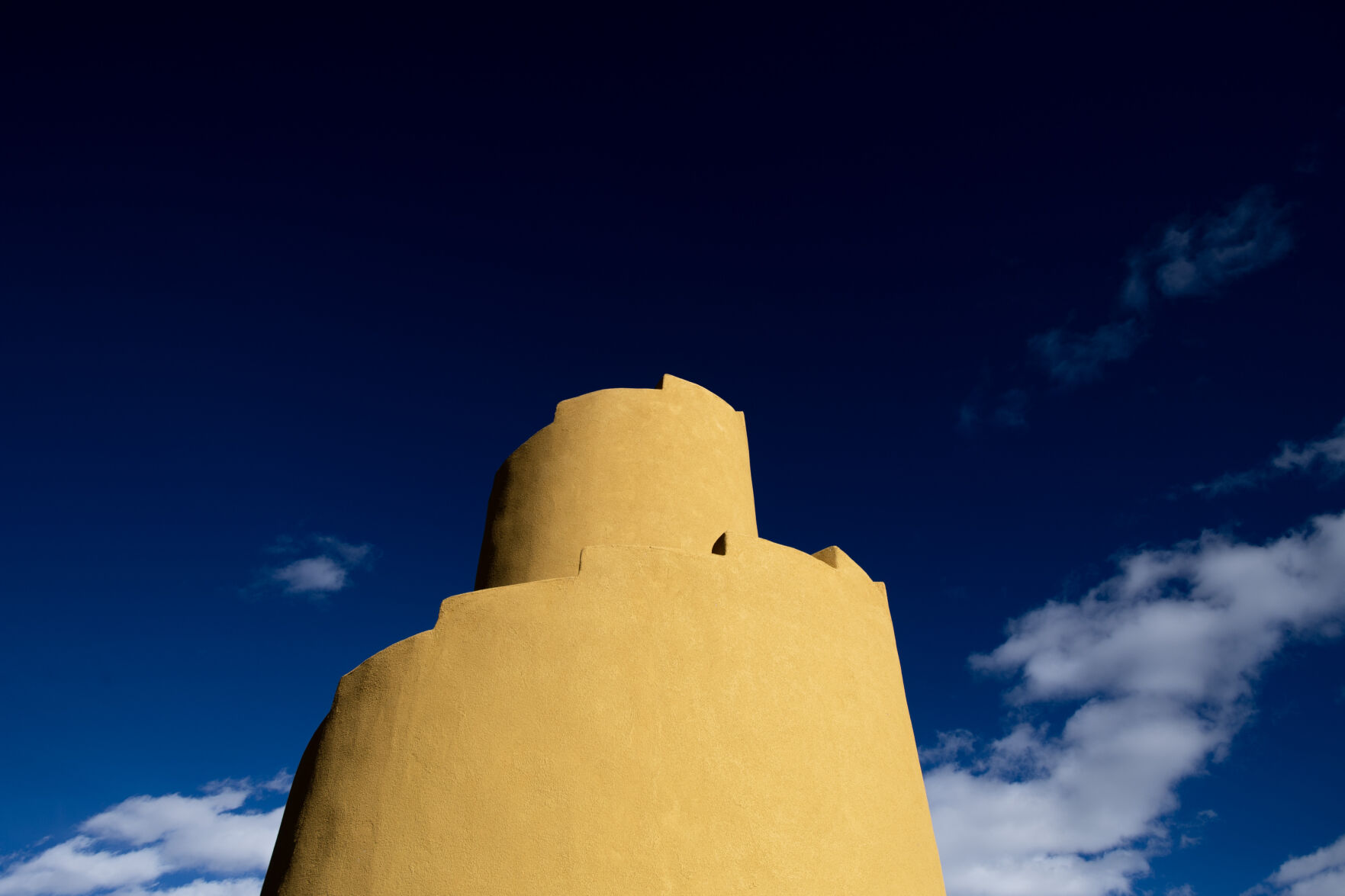
CRESTONE • Up on a hill on the outskirts of Crestone sits a tower.
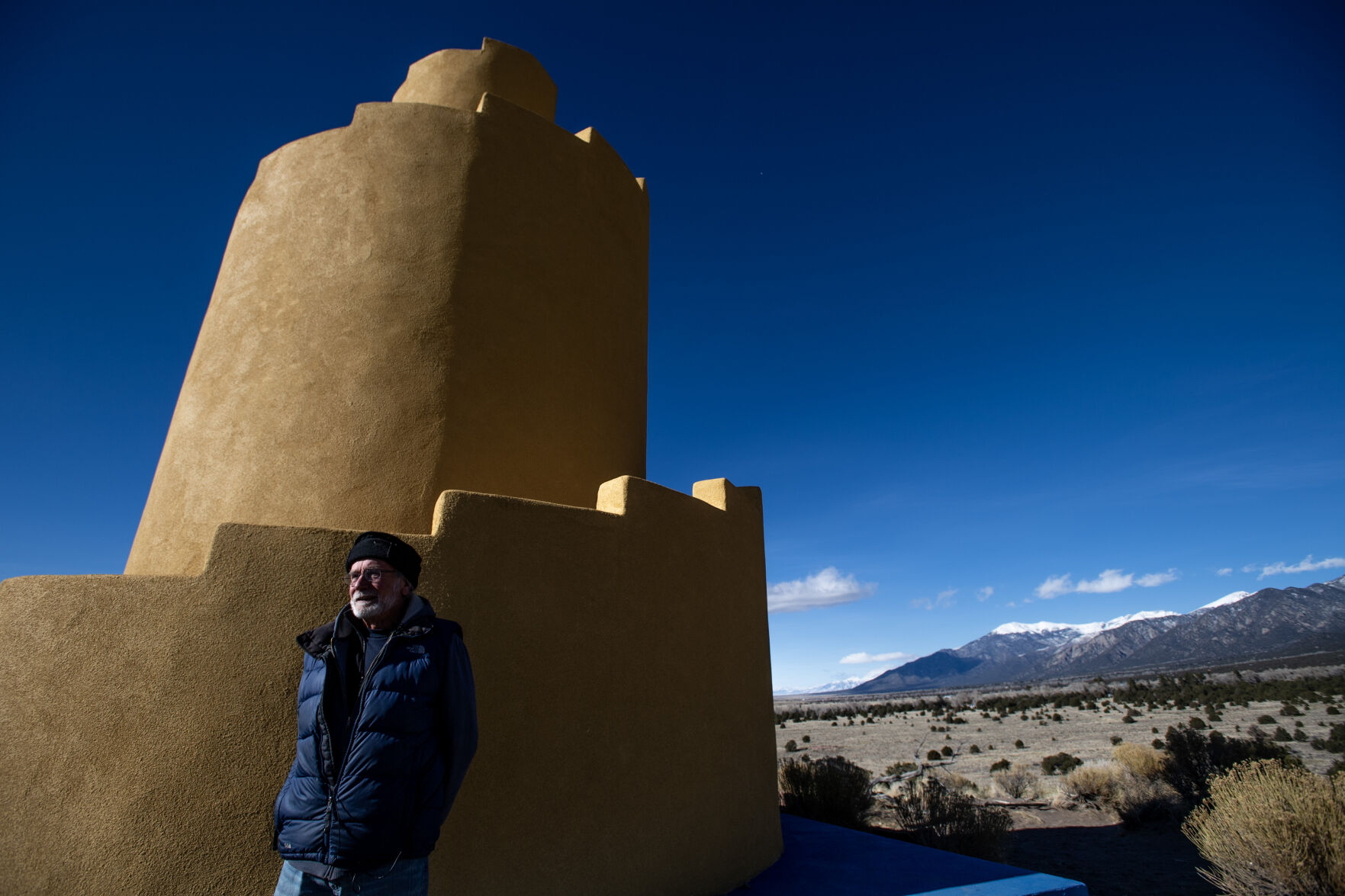
Situated in the San Luis Valley, the tall yellow spiral contrasts with the stark blue sky. A dirt path leads up the hill to the unique building, which can be climbed by following the winding concrete incline that wraps around the structure.
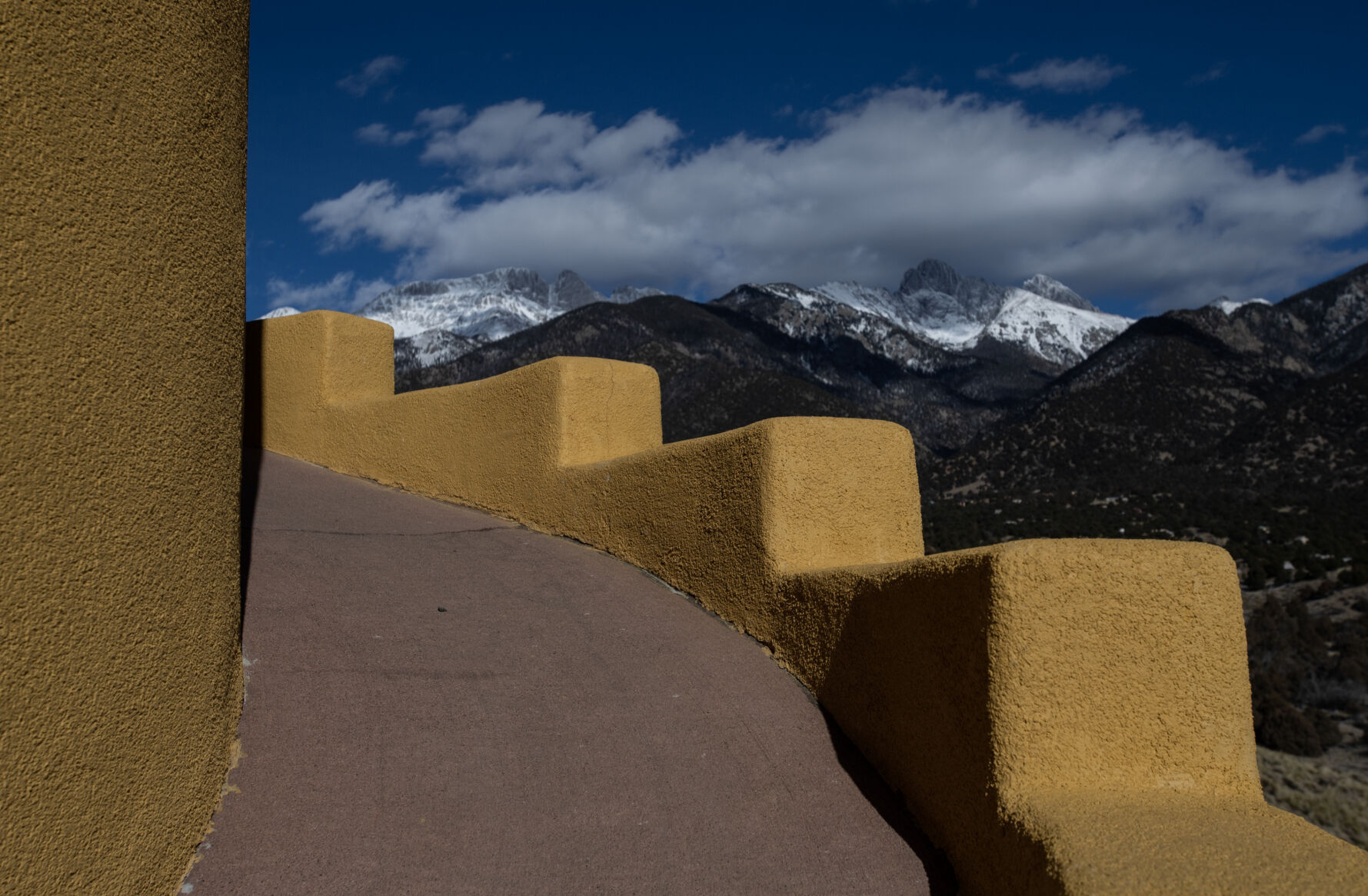
From the top, a panoramic view. To the east, you can see the sand dunes rolling like waves. To the north, the Sangre de Cristo Mountains. The quiet peace is only disrupted by the wind.
The Crestone ziggurat is the only spiritual structure of its kind in the U.S. The monument in southern Colorado mirrors those from ancient Mesopotamia.
The ziggurat is maintained by the Karma Thegsum Tashi Gomang — a group of Tibetan Buddhists based in Crestone who follow the Karma Kagyu lineage.
It’s no surprise that the only ziggurat in North America sits in Crestone, with more than 27 distinct spiritual groups calling the town home, said Njal Schold, the director of the Karma Thegsum Tashi Gomang executive committee.
“There are a lot of stuppas in North America, but there’s only one ziggurat,” Schold said. “It just has a special, different kind of energy than you see other places.”
Open to the public from sunrise to sunset, visitors are encouraged to take the physical (and spiritual) climb up the winding tower to reflect.
Origins
The Crestone ziggurat was commissioned by Syrian-American Najeeb Halaby in 1978.
Halaby, who died in 2002, is well-known for his contribution to midcentury aviation, serving as the CEO and chairman of Pan Am from 1969-72 and as the administrator of the Federal Aviation Administration under President John F. Kennedy. Halaby was also the father of Queen Noor al-Hussein of Jordan.
“He was a Zoroastrian, and the ziggurat is a Zoroastrian temple that is kind of designed to bring you closer to heaven,” Schold said. Zoroastrianism is one of the world’s oldest monotheistic faiths, originating in what is now Iran around 600 B.C.
“It’s an ancient religion,” Schold said. “It’s very nature based, it’s very much based on the elementals. And actually, he built a number of different things on the property to represent the four elements, this being one of them.”
Halaby had the ziggurat built as a place for spirituality and reflection. A close friend of Halaby’s once told Schold that Halaby and his wife would occasionally venture to the top of the ziggurat in the evenings to enjoy a cocktail.
In 2001, Halaby sold the property that contained the ziggurat, which sits on about 60 acres, and an adjacent house to the Karma Thegsum Tashi Gomang for only $10. It’s not known why Halaby was inspired to give the property, but Schold believes he appreciated the organization’s work.
Connecting heaven and Earth
What exactly is a ziggurat? It’s an ancient religious tower commonly built in Mesopotamia between 2,200-500 B.C.
The structure’s purpose was to connect heaven and Earth, hence its towering nature. Essentially, its a stairway to heaven.
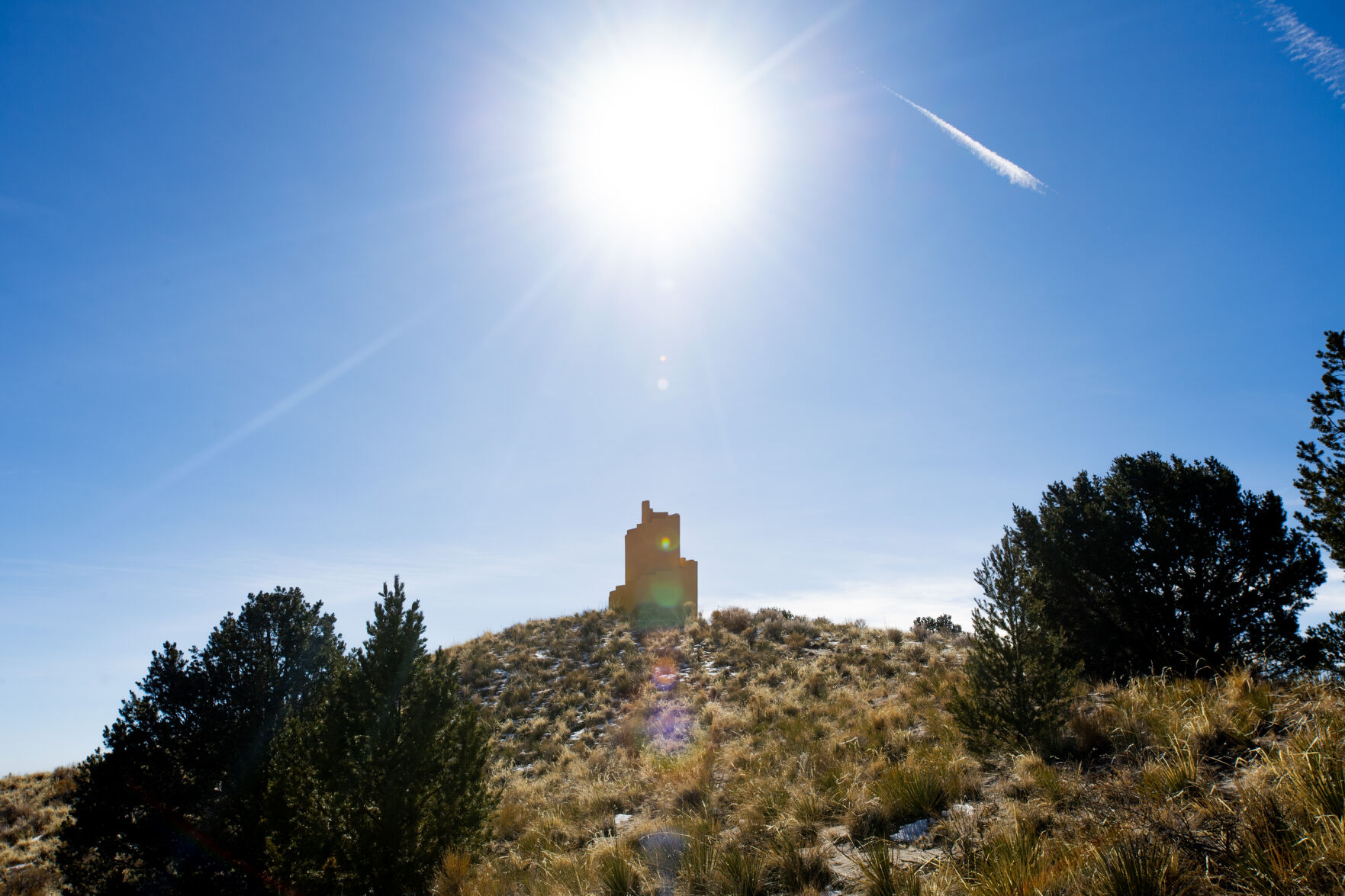
“Really the idea is that you walk in a spiral and with intention of it bringing you closer to heaven,” Schold said.
What remains of these ancient buildings can be found scattered throughout the Middle East, with about 25 surviving sites. Perhaps the most well-known and best preserved is the Ziggurat of Ur, which is in modern-day Iraq and has bricks dating back to 2,100 B.C.
The Crestone ziggurat doesn’t mirror the Ziggurat of Ur, with a simple spiral in place of the traditional, multileveled pyramid with steep stairways.
The Crestone structure spirals left, Schold said, representing the feminine. It stands about 30 feet tall and is made out of concrete blocks.
“When you’re up there at the top, it’s a beautiful view. You can see the sand dunes, the whole San Luis Valley, and then you make your prayers there,” Schold said.
‘A special spot’
The Karma Thegsum Tashi Gomang, founded in Crestone during the 1980s, has been maintaining the structure since acquiring it in 2001.
Only a couple of years ago, the group restuccoed the ziggurat. They’ve also made the adjacent house into a retreat cabin.
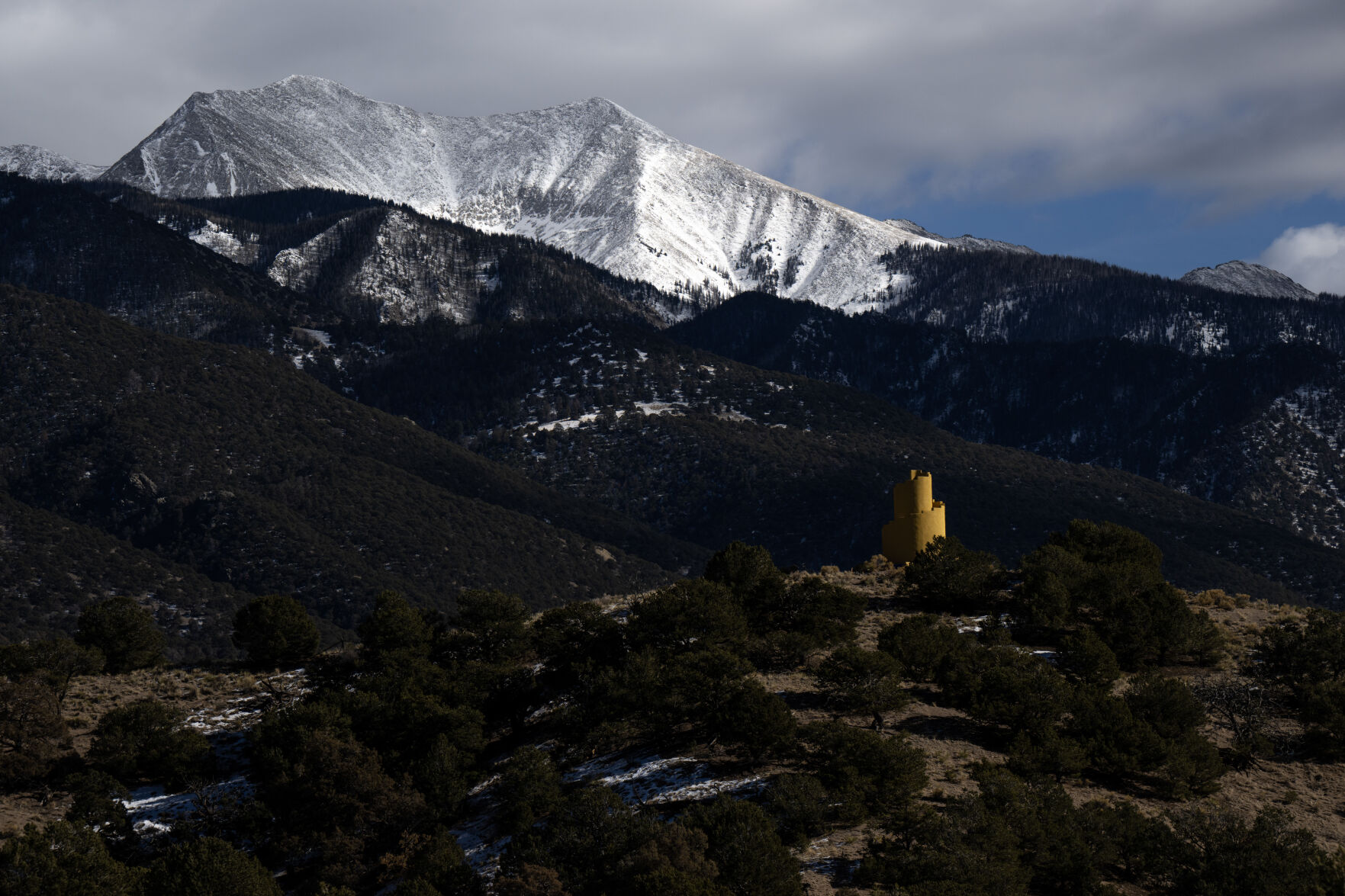
“We hired a stucco crew out of Alamosa, and they came in and had this elaborate scaffolding system built around it and restuccoed it for us,” Schold said. “I try to get up there just to check on things and check on the house.”
The Karma Thegsum Tashi Gomang manages the ziggurat on donations, keeping it free to be enjoyed by the public. Visitors can climb the steps to the top for 360-degree views of the mountains and valleys.
“It’s a special spot; a lot of people come to Crestone just to come and see this,” Schold said. “The view that it has here, and at night with the stars, you come out here and it’s just magnificent.”
Get OutThere
Signup today for free and be the first to get notified on new updates.
PREV
PREVIOUS
Pizzeria Rustica Valentine's Day offer

Dog attack terrorizes quiet Boulder neighborhood
A large dog was stabbed with kitchen knives, tased, and shot before it stopped an attack on its owner and a police officer, only to get up and charge again before it was euthanized. The incident terrorized a quiet Boulder neighborhood Sunday morning. Boulder Police released a short section of police-cruiser dash camera video of […]