







The birth of Christ and the resurrection of the esteemed Jo Bunton Keel | John Moore
2024 TRUE WEST AWARDS: DAY 1
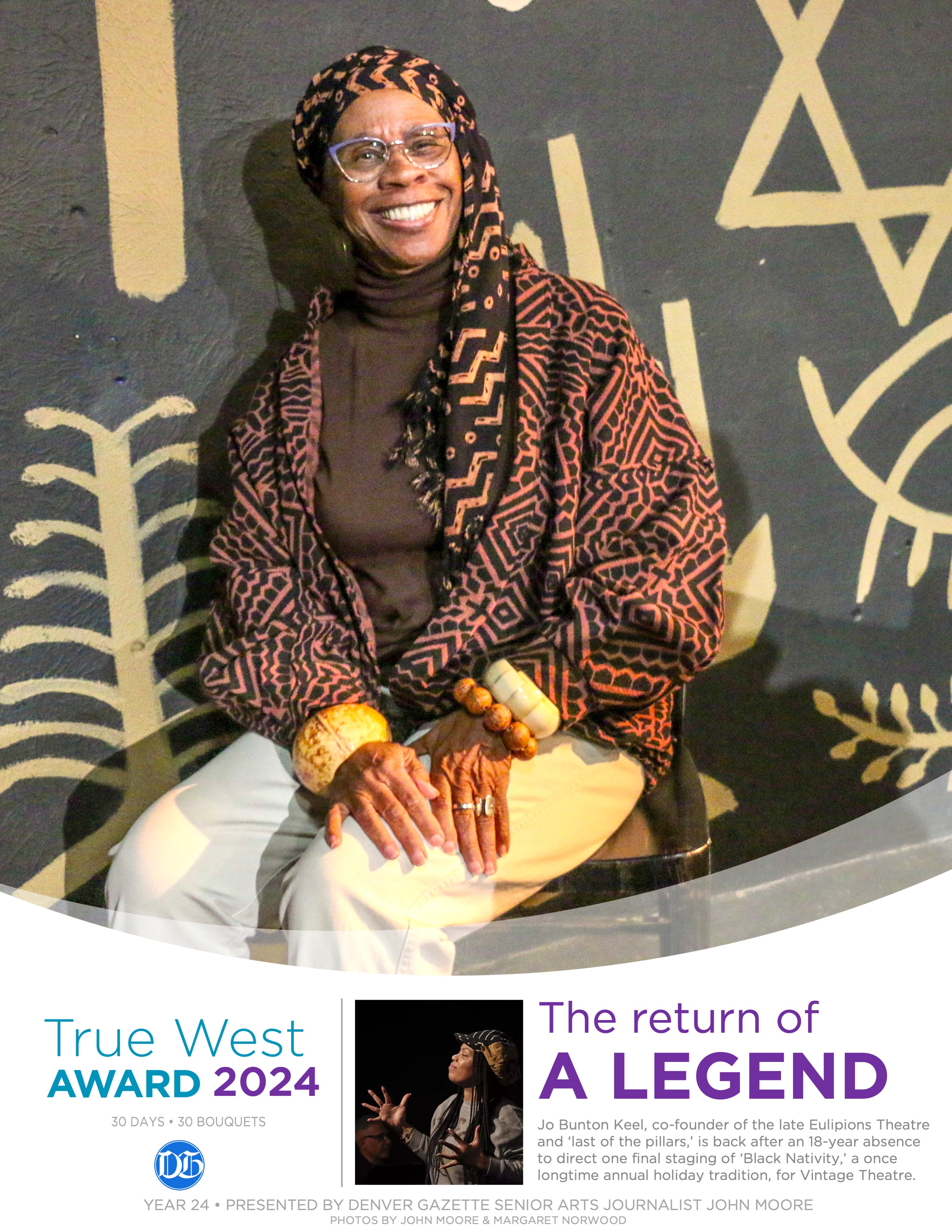

“Mama Jo” has come out of retirement, and all her children have come home to welcome her back.
Director Jo Bunton Keel, co-founder of Denver’s late, foundational Eulipions Theatre Company, is about to become the feel-good story of the local theater year when her once annual production of “Black Nativity” opens Dec. 6 at the Vintage Theatre after an 18-year absence.
She is the first among the Denver Gazette’s 2024 class of True West Award winners, acknowledging 30 great stories from the Colorado theater year.
Bunton Keel, who turns 81 on Jan. 6, last directed a local stage production back in 2006. She’s now reviving a once revered Denver holiday tradition by directing her 20th staging of “Black Nativity.” That’s Langston Hughes’ malleable telling of the Christ birth story from an African American perspective through a combination of scripture, poetry, dance, narration and a musical score that blends spirituals, holiday standards and contemporary arrangements.
“I feel like ‘Mama Jo’ is the last of the pillars whose shoulders we stand upon,” said Dwayne Carrington, himself a Denver acting fixture who goes back 40 years with Bunton Keel. He’s talking shoulder-to-shoulder with legendary figures like Henry Lowenstein, Donald Todd and Jeffrey Nickelson.
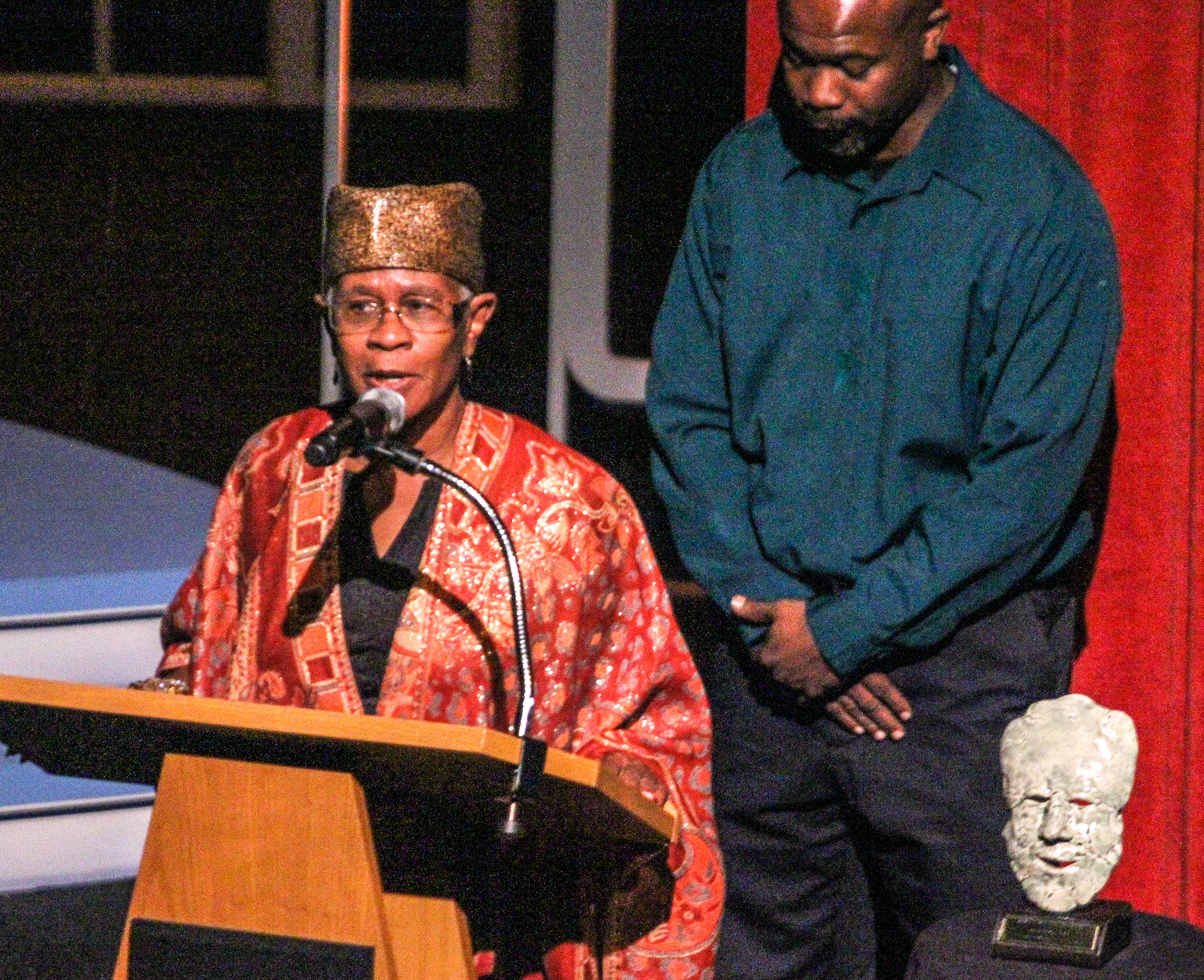
In 2015, Bunton Keel was given the Colorado Theatre Guild’s Lifetime Achievement Award. In May, she was included in the 2024 “Legends of Dance” class by Dance Archive, considered the most significant dance resource center in the American West. And yet, after 18 years away, many in this high-turnover performing-arts community of ours don’t know Mama Jo’s name.
“If you want to know about Colorado theatre history, you have to know about Jo,” said Carrington, her assistant director on “Black Nativity.” “And I say that especially to our young BIPOC acting community, because the opportunities that they take advantage of today, we didn’t have back then. If you were a Black performer, you went to Eulipions because you couldn’t go to the Denver Center. And you couldn’t go to some of the smaller theaters because you wouldn’t get cast. There was just Eulipions.”
The large, multigenerational cast Bunton Keel has gathered for “Black Nativity” includes some of the most accomplished performers in the Colorado theater community, starting with Hugo Jon Sayles, the former producing artistic director of Nickelson’s lamented Shadow Theatre Company; and Mary Louise Lee, a powerhouse actor and vocalist who has returned to Denver from her new home in Texas just to be part of this historic show.
Why? Because Bunton Keel swears this really will be her last directing go-round. For 80, she still seems remarkably up for the physical challenge. It’s just time, she said. “Time to pass it on.”
And if that turns out to be true, then Lee wasn’t going to miss this.
“Jo has been a mentor of mine from the moment I got into theater,” Lee said. “She’s a legend in Colorado. An icon. Because she brings truth and spirit and love to everything she does.”
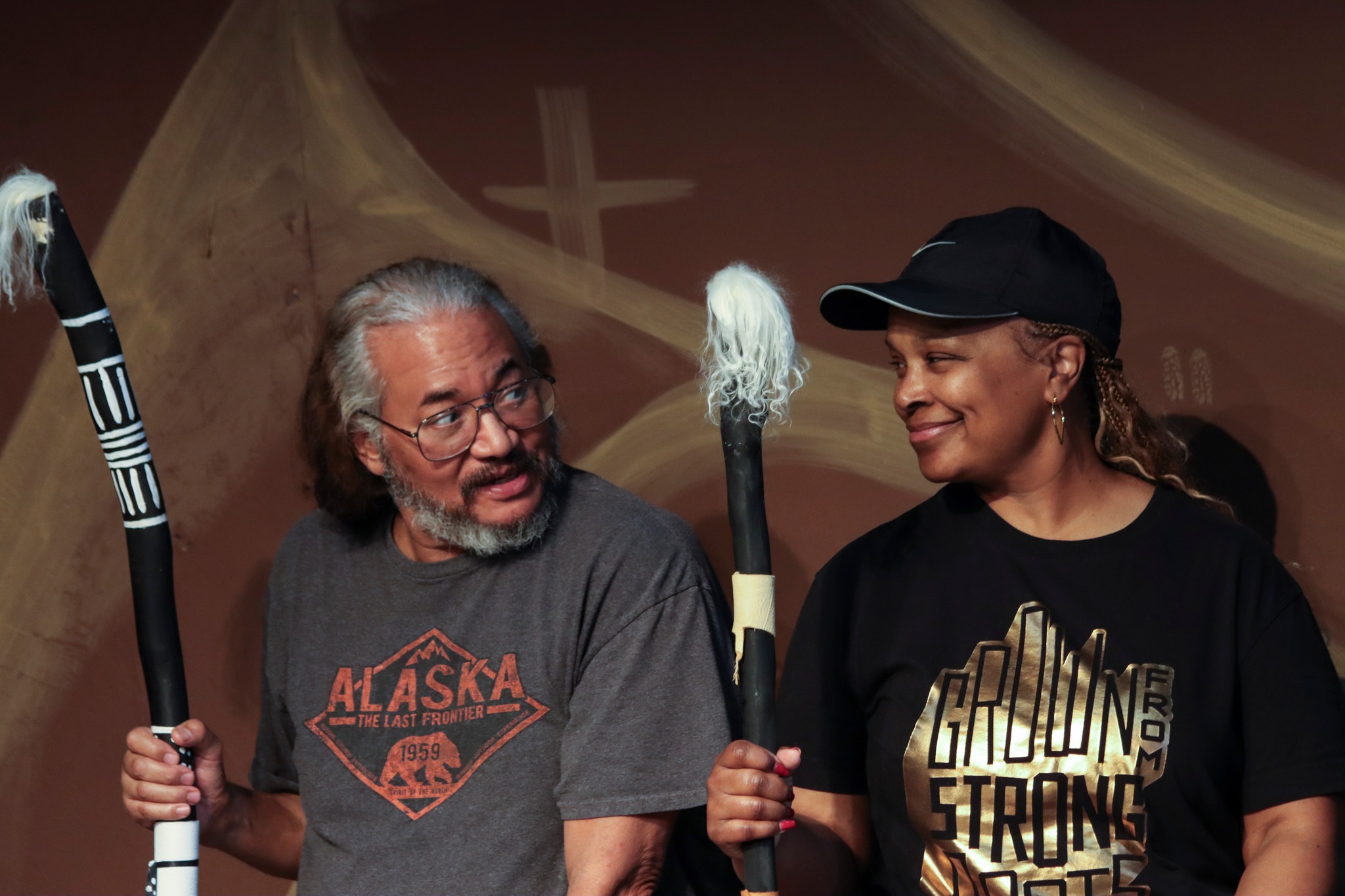
Sayles, who turned 67 on Friday, has been performing under Keel since he was 14. “She was my first employer – other than church,” he said with a laugh. Under Keel, Sayles grew from an actor to dancer to choreographer to director. Now, to be performing “Black Nativity” in the Vintage auditorium that bears Nickelson’s name means everything to him.
“Right now, I’d rather be here than anywhere,” he said.
Birth of a legend
Jo Bunton Keel was born R. Jo Richards on January 6, 1944, in Middleport, Ohio. She moved to Denver in 1968 with a chemistry degree, her first son and a job as a chemist for The Oil Shale Corp. But she found her feet, so to speak, as a founding member of Cleo Parker Robinson Dance, soon to become an internationally acclaimed dance troupe. She choreographed for the Denver Black Arts Company and at the Bonfils Theatre, all while directing the Cultural Department for Colorado State University’s Family Action Center.

She left CSU in 1982 to start Eulipions, which energized the local arts scene by delivering regional premieres of seminal titles like “The Gospel at Colonus,” “Ma Rainey’s Black Bottom” and “Ms. Evers’ Boys.” When Eulipions closed in 2000, Bunton Keel became an assistant principal at Montbello High School and later an adjunct professor for the University of Northern Colorado. She continued staging “Black Nativity” whenever and wherever she could through 2006 (at Su Teatro).
Two of her former Montbello students – Krisangela Washington and Cha’rel Wright – are now appearing in her current production.
“Ms. Bunton Keel has a gift of seeing people’s potential before they’re able to see it,” said Washington, who plays Mary in “Black Nativity” after having recently starred in musicals at the Littleton Town Hall Arts Center and the Arvada Center. “I would never have a career, or have been interested in theater at all, if it weren’t for that lady. To be under the tutelage of such a theatrical giant – it really is humbling.”
Bunton Keel founded Eulipions to tell stories of the Black experience. She took the name from a song by Rahsaan Roland Kirk. “It’s about somebody who takes people on a journey,” she said. “And for us, this is a creative journey.”
Throughout the years, Bunton Keel emblazoned the front of every Eulipions script with the words “Excellence, not Mediocrity” – a mantra she took from Donald Todd. “It is important that we always strive for excellence,” she said. “That is the legacy of Eulipions.” The company survived for two decades in a primarily White city, she said, because White people also came, experienced its stories and benefitted from them as well.
“I always believed that as long as we present something that’s excellent, then people would come,” she said. “And they did.”
The reason for the season
And now, almost out of nowhere, Bunton Keel is back.
“Back from the dead – sort of like a vampire, right?” she said with a hearty laugh. More like full of life, Carrington said. Although Bunton Keel will concede that directing isn’t easy on an octogenarian.
“Let me tell you, I was so tired the other day, I thought I’d die,” she said with a smile (and sounding as young as ever).
Vintage Theatre Artistic Director Bernie Cardell first aspired to resurrect the “Black Nativity” tradition at this time last year, but the harried production, which did not involve Bunton Keel, was canceled at the last minute. “Bernie was heartbroken” by the collapse, Bunton Keel said, so she suggested that he should bring in Carrington to direct it this time around. Not knowing that, at the same time, Carrington was suggesting to Cardell that he should bring in Bunton Keel to direct it one last time. So they decided to do it together this year.
“I said yes,” she said, “because I really do think it’s an important play, and it has a lot to say in the post-election world we find ourselves in.”
While Hughes wrote “Black Nativity” in 1961 to focus on the Christ origin story, he also gave his written permission for any director to tailor the second act of the musical to reflect current events.
“The first act, no matter who does it anywhere, always stays the same,” said Bunton Keel. “But because of Langston Hughes’ directive, each theater company can add or subtract whatever they deem necessary to address contemporary issues.”
Those issues of specific 2024 interest to Bunton Keel are communication and healing. Parents and children who have lost the ability to sit and talk to each other because of our modern reliance on devices. In a nation more dug in and divided than ever.
“This is a time for healing,” she said. And hope. And renewal. And learning.
“You ask people, ‘Where was Jesus born?’” she asked. “They might say, ‘The Middle East.’ Well, there is no continent called ‘The Middle East.’ Jesus was born in Africa. Where the Euphrates meets the Nile. So this is also educational.”
Bunton Keel’s 2024 prologue is “The Creation,” by James Weldon Johnson. That famous poem begins:
“And God stepped out on space,
And he looked around and said:
I’m lonely —
I’ll make me a world.”
“There are people in our community who have never heard of Langston Hughes or James Weldon Johnson,” said Bunton Keel. “So it becomes no longer entertainment for entertainment’s sake. “It becomes spiritual. It becomes educational. And for me, it becomes rewarding.”
Carrington said if the show comes off as intended, “People will leave with a feeling of spirit and hope.” And with regard to the election, he added, “This show will be a salve to the spirit. They’ll come out feeling good again about life. And this music? This is going to be fire.”
If Cardell has his way, Bunton Keel will be back with “Black Nativity” next December. But if she is true to her word, and the torch is passed, I asked what she wanted her 40-year legacy in this Denver arts community to be.
“I am going to give you a line from an old spiritual,” she said: “‘If I can help somebody, then my living will not be in vain.
Note: The True West Awards, now in their 24th year, began as the Denver Post Ovation Awards in 2001. Denver Gazette Senior Arts Journalist John Moore celebrates the Colorado theater community by revisiting 30 good stories from the past year without categories or nominations.

Unsung Hero of the Day
The work did not end when BDT Stage closed after 47 years on Jan. 12. The process of closing up a theater is no small feat. Much of that work fell to finance manager Jeremy Campion.
“He paid the bills and kept us open for so long, and is still, at the end of 2024, finishing up the financial closing process,” said his wife, Amy. Between him and Seamus McDonough (now Associate Artistic Director at Theatre SilCo in Silverthorne), the behind-the-scenes work has been huge.”