Search warrant to Google in deadly arson fire tackled by Colorado justices
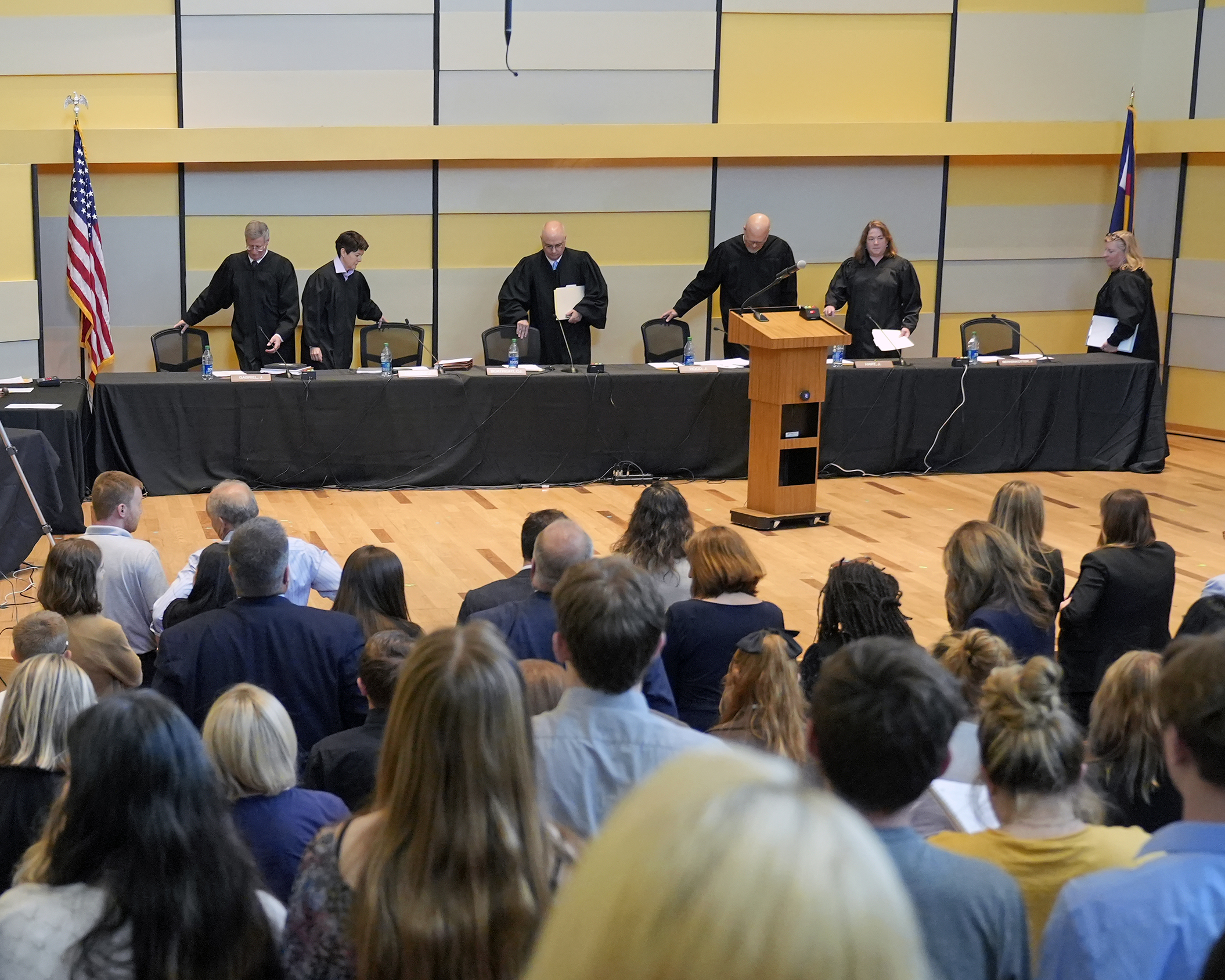
The Colorado Supreme Court heard arguments on Thursday in a case that could have huge ramifications in how law enforcement uses the internet to track down suspects.
Specific to the arguments in the case of People of the State of Colorado v. Gavin Seymour is a reverse search warrant Denver Police investigators served to Google to supply information in an investigation of an arson fire that killed five members of a Senegalese family in August 2020.
Google rejected the first two queries by detectives, but agreed on the third when police asked the company to go through the IP addresses of billions of internet users who specifically Googled the address of the home at 5312 N. Truckee in Green Valley Ranch, Denver.
The search turned up five users out of billions of Google-users, according to arguments made during Thursday’s proceedings.
9News reported that police have said the information helped in leading them to the suspects, who allegedly searched for the address.
At issue is whether the Fourth Amendment rights of three teens arrested in connection with the deadly arson were violated.
The case is likely the first time that such warrants have faced judicial scrutiny.
Mike Price, the attorney for one of the three suspects, Gavin Seymour, argued that asking Google to search a specific address to find a suspect — instead of naming the suspect — is akin to conducting police work on a hunch.
But Katherine Hansen, with the Denver District Attorney’s office, stated that this was not a dragnet search.
“It’s a Google keyword search. It’s a request for Google to conduct a query,” explained Hansen. “After months of trying everything they could, they could not identify these people.”
Price wondered if, indeed, the police had investigated everything they could, such as whether they canvassed nearby gas stations for surveillance video or for stores which may have sold the masks that the suspects were seen to have been wearing.
“On both counts, this warrant fails,” Price said. “It is overbroad and there were alternative means of investigation.”
Charged as adults, Seymour and Kevin Bui face premeditated murder charges and dozens of other counts in connection with the fatal fire. The third defendant, Dillon Siebert, who was 14 at the time of the fire, pleaded guilty to second-degree murder in February.
They allegedly intended to set the fire as revenge for a robbery a few weeks earlier, according to information revealed during a probable cause hearing. Bui’s phone had been stolen, and he used the Find My iPhone application to track it to a location he believed was 5312 N. Truckee St., where the Senegalese family lived.
The person who robbed Bui did not live in the house that was torched.
The blaze killed Djibril Diol, 29, Adja Diol, 23, their daughter, Khadija, just under 2, Hassan Diol, 25 and, her 7-month-old daughter, Hawa Beye. Three others escaped the burning house and survived.
In November, Denver District Court Judge Martin Egelhoff upheld the legality of the warrants, explaining that they were narrowly tailored to specify the type of evidence police sought.
“What we have is the police doing exactly what we want the police to do, ie: investigate their case. If they need to conduct searches that implicate Fourth Amendment issues, go first to the courts to obtain authorization to do so, and then go from there,” wrote Egelhoff in his order.
Egelhoff compared the keyword search Google was asked to do to looking for a needle in a haystack: “The fact that the haystack may be big, the fact that the haystack may have a lot of misinformation in it doesn’t mean that a targeted search in that haystack somehow implicates overbreadth or anything like that.”
But, in his argument to the Colorado Supreme Court justices at Colorado Mesa University in Grand Junction, Price countered that this is not an ordinary haystack.
“It’s haystacks across the globe. The breadth of the haystacks being searched is the problem,” said Price, who said that the privacy of billions of people were at issue when Denver detectives asked Google to reveal its database of billions of people who may have searched 5312 N. Truckee St., the mistakenly targeted Green Valley Ranch home.
In what has proven to be a groundbreaking and complex issue, the justices voiced concerns about the snowball effect their decision would have on future cases. The justices questioned arguments on both sides, and appeared to consider the fact that the reverse Google search only asked for information from a narrow time frame and a human being did not see personal data.
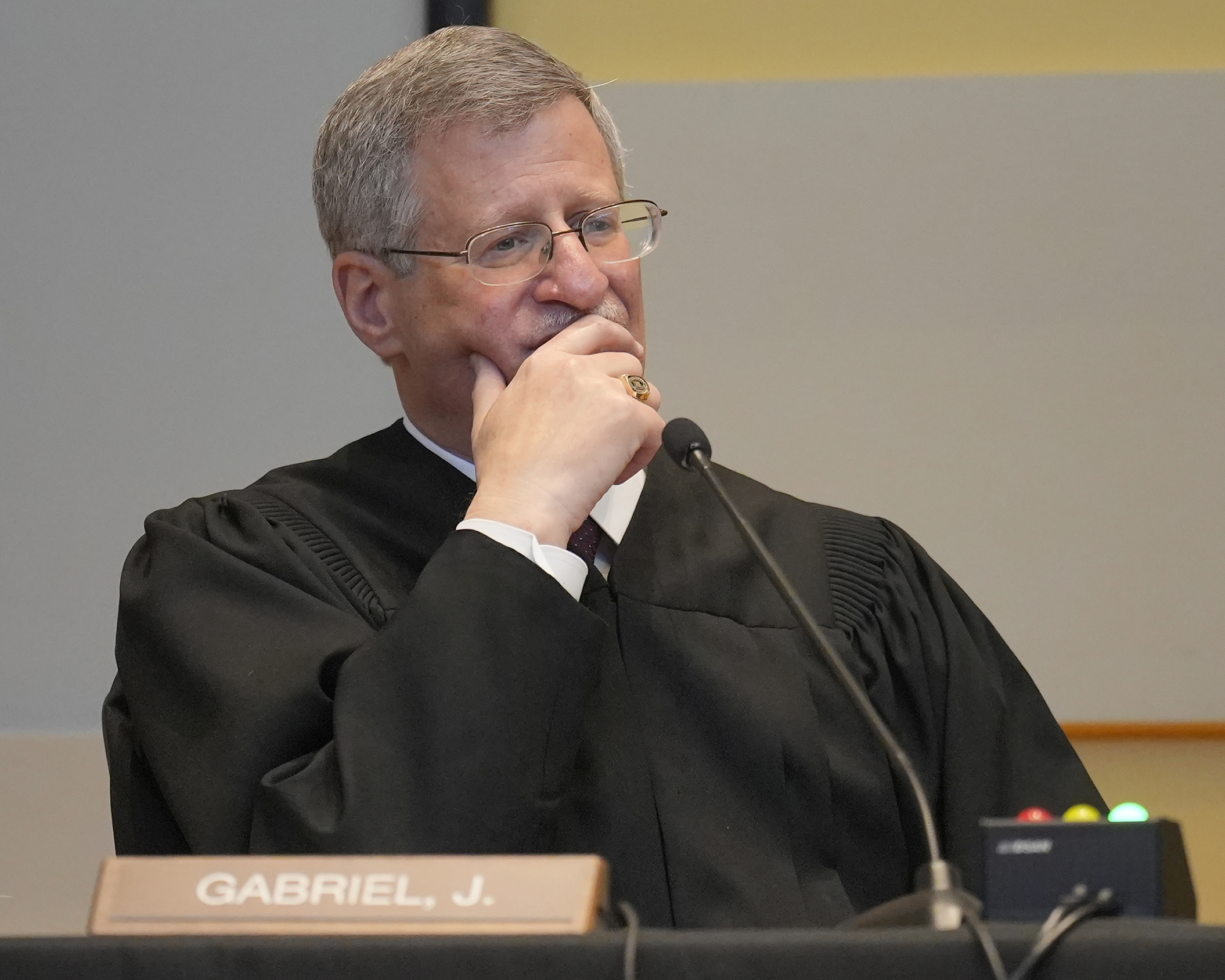
Justice Richard Gabriel asked whether police were acting on a hunch by requesting the Google data, instead of doing an actual exploratory search.
“How is that probable cause? It feels like ‘I’ve got no other leads let’s try this,’” said Gabriel.
Others were worried about the effects these broad searches would have on people’s private lives, wondering if sensitive words, such as alcoholism, mosque or prostitution, would come up.
The case is generating significant interest in the legal world.
Kirk McGill, a Denver attorney with Hall Estill who specializes in constitutional law, told The Denver Gazette that, ultimately, the central question delves into the balance between privacy rights and catching lawbreakers.
“There is no argument that the information police obtained from Google was critical to breaking the case,” he said. “But because the warrant sought information about every person who searched for the keywords at issue, there is a strong argument that it constitutes the kind of General Warrants abused by the British Crown and are barred by our Constitution. Conversely, the prosecution seeks to establish that the warrant was sufficiently narrowly tailored to pass constitutional scrutiny.”
He added: “Stuck in the middle are all the law-abiding citizens whose personal information was swept up in the net. The critical legal and political question is the same one as our courts have struggled with since the founding of the Republic: How much privacy can law abiding citizens be required to give up to help catch lawbreakers?”
There is no deadline for a decision from the panel of justices, but they often render opinions within months after oral arguments are made.
Seymour is scheduled for a case management conference in Denver District Court on June 2. Bui, who is scheduled for his arraignment May 26, faces separate charges connected to being caught with nearly 100 suspected fentanyl-laced pills in June following a detainee’s overdose in Denver’s detention center.
Siebert, now 17, was sentenced to seven years in Colorado’s Youthful Offender System, part of the Department of Corrections, and an additional three years in the Division of Youth Services.
Denver Gazette reporters Dennis Huspeni and Julia Cardi contributed to this story.