







Kaiser Permanente reaches tentative agreement with union
The agreement means union workers will receive 21% wage increases over four years and a $23 an hour minimum by 2026
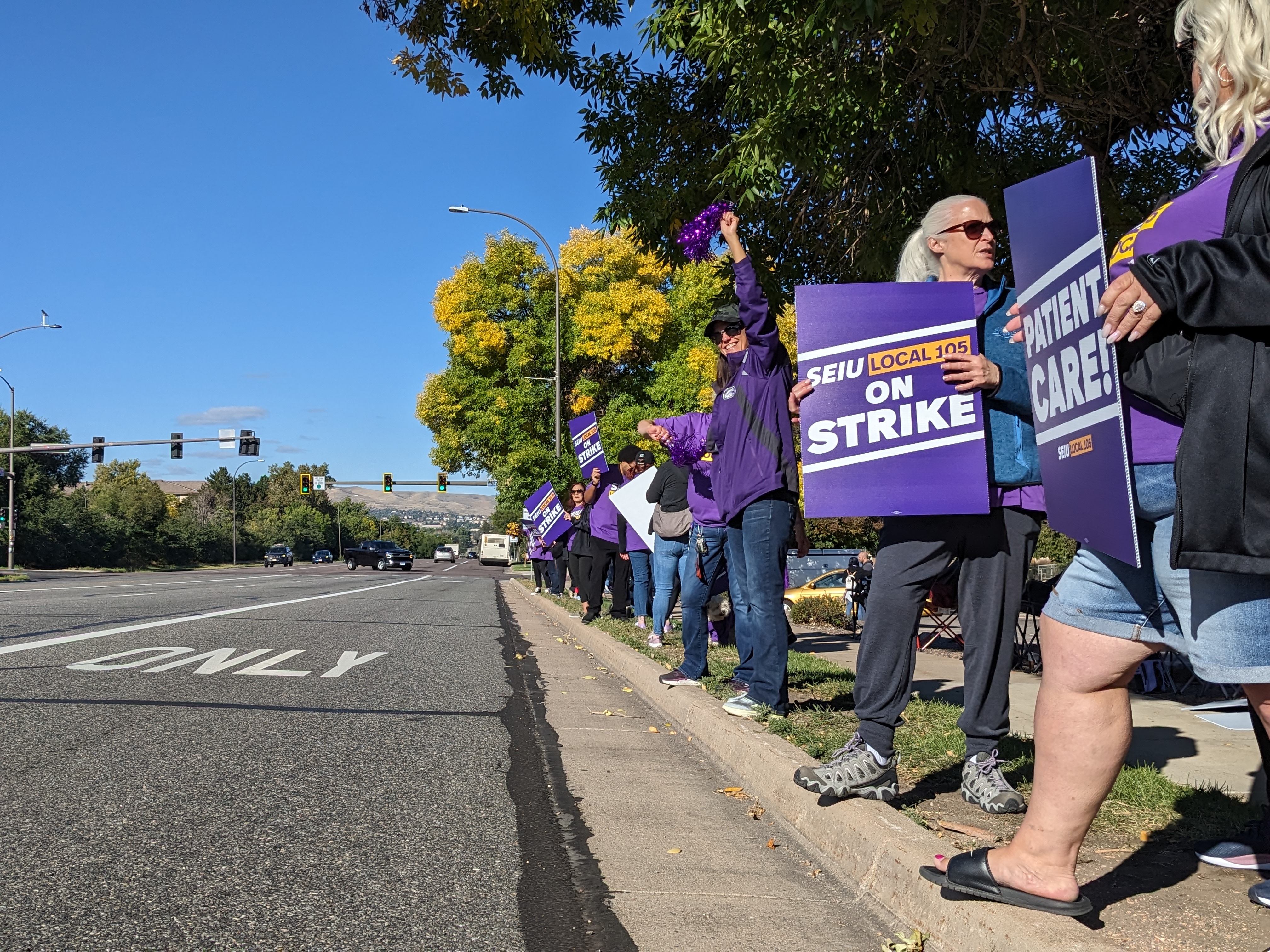
Kaiser Permanente has reached a tentative agreement with Service Employees International Union (SEIU) Local 105 and the 3,000 workers represented by the union in Colorado.
SEIU announced the agreement Friday, saying the negotiations include a wage increase, protections against outsourcing jobs and funding for education.
“This agreement is nothing short of historic,” Stephanie Felix-Sowy, president of SEIU Local 105, said in a press release.
“It’s a massive step in the right direction towards truly addressing the crisis in patient care and reducing wait times.”
Last week, workers in Colorado joined more than 70,000 Kaiser employees across the country in a three-day strike — the largest health care work stoppage in American history.
Kaiser’s contract with the union expired on Sept. 30.
The 3,000 union members in Colorado represent roughly half of the 6,800 Kaiser employees in the state.
The health system remained open during the strike.
“Now, they’ve won unprecedented raises and the protections and investment needed to begin safely staffing these facilities for quality patient care,” Felix-Sowy said.
Andrew Sorensen, a Kaiser spokesperson in Colorado, referred The Denver Gazette to the company’s statement, which credited Acting U.S. Secretary of Labor Julie Su for “her instrumental involvement in bringing negotiations to a close.”
Among the provisions in the agreement:
• A 21% wage increases over four years and a $23 an hour minimum by 2026.
• Increased medical benefits for retirees.
• Protections against outsourcing union jobs in Colorado.
“We fought and sacrificed for our patients, and together we won,” Patricia Johnson-Gibson, vice president of healthcare at SEIU Local 105, said in a statement.
Johnson-Gibson added: “We fought to keep health care workers from leaving Kaiser and to bring new folks in. We fought so patients don’t have to wait months for a simple procedure. We fought so we can do the work we love, provide the best care we possibly can, and not just survive, but actually thrive in Colorado.”
Kaiser employees in Colorado have characterized the need for the strike over what’s been called “unfair labor practices” and a staffing crisis that union members have said has led to months-long waits and delayed care.
The staffing crisis is not unique to Kaiser.
Colorado is expected to face a shortage of 54,000 lower wage health care workers and more than 10,000 registered nurses over the next three years.
To address this, Kaiser has committed to hiring 10,000 union-represented jobs nationally, an unknown number of which will be in Colorado.
The sticking point in the negotiations was pay with the union originally asking for an across-the-board 7% increase. Kaiser had offered a 3.5% increase for Colorado workers and a $21 minimum wage for employees next year.
Many of the frontline workers who joined the strike earn less than $25 an hour.
With 75,000 workers in five states and Washington D.C. having joined the picket line, the work stoppage has the distinction of being the largest in the nation, according to the U.S. Department of Labor.
The previous record was set in 2018 when 53,000 workers in California had a two-day strike, federal data shows.
SEIU last authorized — but did not employ — a strike in 2019.
Kaiser has reached agreements with the union for the past 26 years without a labor strike.
Kaiser Permanente operates 30 medical offices along the Front Range, including three in Colorado Springs, that serve more than 500,000 patients annually.
Unionized workers are expected to ratify the agreement next with an effective date of Oct. 1, according to Kaiser.