Advanced nuclear materials railcar nearing certification in Pueblo at MxV Rail

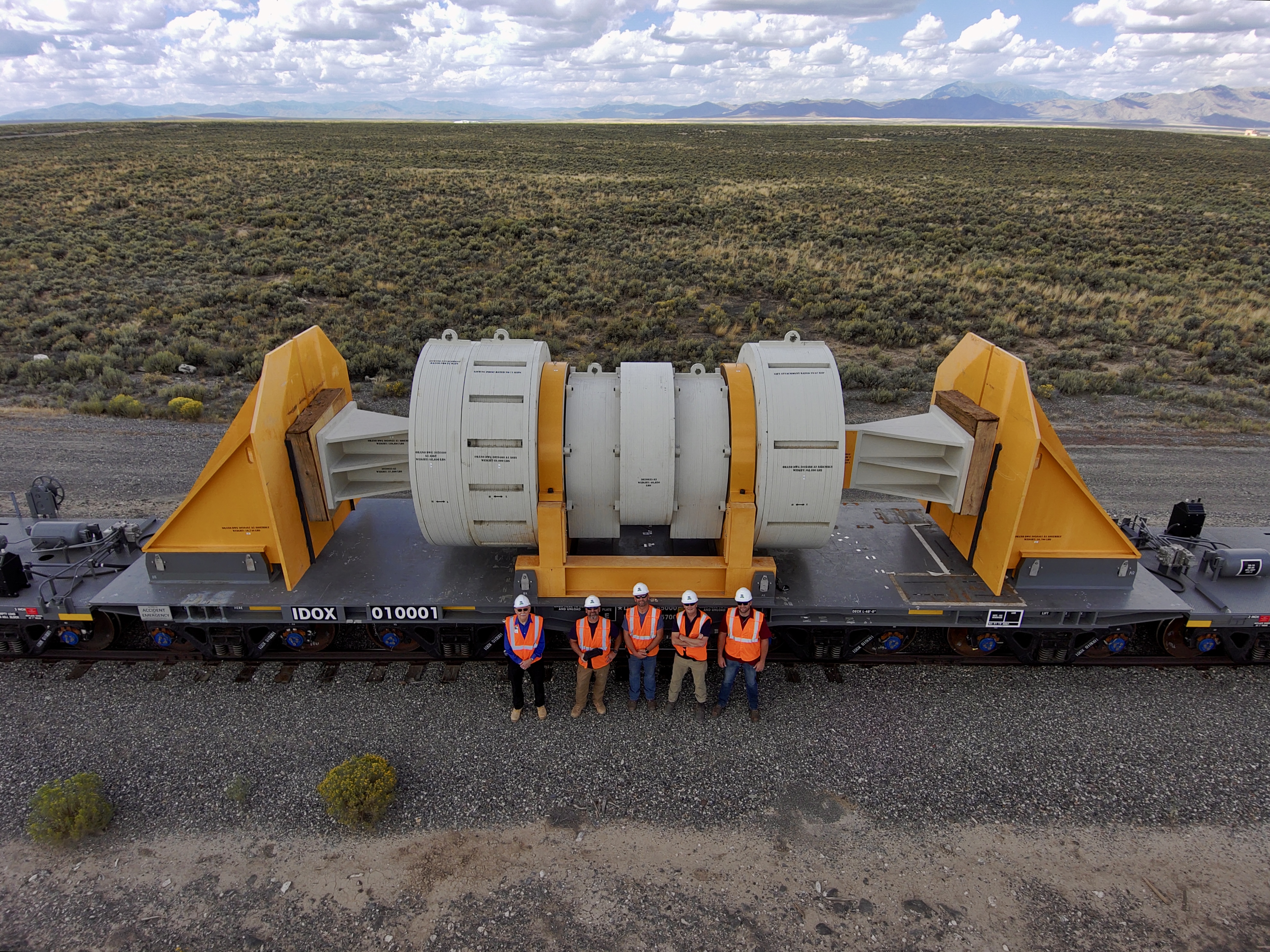
A new rail car designed to safely transport casks filled with spent nuclear fuel and high-level radioactive waste weighing as much as 240 tons is awaiting final certification at Pueblo’s MxV Rail testing and research facility, 12 miles east of the city.
Atlas is a 12-axle railcar designed specifically to transport large containers of spent nuclear fuel and high-level radioactive waste that meets the highest safety standards set by the Association of American Railroads, according to the U.S. Department of Energy.
“These special railcars are designed to carry the nation’s spent nuclear fuel,” according to the Department of Energy. “This is the same material that is currently stored in large dry casks at the nation’s nuclear power plants. The material would have to be moved out of the dry storage casks and into transportation casks before being loaded on top of the railcar.”
The Atlas rail car has been under development since 2015 by the U.S. Department of Energy, Kasgro Rail Corp. and MxV Rail. Engineering and testing took place at MxV Rail’s new research facility in the PuebloPlex industrial park, built on the site of the former Pueblo Chemical Depot about 10 miles east of Pueblo.
MxV Rail provides research, testing, and engineering support for the Association of American Railroads. The association, founded in 1934, is a railroad research, standard setting, technology, and policy consortium that focuses on safety and productivity in the rail industry. MxV Rail is privately funded by the association and others and is a wholly owned subsidiary of the association.
“Our team offers a full suite of advisory and research services including consulting, testing, research, maintaining standards, and training,” said Niki Toussaint, spokesperson for the company. “MxV Rail provided research and engineering consulting services, along with testing which utilized our test tracks and laboratory facilities. Certification tests involved both track-worthiness and structural tests. Crash testing was not required.”
The Department of Energy has been pursuing solutions to the safe transport of high-level nuclear materials including spent nuclear fuel rods. Originally commissioned by the U.S. Navy to provide safe transport options for nuclear materials from the U.S. fleet, the DOE expanded the program to prepare for the anticipated increase in spent fuel from commercial nuclear power reactors intended to help meet the nation’s decarbonization goals.
“MxV Rail supported the Department of Energy as a research and engineering consultant, including computer modeling performed by scientist Russell Walker,” Toussaint said.
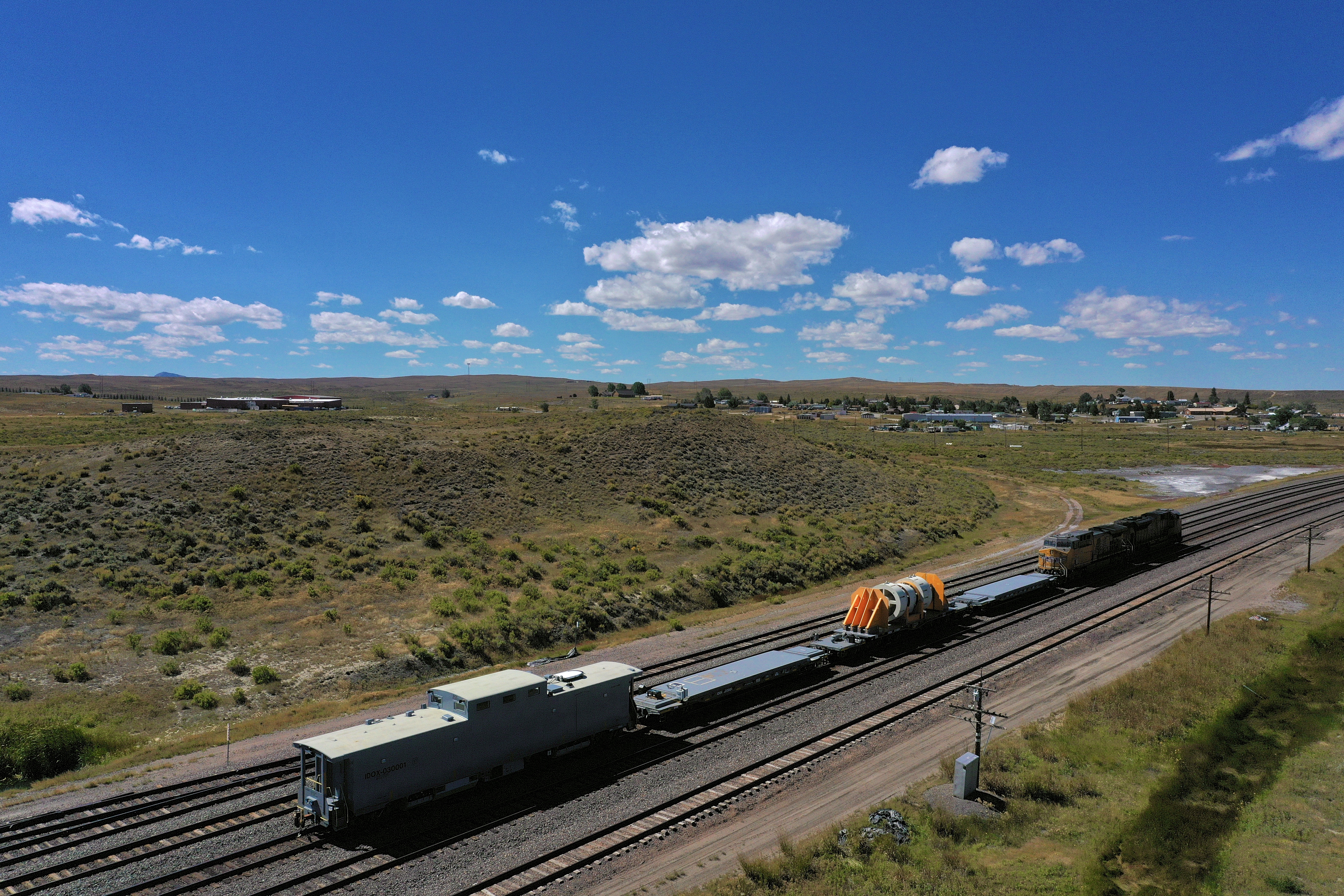
According to the DOE, transporting nuclear materials requires 24/7 monitoring and surveillance of their shipments by specially trained security personnel on board the transport train. The Atlas rail cars, with their cargo, will be guarded and monitored by personnel in a specialized rail escort vehicle that combines sophisticated systems monitoring and surveillance during transport including security details and equipment.
The final test was a round-trip made with a 480,000-pound non-radioactive test cask from the MxV facility to Scoville, Idaho. The train, drawn by two locomotives left Sept. 5 for the four-day trip over more than 1,680 miles, during which data was collected on the performance of the Atlas rail car, two buffer cars and the rail escort vehicle.
Interstate 25 near Pueblo fully reopened Thursday after the recent fatal coal train derailment that killed a trucker and spilled tons of coal after the train hit a damaged portion of rail, according to the National Transportation Safety Board.