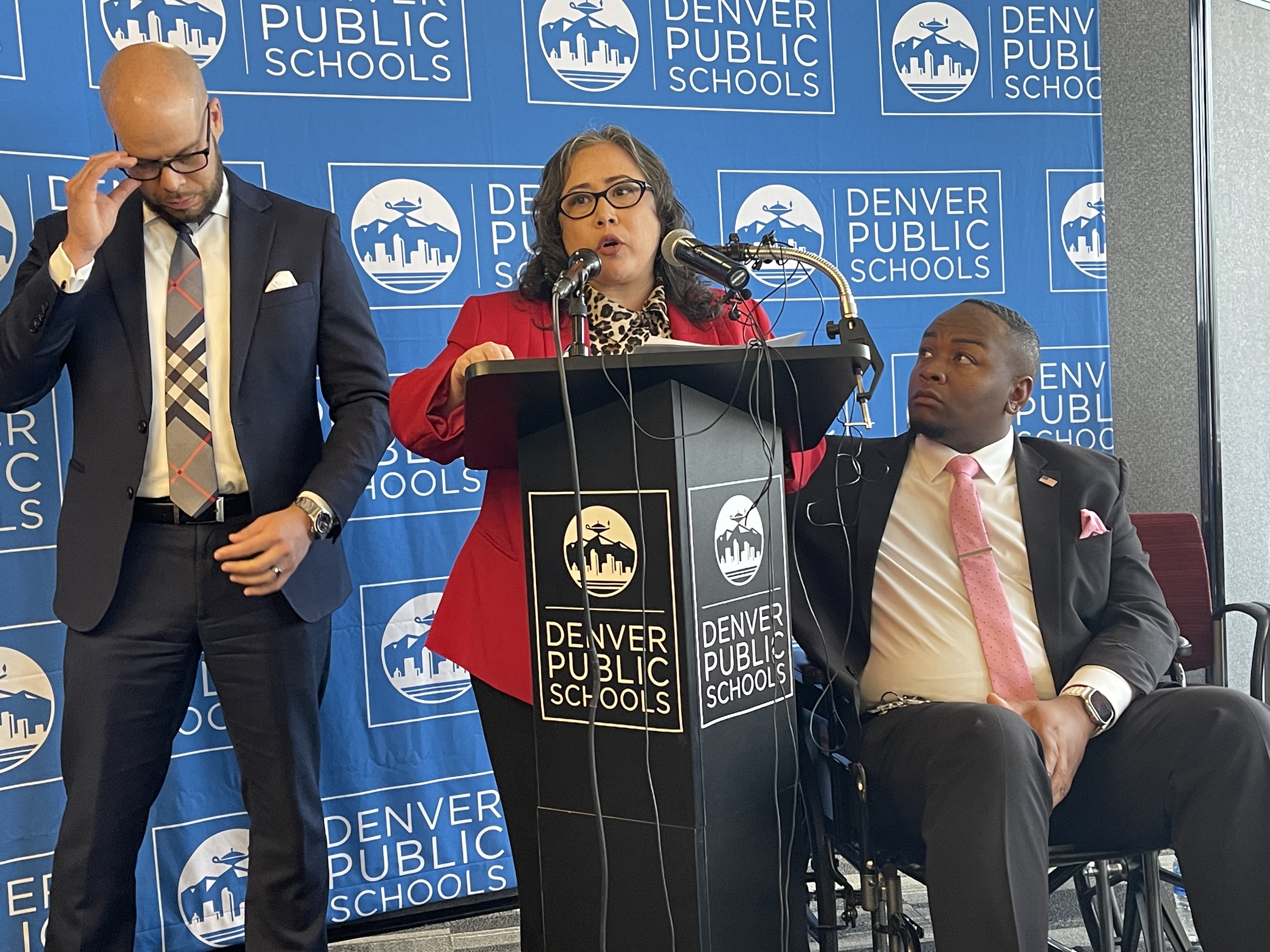
Denver Gazette appeals judge’s decision to let Denver Public Schools keep administrators’ discipline records secret
Denver District Court Judge Marie Avery Moses sided with DPS’s additional assertions that releasing the public documents would “create a substantial injury to the public”

Denver Public Schools does not want the public to see the discipline records of its administrators — conduct by principals and others that could range from the mundane to the egregious — because it says, and a judge has agreed, it could damage the public’s interest in ensuring a well-run school district.
Even though Denver District Court Judge Marie Avery Moses already determined that four years’ worth of discipline records sought by The Denver Gazette — from 2018 through 2021 — were public documents, she eventually sided with DPS’s additional assertions that releasing them would “create a substantial injury to the public.”
Avery Moses also prevented the disclosure of any discipline matters pertaining to sexual harassment, meaning parents would never know when an administrator — and by extension teachers — in a school where their child is a pupil was disciplined for that behavior.

The Denver Gazette a year ago sued DPS for access to the records — discipline matters impacting only administrators from assistant principals and higher — months after the school district initially approved and then denied their release.
Avery Moses’s ruling came in April — eight months after The Gazette sued — and lawyers for the newspaper are currently preparing its challenge to the Colorado Court of Appeals.
The Denver Gazette requested the discipline records following stories it published in early 2022 about a culture of pervasive sexual harassment that allegedly existed for years among Cherry Creek School District administrators, allegations that were levied by a former principal who later sued in federal court. The case is pending.
The Gazette’s appeal also comes on the heels of other DPS decisions to withhold information from the public, notably secret school board meetings where decisions about school safety were discussed. News organizations including The Denver Gazette sued and won.
“In multiple instances recently, DPS officials have shown us that they believe they can ignore the word ‘public’ in Denver Public Schools,” Gazette Executive Editor Vince Bzdek said. “This action aims to prevent DPS from covering up the misdeeds of public employees.”
In the pending lawsuit, DPS reasoned that giving the public a look at administrators’ misconduct — DPS sources have told The Denver Gazette that more than three dozen of them have been disciplined in those years for a variety of infractions — would traumatize the offenders, make it tougher for them to find another job, and make it more difficult for DPS to hire replacements knowing any discipline they might get could be made public.
DPS also said it would cause “reputational harm … to a school leader if discipline memos were released to the public because it could result in the loss of trust in the school leader by students, parents and the public,” according to Avery Moses’s decision that summarized the case.
The district said it had been a long-standing practice to handle disciplinary matters secretly and not allow for their public disclosure, and that administrators have relied on that.
Bzdek noted the lawsuit victory against DPS’s secret meetings “resulted in a more transparent process for decision making,” but that hiding discipline records goes too far.
“Bad laws shouldn’t be used to insulate our public schools from accountability to the public they are meant to serve,” he said. “Our chief goal is to stop DPS from hiding the discipline records of educators from parents who trust their kids to these schools.”
Months before the ruling against The Gazette, DPS in December released records that it had investigated former principal Kimberly Grayson in 2021 over allegations she had misspent more than $175,000 on school district credit cards. Grayson was principal of Dr. Martin Luther King Jr. Early College. The documents did not include any disciplinary matters but did show she kept her job and was even promoted.
It’s unclear if the records were part of the cache being withheld from The Denver Gazette.
Grayson resigned in August 2022 amid a different inquiry into allegations she racially discriminated and retaliated against some DPS employees.
First Amendment proponents say Avery Moses’ ruling overreaches by making an entire class of records — all discipline matters involving public school administrators rather than specific records considered on a case-by-case basis — protected from public disclosure.
Government records are generally deemed public unless a specific exemption in the law protects them. The Colorado Open Records Act allows for the government to argue a public interest exemption, a catch-all phrase that is to be construed narrowly for extraordinary and unique circumstances that are singular in nature which the General Assembly could not have anticipated.
It was a rare example of a government entity successfully preventing the release of otherwise public records by arguing it would cause substantial injury to the public interest to do so. In 2002, a Jefferson County district court prevented the release of graphic autopsy reports related to the Columbine High School shooting, saying it would inflict additional harm on the families of the dead to make them public.
“With all due respect, the ruling flies in the face of how the ‘catch-all exemption’ — applicable to public records that are not subject to any itemized statutory exception — is to be applied,” First Amendment lawyer Steven Zansberg said. “A long-standing practice of a school district to disregard the Open Records Act cannot be an ‘extraordinary and unique” set of circumstances … or one that justifies withholding records showing official misconduct by any public employee.”
In making its case, DPS teamed with the Denver School Leaders Association, a union that represents principals and other school administrators. That group said principals whose discipline records were made public would be treated unfairly because of a law that protects the release of performance evaluations for licensed educators.
The Colorado Licensed Personnel Performance Evaluation Act “specifically excludes ‘evaluation reports and all public records … used in preparing’ them, which would include discipline files,” according to a letter from attorney Joseph Goldhammer, who represents DSLA.
Also, Goldhammer said, administrators have a constitutional right to challenge any damaging information from a discipline record prior to being made public, which would be a needless drawn-out process.
“This will entail undue expense to the union and the public entity and will involve the public employee in unnecessary litigation, all contrary to the public interest,” Goldhammer wrote in the letter that was shared with the district court.
Avery Moses held that disclosing the discipline records “would create a substantial injury to the public by creating retention and recruitment problems and by chilling the ability of supervisors to coach and mentor school leaders.”
She added that The Gazette did not “narrow (its) request to serious disciplinary infractions which resulted in the suspension or termination of an employee, or to discipline records related to criminal conduct, substance use or mistreatment of children.
“While there may be an obvious public interest in disclosure of disciplinary records related to egregious conduct,” Avery Moses wrote, “there is no obvious public interest in disclosure of corrective action related to minor disciplinary matters such as failing to property secure an AV cart or failure to greet families at the front of the school at the start of each day.”
With regard to discipline stemming from sexual harassment, Avery Moses said “while there may be compelling reasons for … discipline memos concerns sexual harassment of school administrators to be subject to disclosure, that is a matter to be addressed with the General Assembly, not this Court.”
The Gazette argued that it sought final disciplinary decisions, not information about sexual complaints or ongoing investigations into them. Avery Moses held that the final decisions were no different than the complaints or investigations and should be protected from disclosure.
Zansberg said state law is clear: Public employees discipline is not exempt.
“To suggest that school administrators have a constitutionally protected ‘privacy interest’ in records discussing their official misconduct is to ignore well-settled precedents to the contrary,” he told The Gazette.
The Denver Gazette is represented by Rachael Johnson, an attorney with the Reporters Committee for Freedom of the Press, a Washington, D.C.-based non-profit.