







Denver City Council backs providing campsites for homeless
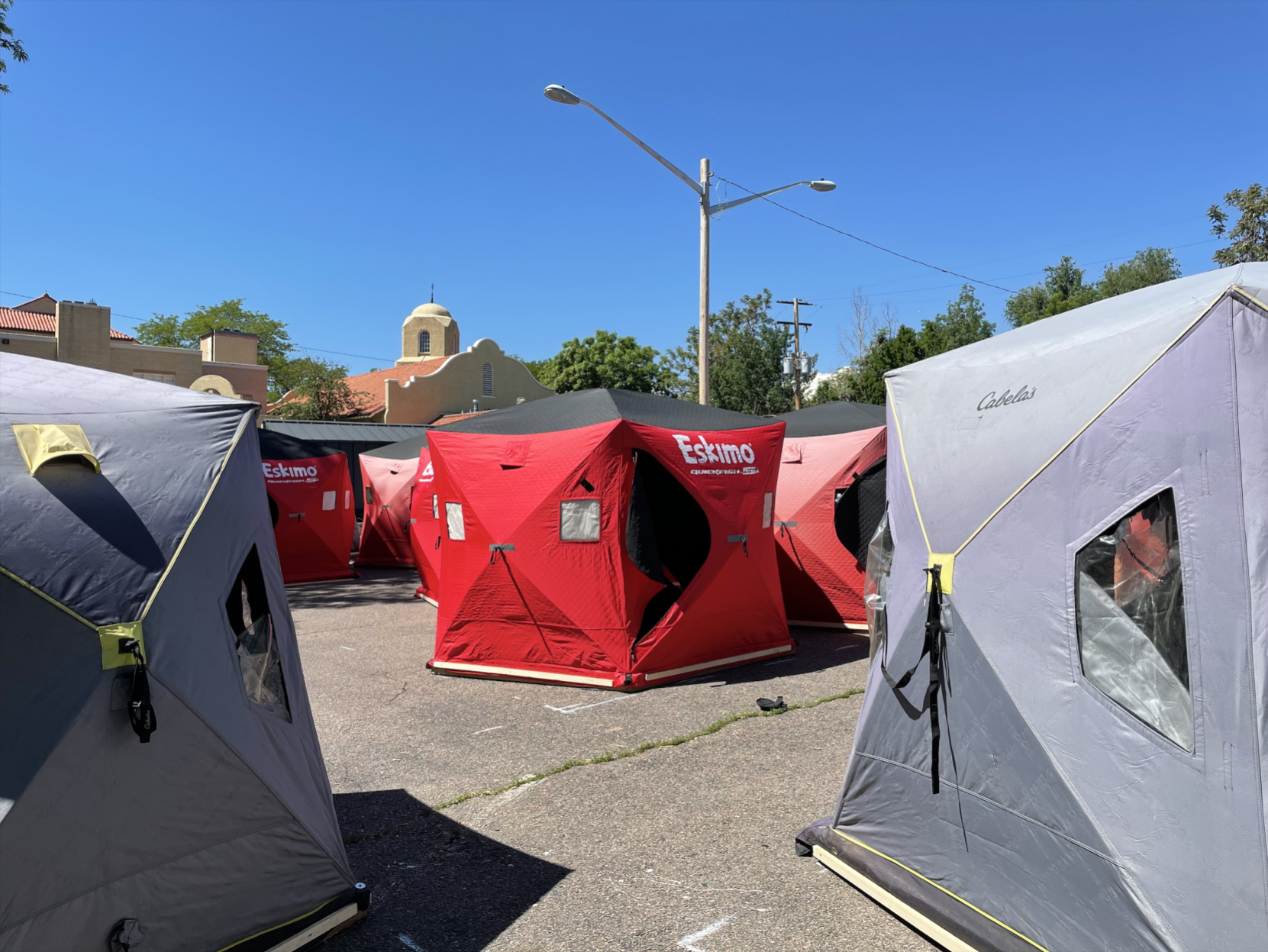
A bill to make a pandemic-era tool to provide homeless people with campsites a permanent — rather than temporary — policy earned the support of a majority of the Denver City Council on Monday.
The bill amends the portion of city code that permits temporary tiny home villages to also allow a “temporary managed community use” or managed campsites called “Safe Outdoor Spaces.”
“As somebody who has been homeless in my lifetime, every option has to be at the table,” Council President Jamie Torres said.
The lone dissenter on the council called the measure inequitable, particularly to people who may not be able to afford to challenge such camps.
Denver launched the program in 2020 in response to the COVID-19 pandemic, partnering with nonprofits to manage each location. Under the program, the camps are staffed 24/7 and offer sanitary facilities and other services. One site also provided parking space for people to sleep in their vehicles.
The goal is to provide homeless people with safe space and shelter.
Such camps have generated stiff opposition from some quarters, while others see them as a pragmatic and necessary response.
In Park Hill, neighbors sued the city in an attempt to prevent a Safe Outdoor Spaces site at Park Hill United Methodist Church, arguing the site would endanger children in the area.
The lawsuit, which was thrown out by a judge, citing lack of jurisdiction, claimed the campsite would create a nuisance and present a danger to the community.
The Denver Board of Zoning Appeals then narrowly rejected the effort to reverse the zoning permit for the managed homeless campsite. Three of the five board members voted to reverse the permit, but the action required a four-vote supermajority to pass.
Other critics said the encampments promote open drug use and overdoses, as well as crime, and the city’s approach hasn’t worked.
Colorado’s biggest cities — metro Denver, in particular — have struggled to address homelessness, even as state and local governments have poured significant resources into tackling the crisis.
A free-market think-thank said local governments and nonprofits are on track to spend nearly $2 billion over a three-year period to tackle homelessness in some counties in the Denver metro area alone.
Indeed, metro Denver’s homeless population jumped by a quarter, adding nearly 1,400 between 2021 and 2022, federal data show.
Denver has allocated $254 million for homelessness this year alone.
The city has operated eight Safe Outdoor Spaces locations throughout Denver that provided shelter to more than 500 people. More than 180 of those individuals moved into more permanent housing, according to the city.
The sites were only slated to stay open through 2023 before the introduction of Ordinance 23-0412, co-sponsored by Councilmembers Robin Kniech and Chris Hinds. The bill received approval on Monday in a 12-1 vote.
Under the new code, Safe Outdoor Spaces can receive a zoning permit for up to four years. After using a location, the camps cannot return for the same amount of time that they had operated there. The bill eliminated a 30-unit maximum and instead bases capacity on the lot size and fire code.
The bill also added to the types of places the camps can move into, no longer restricting them to civic or public institutions, but also allowing them to be used on vacant corner lots of at least 5,000 square feet in size that abut a major road. They must be working in collaboration with a willing landowner to get a zoning permit.
Councilmember Amanda Sawyer, who voted against the proposal, called the proposal inequitable. Members of communities that are underprivileged or historically redlined communities will not be able to afford the cost of legally challenging sites that are approved near them, she said.
That means they will likely be more heavily concentrated near underserved communities, she said, calling it unfair.
Sawyer also raised concerns about using pandemic recovery funds set to run out in 2026 to fund the sites, saying, “We are going to see a cliff effect here.”
The city is investing too heavily in temporary solutions and should be more concentrated on long-term fixes, along with addressing housing, she said.
“This is not good enough,” she said.
Supporters said the spaces offer a practical and cheaper solution to the city’s homeless crisis.
Many of the people who sought shelter at Denver’s Safe Outdoor Spaces could not stay at traditional shelters, such as couples, Kniech said. The tents are also able to serve people with disabilities and act as an accessible shelter space, she said.
The managed camps are an interim solution within the long-term goal of helping people into housing, she said, adding they are aimed at addressing the unsheltered population.
She said the bill represents many things for Denver, including that politicians can change their stances, that the city’s approach to addressing homelessness has transformed in the past 12 years and that Denver is willing to try new or innovative solutions.
Some elected officials in Denver initially opposed Safe Outdoor Spaces and later changed their minds, Kniech said.
Homelessness cannot be solved with one fell swoop and will require a series of steps like the Safe Outdoor Spaces, she said.
“The short story is it was piloted during the pandemic, and it proved successful,” Kniech said.
The first two launched in Hinds’ District 10, with one of them filling to capacity within two hours of opening, he said, adding that demonstrated the need for Safe Outdoor Spaces.
That the sites combine 24/7 staffing with sanitary facilities and supportive services has had a “transformational impact” on the people who find shelter there, as well as people living in nearby residential areas, he said.
He emphasized that only the facilities are becoming a permanent resource in the city, and that the people staying at the campsites will not be staying permanently.
They are also cheaper than homeless people relying on emergency and public safety services, he added.
