







GUEST COLUMN: Winning the battle against homelessness
We’re often told that homelessness is a hopelessly complex, unwinnable challenge, and that we have to manage it, not fix it. The reality is that local governments, such as Douglas County, are finding creative, comprehensive solutions that compassionately face the needs of the homeless while respecting the real concerns of families, businesses and local neighborhoods.
Our win-win solution focuses on 4Cs: compassion, community services, communication and code enforcement.
It’s working.
Today, Douglas County is one of only two counties in Colorado that have reduced homelessness over the last year, and our “point in time” count of unsheltered homeless is by far the lowest of any large county in the Denver metro area.
The foundation of our approach is compassion. We recognize that it is not a crime to be homeless, and there are a wide range of underlying reasons why people experience homelessness.
The key to our compassionate approach is our successful Homeless Engagement and Assistance Resource Teams (HEART), who respond with law enforcement. We also have a dedicated phone line answered by a live person for any citizen to call when they encounter someone homeless and summon our HEART teams.
These highly trained men and women know our homeless by name and are continuing to build relationships to serve those in need.
It’s compassionate to offer an array of community services directly to our homeless population, treating these men and women not as a problem, but individual people in need of help and hope.
Approximately one in five of the homeless our HEART teams encounter are open to accepting these services. That 20 percent gain access to services for substance abuse, mental health, job counseling or legal assistance.
Unfortunately, many of the 80 percent who refuse the offer of services are creating a public safety hazard in our roadways, destroying public spaces including parks and sidewalks, causing businesses to shut down or avoid opening. These are the people who are actively committing crimes such as public intoxication, littering, vandalism, and harassment.
This is why we pair our HEART teams with sheriff’s deputies. If we can convince a person to accept services, they will receive the services they need. But if there is a crime committed or an unsafe situation that must be addressed, our law enforcement professionals handle it.
We link compassion and the offer of community services with clear communication about what is unacceptable in Douglas County.
We have virtually eliminated panhandling in Douglas County by communicating through a “Handouts Don’t Help” public awareness campaign not to give money out at intersections, but instead to our Douglas County Community Foundation — which in turn helps support proven services for our homeless population.
Douglas County also insists on Code Enforcement to eliminate the blight and public health issues associated with homeless encampments. Our county-wide camping ban has helped improve our public spaces, including parks, sidewalks and underpasses, which are not the right places to receive services.
The news has spread in the homeless community that Douglas County is not a place where homeless encampments are tolerated, and we now have virtually zero.
Our multi-faceted, reality-based strategy unites compassion, community services and clear communication. We are laser focused on helping our homeless population while defending rights of our citizens and protecting Douglas County’s top-notch quality of life. It’s a strategy that can be replicated by other municipalities and counties.
Working together, through ongoing collaboration with our partners in the Denver Metro Area and the rest of the state, we can reduce homelessness statewide to functional zero.
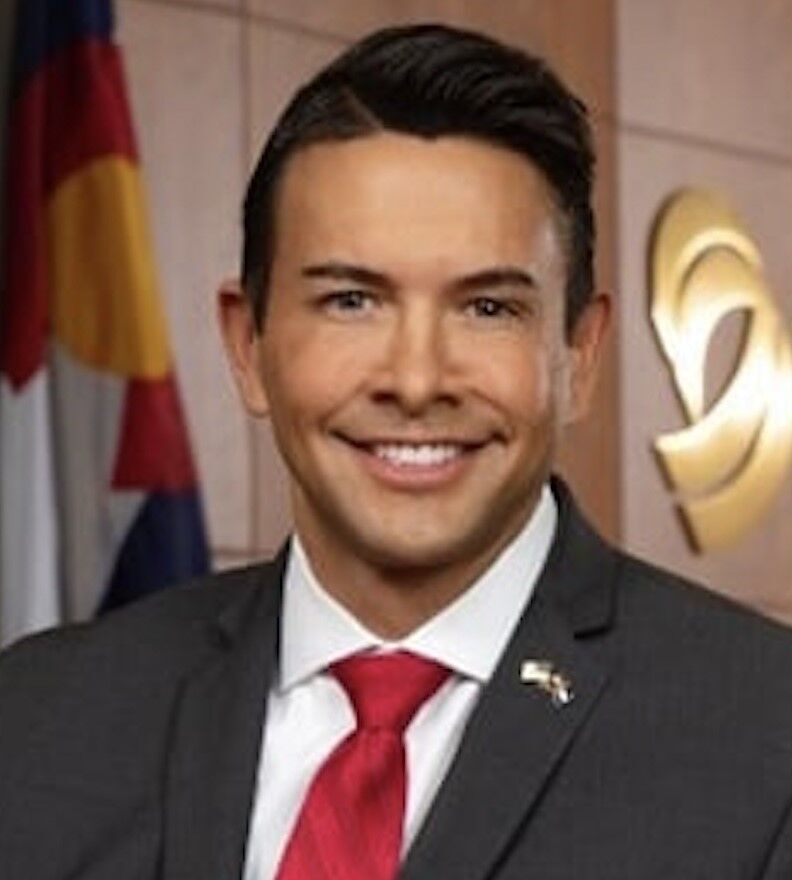
Abe Laydon was elected to the Douglas County Board of County Commissioners in 2018 and reelected in 2022.
