







COLUMN: Coloradans should care about Ukraine | Jimmy Sengenberger
After decades of war, Americans seem almost universally tired of expending blood and treasure overseas, fighting others’ battles. Count me among them.
It may be tempting, therefore, to overlook Russia’s full-scale invasion of Ukraine. Here at home, we’re suffering the highest inflation in 40 years, skyrocketing crime, a faltering education system and the plaguing coronavirus.
The temptation to turn inward – to ignore the videos of children screaming as Russian missiles strike nearby – is understandable. Yet we must not give in. Even as most of us rightly oppose American military action, Coloradans should care about what’s happening in Ukraine.
As district attorney John Kellner – an Afghan War veteran and Colorado attorney general candidate – tweeted Wednesday, “You may not know anyone there, and it may be tempting to ignore. But I hope you don’t. We should all recognize Putin’s unprovoked aggression for what it is: a reprehensible crime.”
Russia has attacked and invaded a sovereign nation – to expand its borders. No benevolence exists in such a brazen action.
Russian President Vladimir Putin insists his “special military operation” could have been avoided if Ukraine agreed not to join NATO and to recognize Russian sovereignty over Crimea, a part of the country Russia seized in 2014. That was a lie.
As Russian government-backed wire service TASS put it, Putin’s objective is to “demilitarize Ukraine and denationalize it. Russia’s president called on Ukraine’s military officers to disobey the illegitimate and criminal orders and to put their arms down.”
Let’s be clear: “Demilitarize” means Ukraine forgoes its security outright. “Denationalize” means Ukraine submits to Russian rule – and permanently vanishes from the map. It’s obvious what Putin’s real intentions are – and they go beyond one country.
From 1981 to 1995, Keith Nobles was a military intelligence contractor. Having worked in the last decade of the Cold War, he deeply understands the dynamics of Russia and Eastern European conflicts.
“Putin views his model to be Peter the Great. He wants to reassemble the Tsarist (Russian) empire,” Nobles told me on KNUS radio Monday. Since Russia has viewed Ukraine as part of Russia for centuries, “Ukraine is a critical piece of that in his mind.”
You don’t need to be a Russia hawk to worry. If Putin succeeds, it will become much more difficult to logistically defend other Eastern European nations from Russian aggression.
The likelihood of a future war between the U.S. and NATO allies against Russia may grow. Ukraine is just the beginning. NATO members Estonia, Latvia, Lithuania and Poland know. That’s why they invoked Article 4 of the alliance charter, calling on allies to bolster their territorial integrity.
Putin’s broader strategy is to create “asymmetrical situations.” As Nobles explains, “Putin is saying, ‘I am willing to expend this much blood and treasure to acquire to the Ukraine. I am betting YOU (U.S., NATO) are not willing to expend blood and treasure sufficient to keep me from doing it.’”
A veteran of the Soviet KGB who works at the direction of Russia’s wealthy oligarchs, Putin understands his country is far weaker than the U.S. and NATO nations, both militarily and economically. “But by creating asymmetrical situations in which (we) are unwilling to expend the blood and treasure to stop him, he can continue his advance,” Nobles added.
Meanwhile, America’s greatest adversary – the Chinese Communist Party – is watching closely. China and Russia are collaborating in a short-term alliance of convenience. Putin has met with China’s Xi Jinping several times; both countries have held joint military drills.
China’s declared intent is to absorb Taiwan, which the U.S. has pledged to support. In 2020, the CCP revoked Hong Kong’s autonomy decades earlier than promised. Preoccupied with the pandemic, Western nations hardly batted an eye. If the West blinks over Ukraine now, it will almost certainly embolden China’s aggression toward Taiwan.
Identifying these concerns – and the obvious humanitarian tragedy for innocent Ukrainians – American allies from the United Kingdom to South Korea have joined the U.S. in slapping stiff financial sanctions on Russian businesses and oligarchs. A unified front among many countries is critical; however, calling out Russia’s aggression and holding them accountable does NOT equate to supporting another American war.
Is it too little, too late? Last year, President Biden canceled U.S. arms to Ukraine – only to try to get as many arms there as possible in the past two weeks. Coupled with other Trump-era rollbacks, these policies encouraged Putin’s advance. “Our big power was in preventing this,” Nobles said. “Putin is not the boss here; the oligarchs are. The goal was to get the oligarchs to get cold feet. It looks like we haven’t succeeded at that.”
With options limited, the U.S. and our allies must follow through on sanctions and continue sending military support to Ukraine. Russia may escalate further, potentially resulting in even higher energy and food prices, crippling cyberattacks and/or financial market disruptions. The world must brace for more strife.
What the West does now to counter Putin’s aggression will send a flashing green or red light to both Russia and China. We must heed Ronald Reagan’s admonition: “There is no security, no safety, in the appeasement of evil.”
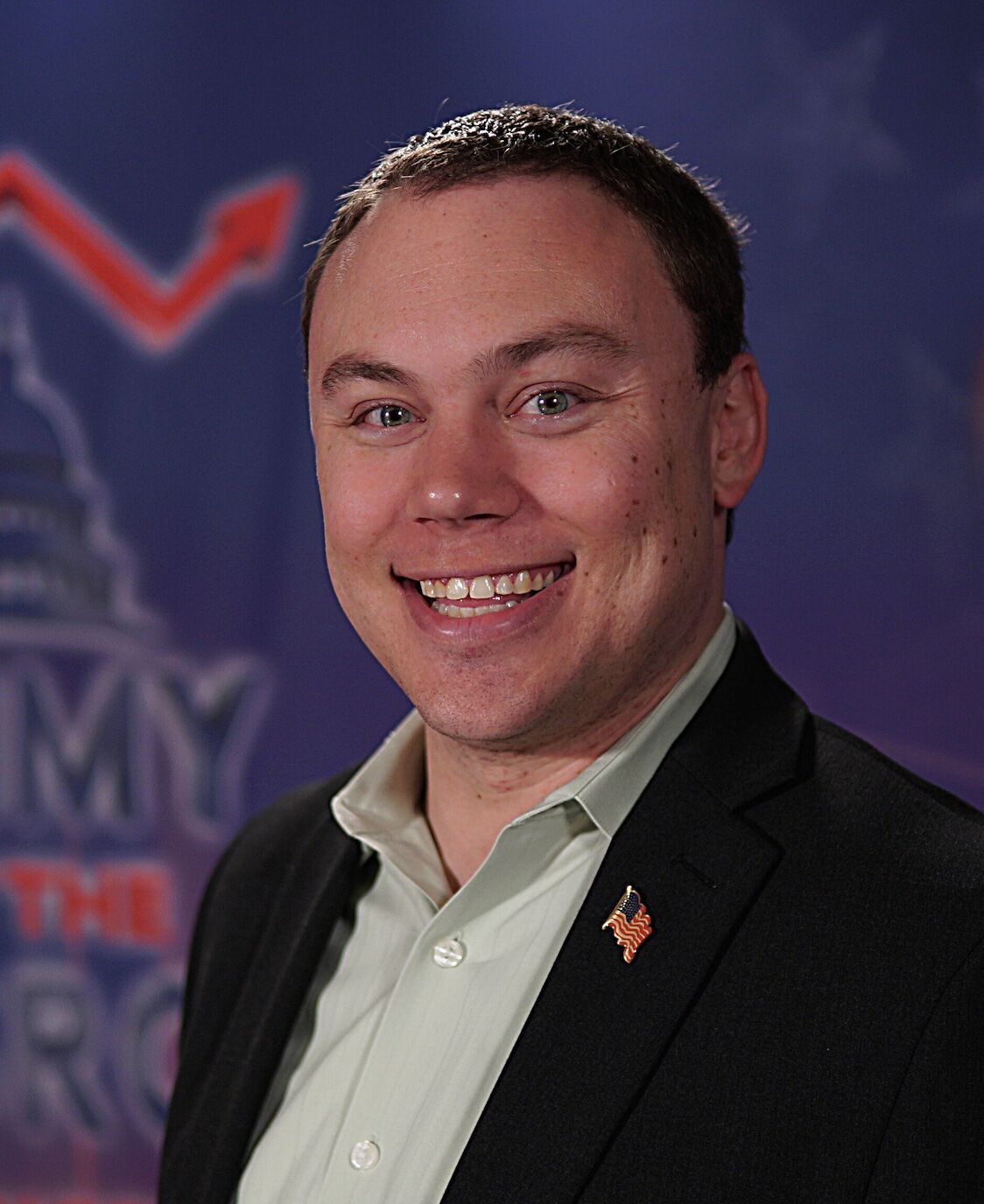
Jimmy Sengenberger is host of “The Jimmy Sengenberger Show” Saturdays from 6-9am on News/Talk 710 KNUS. He also hosts “Jimmy at the Crossroads,” a webshow and podcast in partnership with The Washington Examiner.
