







EDITORIAL: Axon cameras will aid Denver’s crime fight
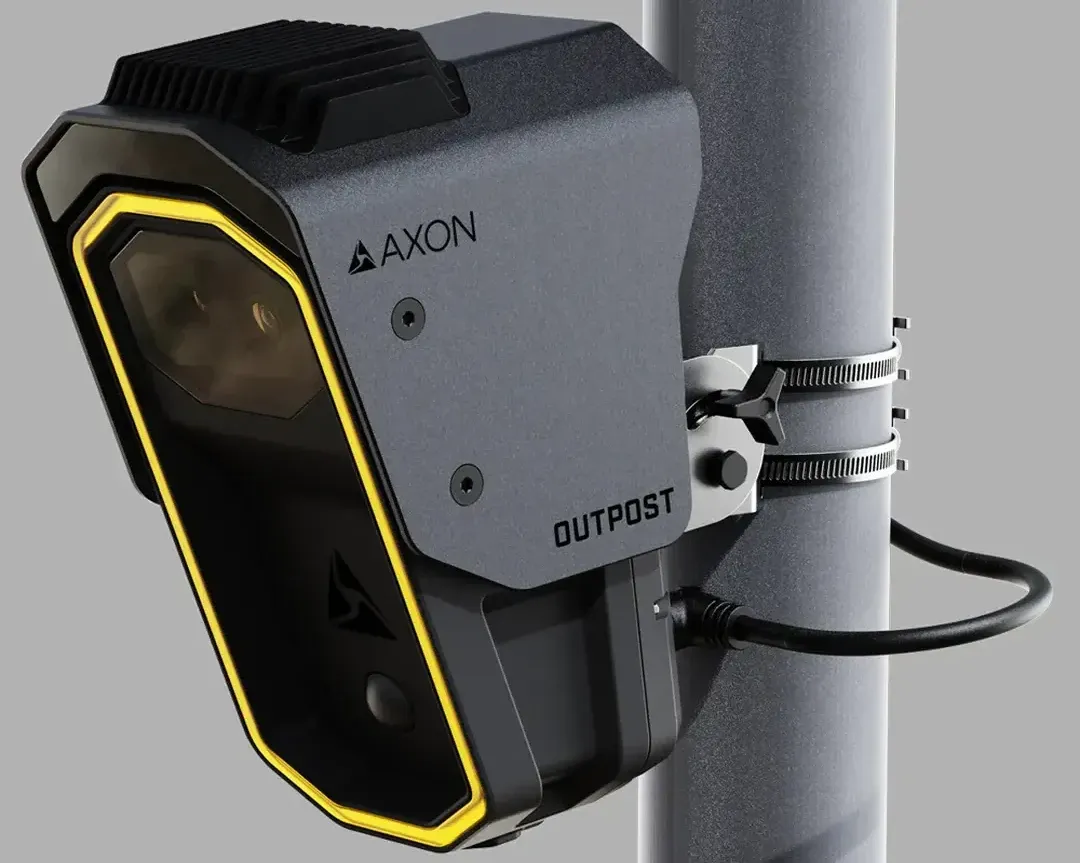
The Denver City Council has been debating whether to adopt new license-plate reading cameras, along with the necessary hardware, after ending a contract with former vendor Flock.
It was an astonishingly close call until Tuesday night, when a 7-6 majority voted to approve a contract with Axon for 50 cameras.
Talk about a no-brainer. Like Flock, Axon’s surveillance technology is a breakthrough method of helping to nab lawbreakers — from auto thieves to those using stolen cars to commit other crimes.
The council majority deserves kudos here. After months of handwringing over whether to move forward, they’ve approved a year-long contract with Axon. Denver will keep pace with many jurisdictions that use this technology, from Democrat-led Arapahoe County to Republican-run Douglas County.
It was just last fall when Aurora police announced they had arrested a Honduran national on charges of attempted first-degree murder, first-degree assault, menacing and illegal discharge of a firearm. The charges stemmed from a shooting on I-225 as the suspect, Celin Villeda Orellana, was about to flee the U.S. Orellana, as it turned out, was previously deported from the US three times.
The key to tracking down Orellana? A Flock camera.
Denver’s 12-month Flock pilot similarly resulted in a huge drop in auto thefts from more than 12,000 in 2023 to 8,550. Nearly 300 arrests were made, with 170 vehicles and 29 firearms recovered.
The high-tech camera systems use cutting-edge artificial intelligence to scan vehicles’ license plates and other characteristics. That data is then sent via cell network to central servers and cross-checked against the National Crime Information Center and law enforcement watchlists of stolen vehicles or vehicles of interest in connection with other crimes.
It’s a slam dunk for public safety. Law enforcement experts emphasize that stolen cars are routinely used to commit other, often serious crimes — including robbery, drug offenses and worse.
While reasonable privacy concerns are likely to accompany any new surveillance technology, privacy seems like a mere pretext for the soft-on-crime crowd that has contributed most of the hysteria in opposition to the cameras.
They’d rather stir the pot with claims of, “We’re being watched!” than admit they simply begrudge law enforcement another effective tool for busting lawbreakers.
It’s the same “justice reform” mindset that weakened criminal penalties and held back law enforcement at Denver City Hall as well as the State Capitol.
To his credit, Mayor Mike Johnston has consistently advocated high-tech camera systems. On KOA radio last week, he noted that every American city with a population over 500,000 — including all 25 of the nation’s safest cities — has a license plate reader camera system. He pointed to two of the nation’s most progressive cities, New York and San Francisco, both of which use similar systems.
Should Denver police really have to write a license plate down on a notepad and drive around looking for it — in the Digital Age?
“That is just not a modern technology way of trying to solve crime,” Johnston said. “And it will result in people knowing, as long as you steal cars in Denver — you’ll see crime go up.”
If law enforcement is denied a practical way to track down leads using the latest technology, it’s the city’s residents who will pay the price for all kinds of crimes.
Fortunately, thanks to Johnston and a foresighted council majority, Denver residents won’t be left behind.