







Denver police writing speeding tickets again as traffic deaths climb under Vision Zero
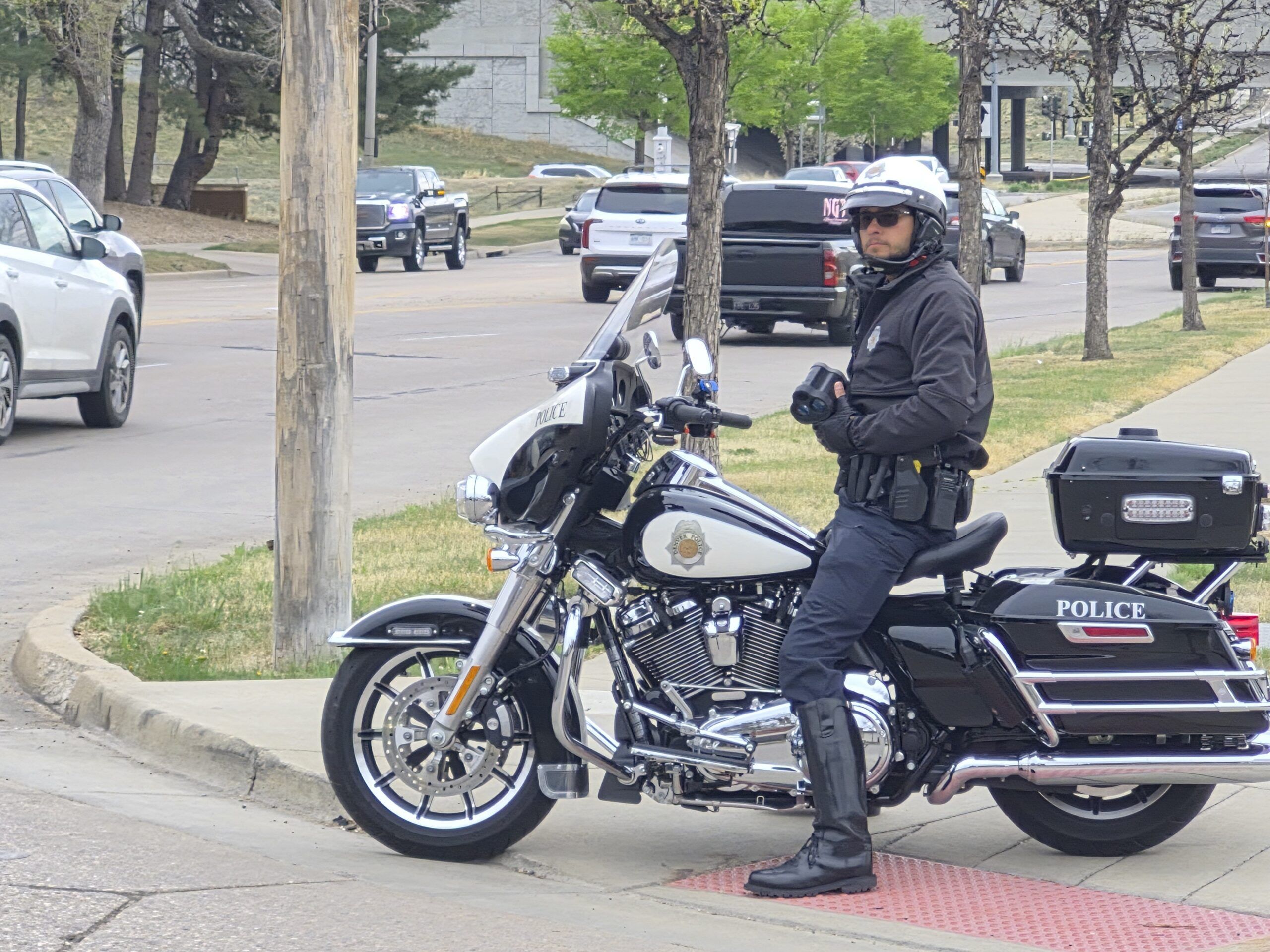
There’s a memo out to anyone grown accustomed to running red lights or cruising the freeway at 20 miles per hour over the posted limit.
They’re back.
Denver police officers are writing traffic tickets again, and for some road stretches, the city is prepping fixed cameras to capture speeders in the act.
Court records provided to The Denver Gazette show that since the first of the year, drivers are being handed citations at a faster clip — up 121% over the early months of 2025.
Police issued some 13,998 tickets through mid-March of 2026, compared to 6,346 tickets over a similar span of the year before. The totals are in addition to photo radar and parking tickets.
The pronounced hike follows a sizable drop-off in enforcement that Denver and other major cities experienced after the COVID-19 pandemic arrived.
In Denver, that decline had persisted all the way through last year.
A decade ago, Denver drivers running just 8 or 9 miles per hour over a posted limit could reasonably worry about being pulled over, cited for a fine and accruing points on their license.
That changed drastically in 2020. The pandemic’s government-imposed shutdowns pulled drivers from the roads, while police departments here and elsewhere worried about officers being exposed to the virus during traffic stops.
The drop-off in enforcement is readily evident in citation numbers obtained by The Denver Gazette: Denver officers were writing around 70,000 traffic tickets a year coming into the pandemic, hitting a peak of 81,990 tickets in 2017. In 2018 officers wrote almost 8,800 citations in August alone, according to Denver County Court records.
Drop in citations
Citations dropped to around 48,000 in 2020 — when COVID-19 took hold and governments shuttered businesses and events and limited gatherings — and remained there in 2021.
Meanwhile, as many drivers left their cars parked, those still on the road saw a pickup in driving behaviors that might have seemed unimaginable in previous decades — more laxity in stopping for yellow and early-red lights, tailgating, aggressive driving, and racecar speeds on the freeways.
That phenomenon was confirmed nationally by numerous sources, including the National Highway Transportation Safety Administration, which reported a change in driving behaviors, evidenced by an increase in fatal crashes due to speeding, impaired driving and lack of seat belt use.

As the pandemic waned, drivers returned to the roads. However, citation records in Denver show that, in large part, traffic officers did not.
In 2022, with the pandemic in the rearview mirror, just over 30,000 tickets were issued. Totals dropped again to a decade-low of 29,983 in 2024, before climbing last year to 32,613 in 2025 — still less than 40% of the tickets Denver was writing eight years previous.
Coming into the year, police have stepped up enforcement. That coincides with a new tally of traffic fatalities that Denver posted last year — a record 93 deaths, 35 of them pedestrians.
Those fatalities have prompted a citywide debate as to whether Denver is winning or losing the battle to save lives, and whether infrastructure programs and policies adopted by the city — aimed at curbing deaths, their proponents say — have helped or hurt the effort.
‘Vision Zero’
At the heart of those recent traffic projects is Vision Zero, a Swedish program that Denver implemented in 2017 with the goal of cutting or ending traffic deaths and injuries. The effort is visible now in “road diets” planned or underway along major arterials, such as East Colfax Avenue undergoing a transformation to accommodate bus rapid transit lanes.
Meanwhile, smaller Vision Zero-type projects are reshaping neighborhood streets, where marked bikeways are being installed, along with traffic “calming” devices, such as roundabouts, bulb-outs and speed humps.
During the years while police enforcement wasn’t as robust, Vision Zero projects have gained momentum. Mayor Mike Johnston, under criticism from bike activists for the rising fatalities, has redoubled his support for those strategies.
In a statement to The Denver Gazette backing the ramp-up of police enforcement, the mayor’s press secretary, Jon Ewing, noted that “the city is also doubling down on proven solutions, like adding speed cameras at busy corridors, and will continue investing in infrastructure that makes Denver safer.”
The office added that Denver could have seen fewer fatalities last year, but that unseasonable warm weather brought more traffic out. The city’s online Vision Zero’s tracking dashboard shows that, amid record fatalities, the city saw fewer serious bodily injury crashes in 2025 than in any year since 2020.
But as fatalities set a record, the city and its Department of Transportation and Infrastructure — the agency implementing Vision Zero — have come under criticism from two directions, each criticizing the program’s implementation.
In January, a consortium of bicycle and transit advocates issued the mayor a “D” grade for transportation safety, specifically for traffic deaths and what it said was slower progress on the infrastructure projects.
On the other hand, neighborhood groups have been divided over DOTI’s projects, and some have successfully lobbied to scale them back, arguing the changes have redirected traffic from main thoroughfares to their roadways, while noting that traffic fatalities are up.
No substitute for police enforcement
Other critics, including former Denver traffic engineers who spoke with The Denver Gazette, charged that the entire Vision Zero program is misguided and that it is no substitute for active traffic enforcement by police.
Denver police officials acknowledged that citations dropped off with the pandemic, including from workload issues. However, a police spokesman emphasized that enforcement did not cease following the pandemic.
”Officers left the department at much higher rates during that time, and hiring was impacted somewhat by the economic downturn brought on by the pandemic,” the spokesman wrote The Denver Gazette.
Police said enforcement was also impacted “in response to the social justice movement following the murder of George Floyd in Minneapolis.” Floyd’s death in May 2020, following the shutdown, brought a national focus to police interactions with citizens and was widely attributed for slowed enforcement.
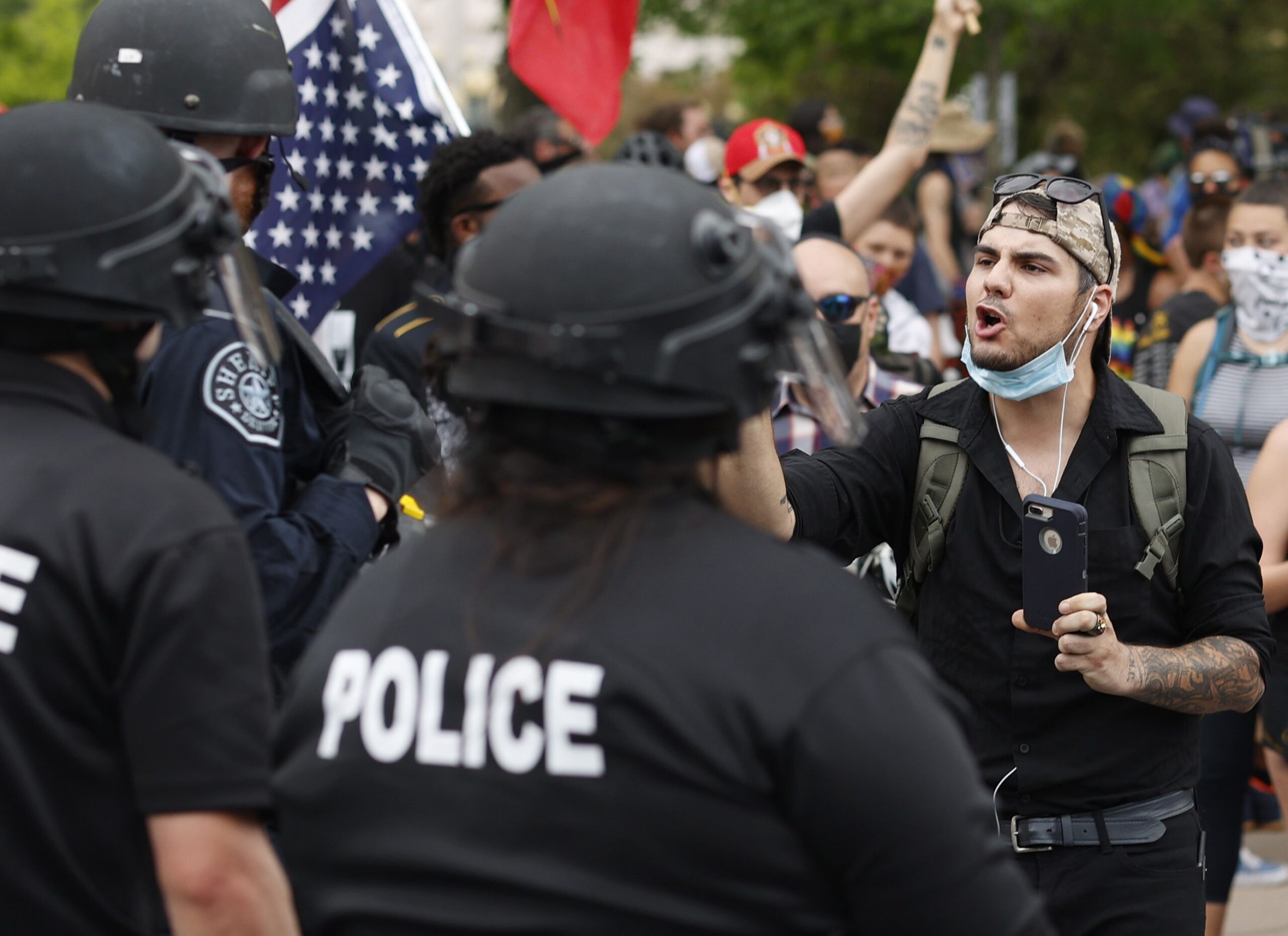
Police added that in addition to the loss of staff, the department reallocated officers to policing other crimes, which also spiked with the pandemic.
“The increases in overall crime required more officers responding to 911 calls,” the department said. Homicides in Denver, police noted, hit a 30-year high in 2021.
Today, drops in violent and property crime are allowing more focus on traffic safety, and officers are being reassigned to traffic patrol. New officer recruits, police said, are arriving at the highest numbers in recent years.
Several voices — police, DOTI, the bike and pedestrian lobbies — agree that speeding is a direct cause of crashes and deaths. The Vision Zero program has speed reduction as a central construct.
Others, such as a former Denver chief traffic engineer, told The Denver Gazette that the entire Vision Zero initiative is misguided and misapplied, and it could actually be contributing to the rising numbers of serious accidents, rather that reducing them, notably by failing to understand driver psychology and shoehorning a European concept into America’s roadways.
Motorcycle officer John Allred with Denver’s Traffic Operations Highway Unit, who chatted with The Denver Gazette as he punched his radar gun on South University Boulevard last week, corroborated that speed is an issue now.
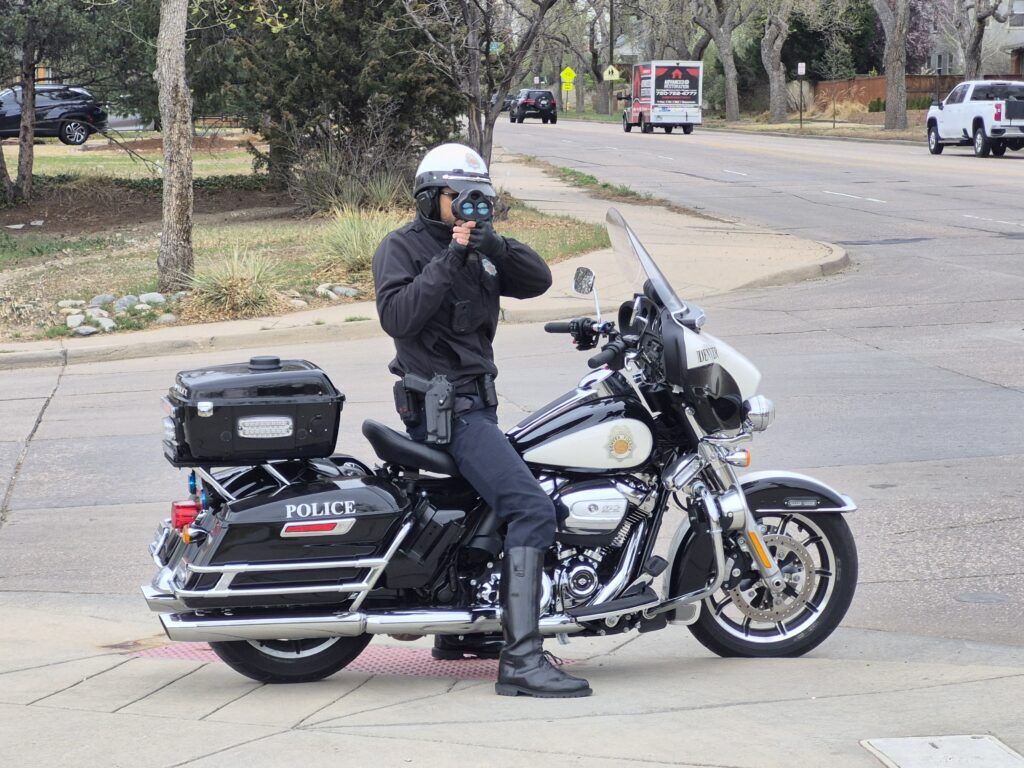
On city sections of freeway where limits are low compared to outlying areas, he recently ticketed a driver at 98 miles per hour. He added that he hears reports from other officers of episodes in excess of 100 miles per hour.
But parties differ greatly on what remedies will cut speeds.
“Our preference is for automated enforcement,” Jill Locantore, executive director of the Denver Streets Partnership, told The Denver Gazette. “We’d love to see them switch to fully automated, rather than sporadic, disjointed efforts.”
Speed cameras
Locantore’s organization was among numbers that carried out a ‘die-in’ in front of Denver’s city and county building last month, where demonstrators laid down to act out each of the 93 fatalities in 2025. The group repeatedly criticized the mayor for failing to carry out traffic-related campaign pledges.
The complaints included being tardy in installing automated speed cameras. Use of cameras had been limited under state law to situations with an active police presence, but a revised statute in 2023 removed that requirement.
Now, the Streets Partnership charged that Denver is failing to take advantage of that statutory change.
“Other cities around the state have been much quicker than Denver to use automated enforcement,” Locantore said.
Denver police have mobile speed cameras, but staff shortages post-pandemic had limited their use, police noted. The city also operates red-light cameras at four key intersections.
The city of Aurora launched mobile camera enforcement last November, issuing $40 citations, $80 in school zones. Thornton uses both mobile speed cameras and fixed red-light enforcement cameras. Greenwood Village has red-light cameras, according to city websites.
DOTI is now preparing to roll out fixed speed cameras in Denver on East Alameda Avenue and on Federal Boulevard, agency communications director Nancy Kuhn told The Denver Gazette. The agency is readying a presentation to the City Council in the coming weeks for final approval, she said.
“DOTI’s focus is to continue to deploy infrastructure improvements and safety treatments that effectively slow drivers down, reducing speeding, which is a major contributor to crashes,” Kuhn added in a written reply to queries.
As with photo radar vans operated by Denver police, citations resulting from fixed cameras would be treated as civil violations, leading to traffic fines but not to points added on a driver’s license, Kuhn said.
More difficult to drive
Two former chief traffic engineers for the City of Denver questioned the effectiveness of infrastructure programs, as opposed to active police enforcement.
“I was under (Mayor) Michael Hancock” said Brian L. Mitchell, who served as Denver’s City Traffic Engineer from 2007 to 2013. “Michael and I had a good relationship.
“What we were trying to do is not make it more difficult to drive a car, but to add alternate transportation,” Mitchell told The Denver Gazette. “Hancock wanted to give commuters choices, but he didn’t want to take away choices. We didn’t want to punish automobile traffic in doing so.”
Mitchell said he perceives a change in philosophy since his tenure and cites South Broadway as an example of how commuting has become more difficult.
“What they have done to Broadway is not helping traffic flow,” Mitchell said, recalling that the arterial had five vehicle lanes linking downtown to I-25.
“Now there are three lanes of through traffic, plus a bike lane and a floating parking lane, with (parking) meters still on the sidewalk,” he said.
Mitchell said he senses that such modifications have been made to accommodate the bicycle community. Designated bike routes, he noted, were already available along parallel side streets when the lanes were repurposed.
Dennis Royer, the city’s chief traffic engineer before Mitchell, condemned the cutback in enforcement that followed the pandemic. And he faulted changes made to the infrastructure for the rising fatality rate.
During his term as chief traffic engineer, Royer noted that Denver averaged 46 fatalities a year, with an average of 12 pedestrian and bike fatalities.
“The only thing that’s changed is Vision Zero,” Royer told The Denver Gazette.
The program’s road diets and other devices, Royer contended, fail to work either along arterials, where they interfere with the progression of traffic and force it onto sides streets, or in neighborhoods, where Denver’s grid system of stop signs already acts as a curb on speeding.
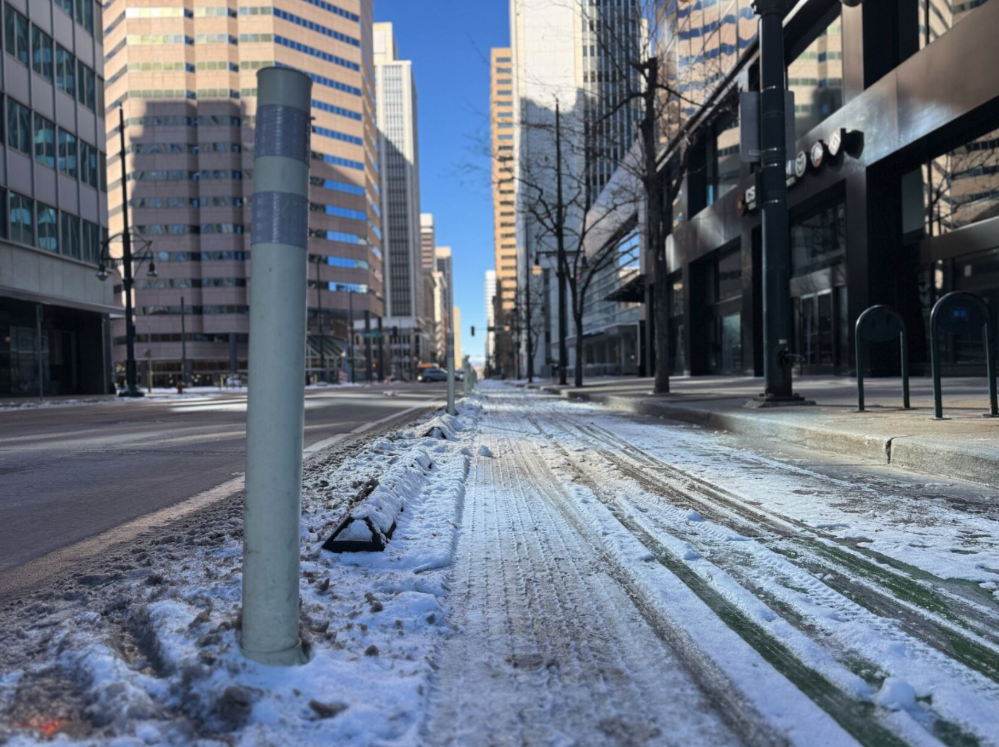
“Then you have these crazy bollards,” Royer added.
“If you could get progression back on the arterials, the number of street accidents would come down,” he said.
Police enforcement, he added, is absolutely essential.
“You need the police out there, announcing how many people they have ticketed. You have got to get back to voluntary compliance,” he said.
Catch 22
Mitchell, the former chief engineer, noted that a new generation of drivers may be poorly equipped to cope with the stepped-up enforcement.
“A lot of younger drivers grew up playing video games drive like Super Mario,” Mitchell noted. “Whatever maneuvers they have to make — they treat like a video game.”
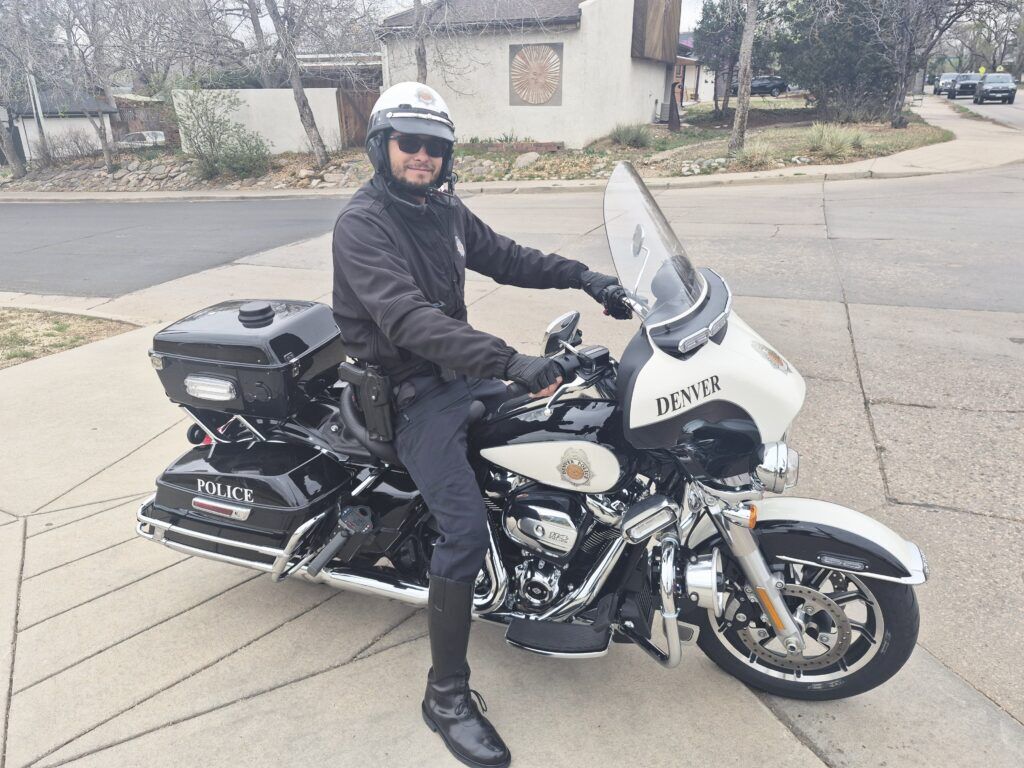
Meanwhile, straddling his Harley Davidson, Allred, the 10-year veteran officer, said he has the best job in the department, being paid to ride a motorcycle.
He added that he particularly likes stopping younger violators and counseling them on just how dangerous speeding can be.