







Arvada welcomes 120 new businesses in 2025, looks to bolster infrastructure
In front of a packed room with more than 100 residents, Arvada officials celebrated the success of a growing business community bringing in millions more in tax revenue and looked forward to infrastructure improvements in 2026.
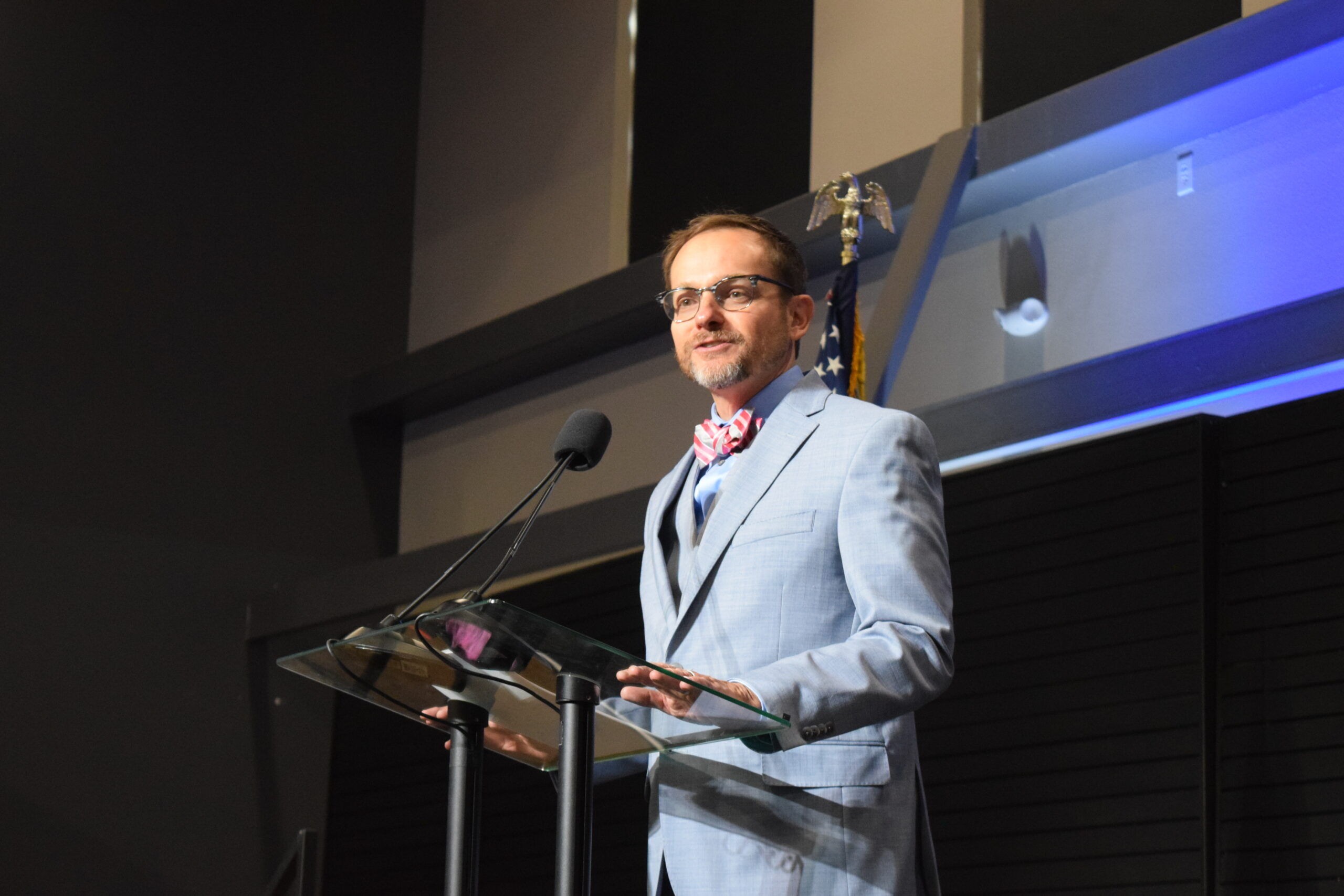
The Arvada Chamber of Commerce held its annual State of the City address Friday morning at the Social Capitol Events, with Mayor Pro Tem Randy Moorman taking the stage to discuss the past year’s wins — and some missteps — along with plans for 2026.
While Mayor Lauren Simpson was present, she did not give the annual address due to her ongoing battle with breast cancer.
“We delivered real results,” Moorman said of the last year, but said to keep looking forward in “how can (the city) work better for people, businesses and the environment.”
Looking back over 2025, Moorman highlighted a few achievements the city had through its various programs.
For example, the city’s Suburban Studios Program — an emergency shelter providing resources to those experiencing homelessness — served more than 150 people in 2025. Of those people, around 70% left the temporary shelter with permanent housing.
Arvada had 292 homeless people during the point-in-time count in 2024. There were 925 homeless people in Jefferson County, while Denver had 6,539.
The city welcomed more than 120 businesses last year, and the city’s businesses invested nearly $13 million back into the community through bond programs.
Moorman highlighted setbacks, as well.
The city decided to cut ties with its West 72nd Avenue Project in 2025 after prices ballooned to more than twice the initial estimates.
The project was approved in 2018 and was set to widen streets, improve the state of roads and sidewalks, and create an underpass west of Kipling Street.
While the project got through its first two phases, the city halted the development of the underpass last year when price estimates reached $137 million — double the original approved bond amount of $64.5 million in 2018.
Moorman said the remaining phase would have required “trade-offs that were not financially responsible for our team,” calling for the “difficult decision.”
“But that decision reflects stewardship,” he said. “It reflects a commitment to protecting essential services, maintaining financial stability and really being honest with the community.”
Now the city turns its eyes toward the future.
Moorman announced the three main priorities the city remains focused on in 2026 — protecting technological systems city residents use like online payments and websites, decreasing homelessness and increasing pavement.
Regarding homelessness, Moorman said the city wants to work to get 65 people off the streets of Olde Town Arvada and into permanent housing through outreach and city programs.
City leaders also want to have 75 miles of roads resurfaced — more than double the amount of miles from any year prior.
He said the city has pulled $10 million from reserve funds to help achieve the mission, but that is only a temporary bandage for a long-term goal.
“Arvada has the fifth-worst roads in the area. That isn’t because our teams aren’t working hard,” Moorman said. “Infrastructure costs are rising, backlogs are real and long-term improvement requires consistent investment over time.”