







Developer says time is right in RiNo as apartments with amenities launch along A-Line
In an apartment market where large, new projects have run ahead of absorptions following a pandemic-driven construction boom, developers are starting to look past the supply issues and are doubling down on the potential of the River North Art District north of downtown.
Denver-based Formativ Real Estate Group on Wednesday launched construction on its second large apartment project for a site in north RiNo at Walnut and 38th streets, 100 yards from the Regional Transportation District’s A-Line commuter rail station to Denver International Airport.
With two communities underway at the half-block site, developer and CEO Sean Campbell said that his crane was the only one in the air when the first project got underway last year. But he says the time is right.
Data driven
“I feel very strong about the growth prospects,” Campbell told The Denver Gazette this week.
“The apartment business is data driven,” he said. “We (saw) nine buildings delivered in RiNo during the last three years and all of those are now 80% occupied, and some are at established occupancy in the 90s.
“We’re going to be eating up that supply in six to eight months.”
Consultants at the Apartment Association of Metro Denver have continually advised that the jam of newly arrived projects in the pipeline that emerged from the demand surge during the pandemic would eventually be absorbed and the market could return to an undersupply.
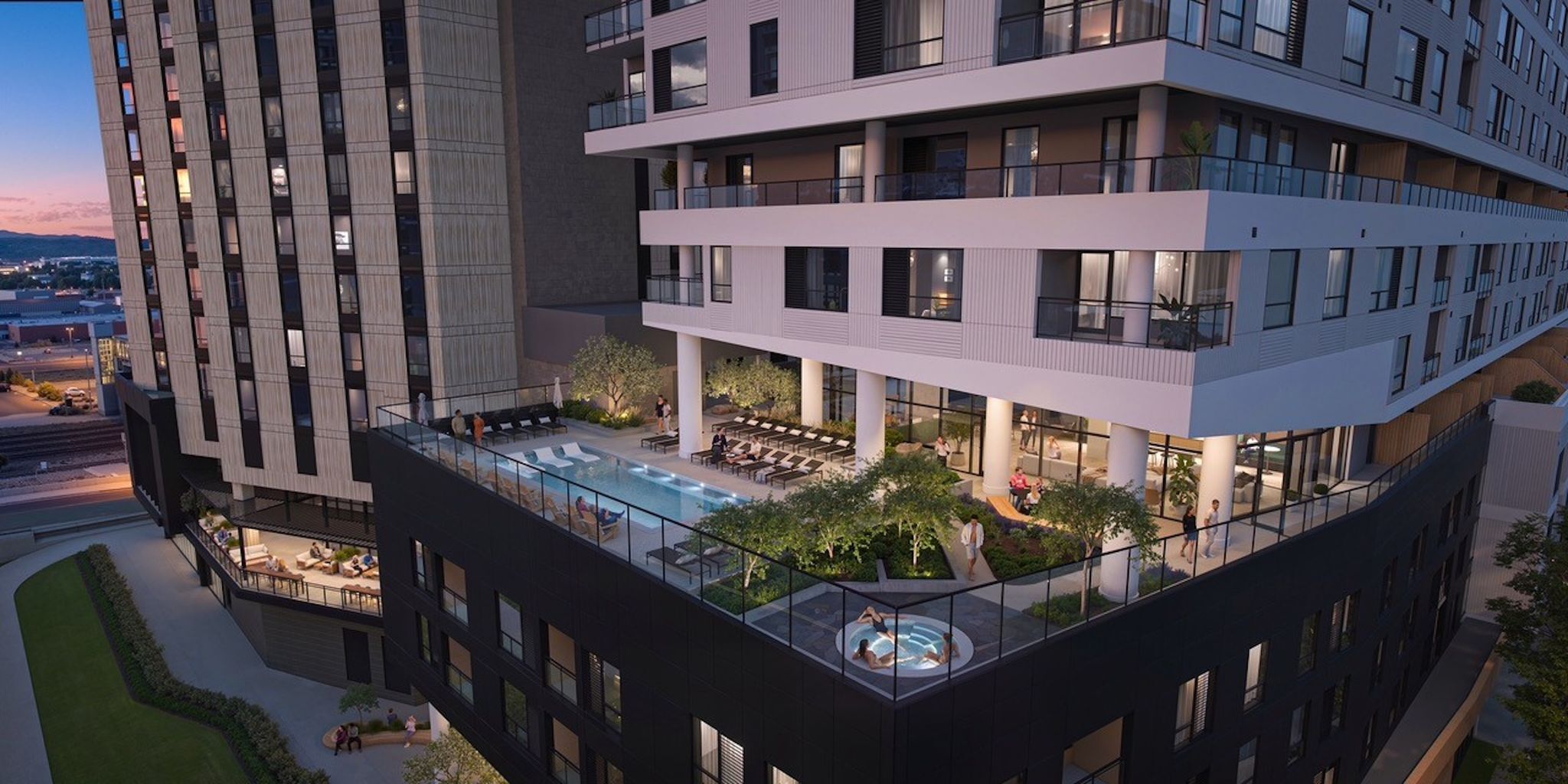
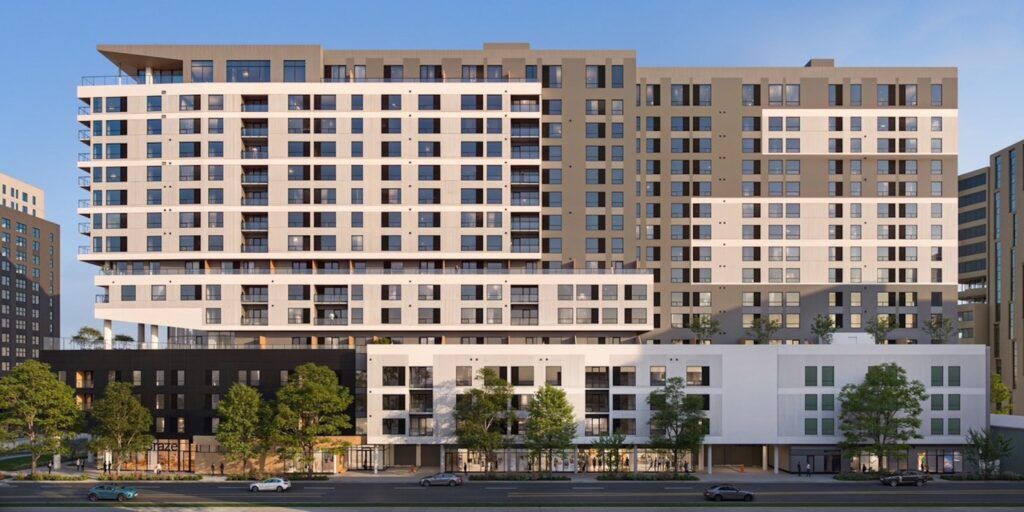
Formative’s newest project — named Rowan after a tree species of mountain ash — would deliver 358 units of market-rate apartments to 3875 Walnut St. The 16-story design by the LoDo-based architects SAR+ devotes two floors to amenities, including a pool, spa, Pilates studio, coworking lounge, and outdoor gathering spaces.
The building would offer a blend of studio, single-bedroom and two-bedroom rentals, along with a limited number of high-design penthouse units, trimmed out with fireplaces, wet bars, five-piece baths, and premium finishes.
Spaces are designed and heavily themed around alpine landscapes. The project, estimated by Campbell at $196 million, would deliver in summer 2028.
Across the block, Formativ was already underway on another 310 units to be marketed as workforce housing. That building, named 3850 Blake, will have units primarily designed to accommodate renters earning between 60% and 90% of the area’s median income.
Meanwhile, with the airport access offered by the commuter rail station, Formativ is also planning construction of a 180-room hotel at the site, being designated for a prominent hotelier brand yet to be named, according to Campbell.
“You walk out of the station and into the lobby,” he said. “You’re 30 minutes to DIA, three minutes to Union Station.”
Although the area already shows some boutique hotel brands, he added that he considers this side of downtown to lack a nationally flagged hotel.
Campbell said that all three projects — higher-end apartments, low-to-mid-priced apartments, and a hotel — will play off the jobs infrastructure that has already arrived in RiNo, including in the less developed north end of the area.
The new event centers at the National Western complex are a mile north, and Xcel Energy’s new 220,172-square-foot regional headquarters is three blocks south.
“In the last five years, there has been $2.5 to $3 billion in development,” he said of the area immediately surrounding Formativ’s site. He added that there are a number of brewpubs and restaurants already within blocks.
“If you’re a young person, it’s a happening place,” he added.
Denver Mayor Mike Johnston played up that youth appeal of the area when he spoke at the formal groundbreaking for Formativ’s project on Wednesday.
Twenty-somethings
“If you are a 20-something looking for your first job or you’re a teacher, nurse or a firefighter, and you want to still be able to live in one of Denver’s best neighborhoods, you can do that at this location,” Johnston said at the event.
How will the market’s dynamics work as the new units come online this coming year and next?
“It’s already in recovery mode,” Johnston said.
He cautioned that the dynamics in RiNo did not necessarily cover the broader metro market, including areas where some newly arrived projects have struggled to lease up and where some projects have made deep concessions to attract tenants.
“People who work in RiNo want to be there,” Campbell said. “Absorption is still happening.” He added that the drop-off in absorption in RiNo, from around 30 units a month to 20 units coming out of the supply boom, was never huge.
Campbell also saw Formativ’s positioning of the two rental buildings — one workforce, one market-rate with attractive amenities — as working well with the upcoming demand situation.
“RiNo had developed a lot of nice market-rate product, but we don’t have a lot of work-force product,” he said. “Whether I’m a teacher or a bartender, I might not want to spend a lot on the highly amenitized building, so our first building is workforce-oriented.”
Both buildings, Campbell said, will benefit from a “flight to quality” seen across the market now, as renters in older, less desirable buildings take advantage of the discounted pricing of new projects, better amenitized, that have arrived post-pandemic.
“We’ll be one of the few that have the bright shiny look,” Campbell said.