







Conservation efforts emphasize the lesser prairie chicken | Rachel Gabel

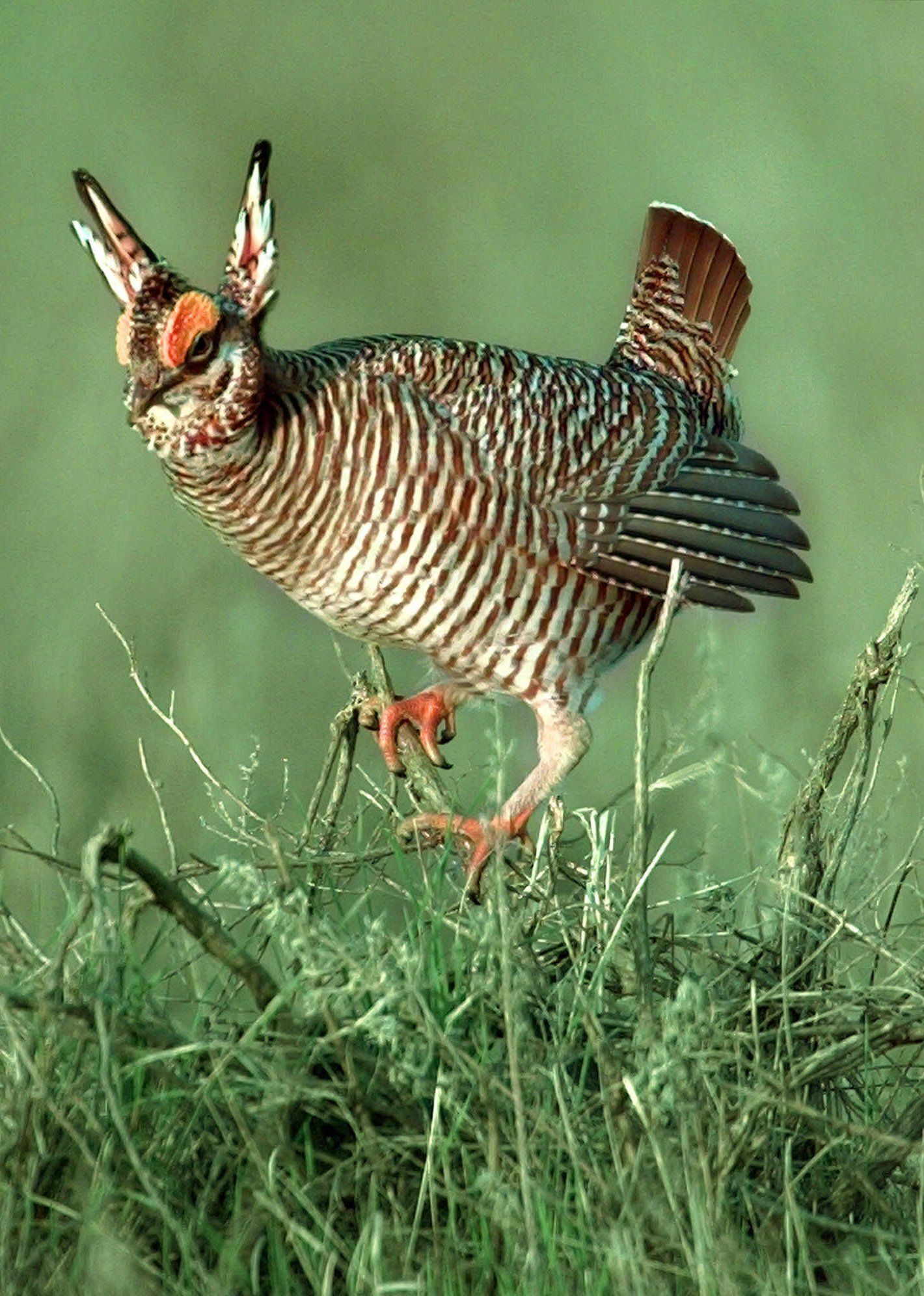
Reid DeWalt, deputy director of Colorado Parks and Wildlife, spoke to the Water Resources and Agriculture Review Committee about the Lesser Prairie Chicken and moving conservation forward.
He said in 2026, CPW staff counted 77 males on 13 leks, a number that has dropped year over year since 2024. There are fewer than 1,000 chickens across the sand sage ecoregion in Kansas and Colorado on a three-year average. CPW has invested annually in a landowner cost share program through the Lesser Prairie Chicken Habitat Improvement Program and that includes of 48,0000 acres since its inception in 2009. DeWalt said the agency recognizes that a greater investment must be made to move the needle on conservation.
As a result, CPW began in 2023 building the Sand Sagebrush Generational Grassland Stronghold, with the goal of including 50,000-acres of permanently protected land and LPC habitat management through voluntary landowner engagement. Through the Species Conservation Trust Fund (SCTF) funding is being made available to provide grazing deferment to provide nesting structure, crop to grass restoration, and technical assistance.
Dr. Nicole Rosmarino, director of the State Land Board, joined the committee to report on the updated Stewardship Action Plan which will guide action to protect, enhance, and manage LPC habitat on state lands. She said early conversations with agriculture leasees about cost-sharing programs available to them and joint strategies to improve range conditions. She said improved range conditions and improved bottom lines for ranchers are connected.
Rosmarino hopes to create a species conservation bank, to create mitigation credits in the state. However, without the requirement that compensatory mitigation be paid in state, there is no market for the credits and the mitigation will be paid in states with the requirement. The species conservation bank to benefit the Prebbles meadow jumping mouse, which was the first conservation bank in the state, has generated $3,400 per acre in returns thus far with additional credits to sell. She said the wetlands mitigation bank credit sales created in March is estimated to create $4 million in returns on 230 acres. Biological carbon sequestration is also a potential revenue generation stream that will be shared with leasees. A carbon sequestration project approved in May on the Chico Basin Ranch is estimated to return $5.3 million to the trust over the next decade. There is potential for ecosystems services to generate returns, to benefit the state land board beneficiaries (public schools), to benefit ranchers, and to benefit species. Help the ranchers, help the chicken.
James Lester, senior advisor of the Colorado Energy Office, said their role is in meeting climate goals and growing electricity demand. He said meeting those goals will require about 111,000 acres. One of the greatest risks to the LPC is habitat loss. That can happen, according to DeWalt, through conversion of habitat, energy exploration, the installation of transmission lines, and losses due to drought and severe weather. LPC, he said, avoids tall structures, such as wind turbines and electric transmission lines.
In Colorado, CPW does not have the authority to require energy companies to replace or mitigate any LPC habitat destroyed. Voluntary collaborative efforts have not reversed the decline in LPC numbers, but mitigation banking could. It appears green energy goals and wildlife restoration have collided on the backs of elusive, wobbly little birds in ranch country. Voluntary efforts to improve habitat through partnership with ranchers and landowners is occurring. The missing pieces of the puzzle are the creation of a mitigation bank and the requirement that energy development pay compensatory mitigation in the areas where habitat damage is occurring. If and when the LPC is listed as an endangered species, the opportunity for voluntary cooperative efforts is replaced by federal involvement and a power struggle not unlike others in the state centering on listed species.
Dallas May, a rancher in Lamar, reiterated that the existential threat to endangered species in the state is not climate change, but the loss and degradation of habitat. Any habitat degradation in Colorado, he said, should be mitigated in Colorado. May said millions in compensatory mitigation have been paid to ranches in Kansas in previous years for habitat damage that was done in Colorado. Without the requirement, the dollars will continue to leave Colorado’s borders. He said LPC is an indicator species and only one of the species that will benefit from habitat improvement, in addition to the benefits to the rural communities near LPC habitat.
Science, common sense, and good manners on this issue would make leaps and bounds toward habitat improvement, supporting ranchers, supporting small communities, and still allowing the green energy goals made on high to move forward simply by requiring compensatory mitigation be made in state.
Rachel Gabel writes about agriculture and rural issues. She is an assistant editor of The Fence Post Magazine, the region’s preeminent agricultural publication.