







It was a ‘good day for firefighting’: Aspen Acres fire’s growth slows
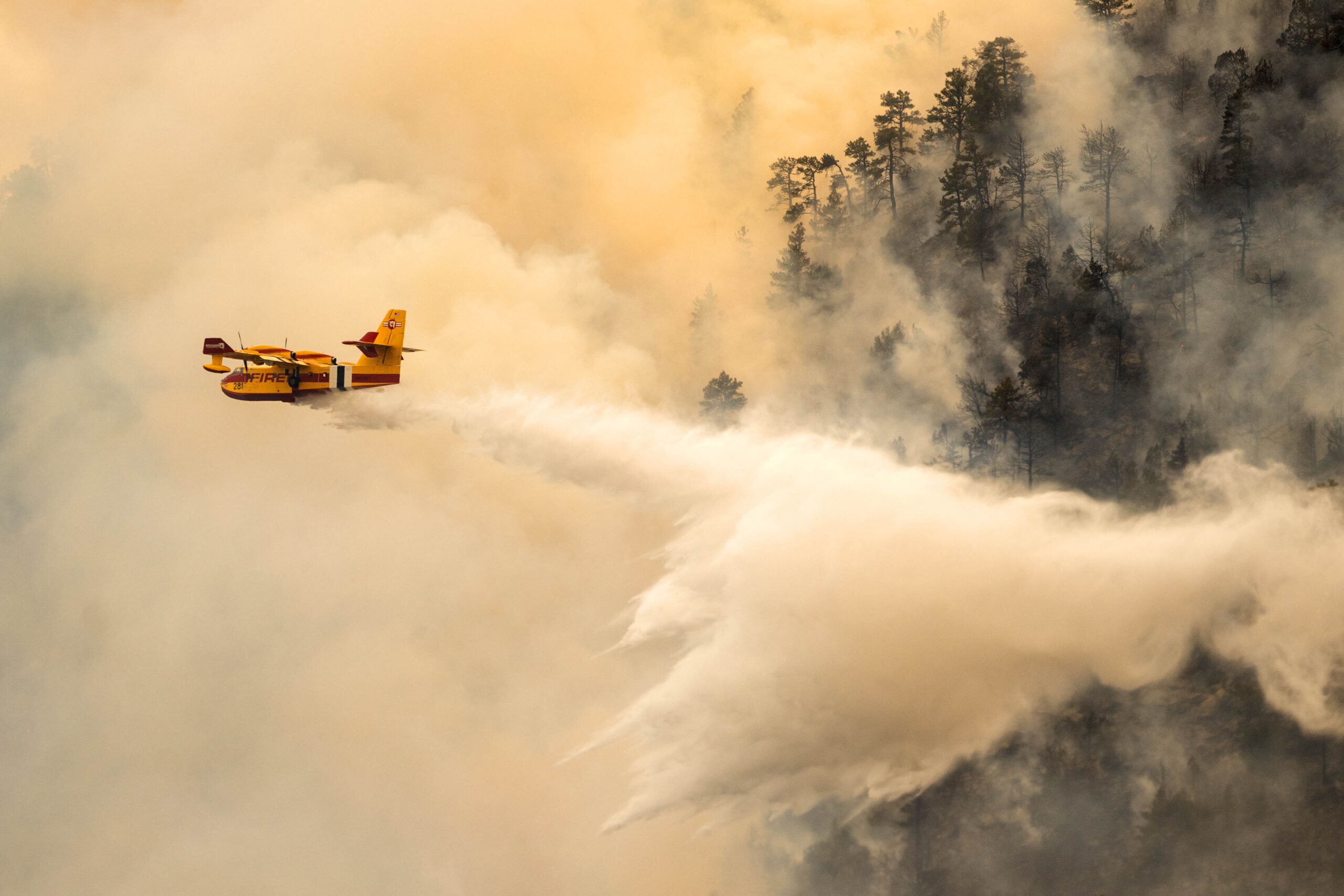
There were some positives to emerge from the Aspen Acres fire on Saturday. In an evening briefing shared on Facebook, fire officials said it was a “good day for firefighting.”
The massive fire burning southwest of Pueblo grew to 86,983 acres and continued to show extreme behavior, but increased relative humidity and cloud cover moderated it somewhat, fire officials said.
The blaze, now the seventh-largest in state history, was about 6% contained as of the latest update from the National Interagency Fire Center.
“Yesterday and last night the (relative humidity) recovery was up in the high 60s and so day shift resources were able to go out and actually fight fire aggressively,” said Zack Flemming, who led the Saturday evening briefing.
And a Southern Colorado icon, Bishop Castle, remains standing, fire officials and the castle owners confirmed Saturday.
While the fire grew by about 3,000 acres overnight, more firefighters and equipment were coming to fight the blaze, and dozer lines put in place were holding in some areas, said Brad Washa, the operations section chief for the Alaska Incident Management Team, which has taken the lead in fighting the fire.
About 665 firefighters were assigned to the fire on Saturday, up from about 326 firefighters on Thursday. While relative humidity has increased, thunderstorms in the forecast could bring other risks, Washa said.
“Our biggest concern with that is both dry lightning, which could create new starts, (and) outflow winds,” he said. “That can really cause a major concern because all of a sudden you get winds coming from a different direction, and very strong winds.”
The area is no longer under a red flag warning, which Washa said is a good thing for firefighters because they won’t be pushed around as much by the weather.
While air tankers, or airplanes modified to carry fire suppressant and build containment, were diverted Friday to fires on the Western Slope, the team fighting the Aspen Acres fire received several large, medium and small firefighting helicopters, Washa said.
And more personnel and equipment are coming to fight the fire, he said. On Thursday, the incident management team said it asked for 17 hand crews, more than 100 engines, six bulldozers and 15 water tenders to fight the fire.
“We’re getting almost double what we’ve asked for in some cases,” Washa said Saturday. “It’s slowly coming in, and it’s going to take a couple days to get here, but we are starting to get a lot of resources as some of the other fires in the area are (being contained).”
Washa added that some dozer lines were holding. Dozer lines are areas where bulldozers have removed vegetation to stop fire growth.
On the northeastern flank of the fire, the fire went “beyond the road system,” Washa said. The team plan to build a dozer line in this area to try to keep the fire east of Siloam Road. The fire also jumped Colorado 165 in some areas on the southwestern edge, with crews identifying two spot fires, one 15 acres and one 50 acres.
They were able to quickly get lines around the flames and contain them, Washa said. The fire also crossed Colorado 165 near the YMCA camp outside of Rye. The camp is still intact, but the fire is on both sides of it, Washa said.
Near San Isabel, the fire came down into the cabin area Friday, he added.
“We are holding that for the most part, but we did lose a couple structures in there,” he said.
The moderate overnight fire growth was a welcome development for crews following big growth on Friday. From an overlook just south of Colorado City, plumes of black smoke could be seen rising as the fire encroached on buildings near the southern Colorado town. On Friday afternoon, rows of white smoke dotted the hillside. Occasionally, flames could be seen through the smokescreen.
But as winds increased, whipping up dust and ash along the zone where prairie meets foothills, the smoke and flames changed. Flames became increasingly visible along the hillside and a volcanic column of black smoke began to rise.
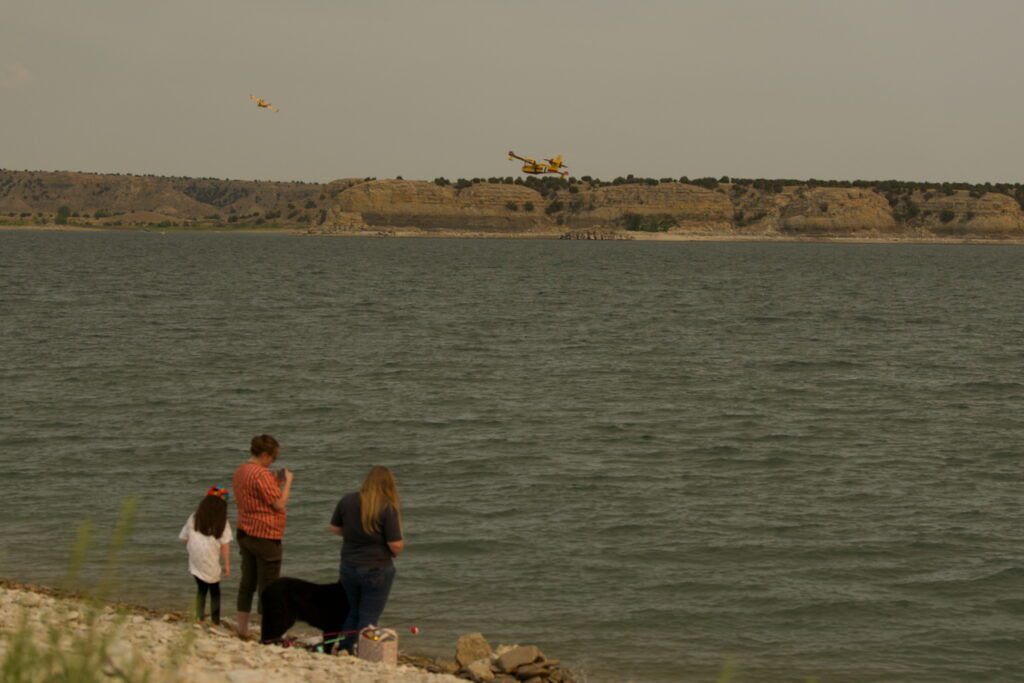
A Firehawk helicopter, a Black Hawk modified with firefighting equipment, raced from Beckwith Reservoir to the foothills dumping water on the fire. Farther north, at Lake Pueblo State Park, a pair of amphibious firefighting air tankers came and went rapidly.
Capable of holding more than 1,400 gallons each, the amphibians drew the eyes of boaters, campers and hikers at the state park with their bright yellow and orange paint jobs. Over the course of about an hour, the aircraft hit the fire and returned to the lake for more water several times.
As of noon Saturday, several helicopters were over the fire and one large air tanker was flying, according to the ADS-B exchange, an online flight tracking service. There was a temporary flight restriction over the fire and Lake Pueblo, according to the Federal Aviation Administration.