







Building a life: Inside the Douglas County community reshaping what’s possible for intellectually disabled
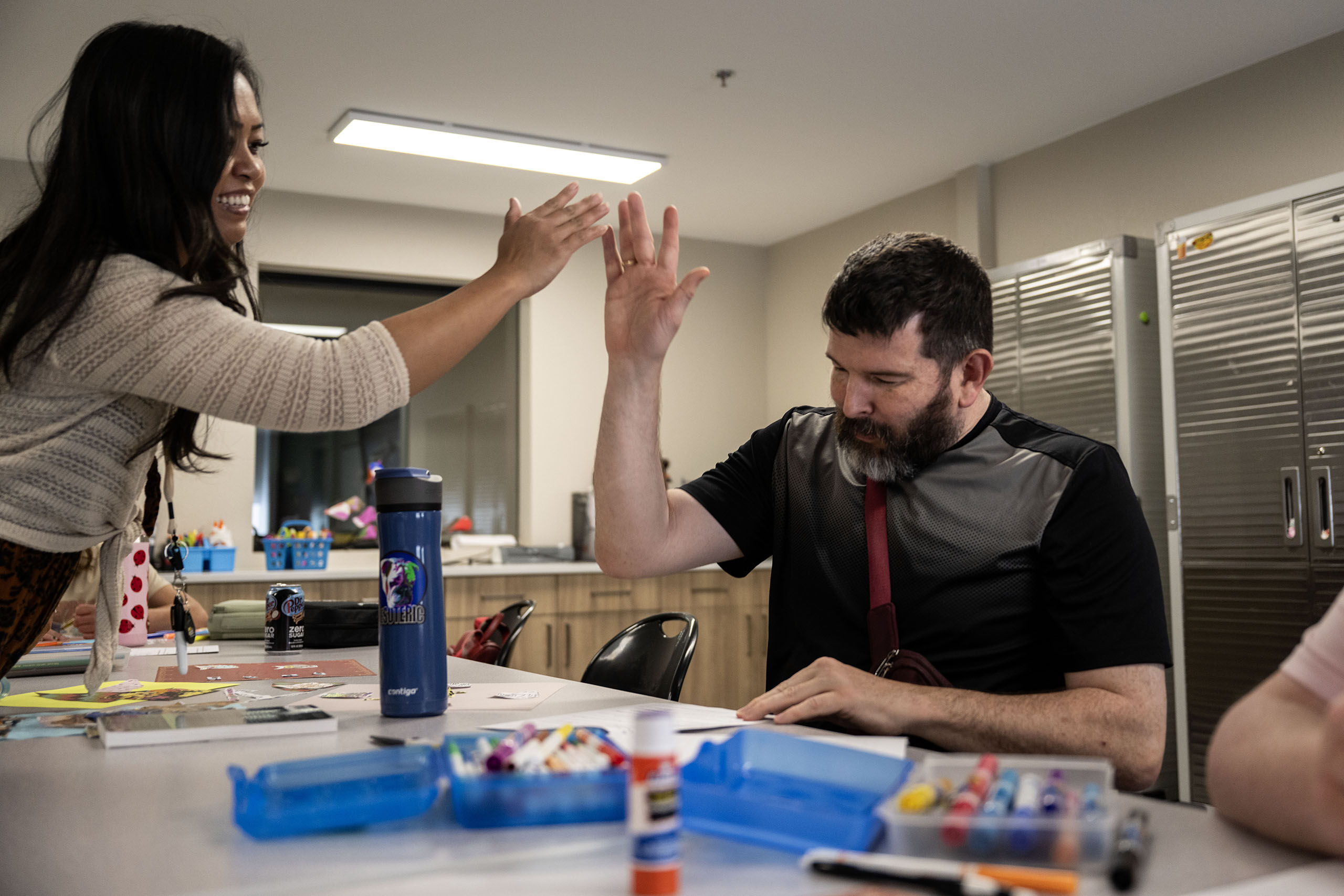
When Ted Callahan unlocked the door to his apartment last summer, it was the first time in nearly 50 years he had lived anywhere other than with his mother.
Ted was born with Down syndrome in 1976, at a time when families were often encouraged to place children with intellectual disabilities in institutions, segregated from their family and community.
His sister, Katie Callahan, said their parents chose a different path.
“It was kind of cutting edge at the time. I tell people Ted was my mom’s life’s work and I think there’s a lot of pride in that,” she said.
Today, Ted represents a generational transition, as families who fought to keep their children at home now confront the realities of aging caregivers and the need for communities built to support their kids for life.
When Katie realized their mother could no longer safely care for Ted, she found Wellspring Community in Douglas County where Ted lives in one of two former hotels in Castle Rock that Wellspring has transformed into independent living apartments.
After nearly 50 years living together, the separation was, in Katie’s words, “bumpy.”
Wellspring staff worked with him through the adjustment, building new routines and managing the emotional weight of moving away from his mother for the first time in his life.
What Katie noticed afterward surprised her. She said Ted’s biggest gains didn’t come simply from having his own apartment, they came from being separated from his mother’s declining health. As her health worsened, Katie said, Ted had started mirroring her decline.
Once he was living independently, she said, he started regaining pieces of his personality and confidence that had begun slipping away, closer to the person the family knew before his mother’s illness took hold.
The scale of this transition is significant.
Nicole DeVries, Wellspring’s executive director, estimates roughly 20,000 adults in Colorado live with caregivers over the age of 60 and said a majority likely have no plan for what happens when the parents can no longer provide care.
Without dedicated housing, families are largely left choosing among siblings, extended relatives or host homes with caregivers they’ve never met, an outcome DeVries says terrifies parents more than almost anything else.
“Colorado’s on the brink of a housing crisis for this demographic,” she said.
Wellspring wasn’t originally built to solve a housing crisis.
Founder Mary Lou Fenton began baking with her daughter after school and selling cookies at a church bake sale, eventually launching a summer program for individuals with intellectual disabilities in 2008.
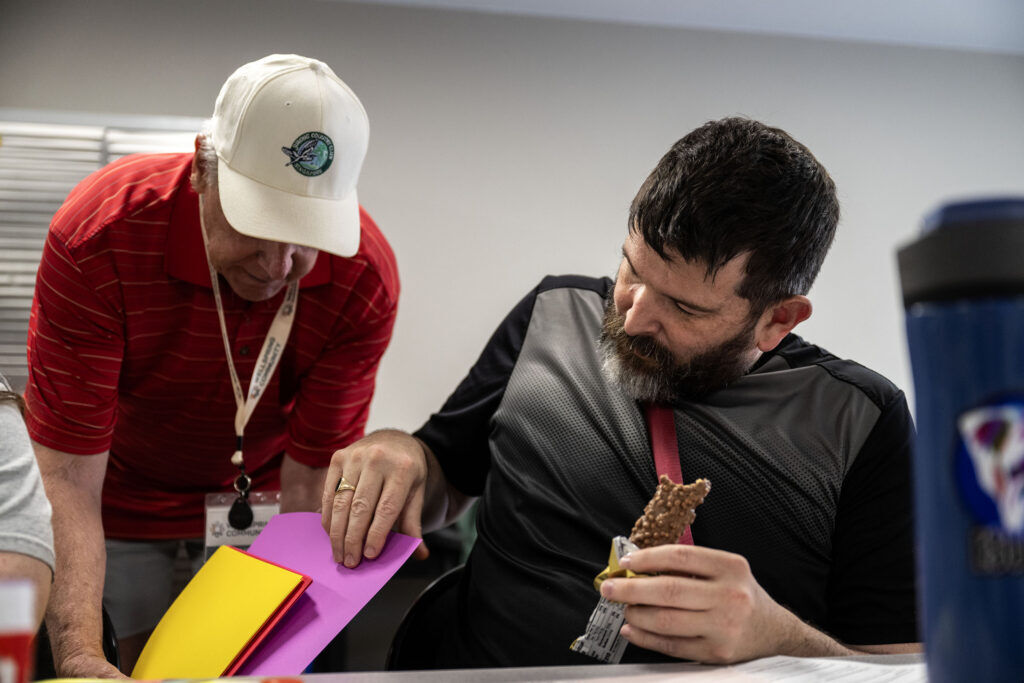
By 2022, the organization’s core offering, a day program built around classes, employment and community life, had hit capacity, with a growing waitlist. When leadership sat down with families expecting a conversation about adding classroom space, they got a different message instead.
As DeVries recalled it, parents said: “We think your day program is great. But our bigger concern is what’s going to happen to our loved ones when we can no longer care for them.”
That conversation redirected the organization toward housing.
In 2022, through support from Douglas County Commissioners, Wellspring purchased and renovated a neighboring hotel for roughly $6.3 million and Unity on Park opened in 2024 with 42 affordable rental apartments.
Wellspring opened its second residential unit this year, Unity on Wolfensberger.
Housed in another former hotel, Unity on Wolfensberger took a different shape, offering individually owned condominiums, letting residents build equity instead of paying rent. The county has continued backing the expansion, including a $2.5 million housing grant for the Wolfensberger project.
The housing units feature access to assisted living services and day programs hosted on the bottom floor.
“You can live, learn, work, play all in the same place,” DeVries said.
Miles Wilson, Wellspring’s resource and community integration coordinator, spends his days connecting participants to programming on and off campus. Roughly 48 classes run each week, but Wilson pushes back on the idea that the number is the point.
“Everything we do here has purpose,” he said.
Wilson said leadership is one of the most popular offerings, giving participants opportunities to participate in community events and build relationship skills. But the arts classes, which include photography, dance and chorale, are where individuals shine.
“It’s magical to see somebody join a class that may not know anything about singing, then months later they’re on a stage in front of 500 people,” Wilson said. “There’s a lot of tears, but they’re happy.”
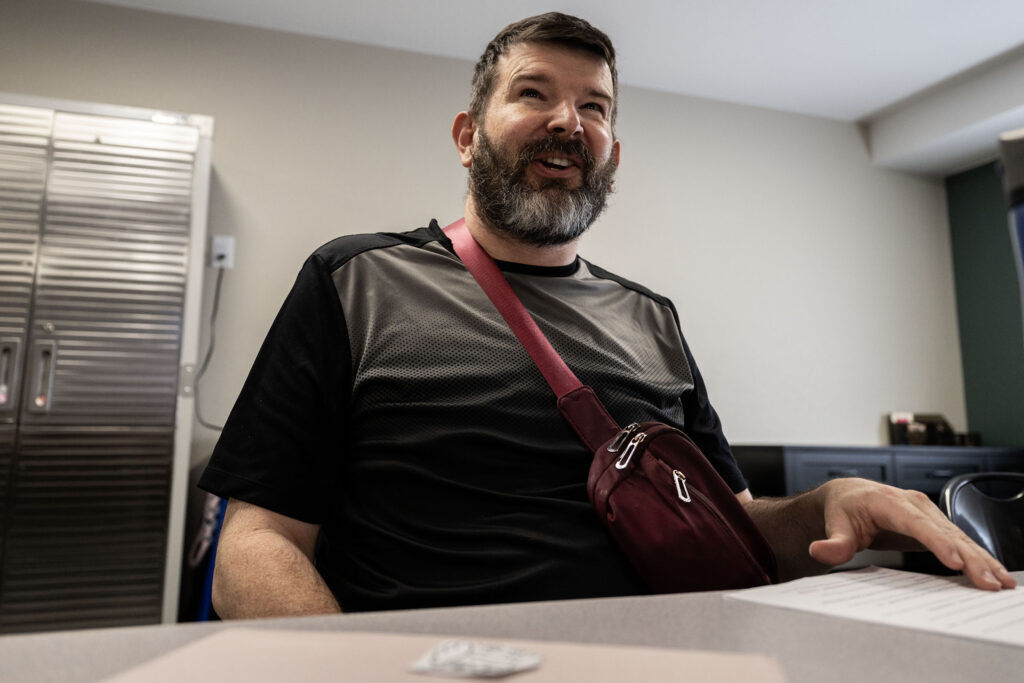
Another resident, Nate, gained a greater sense of himself through Wellspring’s residential and day programs.
He didn’t think he was a good singer or had an artistic bone in his body.
He also never thought he’d own a home or sit on a board of directors either.
Nearly 13 years into his time at Wellspring, he does both.
“When someone sees a person with disabilities, they always just assume, ‘Oh, they can’t do anything or take care of themselves,’” Nate said. “They think someone will always have to take care of us.”
Nate joined Wellspring’s day program in 2013. Today he attends four days a week, moving between choir, gardening, journaling and a denim design class that repurposes old jeans into crafts and gifts.
He’s also worked in Wellspring’s ceramics program, making and glazing pieces sold through the Castle Rock Collective, the downtown coffee shop and marketplace Wellspring opened in 2021. He receives dividend payments as a cooperative member.
For both Nate and Ted, the Castle Rock Collective provides a way to be seen as producers rather than participants. That structure runs through what Wellspring calls the Cooperative, in which participants elect their own leadership teams and draw monthly dividends from the profits.
The goods land at the Castle Rock Collective, which works as both a retail outlet for the Cooperative’s products and a coffee shop.
“I think the best form of empowerment is owning your own business,” DeVries said.
The bigger shift came with housing.
Nate first rented at Unity on Park before recently moving to Unity on Wolfensberger, where he now owns his condominium outright.
He still gets support from residential staff with daily life skills, but ownership changed something in how he sees himself.
“Owning it just makes me very proud, because I can say I truly have a place that is my own.”
For Katie, the practical effect is that Wellspring now handles most of what used to consume her mother’s time, freeing her to be Ted’s sister again rather than his full-time caseworker.
“I can spend time with him doing interesting things rather than just managing his care,” she said.
She searched across three states before landing in Douglas County and knows exactly what the alternative would have looked like without a place like this one.
“If Ted wasn’t at Wellspring, he’d either be living with me or my brother or in a foster home,” she said. “The alternatives just weren’t that great.”
Parents often believe moving a child into independent living means doing something to them, Katie said. Wellspring’s view is the opposite: that families are doing something for them, building a future where independence is possible.
DeVries said housing remains the organization’s top expansion priority for at least the next five years and pointed to the continuing gap in care and demand.
Wellspring’s day program currently carries a 200-person waitlist, and Wilson said the organization can only serve around 60 participants a day, nowhere near what he believes the need actually is.
Wilson said Wellspring’s model of community, care and independence deserves to spread well beyond Douglas County.
“I wish that other people could create what we have because this entire field would be a revolution of sorts,” he said.