Who’s Waldo of Waldo Canyon and why was it named for him?
As wildfires hit Colorado again in 2026, many people are having flashbacks and curious questions about the past. Intriguing queries were about the devastating 2012 Waldo Canyon fire and several came from residents who have wondered about this for at least 14 years and probably longer: Who was the Waldo of Waldo Canyon?
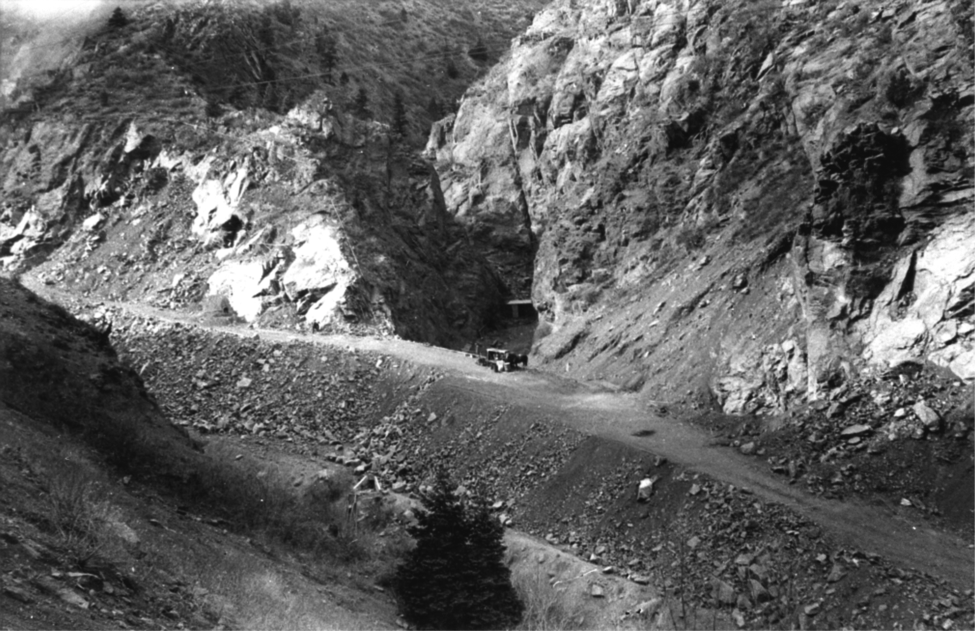
Just off U.S. 24 west of Manitou Springs, the canyon has a fascinating natural mountain history, but it wasn’t privately owned until the 1880s. Today it is under the U.S. Forest Service, Pike National Forest, which has the compiled official history archives. And in them is the most unusual story of William Waldo. No, not a president or a VIP or a philanthropist. This William Waldo was a recluse, a bit of a scam artist, a wheeler-dealer and a hog farmer.
Researchers and historians think he was born in New York around 1850. There are many Waldo families in early-day New York but none to be found with this family member. Colorado records and a census find him in 1881 when he was a gypsum miner near what is now Old Colorado City. A newspaper article had reported that a W.A. Waldo was trapped for a time and had almost died when he and two other miners were caught in the collapse of the quarry wall after they had set off an explosion in the rocks. One of the other men died.
In 1885 the census listed Waldo possibly working on a dairy farm and boarding with the Schamp family in El Paso County. Others rooming there worked in the U.S. Army Signal Corps Weather Station on the summit of Pikes Peak. (rmfi.org)
In May of 1885, William A. Waldo is listed as having filed homestead claims in the Manitou Incline area and several others nearby. Successful claims required that a person settle the land and live there. He sold one of his three parcels in 1886, requiring that the owner allow him to live there rent-free for a year.
Another land parcel, in 1909, became Fremont Experimental Forest, according to historian Eric Swab.
According to legal transactions, a woman had a claim on more than 154 acres of the canyon in 1890, which Waldo purchased along with the neighboring 160 acres, all of which is what became Waldo Canyon. Altogether he owned 474 acres of the former government land.
On one of his land parcels he had a hog farm, hauling the garbage to feed them from Manitou Springs. He was reported to have borrowed great sums of money, possibly 14 loans in all, using his ranch, animals and mortgages on his land, as well as loans from important people in the area, especially in Manitou.
A lively history posted in trailsandopenspaces.org and several other sites says Waldo got in trouble with the unsympathetic law in Green Mountain Falls for letting his livestock run loose. When the city marshal went to serve a warrant on the charges, he and Waldo got into something of a gun battle. Neither was injured but Waldo got away.
There’s also an oft-repeated tale about a fellow called “Mudy” Jones who apparently had the mortgage on Waldo’s cattle and when the men quarreled, Waldo asked to see it. Jones handed the paperwork to him, Waldo took it, “put it in his mouth, chewed it up and swallowed it!”
It wasn’t long before the now-broke Waldo took off, having lost everything and owing everyone. There are no William Waldo photos to be found.
All the land went back to the government, reverting to the U.S. Forest Service in 1900. In the Forest Service Waldo Canyon history, a letter from a supervisor in the 1930s gave the origin of the canyon’s name as simply “the name of an old recluse named Waldo who lived in a hut there during the early days.”
Over the years Waldo Canyon became a highly used and beloved 7-mile trail through breathtaking acres with handy trailhead parking close to the highway and areas for outdoor recreation.
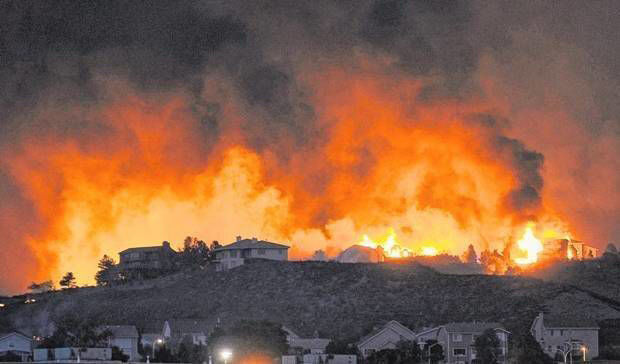
Then, in June 2012, hikers or bikers on the trail were reported to have seen some possible smoke in the distance. It later proved to be true and became the devastating Waldo Canyon fire, wiping out 18,247 acres, thousands of acres of ponderosa pine forest, destroying 346 homes, forcing evacuation of 32,000 people and causing two deaths. The trail and camping areas, area watersheds and the canyon as people knew them were severely damaged or destroyed. There were floods starting down the blackened burn scar and endangering towns below.
Speculation was that the fire was human-caused but that was never solved. It remains under investigation. If it is ever ruled as deliberately set, it could carry charges of homicide among others. A $100,000 reward was offered by the Colorado Springs Police Department for information leading to the identification and arrest of the person or people responsible for starting the fire.
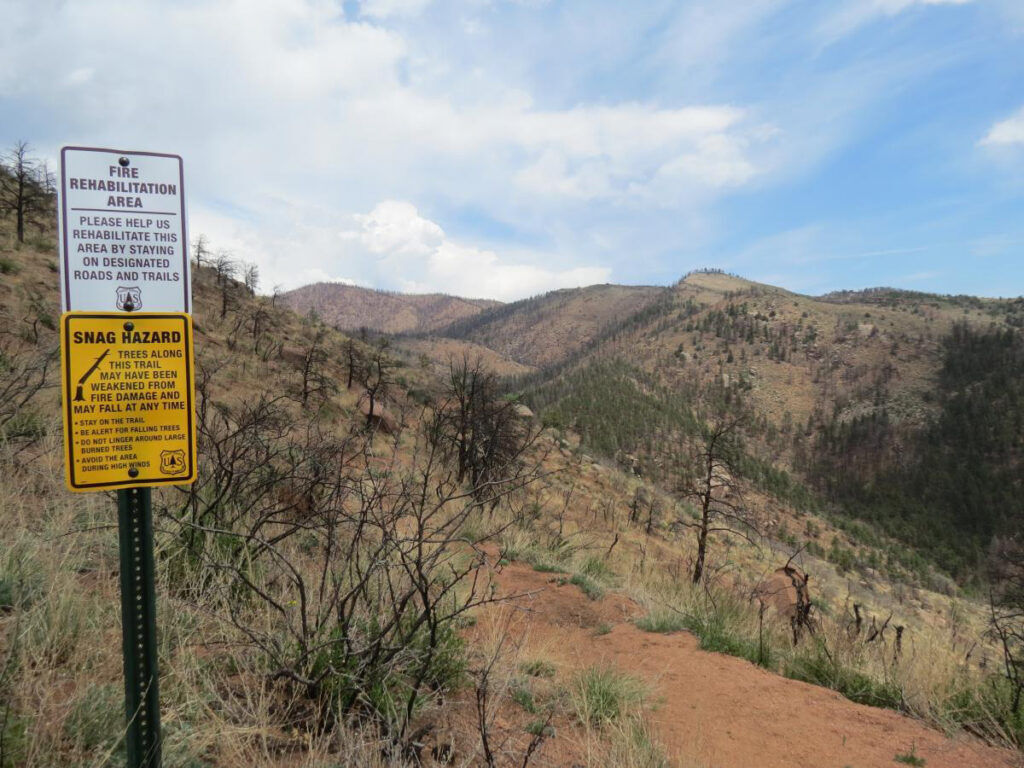
Post-fire recovery and planning for recreation that won’t be able to start again for years from now have been led by the Forest Service, Rocky Mountain Field Institute and Trails and Open Space Coalition. A master plan was implemented in 2013 and extensive work on the burn scar was immediate, focusing on hillslope stabilization in order to begin revegetation and flood mitigation. Dangerous debris made it difficult for anyone, even wildlife, to be in the area.
Several hundred thousand tree seedlings had to be planted to take root and grow, with even more added each year. “There is ongoing tree planting in specific areas and these efforts are focused on restoring native, fire-adapted species to protect drinking water supplies and stabilize the canyon,” said Josh Cowden of the Forest Service.
There are grasses growing now and other ground cover. It will take several hundred years for all the new growth to grow there, the groups point out.
For now and until June 30, 2029, Waldo Canyon is closed to all users while nature and its helpers work to return the forest and the land. Cowden explained: “The purpose of this order is to protect natural resources and public health and safety due to the impacts of the Waldo Canyon fire. While the established end date for the closure is the goal, lifting the closure will be based on the safety and stability of the area.”