







Protesters descend on Hudson Town Council days after prison funded to reopen as ICE facility
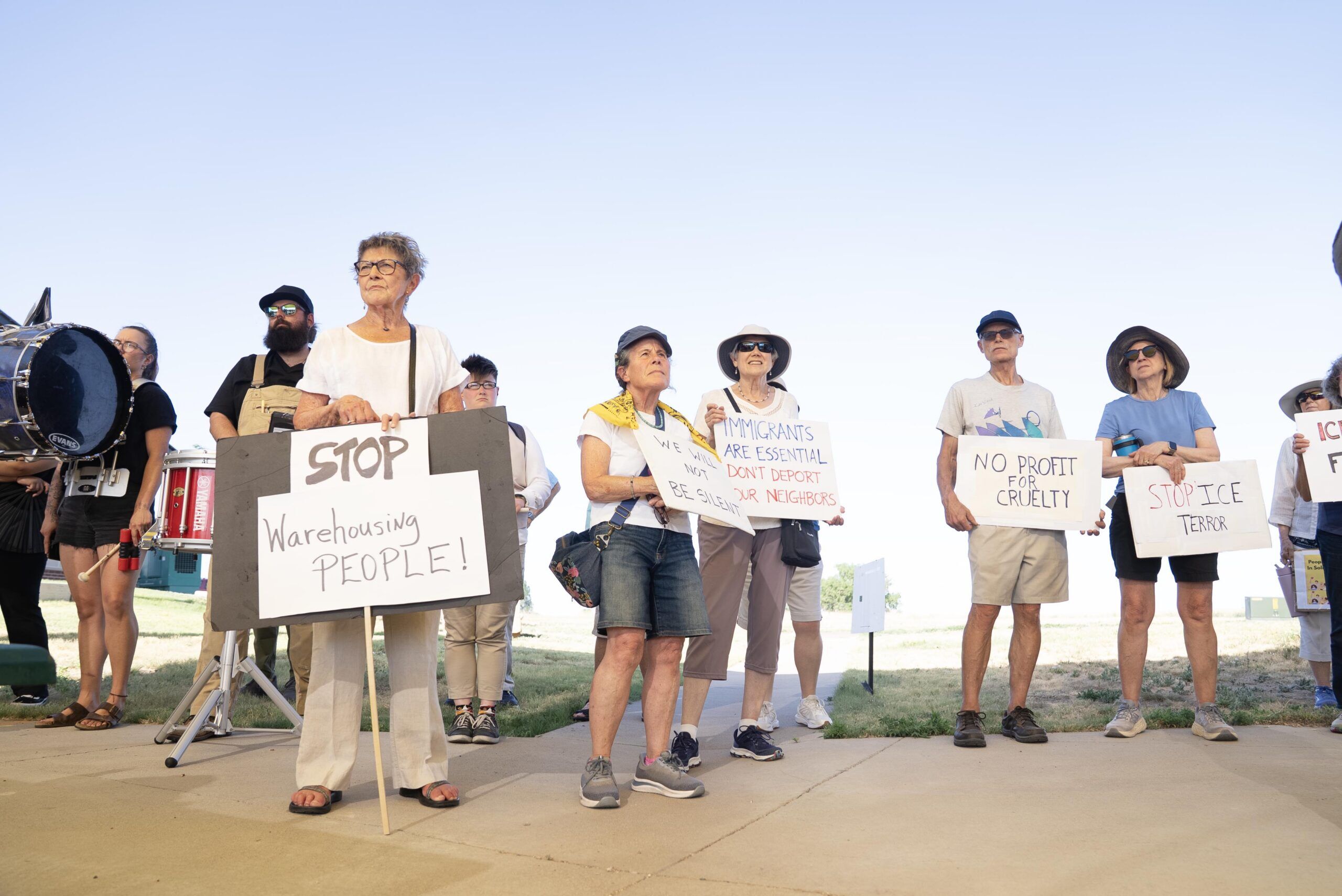
HUDSON — Nearly 200 protesters, including current and former members of the Democratic Party’s progressive wing, descended on Hudson on Wednesday, gathering outside Town Hall about an hour before the regularly scheduled town council meeting to protest the reopening of the town’s shuttered prison as an immigration detention center.
Although the detention center was not on the meeting agenda, the issue dominated the evening.
Demonstrators lined the sidewalk, carrying signs that read “No ICE Concentration Camps,” “Immigrants Are Us” and “Democracy Dies in Silence.”
The gathering also drew immigrant rights activist Jeanette Vizguerra, who was previously detained at the Aurora ICE detention center, the Denver-based brass band Notes of Descent and a vendor selling protest T-shirts.
By the time the meeting began, nearly every seat in the council chambers was filled, with others standing along the walls. Several protesters remained outside, where the brass band continued to play.
The $528.6 million deal with GEO Group will effectively double Colorado’s immigration detention capacity to about 2,700 beds.
As the demonstrators, most from the Denver area, held up signs outside and inside the town council building, Mayor Joe Hammock took a video of the protesters before declining to comment, saying he “only works here.”
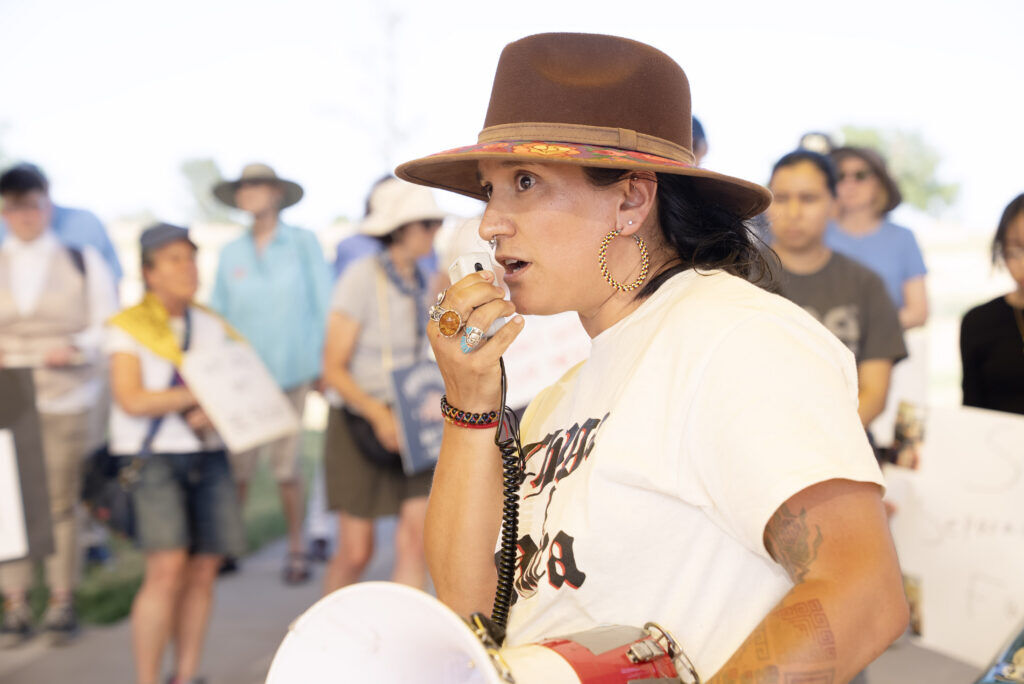
Hudson Town Manager Bryce Lange started the meeting Wednesday saying officials had very little control over federal operations.
It was a claim at least one speaker during public comment challenged, saying that the facility is zoned for a correctional facility. “I urge you to invoke your zoning laws,” he told the council.
State Rep. Yara Zokaie, D-Fort Collins, who sits on the House Judiciary Committee, said she plans to pursue legislation that would give local governments the authority to block immigration detention facilities from opening in their communities.
Sen. Julie Gonzales, who challenged U.S. Sen. John Hickenlooper in the Democratic primary, and former Rep. Tim Hernandez, who lost his election to the state House also during his party’s primary two years ago, took part in the protest.
Hernandez warned the council during public comment that U.S. Immigration and Customs Enforcement (ICE) agents would “grab” people from school bus stops and the fields once the detention facility is up and running.
It was a fear echoed by others.
“Your legacy will be your lack of humanity,” said Laura Gonzalez, a Boulder activist.

During roughly the first hour and a half of public comment, speaker after speaker urged the council to oppose the facility or explore legal options to prevent it from opening. No one spoke in favor of the detention center during that portion of the meeting.
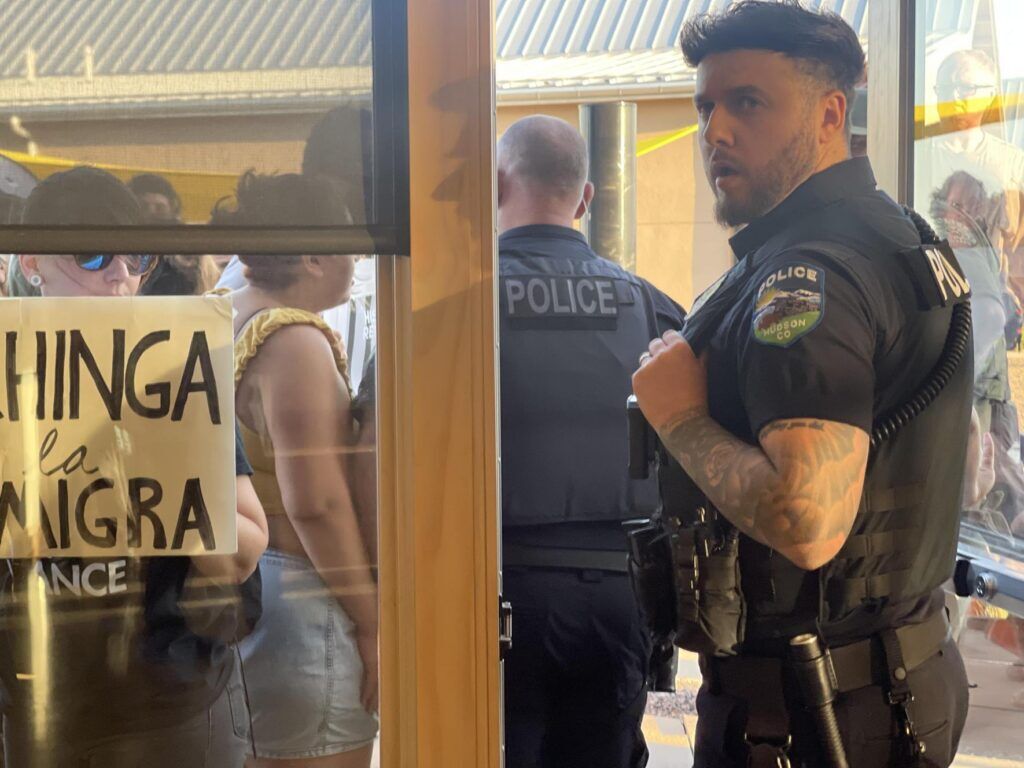
Speakers were limited to three minutes, a rule Hammock strictly enforced. Police officers took the microphone from those who exceeded the time limit.
Protesters outside interrupted the meeting by pounding on the windows of the council building and shouting obscenities, halting it for 15 minutes.
Hammock sent the police outside to disperse the crowd.
Officers were instructed to have their body cameras on.
The GEO Group reached a five-year, $529 million agreement with the U.S. government last week to double Colorado’s immigration detention capacity to about 2,700 beds, with a significant portion of them in the Hudson Correctional Facility, located about 30 miles northeast of Denver.
The prison was built in 2009 and held inmates from Alaska until 2014, when it was closed. GEO has had a 40-year public-private partnership with U.S. Immigration and Customs Enforcement (ICE).
The facility, GEO has said, could, “depending on urgency” and the specifics, begin accepting detainees “in a matter of months.” GEO also reported that the facility has been “very well maintained.”

The Geo Group also runs the Aurora Contract Detention Facility, which has a capacity of 1,532 detainees.
Holly Cheng, a public health nurse who works in Aurora, told the council Wednesday that the tuberculosis outbreak there is “much worse than what’s being reported,” and that council members can expect increased 911 calls and longer wait times after Hudson’s facility becomes operational.
Lange has declined interviews.
On Monday when GEO announced the contract, he directed The Denver Gazette to a two-page community information update on the detention facility.

“Town leadership recognizes that residents have strong and deeply personal views about immigration detention facilities,” the update said, noting the federal government — and not the town — is authorizing the contract.
Officials also communicated to residents that the town does not know “several important details,” including the operational timeline, the number of detainees and facility staffing or demand projections.
Denver Gazette reporter Kyla Pearce and The Associated Press contributed to this report.