







GUEST OPINION: New firearm laws motivate Colorado gun owners

Every electoral cycle, political strategists devote endless attention to suburban women, Hispanic voters, union households, independents, and younger Americans. Pollsters slice the electorate into increasingly narrow demographic categories, searching for the coalition that will decide the next election. Yet one of the nation’s largest, most organized, and most dependable voting blocs is routinely underestimated: America’s roughly 100-million-gun owners and Second Amendment supporters.
That oversight has shaped elections before, and it may do so again.
Donald Trump’s election demonstrated what happens when millions of Americans who view the Second Amendment as a fundamental constitutional liberty conclude that the future of that right is on the ballot. Many constituencies contributed to Trump’s victories, but few matched the discipline, organization, and intensity of gun owners.
The National Rifle Association, despite its well-publicized internal challenges in recent years, remains one of the most influential grassroots political organizations in the country. For decades, it built a political machine that educated members, graded candidates, mobilized volunteers, and reminded voters that elections determine far more than tax rates or foreign policy. They determine who appoints federal judges and Supreme Court justices, and those appointments shape constitutional law for generations.
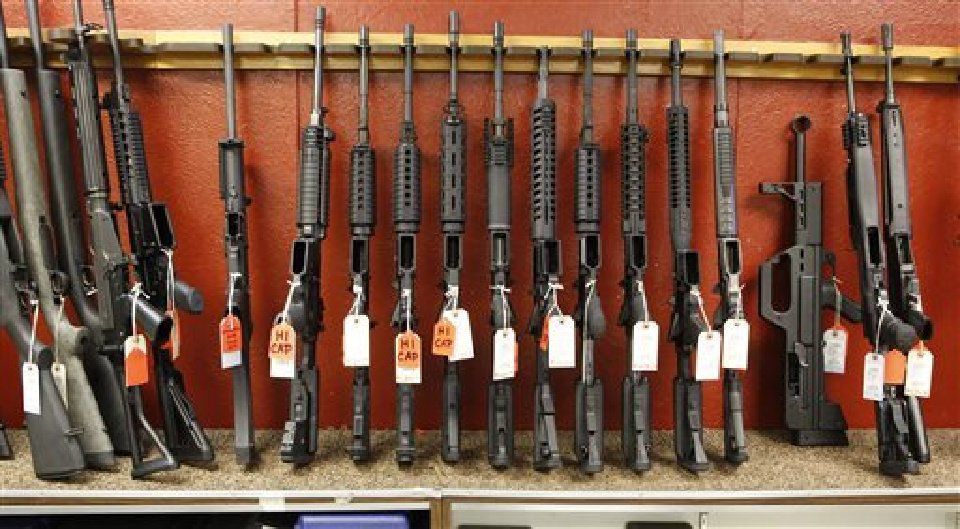
That investment is paying dividends today. The Supreme Court’s willingness to hear new challenges to state restrictions on commonly owned semiautomatic rifles demonstrates how dramatically the constitutional landscape has changed in recent years. Whether those laws ultimately survive remains to be seen, but the fact that the Court is taking up these questions shows a judiciary that is applying far greater scrutiny to Second Amendment cases than many observers expected only a decade ago.
Colorado may soon become one of the most closely watched battlegrounds in that legal and political debate. Democrats controlling the legislature have enacted some of the nation’s most restrictive firearm regulations, including new requirements affecting the purchase of many semiautomatic firearms that accept detachable magazines. Those laws are already facing judicial challenges from gun-rights organizations arguing they conflict with recent Supreme Court precedent interpreting the Second Amendment. While no one can predict how those lawsuits will ultimately be resolved, the state’s newest restrictions appear destined for years of litigation.
Yet the legal outcome may not be the most important political consequence.
For nearly half of Colorado households that include firearm owners, the legislation sent a message. Whether supporters view the new laws as reasonable public-safety measures or opponents see them as unconstitutional burdens, many gun owners interpreted the package as another indication that Democratic leaders remain willing to place additional restrictions on lawful firearm ownership.
In politics, symbolism often matters as much as policy. Voters frequently respond not only to what legislation does, but also to what it says about the priorities and values of those who enacted it.
Colorado has seen this movie before. In 2014, Governor John Hickenlooper won reelection by a narrow margin after years of controversy surrounding his support for gun-control legislation, including universal background checks and the state’s magazine-capacity limit.
Those measures triggered recall elections, energized gun-rights activists, and transformed what had long been considered a reliably outdoors-oriented constituency into an increasingly organized political force. Even after more than a decade, those battles remain part of Colorado’s political memory.
Today’s environment may prove even more volatile. Recent polling has suggested growing dissatisfaction among Colorado voters across a range of issues, extending well beyond firearms. Whether that frustration ultimately translates into electoral change is impossible to know. But history suggests that when motivated voters believe a constitutional right is under sustained attack, turnout often exceeds expectations. Gun owners have repeatedly demonstrated that they vote not simply for candidates but for judicial philosophies that will outlast any single administration.
That is why Colorado deserves national attention heading into November. If a considerable share of the state’s firearm owners concludes that recent legislation represents an unacceptable expansion of government authority over lawful gun ownership, Democrats could discover that they have awakened one of the most dependable voting blocs in American politics. The NRA’s roughly 75,000 Colorado members are certain to remind friends, neighbors, and fellow sportsmen exactly what is at stake in their view. The NRA’s grassroots network remains active, particularly in rural Colorado and many suburban communities.
Critics regularly dismiss the gun vote by treating firearms as simply another issue on a lengthy list of policy disagreements. For millions of Americans, however, the Second Amendment represents something much larger than hunting or recreational shooting. They believe it embodies the broader principle that constitutional rights should not fluctuate with changing political majorities. Agree or disagree with that philosophy, candidates who ignore it frequently underestimate the intensity of the voters who hold it.
The wider lesson extends well beyond firearms. Elections determine who writes laws, who signs them, and ultimately who appoints the judges responsible for deciding whether those laws survive constitutional review. Those judicial appointments frequently influence public policy long after presidents, governors, and legislators have left office.
Colorado’s newest firearm restrictions may eventually be narrowed, upheld, or struck down in whole or in part. The courts will decide that question. But the political message those laws sent has already been received by hundreds of thousands of Colorado gun owners. If recent history is any guide, that message may not only shape future litigation—it may also shape turnout at the ballot box.
Politicians who underestimate the gun vote have done so before. Many have lived to regret it.
Chris Dorsey has covered the Second Amendment and its impact on American politics for more than 30 years.