







New passenger rail proposal would link DIA to ski resorts and beyond | Bob Loevy
In an effort to help relieve traffic jams on Interstate 70 and U.S. 285 through the Colorado Rockies, a brand-new passenger railroad route has been proposed from Denver International Airport to a number of major Colorado ski areas.
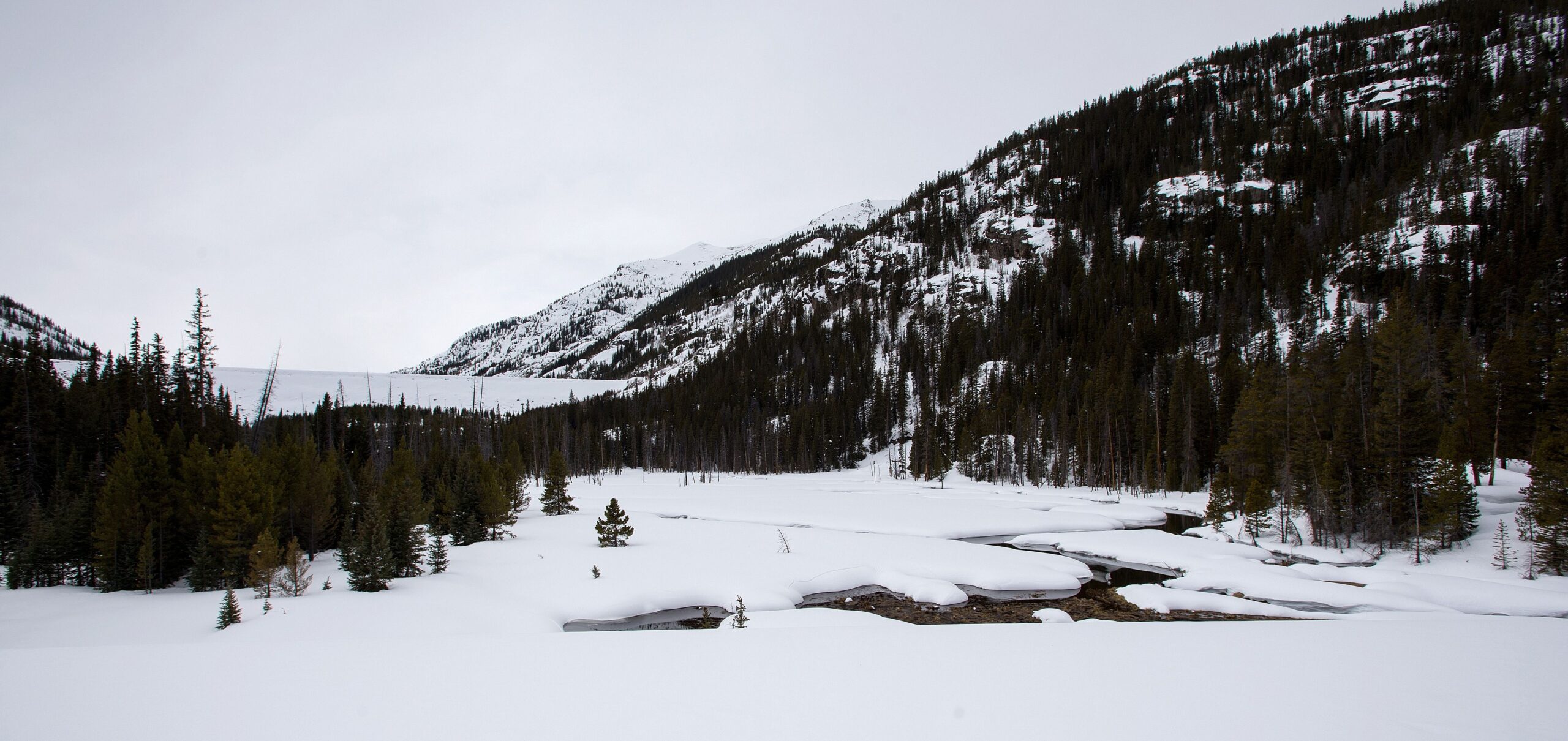
This new passenger railroad will be built far to the south of such busy automobile traffic areas as the Eisenhower Tunnel and Winter Park. It will mainly go through wild and undeveloped scenic territory.
Starting from DIA, the passenger trains will use brand new railroad track running south to Parker and then west to the existing Mineral Station on Denver’s RTD Light Rail line along Santa Fe Drive.
The new railroad tracks then will head in a southwestern direction parallel to U.S. 285 through Bailey to Grant.
Then the new passenger railroad will begin a scenic climb up Guanella Pass heading for the Continental Divide, which will be crossed with a 5-mile-long railroad tunnel.
Once through the Continental Divide tunnel, the passenger trains will soon reach the southern shores of Lake Dillon. (I-70 runs along the northern shores of Lake Dillon.)
The new railroad will then make its first major stop at Frisco, which will provide easy access to the Breckenridge, Keystone, Copper Mountain and Arapahoe Basin ski areas.
Staying on its own newly pioneered route, the railroad will run up and over the next mountain range near Fremont Pass, using a 6.5-mile railroad tunnel. Both the Continental Divide and Fremont tunnels will be engineered to also handle double-stacked container freight trains and military trains.
At Red Cliff, the new railroad will begin to parallel the out-of-service tracks of the Union Pacific (formerly Rio Grande) railroad, which goes over Tennessee Pass from Pueblo to Glenwood Springs and beyond.
The new tracks will carry the passenger trains to Vail, Beaver Creek and other ski areas in the Avon region. A short out-and-back spur track will be needed to reach Vail.
This proposed Alpine railroad will be single track with passing tracks at the major stations. In places, the line will be engineered to allow 90 mph speeds. From DIA to the Summit and Eagle County ski resorts will be 178 miles. It will take as little as 97 minutes for an express train leaving DIA to reach Avon.
The locomotives to pull these passenger trains will be neither catenary electric nor diesel powered. They will be battery powered electric locomotives that can make the trip from DIA to the major ski areas on a single charge.
There will be a major recharging facility at the Frisco station. Battery electric locomotives will recharge quickly in as little as 35-45 minutes during scheduled layovers.
A major asset of battery powered locomotives on mountain railroads is that the batteries can be recharged on downgrades by turning the electric motors that pull the train uphill into electric generators when going downhill.
Battery powered locomotives are non-polluting. They also eliminate the weather-related challenges associated with overhead catenary electric railway systems. The exposed electric wires can be easily damaged in mountain environments by heavy snow and ice.
Additionally, diesel locomotives are more polluting and require expensive tunnel ventilation systems, both problems mitigated by battery powered locomotives.
Passenger trains will be eight cars long, with two locomotives and six passenger coaches for each train. Initially, there will be 35 separate train sets, each one with a seating capacity of 520 passengers.
This new railway project will be a job creator. It is estimated that 72,000 direct and indirect jobs will be created during construction. In addition, 2,100 permanent operating positions will be required to operate the railroad once built.
It is further estimated the new railroad will reduce annual vehicle miles traveled on I-70 and U.S. 285 by 340 million, and carbon emissions will drop by 155,000 metric tons annually.
This project is known as Denver West Express (DWE). It is supported by a group of professionals with engineering, architectural and business training. Jay Branch is serving as vice president of design and development.
The major reason for proposing this project is the dire situation that exists along the I-70 corridor between the Front Range and the popular ski areas in the Rocky Mountains. Traffic congestion is bad and getting worse with each passing year.
Friday westbound and Sunday eastbound travel times regularly exceed four hours for the 100-mile journey from Denver to Vail. This is a trip that ordinarily requires less than two hours under normal driving conditions.
About 12 to 14 years will be required to construct this scenic mountain railroad. The total cost of this project is estimated to be as much as $33 billion in 2025 dollars. At that high cost, this will have to be a major government-supported project.
The high cost would be justified by the seriousness of the current traffic situation on I-70 west of Denver to the major Colorado ski areas. As the population on the Front Range increases in the future and the popularity of snow skiing continues to go up, the I-70 West traffic situation on weekends will only get worse.
A passenger train ride following a wild and scenic southerly route into the Rocky Mountains could be a big part of the solution.
News columnist Bob Loevy is a retired professor of political science at Colorado College who writes about Colorado and national politics.