







Colorado oil company sues over state order that shut it down

A pumpjack on the prairie.
(Photo by ImagineGolf, iStock)
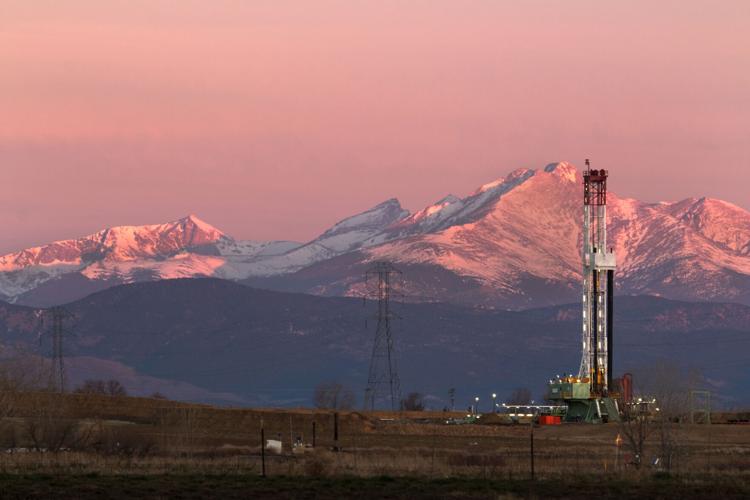
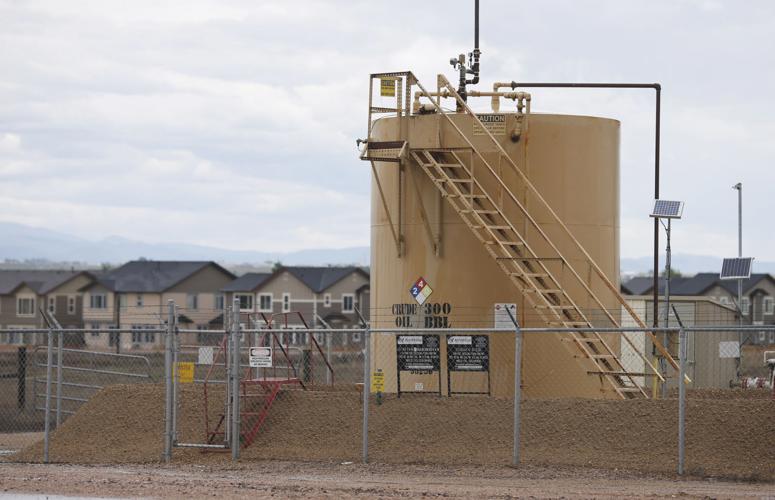
An order by state regulators that shut down oil and gas developer K.P. Kauffman Co. is being challenged in Denver District Court as arbitrary, capricious, unconstitutional and illegal, according to court documents.
The Colorado Oil & Gas Conservation Commission issued the order Feb. 15, which also ordered the company to immediately “operate into full compliance” with oil and gas regulations by August 1, 2023.
At the same time, it revoked the company’s “Certificate of Clearance” that is required for the company to move its products from the well heads to market.
That, the company argues in a lawsuit filed March 2, leaves it without the revenue needed to comply with state regulations and continue the remediation process it’s spent 14 months and $7 million on so far.
An attempt to contact the company for comment was unsuccessful. A commission spokesperson declined comment, citing ongoing litigation.
K.P. Kauffman Co. is a family-owned business that has been developing oil and gas wells since 1984.
The commission reinstated $1,935,030 of a $2,014,530 fine it had suspended, citing the company’s failure to comply with an agreement to remediate pollution at some of its sites.
Kauffman must pay the fine within 30 days of the order, even though the commission knows the company does not have the money.
The timing of the order, writes Kauffman, is calculated to drive the company into bankruptcy only 14 months into a 5-year remediation plan.
“In other words, the Order guarantees that KPK will not be in ‘full compliance with all Commission Rules’ by August 1, 2023, and therefore will lose its license to operate. The Order will force KPK into insolvency and bankruptcy,” according to the lawsuit.
If the company loses its license to operate in Colorado, the commission will seize all its wells and turn them over to Colorado’s Orphaned Well Program, it alleges.
That “will effectively confiscate KPK’s mineral property interests in Colorado and all associated wells,” according to the lawsuit.
State authorities investigated the company for violations of Colorado’s oil and gas regulations in 2020 and 2021 and required it to close approximately 87 wells associated with 29 sites — mostly having to do with contamination from spills and leaks, some of which Kauffman states pre-existed its ownership of some of the locations.
After 13 enforcement hearings in 2021, on Nov. 5, 2021, the commission issued notice for a “pattern of violations” for seven wells and sites out of the company’s 1,223 wells, of which some 800 are active, in Weld County.
Kauffman officials and the commission came to an agreement on a compliance plan in 2021.The agreement requires Kauffman to remediate “more than 50 CPA (Compliance Plan Agreement) sites,” and has detailed requirements for the work.
At a January 2023 hearing, the commission laid out a litany of alleged violations of the agreement, including excavation pits from removal of contaminated soil left open and, in some cases, inadequately fenced for more that 800 days.
Other allegations from the commission included that Kauffman failed to “substantially comply” with the agreement, failed to “correct a culture of non-compliance,” and was not using “best management practices” during remediation work.
“Evidence at hearing also demonstrated that KPK is incapable of protecting public safety or the environment while conducting remediation work, which shows KPK’s failure to change its culture of non-compliance,” says the order.
The commission also found that Kauffman has “not completed investigation at many CPA Sites,” which, it says, prevents the commission’s staff from quantifying the full extent of contamination.
“Overall, the evidence presented by KPK and Staff at hearing demonstrates that rather than a culture of compliance, KPK has a historic, persistent, and consistent lack of compliance. At most, KPK tried to comply just enough to keep the CPA in place, rather than actually progress locations toward remediation and comply with COGCC Rules,” the order says.
The company argues in the lawsuit it is working as fast as it can to remediate the contamination and that the commission’s order is unfair, was issued in violation of the Colorado Administrative Procedures act and is in bad faith.
The fines are the second largest in Colorado history, second only to an $18.5 million penalty against Anadarko Petroleum after a 2017 explosion at a home in Firestone that killed two people. Mark Martinez and Joey Irwin died, and Erin Martinez was left badly burned. The explosion was caused by odorless natural gas from a one-inch diameter plastic flow line infiltrating the soil around the house and eventually leaking into the basement. The line had not been properly shut off at the well head when the well was abandoned.
That incident resulted in Gov. Jared Polis ordering the inspection of every well in the state to ensure shutoff valves were properly set and there were no flow line leaks. Legislation about well safety quickly followed.