







Bug vs. Bug: How Colorado corn and peach farmers are utilizing insects to naturally fight invasive pests

A pheromone trap to monitor peach moths in Palisade.
Photo courtesy of The Palisade Insectary
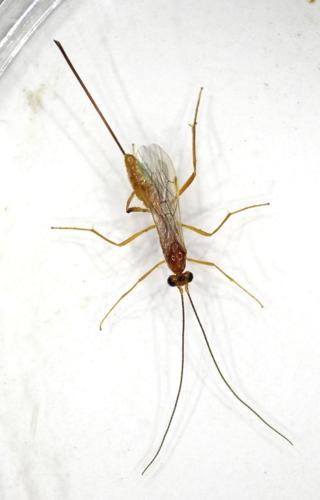
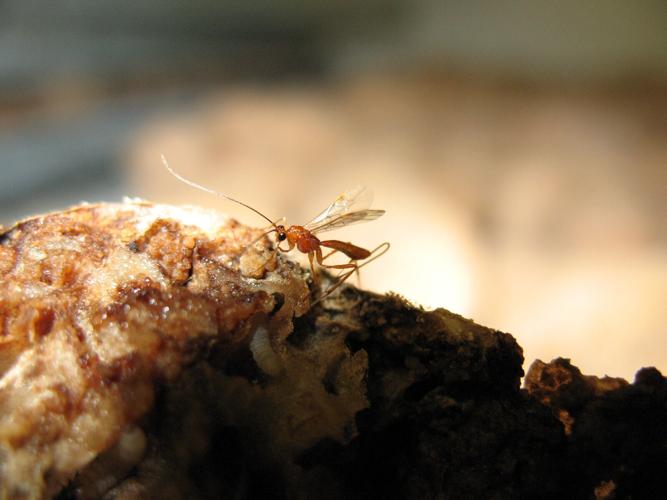
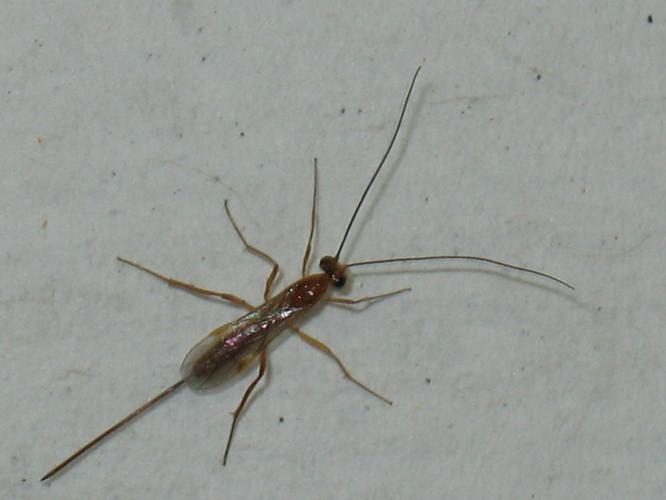
The problem of pests in agriculture isn’t new, but on Colorado’s Western Slope farmers have found a sustainable solution to help ensure the delectable Palisade peaches and Olathe sweet corn grace grocery stores this season.
The answer? More bugs.
The Palisade Insectary has been working since 1945 to develop organic, holistic solutions for farmers to avoid using chemicals through using natural enemies of invasive species impacting the various crops in an integrated pest control strategy called biological control.
“By natural enemies, we mean pathogens, predators, mites and parasitoids that have coevolved with their hosts (the target pests) for a very long time within the pest’s ecosystem,” Kristi Gladem with the Palisade Insectary said. (Parasitoid wasps are a large group of wasps that need to lay their eggs inside other insects to complete their lifecycle).
“Biocontrol is a long-term solution to pest management. It can bring pest levels down to below the threshold of where they are economically damaging,” added Dan Bean, the director of biological pest control for the Colorado Department of Agriculture.
One of the more popular species used in this form of biological control is the introduction of the Macrocentrus ancylivorus, more commonly known as a “Mac” — a form of parasitic wasp that can locate the Oriental moth larvae that have already made its way to the plant tissue and lay its eggs inside the larvae to top its life cycle.
According to Gladem, the Grapholita molesta, or the Oriental moth, is native to Asia and is damaging to stone fruit and peach trees, laying its eggs on the surface of the fruit and its stems.
The Oriental fruit moth first arrived in the U.S. from China in 1913 on flowering cherry fruit shipped here.
“As the larvae chew their way through to the interior of the plants, they ruin the fruit and cause flagging of the branches, which reduced (fruit) yields further.”
“Mac is a parasitoid with a long ovipositor (a tubular structure used for laying eggs) that can locate the moth larvae inside of the plant tissue, lay an egg inside of that larvae and the developing wasp kills the host moth larvae,” Gladem said.
While the wasp that will come forth from the larvae does not overwinter, meaning it dies once conditions cool, the Oriental moth can overwinter, increasing its impact yearly. Not only does the Mac wasp work to decrease the presence of an invasive, unnatural species on the Western Slope, but it does not further impact the ecosystem as it is reintroduced to peach orchards annually with the purpose of pest control.
According to Bean, the insectory releases approximately 1.5 million mac wasps annually.
A successful example of the biological control method can be seen in the insectary’s home in Palisade through the success of mitigating the devastating effects of the oriental moth and affecting the famous peaches.
According to Bruce Talbott with Talbott Farms, the use of the wasps drastically reduced the pressure of pests the family faces when working to produce a healthy crop.
“Using the wasps doesn’t save us a spray, but it gives us more effective control. One of our biggest problems in commercial agriculture is nearby homeowners with untreated fruit trees, and those bugs will travel to our crop,” Talbott said.
“By using the wasps, they go out and find our problems for us. Not to the point that we don’t have to spray, but it drastically reduces pest pressure.”
Talbott said the pesticides currently being sprayed have evolved drastically since his family went into the peach business over 100 years ago.
“We used to have to spray in something that looks like a space suit, now we only wear a baseball cap and a respirator,” he said. “The old, big hammer, organophosphate products were highly effective but disrupted the ecosystem more than what we have right now.”
Colorado farmers these days are working to phase out the use of organophosphate pesticides of the past, said Talbott. Invasive pests have grown a tolerance to the chemicals making them less effective — increasing the need for more biological control agents to assist in combating Colorado crops.
“We’re always looking for anything we can do that prevents us from going out with disrupting control programs,” Talbott said.
The main impacts Talbott says he’s witnessed on the peach crop this year were from weather earlier in the season and pest problems amid the bloom, which has mainly impacted his commercial sales.
“We had some insect problems during the bloom, and two hail storms earlier in the season. The first storm rasped the peaches, the second one made some holes in the fruit,” Talbott said.
“It’s a good peach to eat, you and I would do just great with it. Our sellers like Safeway and King Soopers just don’t want beat-up fruit on display.”
Describing his peach crop as still “reasonably decent,” he expects a 20%-30% loss, Talbott estimates.
“This year, we overcommitted and underdelivered,” Talbott said. “It’s an unlucky problem this year — economically the crop just isn’t worth what it should have been worth, so we won’t have the revenue to upgrade or do the various improvements we want to do as a business.”
All ears
Meanwhile, in Olathe, the invasive corn earworm has posed bitter problems for sweet corn farmer John Harold, owner of Tuxedo Corn Co.
Scientifically known as the Helicoverpa zea, the corn earworm is a bothersome moth.
The young larvae are found inside of the corn ear and feed mainly on the silks. The worms damage the corn’s appearance, not the taste, and decrease corn sales to Tuxedo’s commercial distributors who are seeking perfectly appearing veggies to display.
Additionally, the presence of the earworm works to increase labor costs as farm hands have to meticulously check the corn ears for the worms by hand.
In 2023, Harold cited a 30% decrease in corn production. While he has witnessed improvements this year, the presence of the earworm coupled with other issues such as a rising cost of labor set Harold on a mission to find a sustainable solution.
“It’s better, but it’s still not where it needs to be. We’ve spent a substantial amount of time and effort this year on this problem,” Harold said. “We’re losing about 20% of our crop this year and our customers are terribly flustered, that’s about it in a nutshell.”
According to a Colorado State University article, earworms “(are) one of the most widespread and commonly damaging insects in much of the United States, affecting both field crops and vegetable crops.”
According to CSU, the adult moths lay eggs on single leaves of crops — approximately 25 at a time, producing upwards of two generations a year. In Colorado, the pests are resilient to many common pesticides and are common in crops of corn, tomato and hemp.
Harold told The Gazette that specialists from around the globe are consulting on the pest problem, bringing a variety of possible solutions within the world of biological control.
“We’ve had people here from Australia, Brazil, Indiana, Kentucky — all over the country trying to figure out how to solve this problem.”
Harold said one technique they have witnessed benefits from is introducing types of ladybugs and spider venom to the cornfield to go after the eggs laid by the moths.
“The gentlemen we had come in from Australia said the process can feel like a roller-coaster. Some days you think you’re winning, some days you know you’re losing. We’re doing better but we’re not doing well enough to say we’ve solved it,” Harold said.
He said the farm has started a collaborative effort with the Palisade Insectary this season to work to tackle the problem locally.
“They (the Palisade Insectary) got on this thing like stink and manure this year. While they’re doing a lot of the lab work this year, we’re doing more of the fieldwork. They’ve been great partners,” Harold said.
“Right now, we’re looking at ways we can incorporate biocontrol into earworm management. There are multiple parasitic wasps that could be used to combat the earworms and we are considering the feasibility of rearing and distributing them in large enough numbers to manage the pest,” Bean said.
“The corn earworm is a major problem for sweetcorn growers in Olathe. I would be very happy if we could help manage the corn earworm and as soon as our busy season tapers off in the next month or so we’ll begin working on it. The sooner the better.”
Department of Agriculture Commissioner Kate Greenburg spoke about the success and sustainability of using biological control agents in assisting Colorado farmers now and in the future.
“We want to focus on whole farm resilience,” Greenberg said.
“The earworm is one of many challenges alongside water, climate change, changing labor conditions — there’s so much change happening in agriculture that is forcing farmers to think of new ways of doing things. What worked in the past won’t necessarily work in the future.”
“With biological control, we’re protecting beneficial insects and fighting invasive insects. We’re fighting non-desired species with biological solutions and we’ve seen a lot of success there,” Greenberg said.
Greenberg also posed the sentiment of decreasing expectations of “perfect food,” in terms of its appearance.
“With the earworm in particular we are growing perfectly good food, even if it’s not perfect food. We need consumers to have our producer’s backs and be a part of supporting our farms when times are good and when times are tough.”