







Elijah McClain autopsy: Not certain if struggle with officers contributed to death
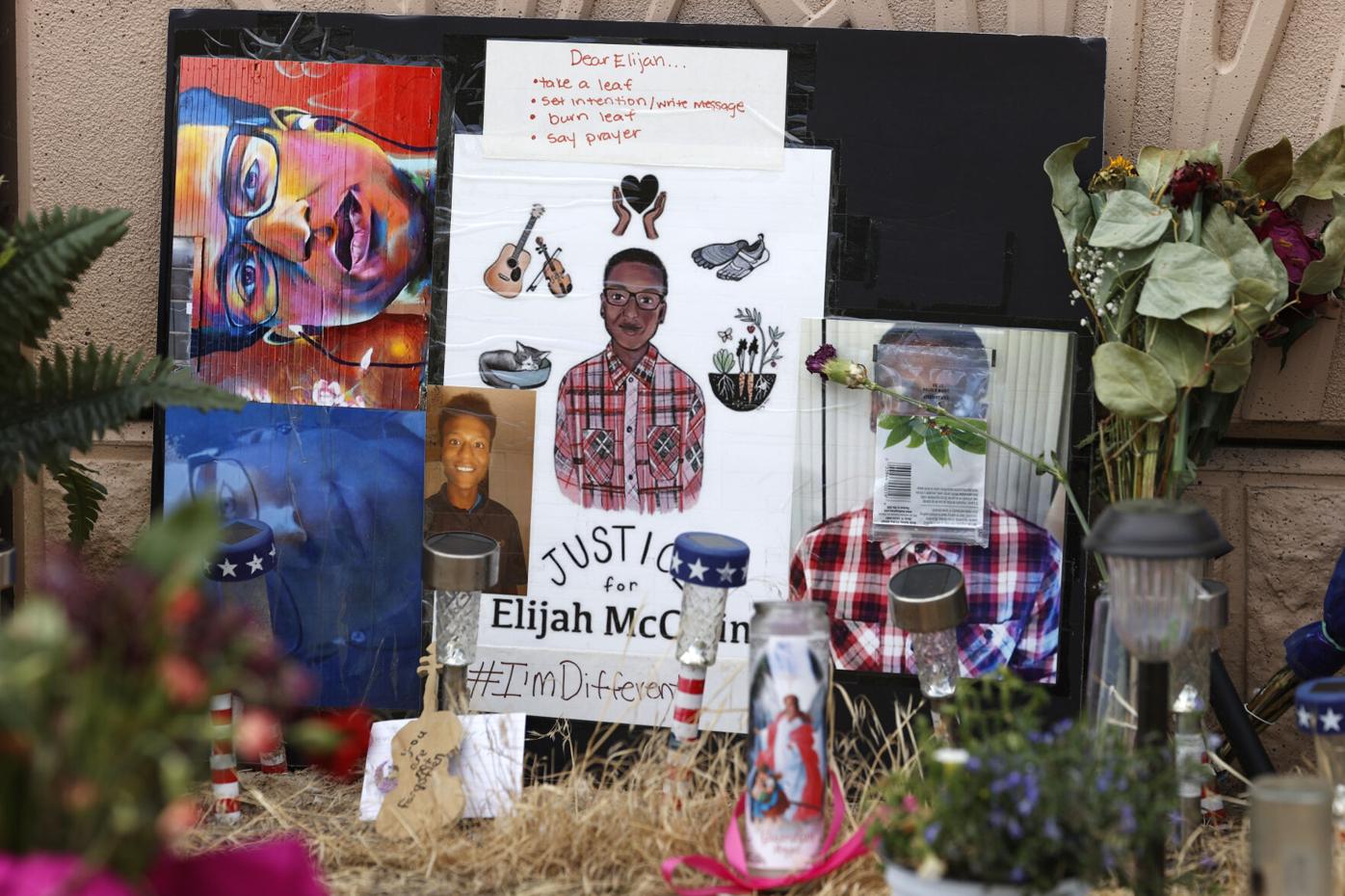
David Zalubowski/Associated Press
The forensic pathologist who performed Elijah McClain’s autopsy testified on Tuesday he couldn’t say for sure whether the effects of McClain’s struggle with police contributed to his death.
Stephen Cina, who contracts with the Adams County coroner’s office, did McClain’s autopsy in early September 2019, a few days after his death at the end of August. He wrote in his initial report from November 2019 he could not determine McClain’s cause of death. In July 2021, he amended his autopsy report to say he believes McClain died from “complications of ketamine administration following forcible restraint.”
He based his opinion on seeing McClain “gasping like a fish out of water” after an injection of ketamine by a paramedic on body-worn camera footage.
Cina noted “Mr. McClain would most likely be alive but for the administration of ketamine,” and added he saw “no evidence that injuries inflicted by police contributed to death” because McClain was conscious, able to speak and responsive following the neck hold and removal of the officers’ body weight from him.
But during testimony Tuesday, Cina clarified he couldn’t say for sure whether low oxygen and elevated acid in McClain’s blood during the struggle with police contributed to his death.
Jury hears about Aurora police's medical emergency training in trial over Elijah McClain's death
Officer Randy Roedema and former officer Jason Rosenblatt each face charges of assault, manslaughter and criminally negligent homicide in McClain’s death. The case accuses them of stopping him the night of Aug. 24, 2019 as McClain, 23, walked home from a convenience store. Along with Officer Nathan Woodyard, the officers put him in a type of neck hold meant to temporarily restrict blood flow to a person’s brain, known as a carotid hold or “sleeper” hold.
Roedema and Rosenblatt are accused of ignoring McClain’s pleas that he could not breathe while pinned on the ground during the 18-minute encounter.
A paramedic called to the scene injected McClain with 500 milligrams of the sedative ketamine. Within a few minutes, he went into cardiac arrest and stopped breathing. He died in a hospital a few days later after being declared brain dead.
Woodyard and two Aurora Fire Rescue paramedics, Jeremy Cooper and Peter Cichuniec, face criminal charges in two separate cases.
Doctor declines to assign fault for Elijah McClain's death
“What you saw suggested to you that prior to the administration of ketamine, Mr. McClain looked normal?” Harvey Steinberg, one of Rosenblatt’s defense attorneys, asked Cina.
“I wouldn’t say he looked normal,” Cina said. “He was alive prior the administration of ketamine.”
Though he said he believes McClain inhaled his own vomit during the incident, Cina said he could not tell whether that happened before or after the ketamine injection. But he added if the carotid hold used by the officers induced vomiting and caused McClain to aspirate while he was restrained, it could have contributed to the ketamine’s effects.
He testified to a grand jury he believes it’s “more likely than not” McClain inhaled his vomit after the ketamine injection, because of his position slumped forward as he was put on a stretcher. But on the stand, he testified that, to him, that means “51% to 49.”
Roedema and Rosenblatt’s defense attorneys pointed out Cina has not found any cases of a person dying from a properly applied carotid hold. They have argued McClain violently resisted the police officers. They have also sought to lay responsibility for McClain’s death at the feet of paramedics who responded that night, establishing they had sole authority over medical decisions for McClain and for monitoring his vital signs once they arrived but did not examine or talk to him.
Cina left McClain’s manner of death undetermined in his second report. The possible classifications include homicide, suicide, accidental, natural causes or undetermined. If he felt sure the police officers’ restraint of McClain contributed to his death, he would have classified the death as a homicide, Cina said.
Elijah McClain already at risk of death before ketamine injection, physician says
Prosecutors spent little time questioning Cina about what led him to change his autopsy report. He said he received additional body cam footage between the first and second reports, and called it crucial to forming his opinion on the cause of death. Cina said he rarely leaves the cause of death undetermined, but it always feels unsatisfying.
“I think it brings more finality to the case, and in some cases it may bring closure,” Cina said.
The Aurora Police Department said it provided body-worn camera footage of the officers’ contact with McClain to the Adams County coroner’s office before Cina’s first autopsy report, Denver Gazette partner 9News reported in July. Cina’s first report said he reviewed footage from the restraining officers, but it’s not clear exactly which clips he saw, the outlet reported.