







Denver exhibit paints improved picture of artist Clyfford Still
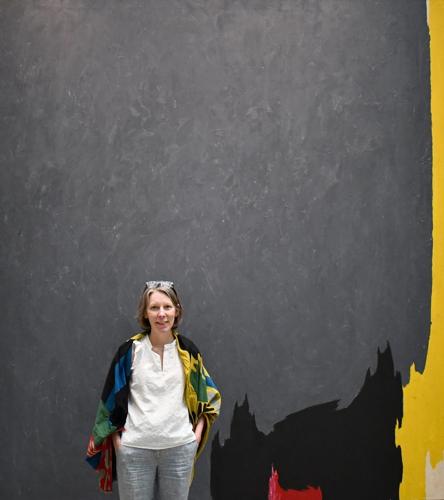
Guest Curator Valerie Hellstein pictured with her favorite Clyfford Still painting: PH-1071. Still created a cataloging system, naming each painting with PH — an abbreviation for “photograph”— followed by a number. The numbers correspond to when Still photographed the work, not when he painted the canvas.
Courtesy photo, Cyfford Still Musuem
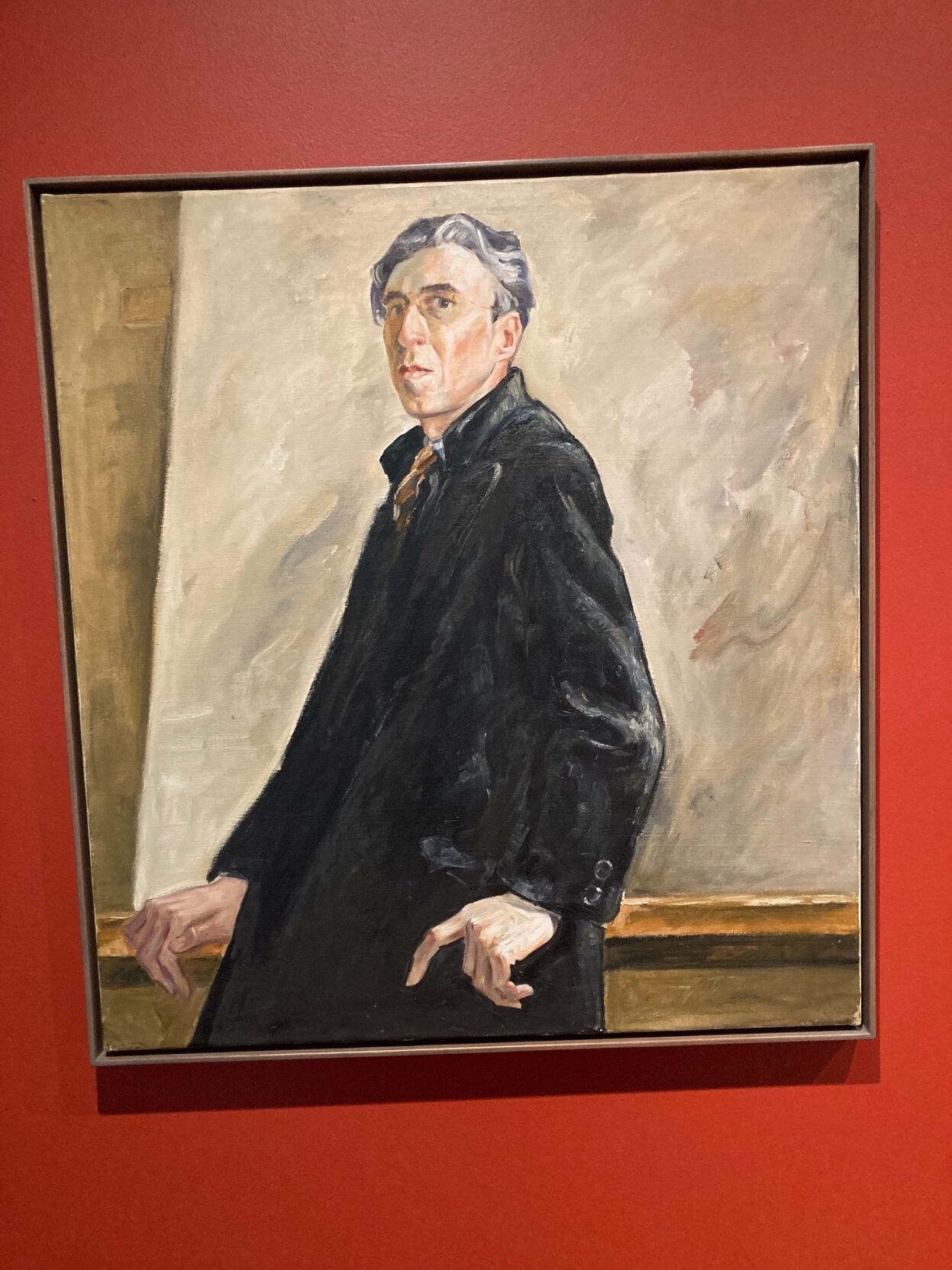
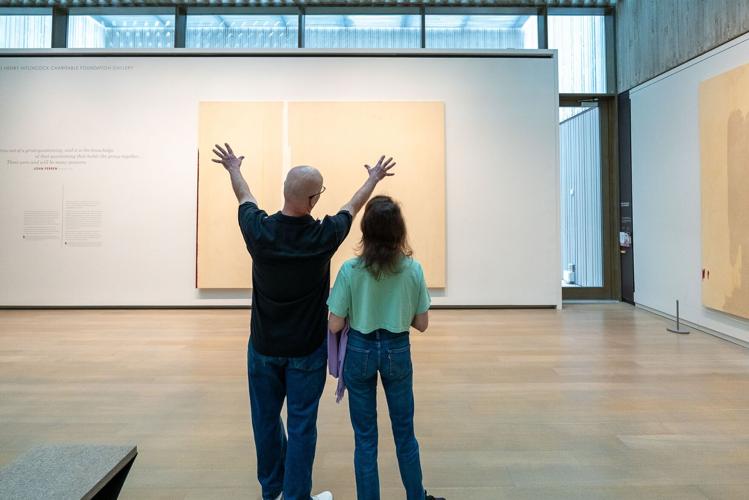
Despite his obviously innovative flair for painting, Clyfford Still (Nov. 30, 1904 to June 23, 1980) has a tarnished reputation.
The artist long has been viewed as a lone wolf with a stereotypically disagreeable artistic temperament.
Still’s personal and professional life scandalized many. He pulled his paintings from galleries, and shunned and bashed the art world.
He was a largely absentee husband and father who divorced his wife and the mother of his daughters to marry a former student 16 years his junior. And he also imposed extreme controls on how his work could be exhibited or collected.
But at the Clyfford Still Museum (CSM) in Denver’s Golden Triangle Creative District, a beguiling exhibition aims to debunk the myth of Still as an isolated sorehead genius.
“Still talked a big game. It was part of the myth he perpetuated, but I think he saw himself as part of something,” said Valerie Hellstein, guest curator of “Dialogue and Defiance: Clyfford Still and the Abstract Expressionists,” showing through Jan. 12, 2025.
Hellstein curated an exhibit demonstrating that the painter who led the charge toward Abstract Expressionism, in fact, belonged to various communities, that his teaching for decades influenced many students and that his system of organizing paintings yet leaving works unnamed allowed viewers to draw their own conclusions about his art. The exhibit showcases evidence that Still influenced, and was influenced by, his contemporaries such as Mark Rothko, Jackson Pollock, Barnett Newman and Willem de Kooning.
“His standoffishness and cantankerousness could probably be attributed to his personality and biography, but he was also a man of deep, deep convictions,” Hellstein said. “He held things so closely and so personally and so fervently. He didn’t want his paintings or the role of the artist corrupted. Those convictions contribute to what we consider now his difficultness.”
Joyce Tsai, Clyfford Still Museum director, said: “I’ve known Valerie Hellstein and have admired her work for years now. She’s a scholar who understands that artists never work in isolation and often push up against, shape, or embrace shared values and aspirations that emerge within community. Clyfford Still is often seen as a lone renegade, but Hellstein’s show beautifully illuminates that his art was forged in conversation with and, at times, in tension with his peers.”
For Hellstein, the deep dive into curating the exhibit granted her a better understanding of Still as a man and as a painter. Yet Hellstein admits Still is still one of the toughest artists to get to know.
“When I was in grad school and working on my dissertation, everything I read about Still made him out to be a difficult human being and one who had difficult relationships with his peers,” Hellstein said. “That was really hard for me to get over — not that you have to love artists you work on, but it was definitely a hurdle.”
Before moving to Denver in 2016, Hellstein had minimal exposure to Still’s art.
“Not many Still paintings are out in the broad world,” she said.
Hellstein saw her first Still painting either at the Metropolitan Museum of Art in New York City or the Hirshhorn Museum in Washington, D.C.
“It was really black with a crumbly texture, a big canvas,” she said. “I didn’t know what to do with this painting. I had a hard time wrapping my brain around what Still was doing. The physicality of the material was so different. I had a hard time positioning him. He was an outlier in all my studies.”
After relocating to Denver, Hellstein affiliated herself with the CSM, which holds 93 percent of Still’s ouvre. Hellstein began leading museum tours.
“I saw all the paintings in this amazing envelope. Learning a little more about him, doing more research about him, working in the archives, I got a better feel for Still,” Hellstein said.
“Some of those walls he put up over the years, I’ve been able to peer behind them just a little bit,” she added. “I feel I’ve gotten to know him. He really is an important part of this group. Still was the impetus or encourager for others to move into abstraction.”
An art historian and widely published independent scholar, Hellstein, as guest curator, enjoyed access to all 935 canvases in painting storage at the CSM. For the exhibition, Hellstein selected 11 Still paintings never previously exhibited publicly.
“We’ve been open 13 years and we’re still bringing out paintings never before on view,” saod CSM Director of Marketing and Communications Sanya Andersen-Vie.
For the exhibit, Hellstein imposed a timeframe to constrain options.
“The dates range from 1948 to very early 1954, so we’re focused on what many consider the pinnacle of Abstract Expressionism,” Hellstein said.
“Still definitely wouldn’t say his paintings are illustrations of his time period,” she added, “but he was of his time and this period and within this group of people he liked and didn’t like.”
Tsai said: “Hellstein’s show focuses on this critical period in Still’s career that benefited enormously from the artistic community in which he was embedded, as well as the work of several powerful women in the art world who supported his rise, including patron and gallerist Peggy Guggenheim, gallerist Betty Parsons and MoMA curator Dorothy Miller.”
Still’s art came to Denver as a gift from his estate because the city agreed to the artist’s stipulation that his work go to a city that would build a museum for his works —and his works alone. The limitation has benefits and drawbacks.
The Vicki and Kent Logan Curator of Modern and Contemporary Art for the Denver Art Museum Rory Padeken said: “Very few places in the world offer the opportunity to engage deeply and thoughtfully with the work of a single artist, much less an artist as influential and important as Clyfford Still, whose artworks continue to fascinate and inspire visitors, scholars, and artists.”
On the other hand, Hellstein could not bring in paintings by Still’s peers. Within the constraints of the CSM, Hellstein curated a show that subtly introduces Still’s artistic contemporaries.
“My first parameter was paintings made in dialogue with other artists,” said Hellstein. “The ‘15 Americans’ show [in 1952 at New York City’s Museum of Modern Art] was a crucial part of this and formed the core of how I thought about the paintings. It’s a little subversive yet without going against the spirit or letter of Still’s wishes, each gallery has a wall quote from another artist. Several of the galleries include catalogs of the other artists.”
Hellstein is writing a book about The Club — a group of artists, musicians and intellectuals who met regularly in New York City as a community to discuss art and ideas. And although Still never belonged to The Club, Hellstein said he influenced the community.
“He was so adamant about not associating with the other artists that I had a hard time conceptualizing how he fit into the community,” Hellstein said. “The artists recognized Still as important. Pollock has a quote in the video downstairs that says ‘Still makes us all look academic.’ Still really did go out on a limb before the others.”
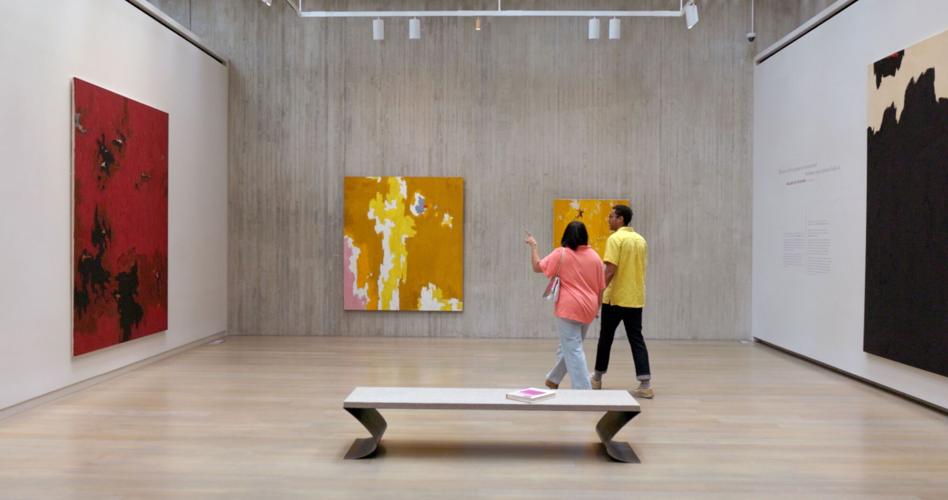
One gallery in the exhibition spotlights Still’s bisected color-field canvases demonstrating an evident back-and-forth between Still and Rothko.
“These visual dialogues with artists he was involved with were at the top of my mind,” Hellstein said. “Still gave Rothko the courage, I think, to move into complete abstraction. Still would never say he got anything from Rothko, but I think we can see it.”
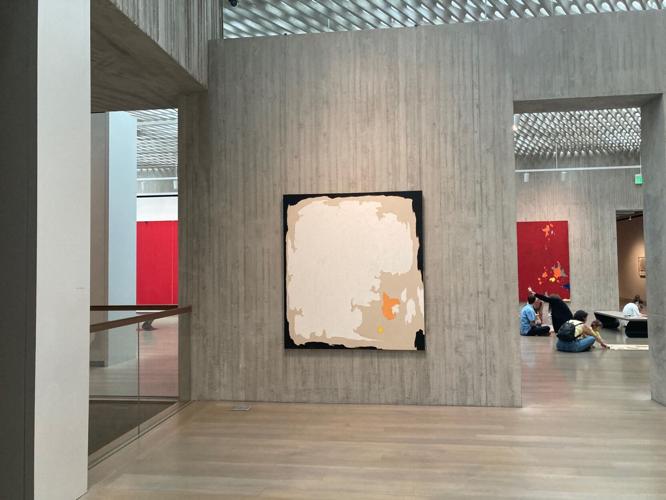
Hellstein, noting Still’s renegade presentation of a largely unpainted canvas with a blotch of blue and a blotch of orange, pointed out that Pollack, in turn, left bits of canvas entirely raw.
“It was really radical, very daring,” said Hellstein. “With Still, there is the idea of courage.”
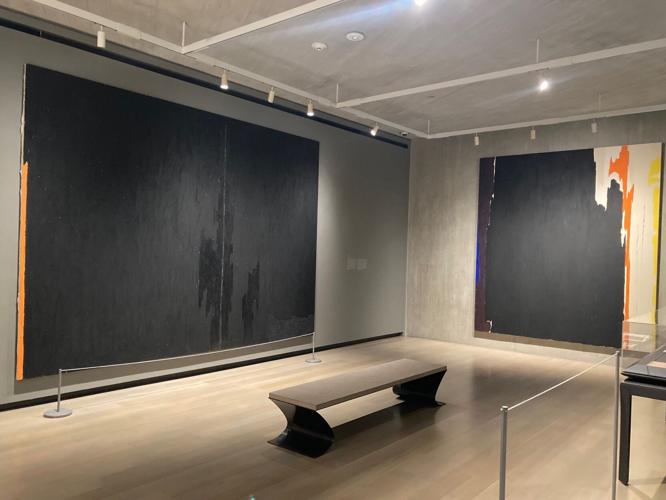
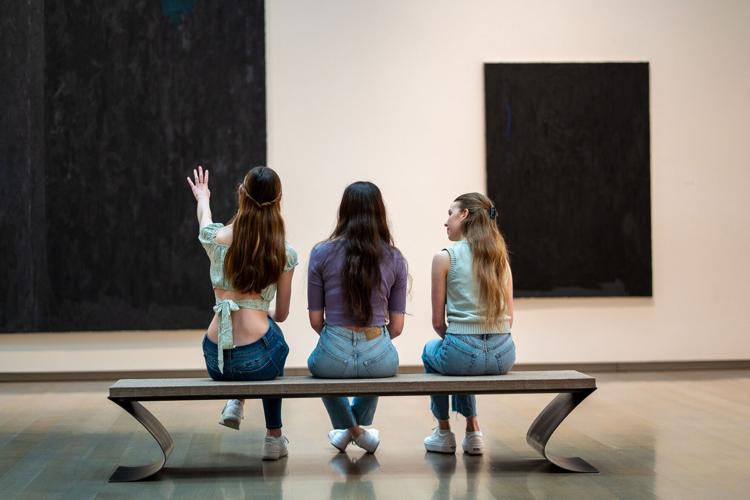
In another gallery, Still’s black and white impasto palette knife paintings preside, monumental and mysterious as life and death.
“Black was always important for Still. He was painting black paintings in the early to mid ‘40s,” said Hellstein. “Other artists were experimenting with black and white and the minimal means to create a painting that holds someone’s attention: de Kooning and Franz Kline and Robert Rauschenberg made black-and-white paintings,” Hellstein said.
“A lot of other artists in that period were asking, in general, ‘What makes a painting? How little can you put on a canvas to make a painting?’”
Hellstein also spoke to the tendency of Still and the Abstract Expressionists to leave their paintings unframed, uncontained.
“It was typical of all of them,” she said. “I don’t know if any of them would exactly say this, but when you put a painting in a frame, it sets it off. Not framing the work, in part, they were thinking of the paintings in terms of the space and the architecture.”
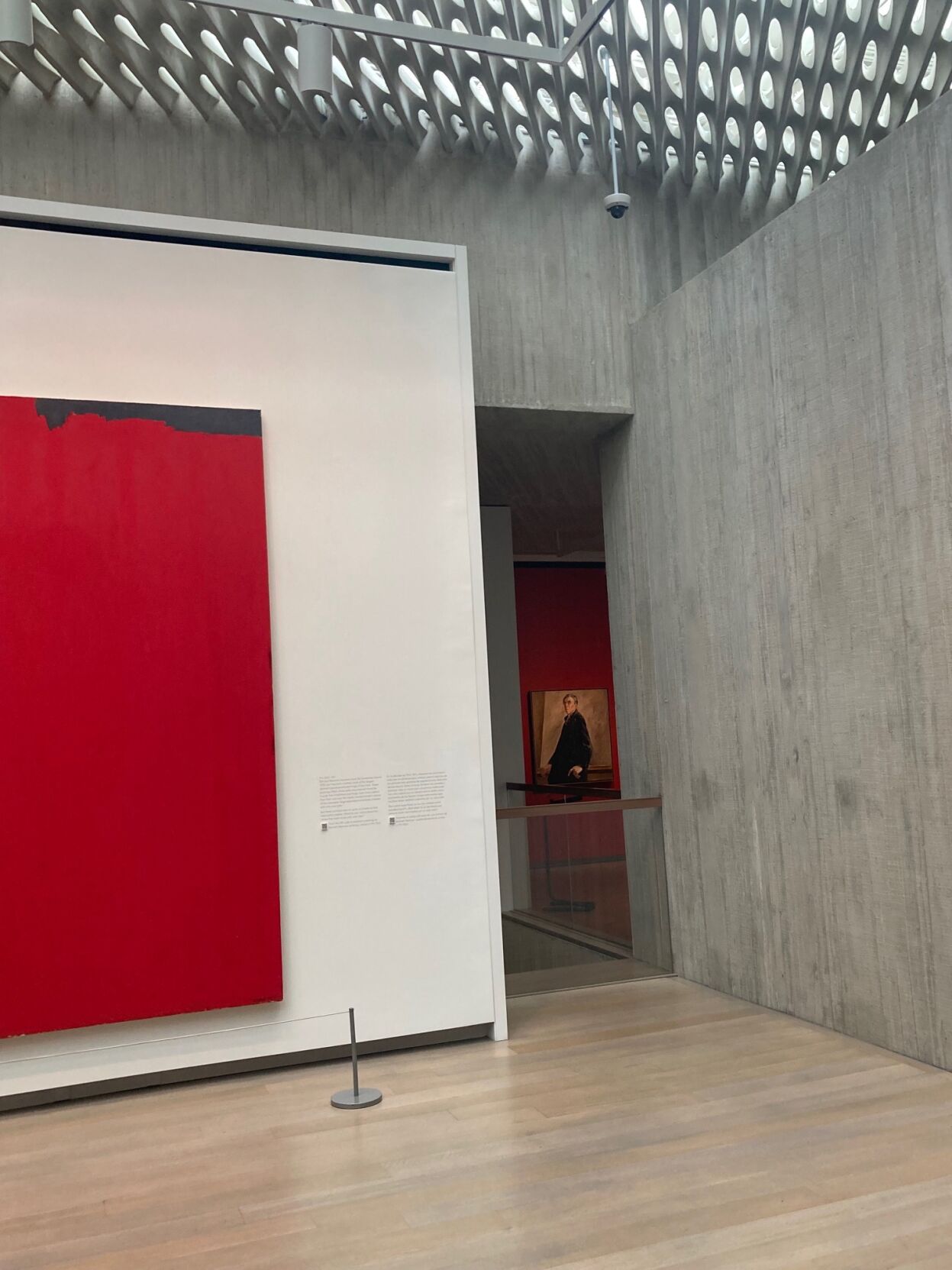
The CSM architecture is expansive and offers calming diffused natural light. Andersen-Vie said visitor survey feedback often mentions the healing nature of the museum. The extraordinary two-story 28,500-square-feet structure designed by Brad Cloepfil inspired Hellstein’s curation.
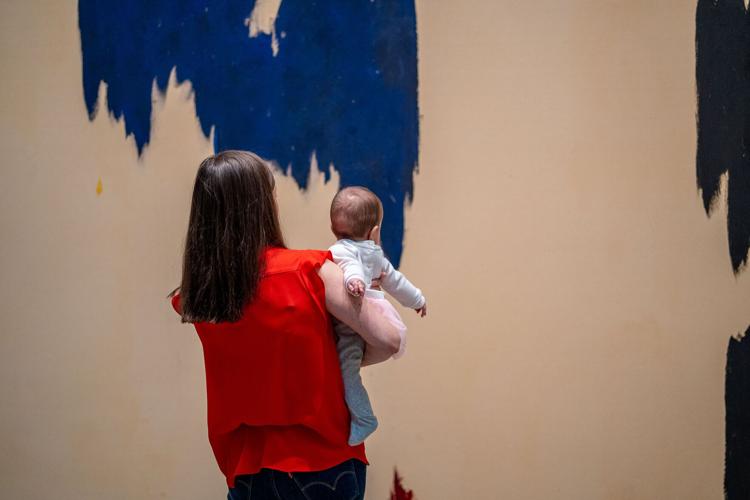
“These ginormous paintings artists did in the late ‘40s and early ‘50s were murals meant to fill the walls,” Hellstein said. “Having that big black painting on that little wall is one of the show’s more surprising aspects.”
And if this exhibition gives rise to a certain stripe of transcendence, Still probably would approve. The artist believed his paintings possessed spirit.
“One way to think of them being alive is that a painting has an impact on the painters as they are creating and, projected into the future, an impact on the viewer,” Hellstein said. “Still, at one point, understood his paintings as states of being.”