







Alamosa City Council may fund a recall of controversial San Luis Valley District Attorney

Alonzo Payne signed on for office in Jan. 2020. This photo is on his election website as part of his endorsement for DA by Bernie Sanders.
Alonzo Payne for Colorado website
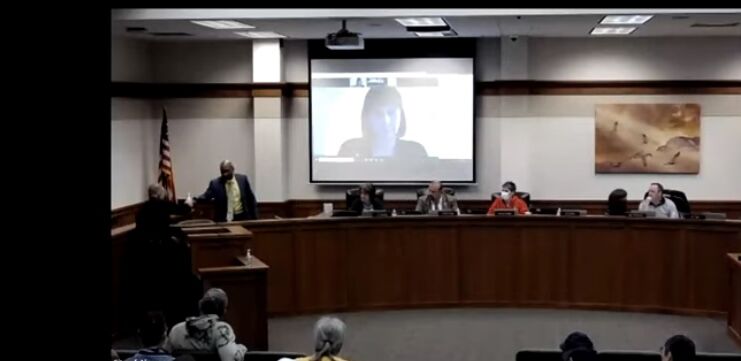


The honeymoon is over in the San Luis Valley between its freshman District Attorney, the Alamosa police chief and residents — who last week begged the City Council to use taxpayers’ money in an effort to recall the man some nicknamed “Let’em Go Alonzo.”
The council listened to sentiment during the three hour meeting that District Attorney Alonzo Payne is making the Valley less safe because he values criminals over victims. Alamosa Police Chief Kenny Anderson explained that none of the more than 40 narcotic cases his department has handed to Payne in the last nine months has gone to trial.
“They have all been dismissed or led to less-serious offenses with very minimal jail time,” explained Anderson.
During a power point presentation, he showed photos of heroin and crystal methamphetamine that his officers have confiscated. Also included in his presentation were “cop killer” weapons they’ve found on drug dealers.
Tears of frustration
The meeting screeched to a halt for several minutes as Anderson choked back tears over the suicide of a bullied middle schooler which he said should not have happened. Thirteen-year-old Jaydin Cruz was attacked at school Friday, Oct. 1, explained Anderson, and charges were recommended by that Monday. “This is a 13-year-old kid. His guardians assert that without the abandonment by the DA’s office, Jaydin would not have killed himself.”
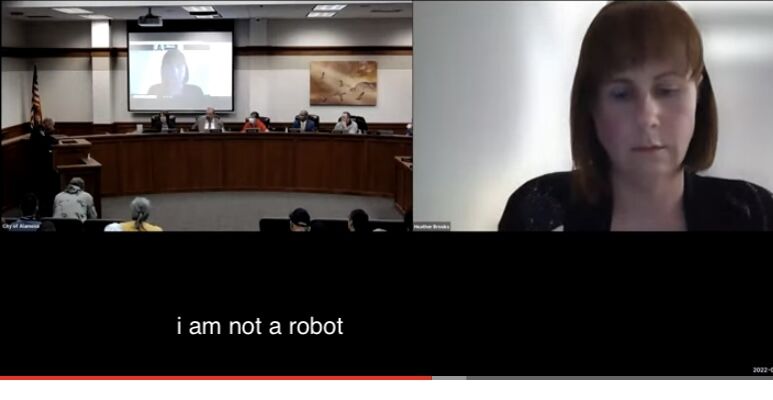
Jaydin Cruz took his life four days before Christmas as charges for his attackers “sat without action on the DA’s desk.” As he inhaled to contain himself, Anderson said “I am not a robot, okay?”
To remove District Attorney Alonzo Payne, the council would have to approve changing the city’s Fair Campaign Practices Act to allow up to $10,000 to go toward the recall. The move is unprecedented in the 12th Judicial District, which is as big as Connecticut and includes six counties.
“I get phone calls from people with terror in their voice because the person standing in line next to them at the grocery store is the person who victimized them,” Mayor Ty Coleman told The Gazette. “They feel there’s no hope. They feel the system is broken.”
During the March 2 meeting, residents talked about their fear just living in the Valley, where they say dangerous criminals who are getting easy plea deals and being put back on the street by Payne’s office.
Payne’s problems are rooted deeper than the city of Alamosa’s complaint. He is under investigation by the Attorney General’s office for violating the Victim’s Rights Act after the Colorado Crime Advisory Board received eight complaints about him since Feb. 9.
All eight of those were reviewed by the Victim’s Rights Act subcommittee which found that victims were not consulted or treated with fairness. The group sent their report to Governor Jared Polis, who then referred the case to Attorney General Phil Weiser, who called the accusations “troubling.”
Weiser traveled to the San Luis Valley Feb. 21-23 on a previously scheduled visit, where he met with local officials and community members, according to his spokesperson Lawrence Pacheco.
This is the first time in the VRA subcommittee’s 30 year history that the board has made this type of referral.
One of those cases is that of a domestic violence victim named Lani Welch, who filed charges against her ex-fiance for third degree assault at the end of June 2020 and for stalking a week after that. Jeffery Tonso was on the run for seven months before he was apprehended last year and sentenced to jail on a drastically reduced charge of telephone obstruction for stealing her cellphone.
Welch said Tonso used to threaten to kill her by text, but made her delete all of those messages but one, which she hid and saved for later: “If I was within an arms length (sic), I’d punch you right in your s*** talking mouth,” he wrote Welch in Dec. 2019 in his first abusive communication to her. “Respect!!! You don’t know what being respectful is.”
Welch claims that once Tonso was arrested, Payne did not seek her opinion about plea negotiations. When she filed a complaint with the Rocky Mountain Victim Law Center, he responded to the Victims Rights Subcommittee in a letter calling her “hysterical.”
Explains Welch, “I was having a panic attack. I had just been told the person who had threatened my life on various occasions was getting a lighter sentence.”
Tonso was eventually sentenced 18 months in jail, and to Welch’s horror, is scheduled to be out of jail this summer.
“I will never stop looking over my shoulder,” Welch, who has been diagnosed with Post-Traumatic Stress Disorder, told The Gazette.
Welch said that through the experience she has found that her voice matters. Besides leading the effort to recall Payne, she has her eye on supporting legislation which would establish a state registry for domestic violence victims.
Payne justified the deal he was giving Tonso was because he had no prior convictions, but Welch discovered through doing research on her own that he had been convicted of domestic violence five times before he met her in four other Colorado counties.
“I want to prevent him from doing this to anyone else. It’s terrifying when criminals know they can get away with their crimes. That’s when they escalate,” she said.
Welch expects Tonso to move in with his mother in Colorado Springs once he’s released.
As San Luis Valley Turns
The district is like a soap opera. This week, Payne, a former Colorado public defender who ran on a criminal reform platform, filed a felony embezzlement charge against his predecessor, former District Attorney Robert Willett, for “converting public monies or property to his own use.” Willett was appointed DA by Polis in Dec. 2019 and sworn into office that January, but Payne beat him in the primary by a 62% margin.
Attempts to reach Payne by email and phone were unsuccessful, but he has supporters in the Valley and not everyone believes using the city’s money for a recall is a good idea. At Wednesday’s meeting, Councilman Charlie Griego said, “To use $10,000 to recall somebody, I believe it’s wrong.” Griego recommended sending a letter to Weiser before approving any action.
But the tales of drugs and subsequent crime overtaking the city hits home for other councilmembers who have seen it firsthand. “That drug house is two blocks away from where I live,” said Councilman Jan Vigil. His neighbors are frustrated. “They’re scared and that’s not fair. There’s only one person in this entire thing that’s not doing his job.”
Mayor Coleman lived across the street from a man who killed his best friend, buried him under his house, and then booby-trapped the home with explosives as SWAT moved in.
“I was painting my house when the SWAT guys called and told me to get inside,” he told The Denver Gazette.
“An entire city block had to be evacuated while waiting for the Pueblo bomb Squad to secure the scene. I was at this one,” said Anderson.
Eric Gibbs, 37, was charged with first degree murder, but plead down to tampering with a deceased human body and was sentenced Jan. 20. He is eligible for parole in Feb. 2024.
City Manager Heather Brooks read a memorandum at Wednesday’s meeting noting that in addition to too many “sweetheart deals” given by Payne’s office, city staff is also unhappy with what she described as a lack of communication with the city of Alamosa.
“The District Attorney has made it abundantly clear that the philosophical platform that he ran on applies to all levels of crimes and that he does not believe jail is productive,” read Brooks.
Payne ran for office with promises of criminal reform and his philosophy is clear on his own district’s web page. The District Attorney’s website explains that incarceration rates in the San Luis Valley are the highest in Colorado, emphasizing that his office will seek “…rehabilitation, reducing recidivism, and the prevention of crime in lieu of the traditional criminal justice.” The website’s statement, however, says justice will be sought with the collaboration of law enforcement and community partners.
At Wednesday’s City Council meeting it was clear that the police chief and city manager of Payne’s district’s largest city do not see eye to eye with him. Said Brooks, “We’re not throwing these words like incompetence around lightly. When we began to look at this issue it was like lifting a rock and a lot of ugly things started crawling out.”
Coleman said he’ll be supporting the idea of forking out the money it will take to get recall petitions for Payne circulating, “To sit down and wait another three years, it’s not getting any better. it gets worse every week.”