







Archbishop Golka installed as new spiritual leader for Denver Catholics
The Catholic Church celebrated the passing of the baton for the most important spiritual position in Denver on Wednesday. More accurately, it was the passing of a golden shepherd’s staff.
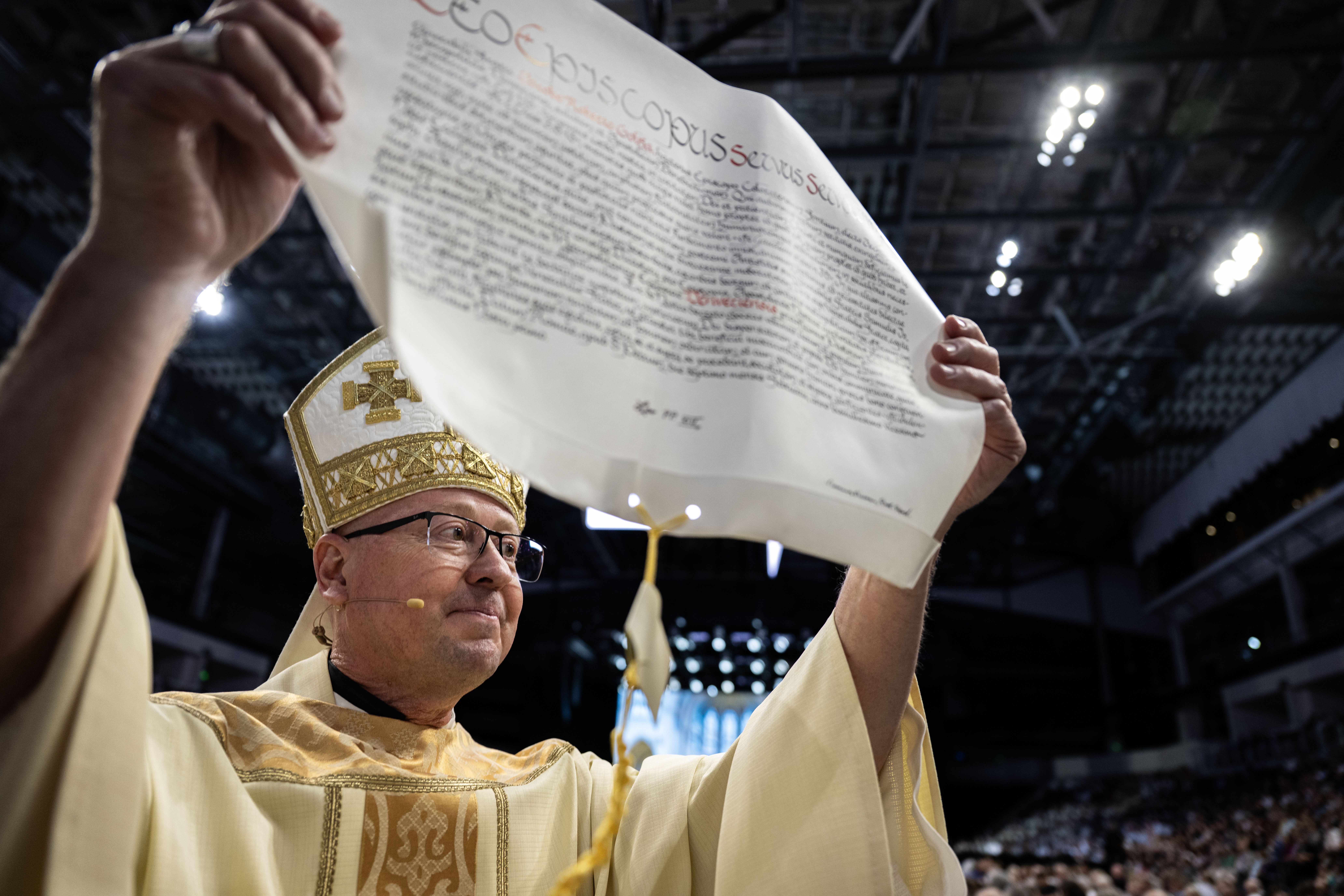
Cardinal Christophe Pierre, the apostolic nuncio and U.S. ambassador for Pope Leo XIV, read out loud the official letter from the pope declaring the former bishop of Colorado Springs, James Golka, as the new archbishop of the Archdiocese of Denver.
“Never grow tired of doing what is right,” Pierre read from the Apostolic Letter. “Mindful that man is more gracious for what he is than for what he has.”
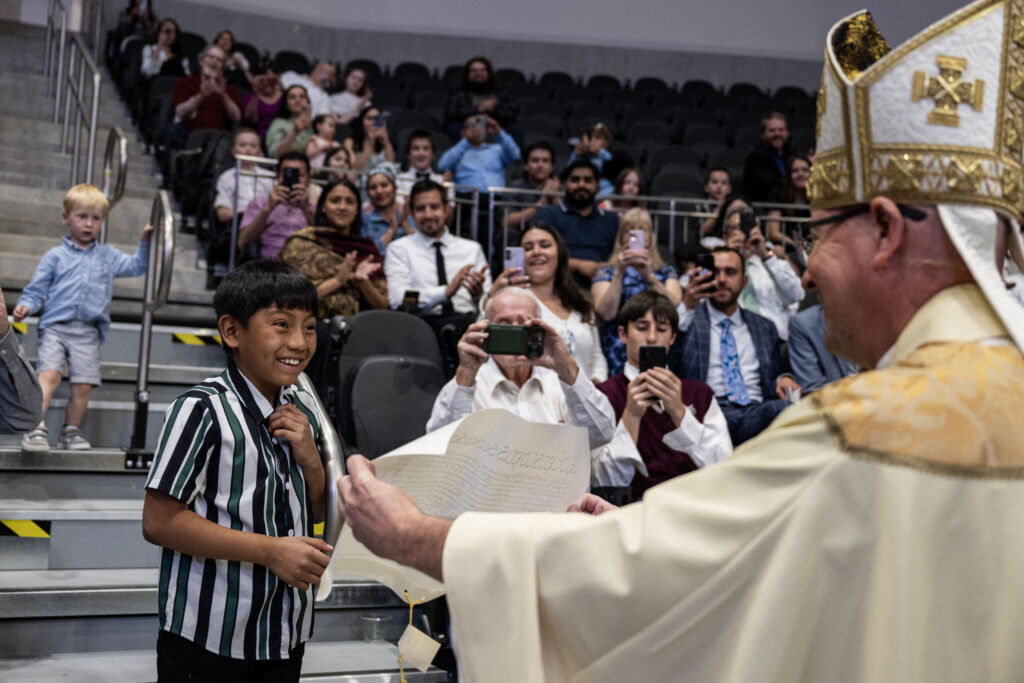
Golka took the letter and held it up as he walked around the new CoBank Arena at the National Western Center, showing the proof that the position granted to him by the Vatican was made official to more than 4,000 attendees.
He then joined Archbishop Emeritus Samuel J. Aquila in front of the archbishop’s wooden seat that towered over both of them and took his place, as Aquila handed him his staff — the symbol of authority over 600,000 Catholics across Northern Colorado.
The Vatican appointed Golka as the sixth archbishop in the Archdiocese of Denver’s history last February, which also gives him the title of metropolitan archbishop to serve as the spiritual leader for not only Denver, but the nearby dioceses in Colorado Springs, Pueblo and Cheyenne, Wyo.
The installation marked the start of his tenure.
Aquila, who turned 75 last year, retired after reaching the age when Catholic bishops are expected to submit their resignation.
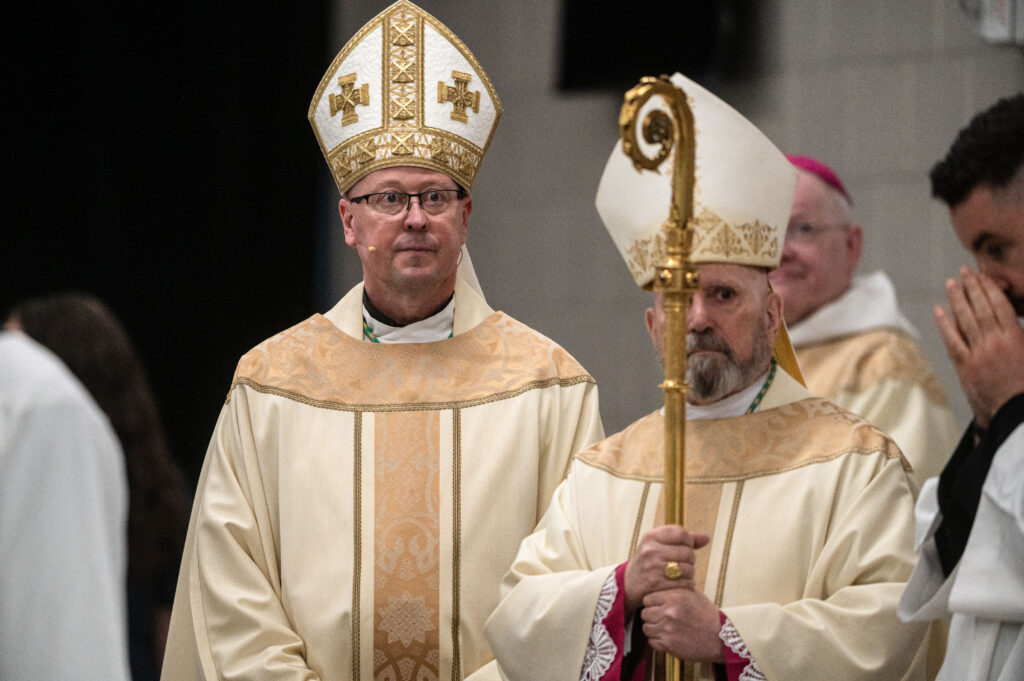
Golka told reporters last month he was “very surprised” to have gotten a call from the United States representative to Pope Leo XIV telling him of his promotion, believing he’d lead Colorado Springs for more than the five years he served.
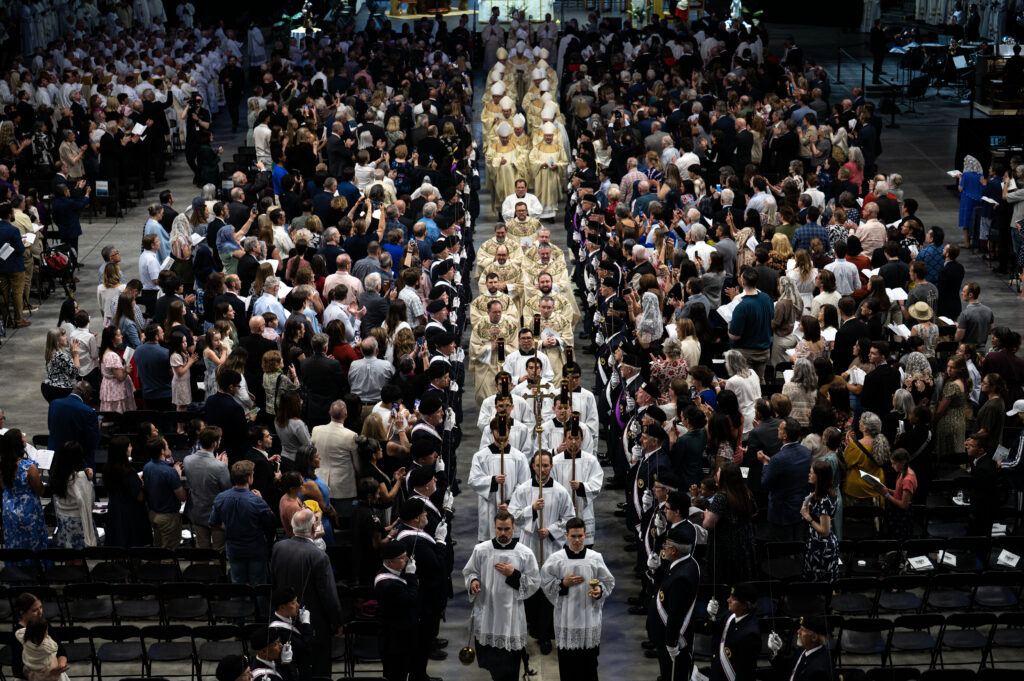
The Mass was held at the newly-opened CoBank Arena at the National Western Center, part of the $259 million complex approved by Denver voters in 2015, as the diocese’s “mother church,” the Cathedral Basilica of the Immaculate Conception, could only seat 800 people.
While the installation was hosted during Lent, the somber season when Catholics fast and pray ahead of Easter to remember the death of Jesus, the Mass marked a more joyous occasion.
The timing of the installation was intentionally set for the Feast of the Annunciation, a major solemnity in the Catholic faith to celebrate an angel visiting Mary and the conception of Jesus.
“Both Archbishop Aquila and Archbishop-designate Golka have a deep devotion to the Blessed Virgin Mary, making the Feast of the Annunciation a fitting day,” said Kelly Clark, spokeswoman for the archdiocese.
She explained that Mary’s choice to consent to being the mother of Jesus was a sign of her trust in God.
“Celebrating the installation on this feast highlights a similar call: just as Mary said “Yes” to her vocation, a bishop also says “Yes” to faithfully shepherd the Church,” Clark said.
From the green fields of Nebraska to the red rocks of Colorado
The archbishop’s new official coat of arms features Golka’s connections to his home state of Nebraska and the community he adopted in Colorado.
Golka was born in 1966 in Grand Island, Neb., is the fourth of 10 children and was ordained a priest in 1994. Both of his parents who brought him up in his faith died earlier this year, his mother, Pat, on Jan. 5 and his father, Bob, on March 5.
The left side of the emblem is red to nod to how “Colorado” is the Spanish translation for the color. It features a white cross to resemble the ice formation on the Mount of Holy Cross in the Rocky Mountains.
The other half is green, in honor of Nebraska’s grass fields.
It includes silver and gold waves to connect how Grand Island was carved by the Wood and Platte rivers and was one of the final stops for miners traveling west for the Pike’s Peak Gold Rush.
Before he joined the seminary, from 1989 to 1990, Golka worked as a missionary with the Jesuits’ Native American Missions in South Dakota. Golka earned a degree in philosophy from Creighton University and a Master of Divinity from Saint Paul Seminary in Minnesota.
He was ordained to the priesthood in 1994.
Golka will lead one of the most prominent regions for the U.S. Catholic Church.
Denver has been a major hub for Catholic nonprofits, businesses and private institutions since St. Pope John Paul II selected the city to host World Youth Day in 1993. It’s home to the college ministry FOCUS and used to be home to the Augustine Institute, which moved to St. Louis in 2024 but kept its old campus in the Denver Tech Center as a Catholic “incubator.”
Golka’s installation marks one of the first selections made under Pope Leo, the first leader of the Catholic Church born in the U.S.
The apostolic nuncio commended Golka’s ability as a good listener, who will not only teach and lead, but walk with the people of Northern Colorado.
“You have spoken of the importance of listening. First to the Lord, and then those entrusted to your care,” Pierre said.
Aquila was installed as Denver’s archbishop in 2012 by Pope Benedict XVI, who ushered in a wave of conservative-leaning bishops across the U.S.
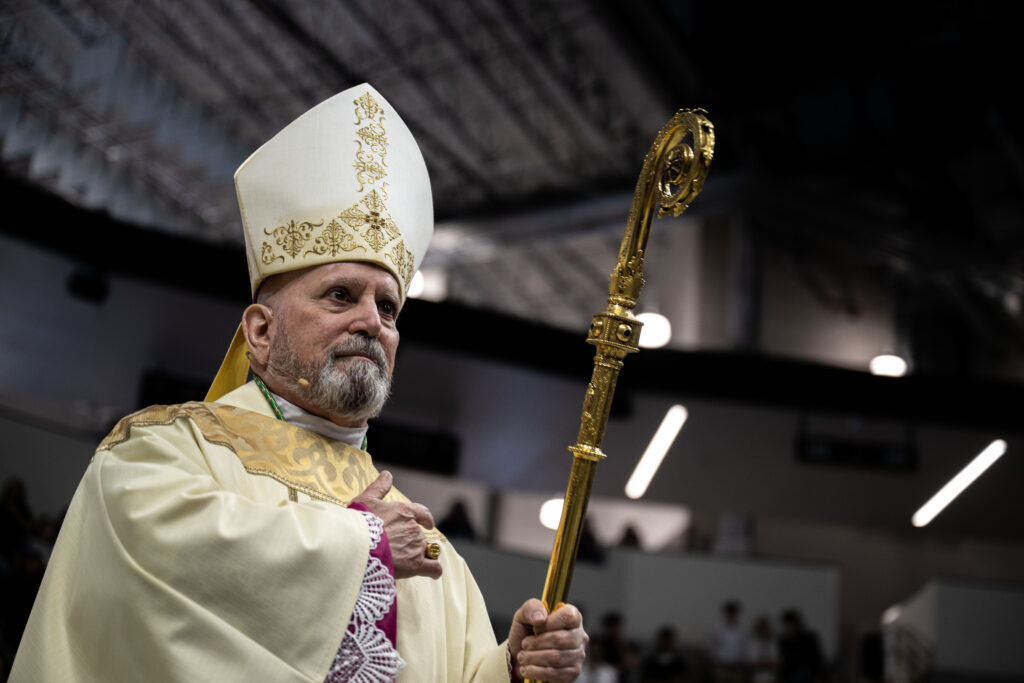
Aquila spoke against abortion and LGBTQ issues within schools in Colorado and pushed for more traditional priests to reform churches deemed progressive, according to a report from Religion News Service. He also decried the treatment of immigrants amidst the Trump administration’s mass deportation campaign and led Catholics in prayer last November outside of the Immigration and Customs Enforcement detention facility in Aurora.
The former archbishop said he’s still discerning what to do during his retirement, though Golka mentioned previously Aquila may head to Rome to work with seminarians there.
Golka was first selected by Pope Francis’ administration in 2021 to lead Colorado Springs. He speaks fluent Spanish and has worked to improve the relationship of Hispanic Catholics in Colorado Springs and established the Shrine of Our Lady of Guadalupe, according to the archdiocese.
First remarks
During the homily, his first public words as the new archbishop, Golka started with a story about a Guatemalan immigrant who worked at a meatpacking plant and attended his former church in Nebraska.
He was in a coma and about to be taken off the ventilator during the COVID-19 pandemic, and his family asked Golka to give him Last Rites.
Golka recalled being dressed in protective gear and having to bring Holy Oil on a cotton swab to pray for him before his death. The next day, Golka said, the man called asking to meet with him. He not only woke up from the coma, but walked around his hospital room and felt ready to go back home, Golka said.
Years later, when Golka recently returned to Nebraska for his father’s funeral, he saw the same man praying at the church.
The story was a lesson in doing what the church asks Christians to do and then trusting God to do the rest, Golka said.
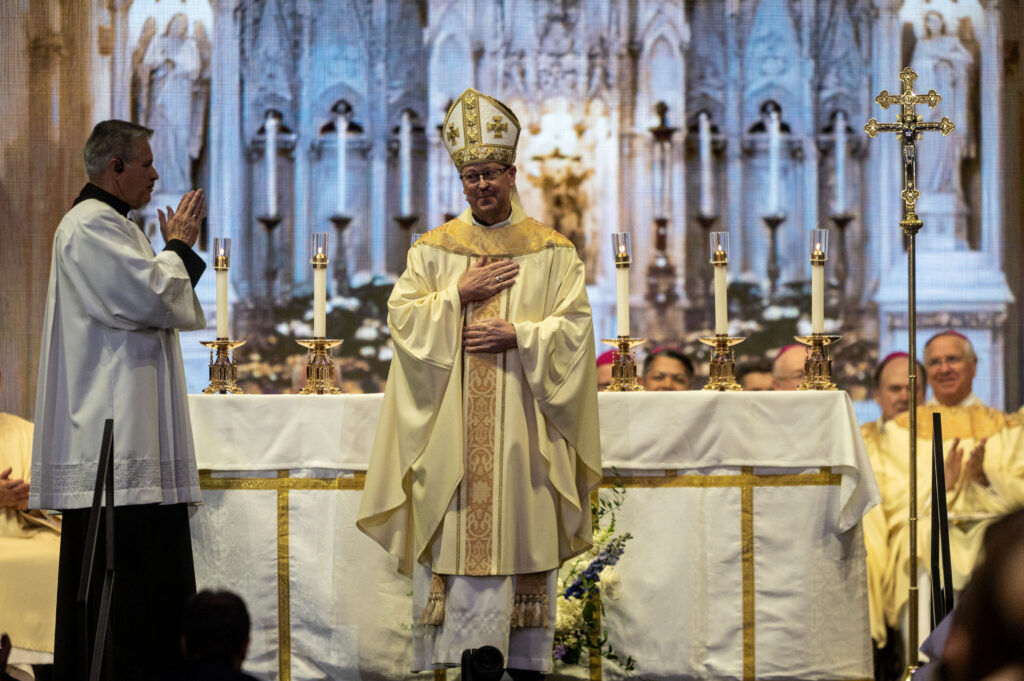
“The main archbishop of this diocese is not James Golka. It is Jesus Christ,” he said. “Any role that a new archbishop has must be to serve this purpose of loving Christ, care for his people in the way he desires.”
He urged the area’s Catholics to not expect God to do everything, though. They must not “sit around” but live as missionaries and act on their faith outside of church, he said.
“We are made for mission. The mission is God’s…” he said. “I’m all in, I’m ready.”
He paused for a second.
“How about you?” he asked the crowd.
Golka walked back to his new seat, officially called a cathedra, the throne of the bishop.
A priest next to him raised his hands, motioning for everyone else to stand with the archbishop to pray.