Football star Reinhardt reaches the end zone after magical run as performer
JOHN MOORE

It’s fourth-and-1 to go for former University of Colorado football star Ed Reinhardt.
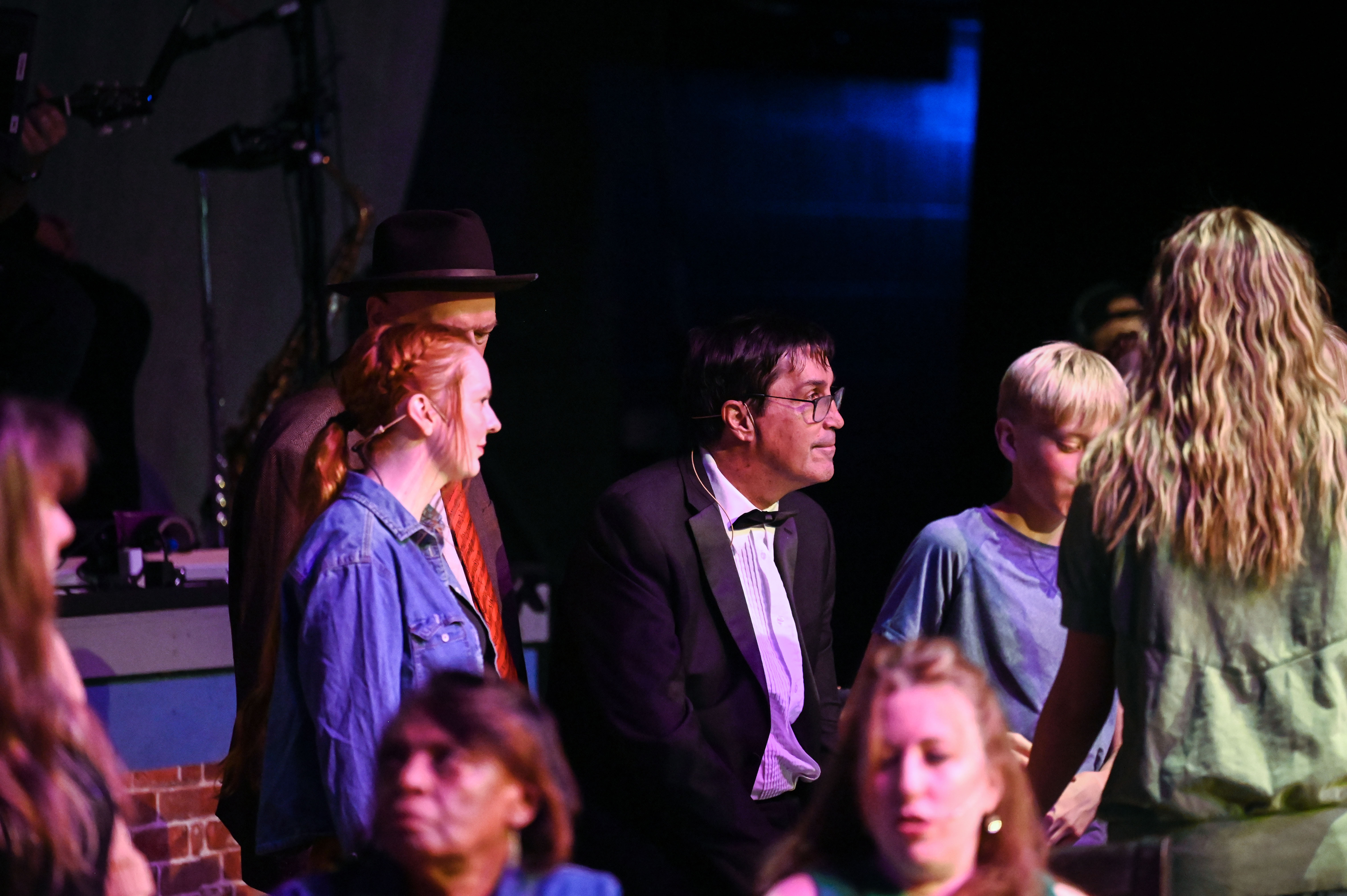
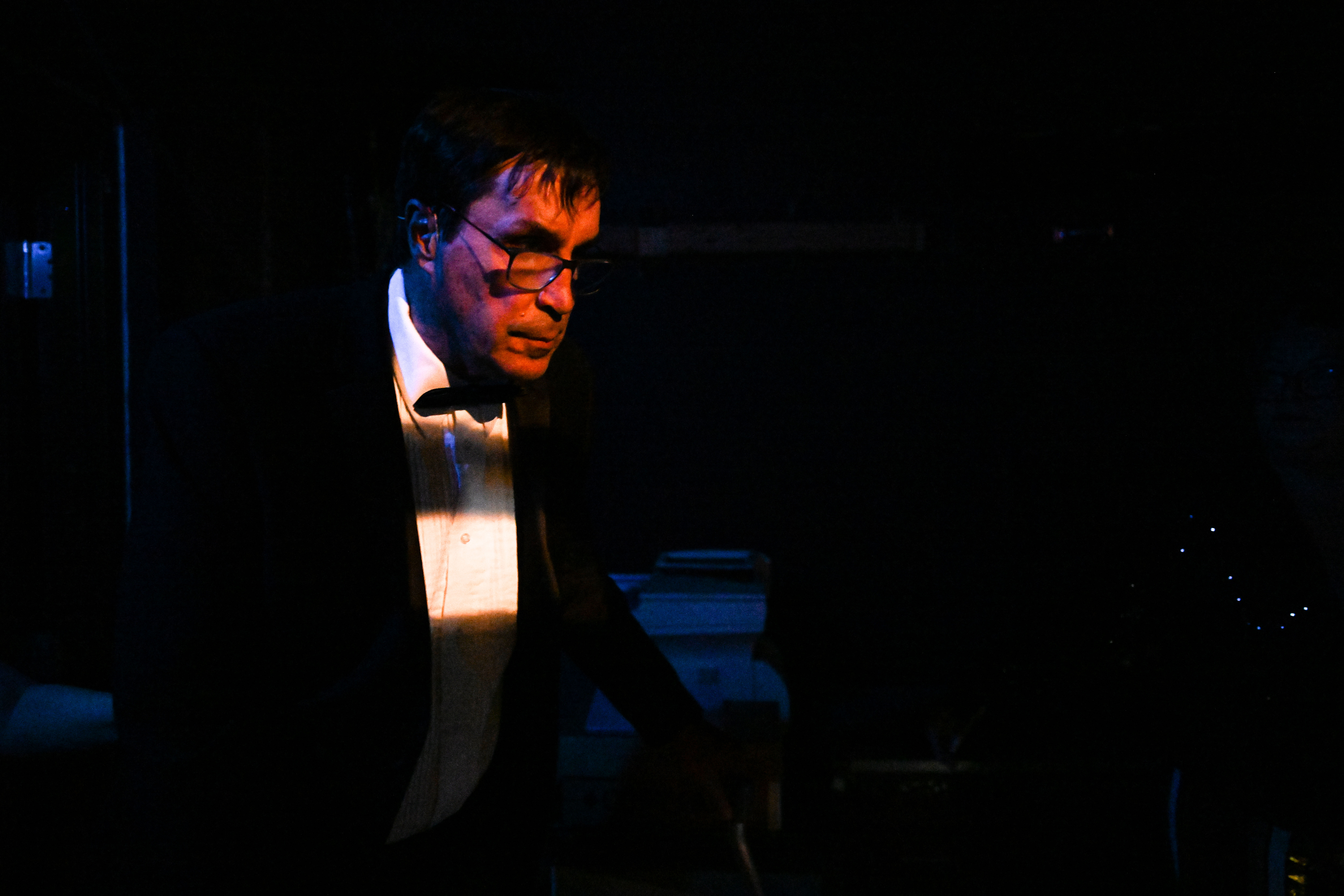
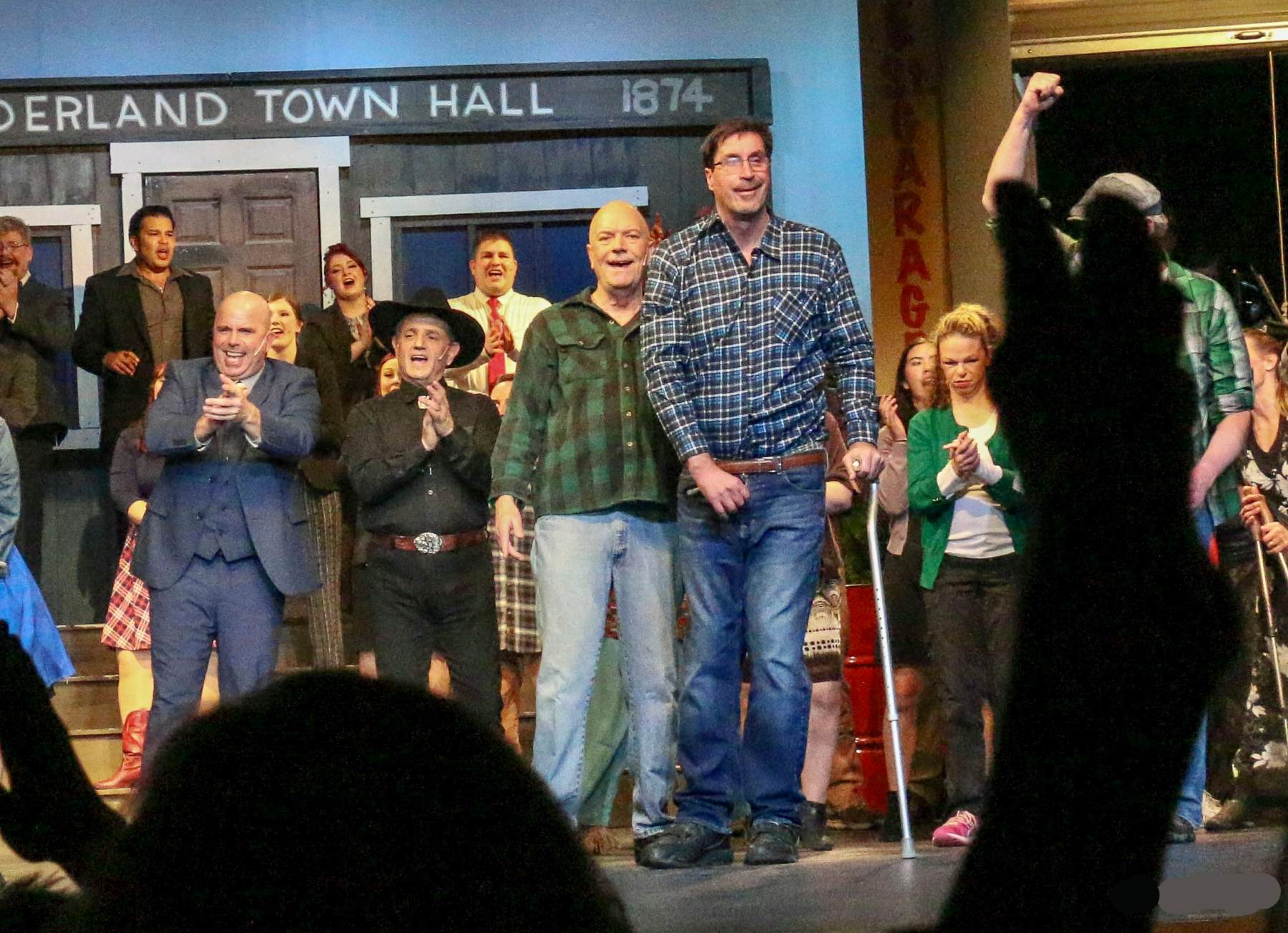
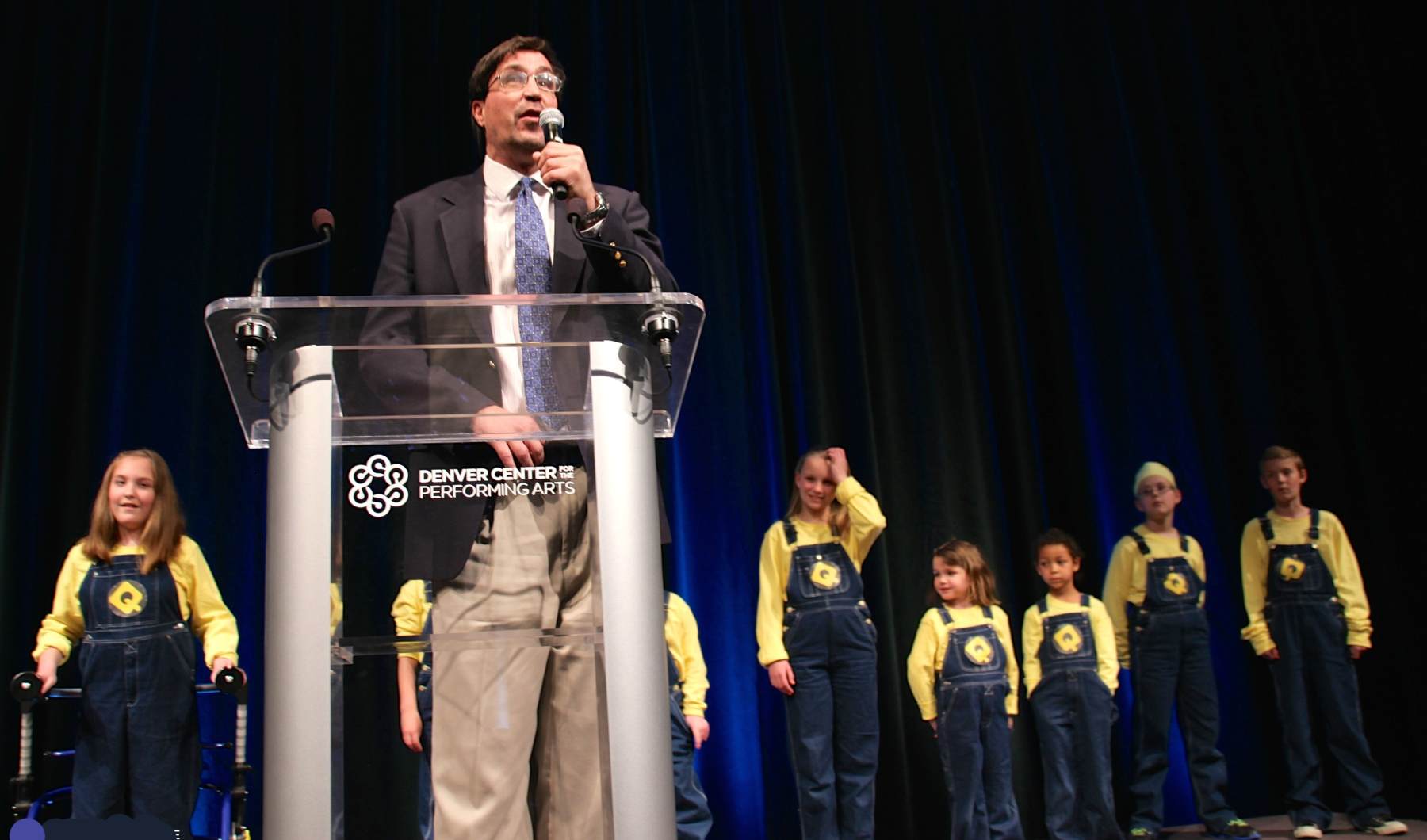
The hulking, 6-foot-8 tight end, a walking Will Rogers — if Will Rogers walked with a shuffling gait — is about to appear in his 27th and final performance for “Magic Moments.” That’s a massive annual pop-music revue that this week will afford 112 hams and Hamlets of all ages and abilities the chance to perform together on the same stage. Some with disabilities, some not.
And yes, it is magic. It’s dozens of magical moments strung together over two hours by notes belted, steps kicked and comedy bits landed.
No one who attends leaves unchanged.
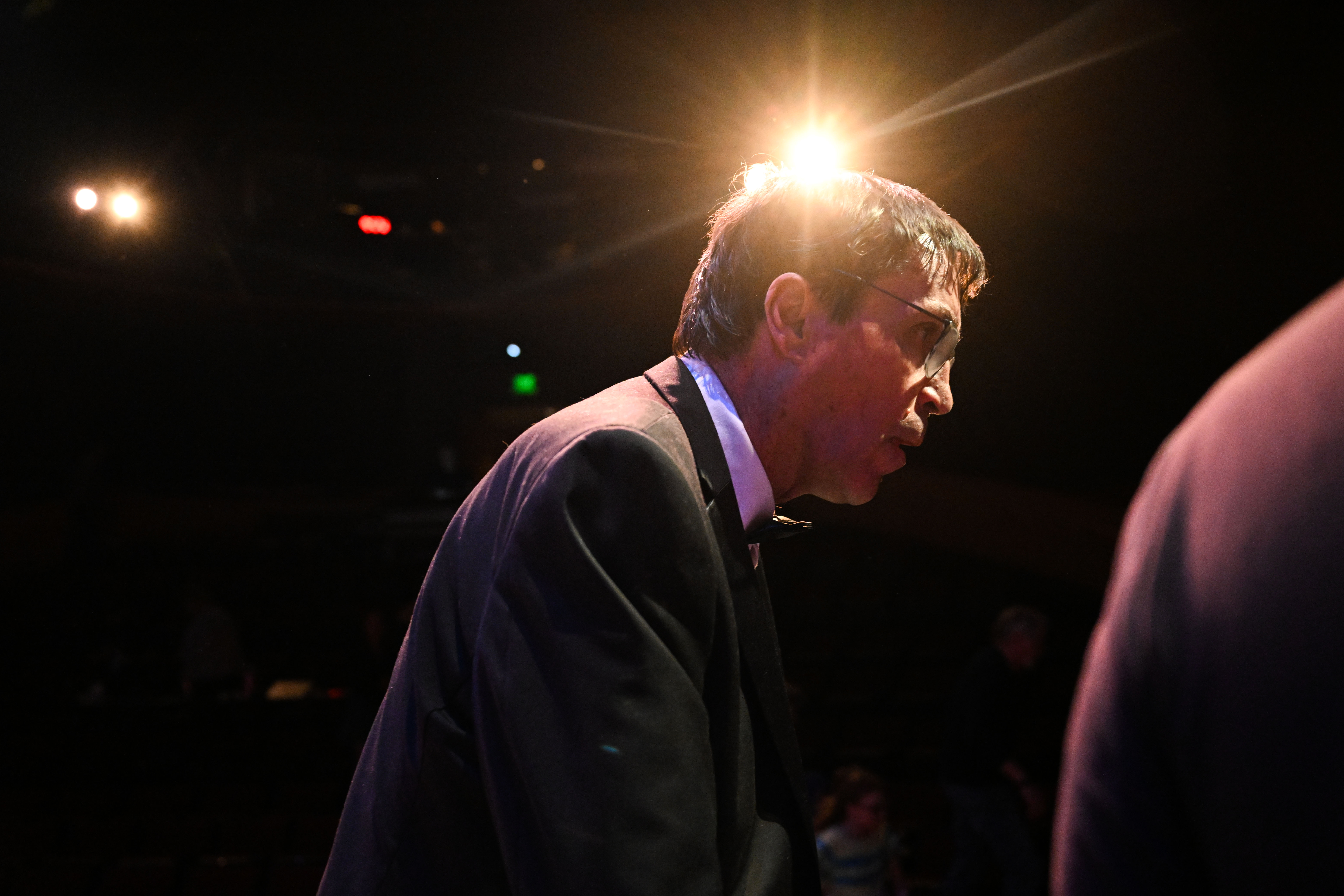
For Reinhardt, Magic Moments has been a seasonal second home that has regularly afforded him a purpose, a sense of community, and a return to the spotlight he owned as a college football star back in 1984. It also gives him a task that would be ordinary for most others — to memorize a song — but is Herculean for someone who has experienced his severity of brain trauma. Each year, Reinhardt sings a pop song that brings the house down and audiences up (to their feet). This year, that song will be Journey’s “Don’t Stop Believin’.”
But Reinhardt is now 60. His beloved mother, Pat, half of a relentless parental caregiving team that has tended to his everyday needs for the 40 years since his injury, died on March 3. The other half is his father, buddy and constant companion, Ed Sr., now 91. Each year, the rigorous rehearsal schedule becomes a little bit harder for Reinhardt to physically manage. So, for his own sake, it has been decided that this year’s show, appropriately titled after Reinhardt’s signature song, will be his last.

Back to the beginning
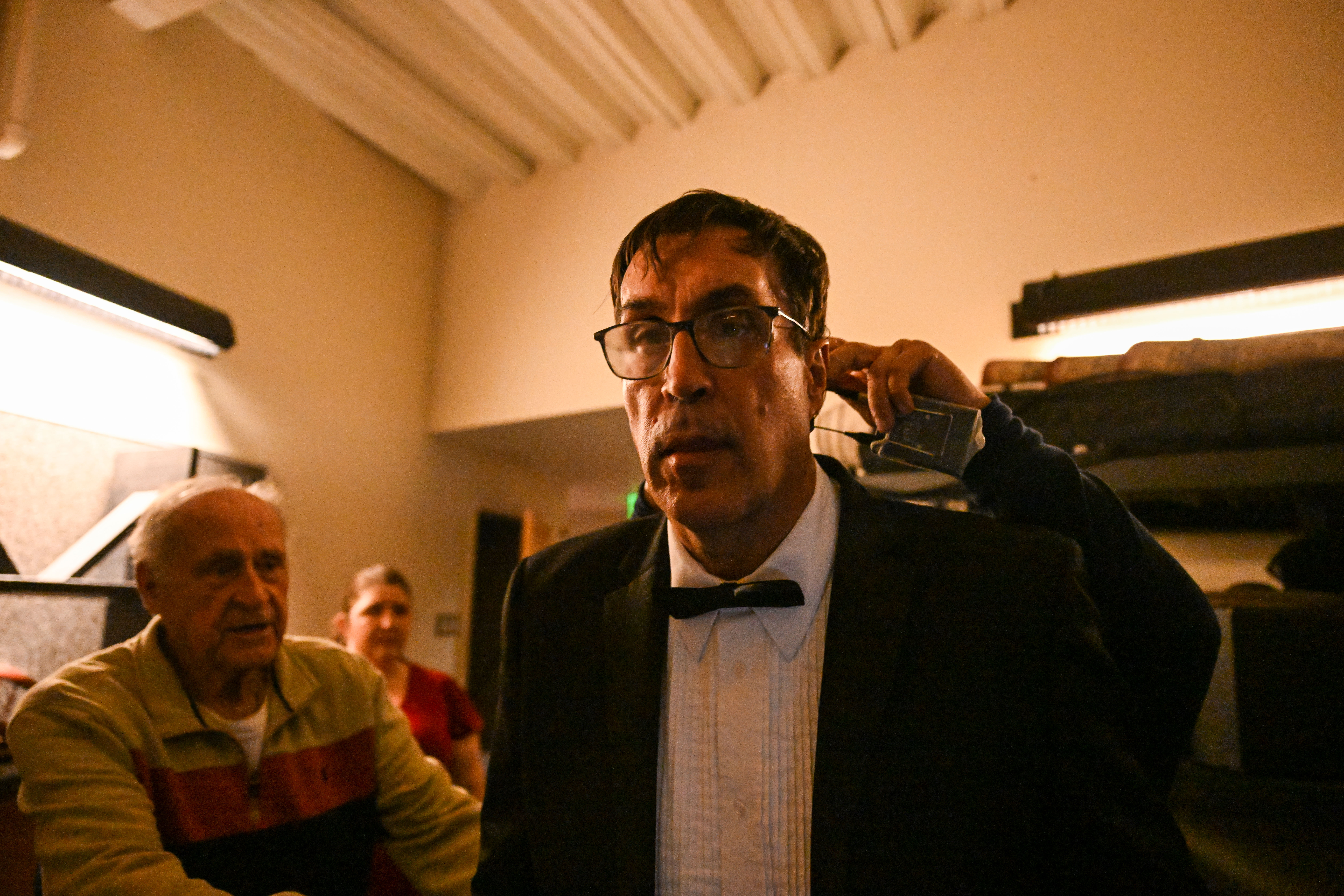
It’s hard for Reinhardt to recognize people by face — thanks to four decades of double vision, which he demonstrates by shifting his eyeglasses up and down. “Single, double. Single, double,” he says, followed by an elongated “Uggh.”
“Chaps my heinie!”
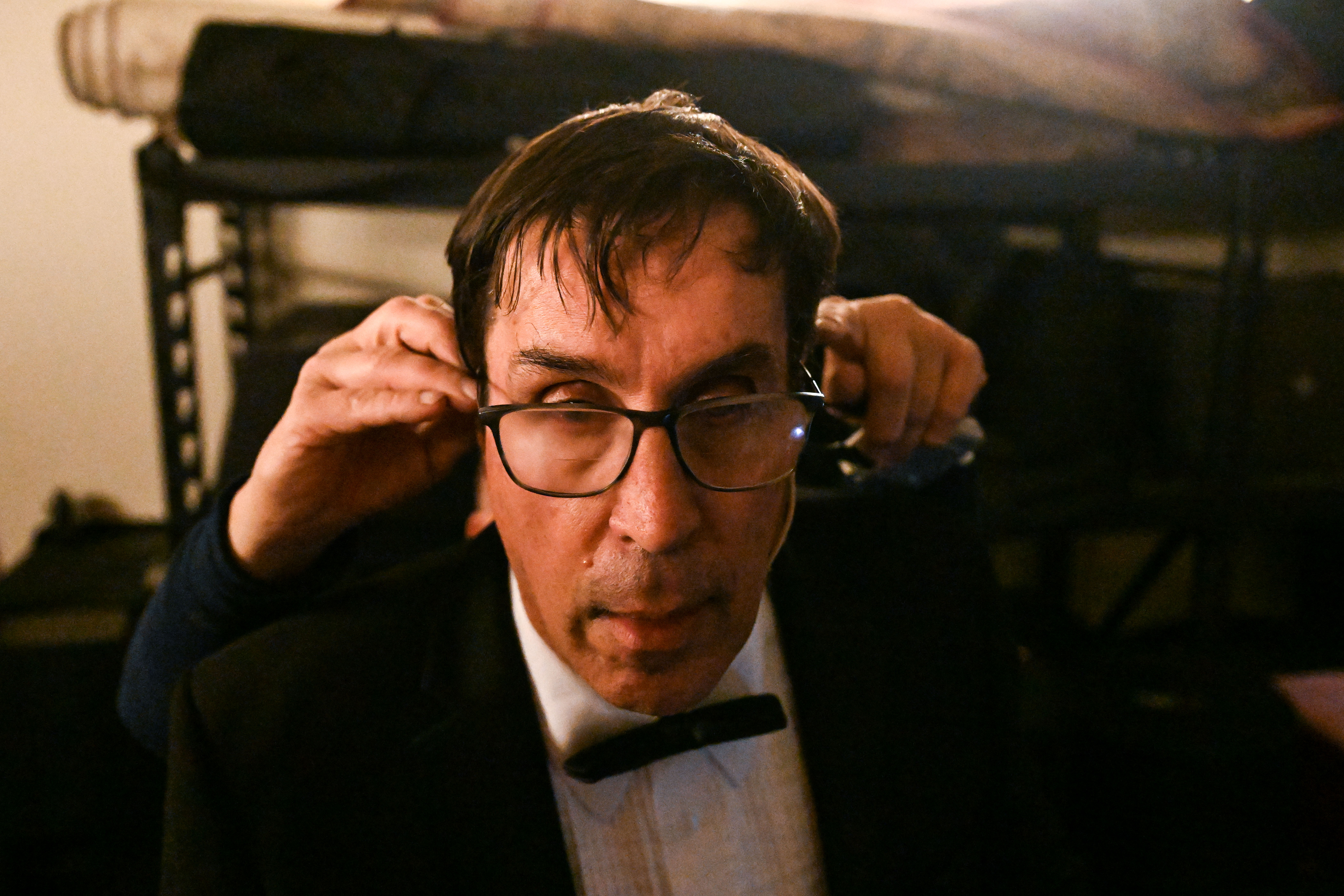
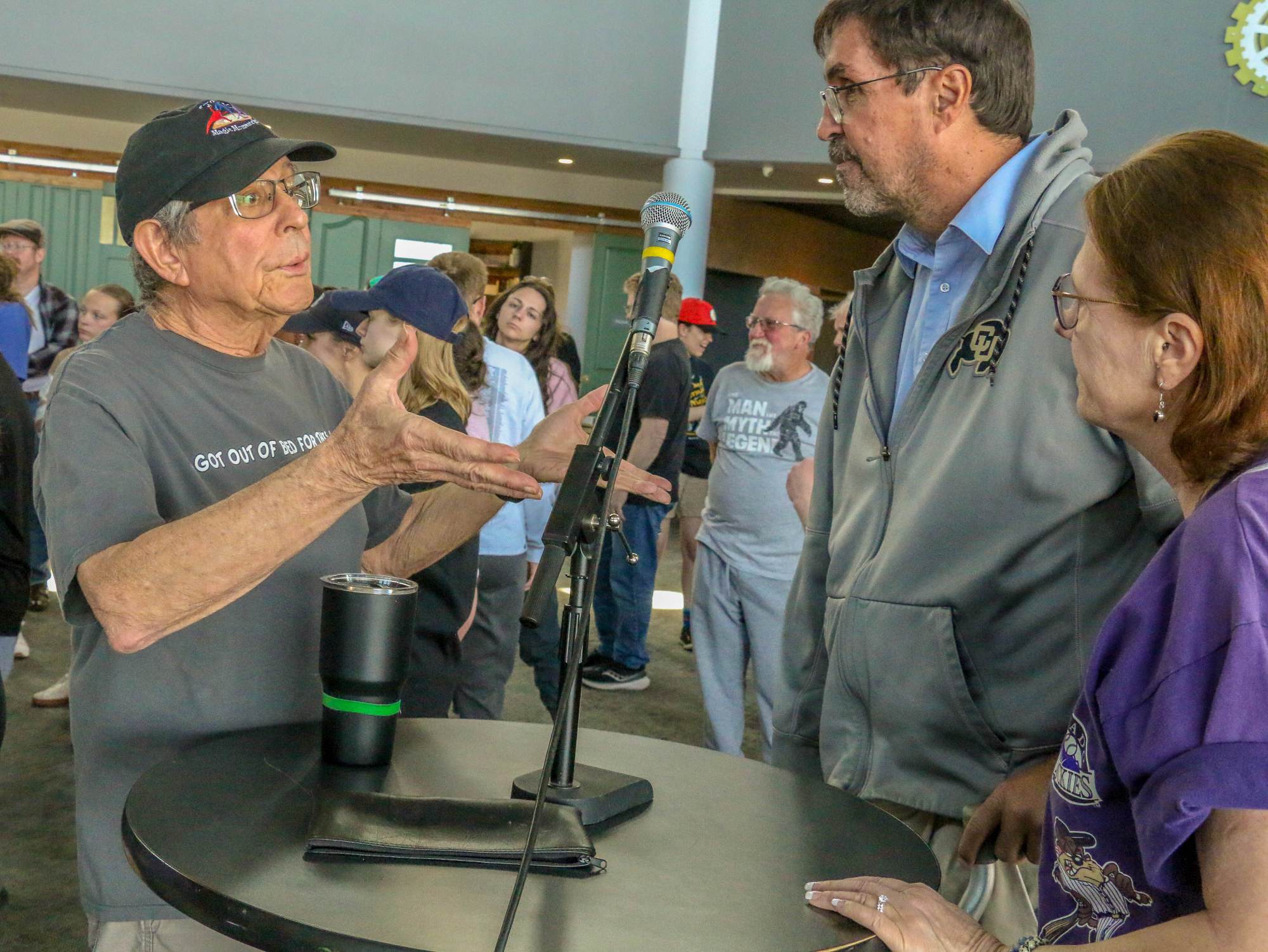
When I reintroduced myself to Reinhardt before Sunday’s rehearsal at a sprawling church in west Littleton, he offered a familiar smile and a strong handshake with his left hand. That’s a courtesy. He’s right-handed, but he doesn’t want you to feel awkward by offering you his recoiled right hand.
Unprompted, Reinhardt rattles off almost the exact same words he greeted me with when we talked before his fourth Magic Moments appearance back in 2001:
“Many years ago, I had an accident. I was a football star at the University of Colorado. I was the second-leading pass receiver in the nation. My grade-point average was 3.6. In the second game of my sophomore year, I caught a pass, and was tackled. My head hit the ground very hard. I was in a coma for 62 days. The injury was a sub hematoma, complicated by pneumonia. The doctor said it was a miracle I survived. They were sure I would stay in a vegetative state. I threw myself into rehabilitation with the same work ethic I had as a football player. It took five months before I could speak. It took two years to walk. My intelligence is intact, and I’m a great listener.”
Although Reinhardt has been part of the Magic Moments family for 27 years, almost no one here knows that their All-American boy was on his way to an All-America season for CU back in 1984. The 19-year-old sophomore from Heritage High School opened that season by catching a school-record 10 passes against Michigan State. The next week, on Sept. 15, 1984, Ed Jr. was in Eugene for the Buffs’ game against Oregon. Dad was accompanying son Tom on a recruiting trip to the University of Wyoming. Mom was in Nebraska watching son John play for the dreaded Cornhuskers against Minnesota. (Ed and John were set to square off a month later in what surely would have been a sibling rivalry match for the ages.)
It was, by all accounts, a clean, unremarkable hit. There was just 1:57 left in the game when Ed ran 6 yards, turned and caught a pass from Steve Vogel. He ran 13 more yards before he was tackled by two safeties. Nothing seemed amiss. But what the naked eye could not see was Ed’s brain crashing into the inside of his skull, bursting a blood vessel. Ed made it to the sideline but passed out, lapsing into the coma that would last, as Ed now says for emphasis, “Siiiiiiixty-twooooo daaaaaays!”
It was an injury so rare that doctors say there is no way to quantify the odds of it happening.
When the family assembled in Oregon, they were told Ed’s chance of survival was 10%, with no possibility of normal brain function. Pat told me in 2001 she felt a peace that could only come from God. She calmly prepared her son’s epitaph, should the time come. It read: “Farewell, Gallant Warrior.”
The story of Ed’s survival over the next few months is one of daily, quiet miracles. He had severe brain pressure, a temperature of 104 and a near-fatal bout with pneumonia. But, in time, the family’s one simple prayer was answered.
“We just wanted him back, no strings attached,” said Ed Sr. “We didn’t care about anything else.”
The son they got back from the coma was paralyzed on the right side of his body. His short-term memory, vocabulary and reading skills were all but wiped out. He underwent 15 surgeries and threw himself into physical rehabilitation at Craig Hospital with the help of his four brothers, a sister and an army of 140 volunteers.
What does that tell you? I asked Ed.
“People are great,” he said.
The Reinhardts measured time by Ed’s progress. After five months, he said his first word. After a year and a half, he got out of his wheelchair. The family made more than a dozen cross-country trips pursuing radical physical and cognitive therapies from acupuncture to biofeedback to a breakthrough program called “patterning,” which called for five volunteers to manipulate his extremities all at the same time.
Ed was game for anything, his dad said. He approached the challenge of rehab with the fire of a world-class athlete.
“Ed was an offensive player,” said Ed Sr., “and offensive players know what to do with the ball. Run.”
Doctors warned the family that Ed’s recovery would plateau at 24 months. Pat didn’t believe it for a second.
“We are cockeyed optimists,” she told me. “From the moment this happened, we were in denial — and we have ridden a horse named denial for a very long time.”
Ed’s greatest rehabilitative win took place well beyond 24 months after his injury. More like 10 years. It came when a doctor suggested that he take singing lessons. The thinking being, said Ed Sr., “Singing will help the speech, and the speech will help singing.”
Let it go
Ed always loved to sing, but because of his short-term memory deficit, singing became one of his most difficult challenges. His brain can now only learn lyrics through so much rigorous repetition that the words finally cross over into long-term memory. For years, his father helped him with the exercise for an hour every day.
In 1998, a family friend suggested that Ed check out Magic Moments, which had been started by a couple of Catholic priests in Littleton in 1984 — just a year before Reinhardt’s injury — to create performing opportunities for people with disabilities.
In his first year, Reinhardt was given a Gershwin song. In 2000, he played the world’s tallest Elvis impersonator. The next year, he was assigned the ultimate Reinhardt, er, Will Rogers song: “Never Met a Man I Didn’t Like.”
In those early years, Ed was assigned an on-stage partner who whispered the lyrics into his ear just as he was about to sing them. The first time Reinhardt got through an entire song without assistance, it was the kind of moment that Magic Moments was made for.
If you ask Ed which of his 27 shows has been his favorite, he literally can’t tell you. But if you start to sing any one of his songs, the words come flowing back to him.
Not that it always goes according to plan. There was the year he was given the Johnny Cash song “Walk the Line.” “He started to sing it fine,” said Magic Moments assistant director Rachael Lessard. “But mid-song, he switched to ‘Ring of Fire,” and the band just went with it.”
That’s what they do at Magic Moments. Go with what you’ve got.
Each Magic Moments show incorporates familiar songs plucked from all corners of pop culture into a cohesive story by a team of writers who this year have intentionally built the narrative to climax with the “retirement” of a beloved character — played by Reinhardt. It is their blatantly sentimental way of acknowledging the very large space that the very large Reinhardt occupies in the hearts of hundreds of people who seem to either not know or not care that he is a legendary figure in CU football lore.
The simple message to Reinhardt, said cast member and co-writer Heather Spillman: “Can’t appreciate you enough.” Added accomplished castmate Anna Maria High, who has performed in 14 Magic Moments shows dating back to when she was 13: “Ed has always been here with a smile and a fist bump and a wink. He is what Magic Moments is all about.”
If you ask director KQ Quintana, the longtime creative leader of Magic Moments, what Reinhardt brings into the room every year, he’ll say, sure: snarkiness. But more than anything: a love of the stage. Take, for example, the broken hip of 2012.
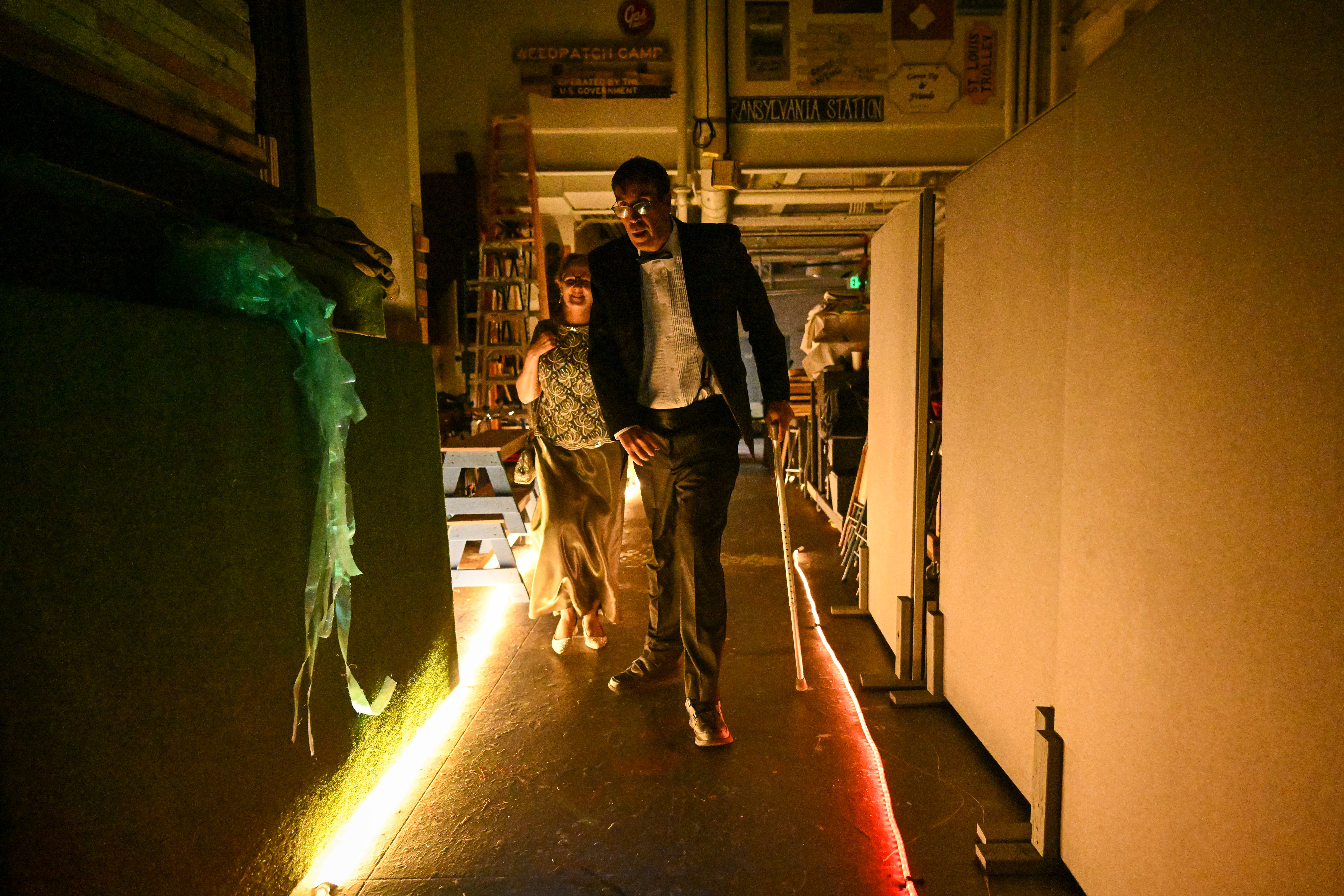
Reinhardt slipped on something backstage, “and he would not go to the hospital, because he still had a song to sing,” Quintana said. “So, we stuck him in a wheelchair, wheeled him right out onto the stage, and he sang his song. Then we took him to the hospital.
“That’s dedication,” he added with a laugh.
If life were fair, Reinhardt would have graduated from CU with a degree in kinesiology. He would have had a reasonable shot to make it in the NFL. He would have married and had kids. He would be teaching and coaching football. Is he angry about that? You bet. None of this is fair. He raises his left fist in the air and swirls. “Release the anger!” he says. “Punching bag!”
And just as quickly, that signature smile returns.

He’s far more concerned at the moment with conquering the one spoken line of dialogue he has been assigned this year, and he hasn’t quite memorized it yet. Trying has been more physically exhausting than it once was.
“Thank you. I would like to send you to the Goodman Theater in Chicago with my recommendation.”
It’s tricky because the line was changed slightly after Reinhardt had memorized a previous version. Asking him to re-learn something he has committed to memory is an almost impossible ask.
“That one sentence!” Ed Sr. says to his son with exasperation. “You’re pulling my hair out — what’s left of it — with that one sentence!”
This draws a proud smile from Ed Jr., who not only has a fully intact head of hair at age 60 — not one of those hairs has yet turned remotely gray.
“John, Tom and Matt?” he says of his brothers. “Bald as a baby’s butt. Thank you, God!”
Don’t stop
In Reinhardt’s well-documented story, which the father and son have been telling the world for 40 years, and in their book, “You’re OK, Kid,” Quintana finds the story of this year’s show.
“Ed never stopped believing from the day he hit the deck on the football field,” Quintana said. “He kept on going. No matter what has happened to anyone here, I tell them, ‘Take a look at Ed. Don’t stop believing in yourself. That’s not what we do.’”
And when it comes to that final song, it’s entirely likely that Reinhardt, his castmates and probably everyone in the auditorium will be singing along as one.
“In that moment, we are just trying to honor the community and the family and the world that Ed Reinhardt has built here, and thank him for everything he’s done for us at Magic Moments,” High said. “And I guarantee you: There’s not going to be a dry eye in the house.”