This Thanksgiving, take your pick: Journalism or your drunk uncle | John Moore
45TH DENVER FILM FESTIVAL WRAPUP

The importance of a robust, independent and principled media was made urgently clear throughout the 45th Denver Film Festival. There were stirring dramas about journalism, revealing documentaries about journalists and many essential docs produced by journos themselves. There was even a panel discussion about the existential threat that changing consumer tastes, willful anti-intellectualism and a certain ex-President who declared the news media to be “the enemy of the people” pose to one of our only two constitutionally protected industries (the other being religion).
“If people truly believe in democracy, then that requires an informed electorate,” Colorado-raised journalist Nate Halverson, Senior Reporter for the Center for Investigative Reporting, told me.
But surely we all know that, right? Hardly. So I asked Halverson to dumb it down in a way that the media’s many gravestompers might better comprehend. Challenge accepted.
“How about: If journalism goes away, then we are all just going to be informed by our drunk uncle at Thanksgiving,” he said with a caustic laugh.
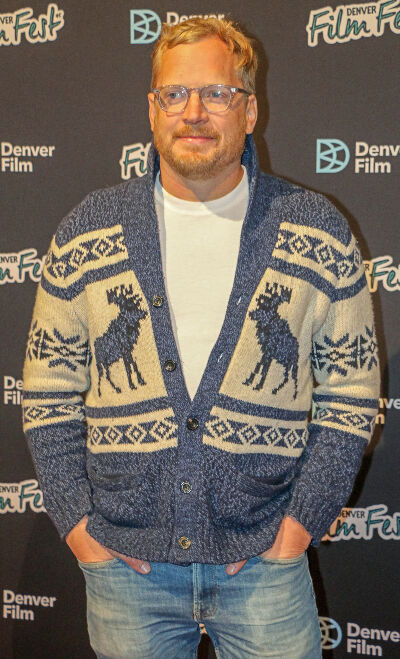
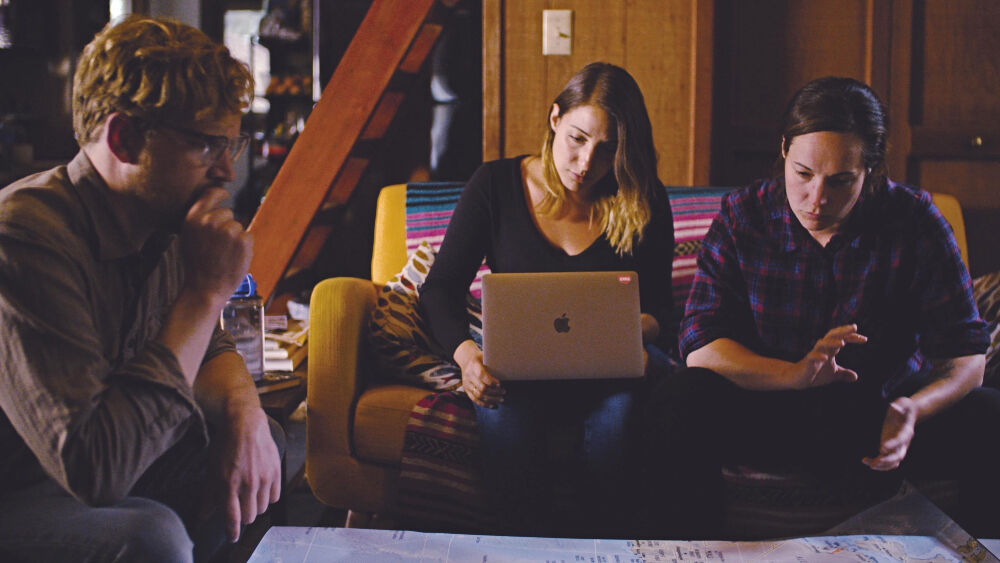
Halverson is the subject of a riveting new documentary called “The Grab,” which chronicles the global race for the last remaining farmable land on the planet. Why, Halverson wondered, did a Chinese company buy one of North America’s largest meat producers back in 2014? Why is Russia moving experienced American ranchers into its mountains to help turn Russia into the world’s largest agrarian nation? Why did a Saudi Arabian company tied to the highest levels of government buy 15 square miles of land in Arizona, completely depleting the surrounding underground water supply and running dozens of local farmers out of business? Those are questions he spent eight years trying to answer.
The chilling answer: They are all preparing for the climate doomsday. The world’s wealthiest countries are invisibly conspiring to take control of America’s food supply right under our noses. In the near future, Vice President Kamala Harris hypothesizes in the film, wars are no longer going to be fought over oil. They are going to be fought over our most precious natural resource: Water.
At a time when staggering economic forces are working against quality hometown journalism, rock-star documentarians like “The Grab” director Gabriella Cowperthwaite are filling some of the gaps in America’s long-form investigative journalism.
“I think documentarians represent the best part of the journalism community right now,” said Denver Film Festival Artistic Director Matt Campbell. “Film is just another way to present some of the same information, but in this day and age – for better or worse – I think people are more apt to watch a film than read a book or a newspaper. It’s a sad state of affairs, but you have to meet the people where they are at, and these filmmakers are doing that.”
Since 2004, more than 2,000 U.S. newspapers have folded, creating growing “news deserts” – those are towns without their own reliable, local news coverage. Since 2008, about 30,000 of the nation’s 114,000 newsroom jobs have vanished, according to the UNC Hussman School of Journalism and Media. Journalism is losing jobs faster than the coal industry, and among the first to fall were veteran investigative news reporters. So who’s left to tell the stories that it takes months or even years to ferret out?
Halverson was raised in Colorado Springs, attended both Colorado State and the University of Colorado Boulder, and now has the unicorn of journalism jobs. The Center for Investigative Reporting, founded in the 1970s by a group of ex-Rolling Stone reporters in San Francisco, now employs about 60 investigative journalists who tell long-form stories that focus on the destabilization of our democratic institutions. One of Halverson’s triumphs was acquiring internal documents that proved Facebook employees were knowingly duping children out of thousands of dollars. And rather than fixing the problem, he said, they let it persist.
Many of the documentaries shown at the Denver Film Festival, including “The Grab,” will soon be available for streaming, which to Halverson is the sweet spot for distribution. “Part of what made this project exciting for me from the start was the opportunity to get investigative journalism on people’s TVs in their living rooms,” he said. Among the other stories from the fest:

• “The Holly”: Denver native Julian Rubinstein came home from New York eight years ago to look into an attempted-murder case in Park Hill. But what starts out as a shocking gangland shooting evolves into a far more consequential paradox: Why, Rubinstein asks, does the city of Denver’s federally funded anti-gang task force have active gang members on its payroll? Gang members who just might have ordered a hit in that aforementioned shooting?
“This question of whether or not active gang members should be allowed to work for law-enforcement agencies is a national issue,” Rubinstein said. “I would say they should not, but let’s at least have a discussion about it. So why won’t our public officials even talk about it?”
• “All the Beauty and the Bloodshed“: Director Laura Poitras uses the intimacy of the documentary form to first tell the troubled life story of famed counterculture artist Nan Goldin and then its tragic intersection with OxyContin, which has been blamed for more than 500,000 deaths. Goldin, now 69, has dedicated her later life to holding the Sackler family accountable for those deaths.
• ”Katrina Babies”: First-time filmmaker Edward Buckles Jr. was 13 when Hurricane Katrina struck New Orleans in 2005. Now, all these years later, he seems to be the first to seriously explore the long-term trauma that continues to manifest itself in those who were between the ages of 3 and 19 at the time. The film reveals that the only survival strategies employed since then have been suppression and silence – but the ongoing damage from the permanent dislocation of thousands from their familial roots is incalculable.
• “The YouTube Effect”: You may remember actor Alex Winter from his “Bill and Ted” days, but he’s long since made a name for himself producing thought-provoking docs like this troubling look at the long-term impact of YouTube and Google on the planet. YouTube draws more eyeballs than TV or film, but the algorithm it has created to steer your online experience has sprouted unforeseen privacy and ethical problems that Winter argues could be the downfall of the $300 billion company.
• The festival lineup also included a few dramatic thrillers that essentially told documentary-like stories in the more popular narrative storytelling format. The biggest-buzz film of the fest was “She Said,” which dramatizes how two New York Times reporters helped to bring down Hollywood mogul and now convicted rapist Harvey Weinstein.
• One dramatic hybrid was rising Boulder filmmaker Daniel Goldhaber’s eco-terrorism thriller “How to Blow Up a Pipeline,” which tells the story of how a crew of college-age environmental activists plot to disrupt the nation’s oil supply. It’s a straight-out action film that leaves its audience with the inescapable documentary-like message that environmental extremism will play an important role in the life-or-death race against climate change.
These are all important, compelling stories with enormous stakes. And, just like old-fashioned investigative journalism in your newspaper, the best ones can be measured by the change they help to bring about.
“I want people to look more deeply at what’s behind everyday news stories,” Halverson said of “The Grab,” “whether that’s farm prices reaching a record high or a conflict in northeast Africa over land. My hope is that when people recognize how bad things are getting, they will unleash the world’s greatest problem-solvers onto those problems.”
That is why I believe that today’s best documentarians are also journalists. And journalists who dig up a truth and share that truth with the public (often at the risk of their own personal safety) are, to me, everyday – and severely underpaid – heroes.
“I personally think it’s awesome that people pay us to be journalists at all,” Halverson said. “But I don’t think the public understands that if I quit journalism, I can have a job tomorrow making five times my hourly wage working as a private investigator for a hedge fund. Because right now, quality information is accessible to the wealthy and powerful for a price.
“Investigative journalism is what brings that same caliber of information to the public.”