






Aurora needs a city council, not group therapy | Michael A. Hancock
The Aurora City Council recently held a meeting about decorum. It became, unintentionally, an argument for the necessity of decorum rules.
The purpose was simple: decide how council members and the public should conduct themselves so city business can proceed in an orderly way. People should speak. Council members should listen. No one should shout down speakers. No one should hijack the meeting. No one should confuse public comment with theater.
But in Aurora, even the obvious now requires a working group.
For nearly two years, council meetings have been disrupted by activists who claim to speak for “the community” — making it harder for the actual community to participate. Residents who want to talk about roads, safety, homelessness, taxes, water, or neighborhood concerns have been forced to compete with grievance rituals that show little interest in persuasion and order.
Now, some of the same voices that helped create this environment complain that the real problem is council members’ decorum.
That is rich.
Not because council members are beyond criticism. They are not. Elected officials should be challenged and corrected. But there is a difference between robust public criticism and turning city hall into a bi-weekly stage for emotional extortion.
The transcript from the meeting reveals the problem clearly. Speaker after speaker demanded that council members show empathy, eye contact, active listening, curiosity, patience, restraint, and visible engagement. These are not bad things. Public officials should listen carefully. They should remember citizens may be nervous, frustrated, or hurt.
But when the question turned to what the public owes the room, the standard changed.
The public, we were told, is hurting. The public has pain. The public has trauma. The public should not be tone-policed. The public should not be expected to monitor itself. The public should be allowed to express anger, disdain, and passion. If people keep returning with the same complaint, that means council failed to hear them.
This is not civility. It is entitlement with a grievance vocabulary.
A public meeting can make room for pain. It cannot be governed by it.
Some who come to council are grieving. Some distrust government. Some believe city institutions have failed them. That should be recognized with humanity. But grief does not repeal rules. Anger does not create a right to dominate. Pain does not entitle one faction to consume civic space that belongs to everyone.
The First Amendment protects the right to speak. It does not require government to surrender the room.
A resident has the right to criticize the mayor, police, council, policy, spending, zoning, homelessness strategy, or anything else within city government’s authority. But no resident has the right to shout down another speaker. No faction has the right to make the chamber so hostile that parents, seniors, or ordinary citizens stop attending.
There is another distortion: because council members hold office, the public has no reciprocal obligation. Council members sit on the dais. They vote. They control procedure. But the public also has power — accusation, disruption, repetition, social media amplification, litigation, and spectacle.
Pretending power only flows one way is not analysis. It is strategy.
One speaker suggested council members should remember taxpayers are their bosses. In one sense, that is true. Public officials are servants, not rulers. But taxpayers are not bosses in the sense that any individual at the microphone may berate elected officials as personal employees. Council members are accountable through elections, law, ethics, transparency, and public scrutiny.
Representative government is not due process replaced by customer service agents.
The meeting also showed Aurora’s remarkable ability to turn a basic question — how should adults behave in a public meeting? — into a seminar on every grievance in modern America. The conversation wandered from decorum to scripture, police shootings, social media, homelessness, backpacks, metal detectors, seating arrangements, trauma, residency, judicial corruption, and foreign conflict.
Some topics may deserve attention elsewhere. But their constant insertion into a rules discussion demonstrates the deeper dysfunction: the city cannot stay focused long enough to govern.
For five months, Aurora’s progressive council members have had an opportunity to show residents what their governing agenda actually is. What is their plan for public safety? What is their strategy for homelessness? How will they protect water resources? What are they doing about roads, infrastructure, affordability, economic development, and police recruitment?
Instead, too much oxygen has been consumed by process fights, symbolic grievances, activist theater, and procedural drama.
The average Aurora resident is not lying awake wondering whether council members are nodding empathetically enough during public comment. He is wondering whether his neighborhood is safe. She is wondering whether her street will be repaired. Parents are wondering whether their children can grow up in a city that feels orderly and hopeful.
Aurora does not have a shortage of emotional expression. It has a shortage of governing discipline.
Real decorum rules should be clear and content-neutral. Speakers get their time. Council listens without interruption. No one shouts down speakers. No threats. No personal attacks. No chanting that prevents business. No special indulgence for preferred causes. Residents should receive priority because this is their city government. Nonresidents may speak when time allows. The same rules apply to everyone.
The test of a decorum policy is not whether activists approve of it. The test is whether ordinary residents can safely participate in their own government.
Aurora does not need more meetings about meetings.
It needs a city council serious enough to govern.
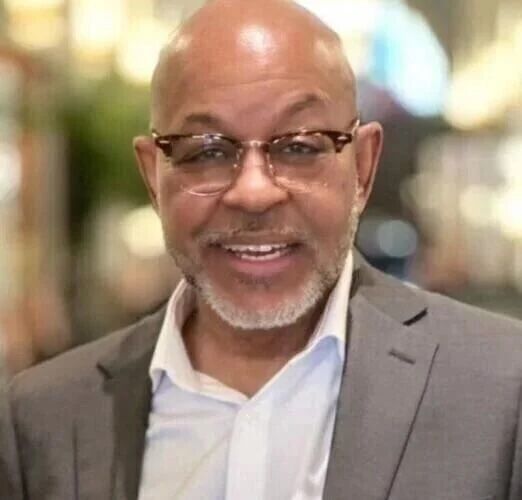
Michael A. Hancock is a retired high-tech business executive and a Coloradan since 1973. Originally from Texas, he is a musician, composer, software engineer and U.S. Air Force veteran whose wide-ranging interests — from science and religion to politics, the arts and philosophy — shape his perspective on culture, innovation and what it means to be a Coloradan.