







Colorado’s athletics departments striving to maintain Olympic sports identity in revenue sharing era
Grand Canyon cut men’s volleyball. Cal Poly discontinued men’s and women’s swimming. Washington State consolidated its track and field programs. Arkansas scrapped its tennis programs before donors stepped in to save it. Plenty more tennis programs have been shuttered across the country.
In total, dozens of Division I sports programs have been dropped in the wake of the $2.8 billion House v. NCAA settlement that allows for revenue sharing of up to $20.5 million per year with student-athletes.
Athletic departments everywhere are feeling the effects. But in Colorado, a commitment to investing and competing at a high level in Olympic sports remains strong.
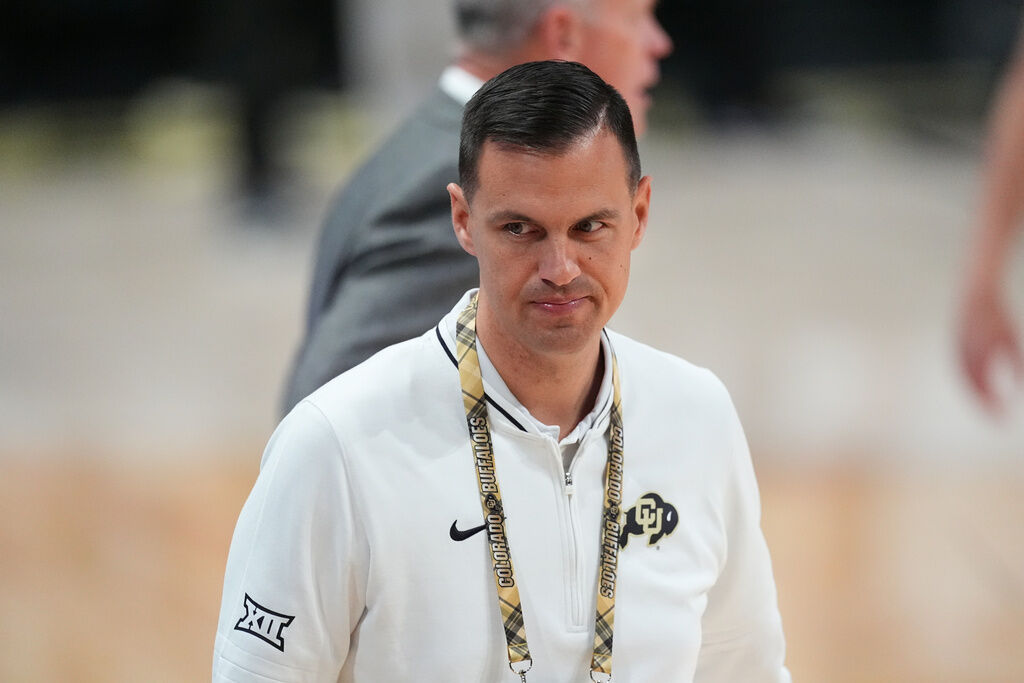
“Our Olympic sports, they’re incredible brand accentuators for us,” CU athletics director Fernando Lovo told The Denver Gazette. “That is core to who we are here at CU. I’ve thought only about, ‘How do I invest more in those programs?’ since I’ve been here. Scholarships are a big deal for those sports. I’ve had conversations with all of our Olympic sports coaches and we’ve talked about that.
“I firmly believe that we can be good at pretty much everything that we do, but it’s incumbent on me to make sure that I’m doing the things necessary to help them with that. I think we’ve got a great opportunity ahead of us in our Olympic sports. We’ve had really good recent success and I’m excited to build on that.”
The recent success Lovo mentioned isn’t hard to find. The Buffaloes’ women’s lacrosse program this spring reached the Elite Eight for the first time, losing a heartbreaker in double overtime against No. 1 seed Northwestern shortly after winning the Big 12 tournament for the first time.

The women’s soccer program has benefited from the explosion of the sport across the state, going to the NCAA Tournament in each of the last three years and advancing last fall to the Round of 16 for the third time.
The long history of both individual and team success for the track & field, cross country and skiing programs has been well-documented.
CU doesn’t have much room to go if it did want to cut sports with a football team competing at the FBS level and 16 varsity sports required to do. The Buffs have 17, with seven men’s sports and 10 women’s sports.
But the funding model for those sports has changed with CU now needing to find $20.5 million every year to share with student-athletes, primarily in football and men’s basketball, in order to remain competitive in the Big 12 and beyond. Lovo doesn’t want it to be a last-resort option, but donor funding for Olympic sports can also help those programs have success and, in turn, find ways to generate additional revenue.
“Endowments are a big thing,” Lovo said. “We have a lot of donors that are interested, whether they be former student-athletes that played in those sports or whatever might be, in endowing positions in those programs to ensure the long-term sustainability of those programs. Yes, the new House settlement and (revenue) share and all of that has added a new dynamic, but that’s been something that for many, many years has been a process. I do think there is tremendous revenue upside in some of those sports.”
That sentiment is felt at the University of Denver, too, where the Pioneers don’t have the stresses that come with trying to fund a successful football program. But they do have certain challenges in not being a public institution with a large student body.
DU has 18 varsity programs competing in five conferences. The dominant hockey program, with its record 11 NCAA championships, is a member of the premier NCHC.

The women’s gymnastics program competes well in the Big 12. The men’s and women’s lacrosse teams challenge themselves against some of the best in the country in the Big East. Starting next month, nine programs will transition to the West Coast Conference, most notably men’s and women’s basketball.
“Access to NCAA postseason, access to schedules, access to quality competition, all those things are very critical, but I don’t know that conference affiliation has ever been more important than it is today,” DU athletics director Josh Berlo told The Denver Gazette. “You go down the list and now with the West Coast Conference, we’re probably in the strongest non-football conference in the West (with) those high academic institutions. Many of them are our official academic peers. They look a lot like us, something that is helpful to our institutional reputation and visibility through their ESPN partnership.”
The move to the WCC is an aspirational one solely from a basketball perspective as DU remains one of just a few dozen teams to never make the NCAA Tournament, but it wasn’t a case of the Pios trying to be something they’re not.
The same could be said for all of the major athletic departments in the state.
CU is back in the Big 12, a well-timed move that keeps its programs competing at a high level in the aftermath of the old Pac-12 breaking up.
Colorado State officially joins the new-look Pac-12 July 1 as part of a group of eight football-playing schools with similar budgets and high aspirations.
Air Force was always going to be in a tough spot in the current landscape, but the Falcons don’t seem to have sacrificed their identity and are in a good position to compete in various sports in the new-look Mountain West.
Air Force is the only D-I athletics department with over 20 varsity programs, but that isn’t a surprise given every cadet must participate in a varsity or intramural sport.
They don’t have the same access to funds as schools in the Big Ten and SEC, but Colorado universities have stayed true to themselves in an era where the future of college athletics is unsettled.
“We call ourselves frugal entrepreneurs,” Berlo said. “We cobble it all together in a strategic way and it works for us. If we were trying to have 25 programs, I think that would be really, really challenging.
“It’s a nice balanced portfolio for us. I don’t think when the decisions were made about what the sport portfolio would look like back in the ’90s foresaw all of the things that we see in the landscape today, but certainly, the decisions about what sports we were going to have at the Division I level has stood the test of time.”