







Denver apartment vacancies tighten slightly, while lower rents are unlikely to help those in need
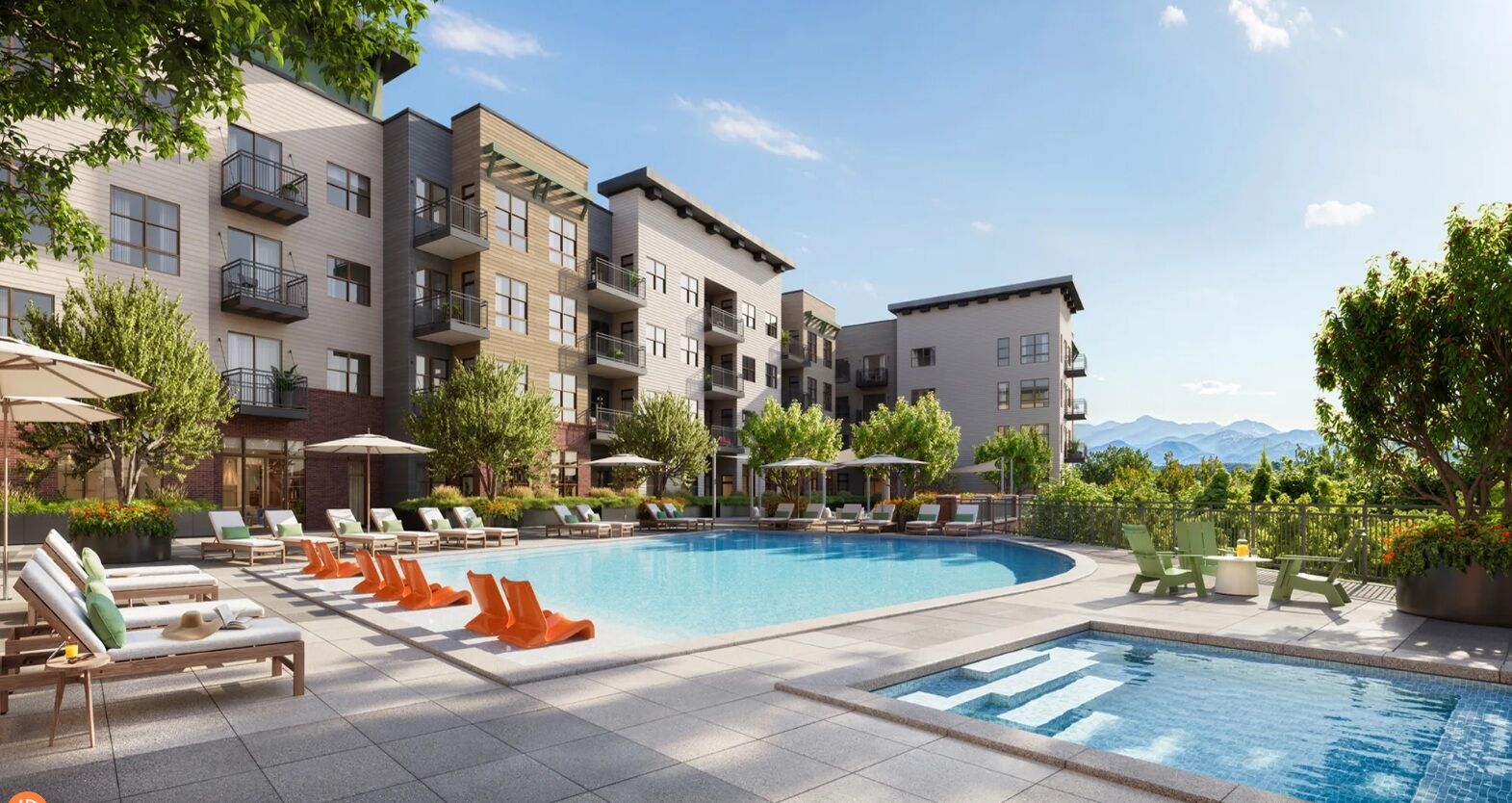
The newest data on the apartment market shows some good news for Denver area renters — but not necessarily for those at the bottom end who face the biggest challenges to securing affordable places to live.
A new quarterly report from the Apartment Association of Metro Denver shows the vacancy rate holding steady in the metro area at 7.5%, down just a tenth point from late 2025. The average rent was also virtually unchanged at $1,758 per month.
Meanwhile, the market’s absorption of new units shows 2,800 new units coming online over the quarter, but with a net absorption of around 3,200 units. Over the past year, the report said, some 12,000 new units had come online, while 8,900 were absorbed.
Tightened supply
Drew Hamrick, general counsel and senior vice president of Government Affairs for the AAMD, told The Denver Gazette that the new numbers show a market gradually tightening after an oversupply of units that were launched during the COVID-19 pandemic had driven vacancy rates up.
“The product on the market all at once caused prices to fall,” Hamrick said. “Now, that looks like it’s worked its way through, and you can see a gradual stiffening in rates.”
“But there’s not much (added supply) in the pipeline; people are not champing at the bit to build,” he added.
That remains the market’s narrative, despite the number of prominent new projects either announced or headed for completion around the metro area.
Those include a number of projects opening or announced for downtown submarkets, including Uptown, East Colfax, the Golden Triangle, Highlands, Sun Valley and in the upper River Arts North District.
In downtown, where office vacancies have hit record highs, a number of purchases of office towers have been announced, some nominally headed for apartment conversions. Those stand against a background office market that shows near-record vacancies in downtown.
According to a new quarterly report on the office market from commercial broker CBRE, office vacancies downtown remain challenging, with a total vacancy rate at 38.9%, posting a negative 56,000 square feet of absorption downtown over the quarter.
That CBRE report notes that the Denver Downtown Development Authority had awarded funding to three high-vacancy buildings announcing multifamily home conversions, but that office development projects downtown are otherwise at a standstill.
Hamrick doubts that a flurry of announced office conversions will add significantly to the housing supply at the lower end.
Hurdles to conversions
“You don’t have to be an architect to realize the hurdles of those (office) conversions,” Hamrick said. “Office buildings don’t have the private baths required for conversion of those.”
He added that development costs for such projects could represent some of the more expensive ones that any potential developer would face.
“A commercial building is generally a lot deeper,” Hamrick noted. “In a residential building you expect larger windows in the public areas. If you’re going to work that into a really expensive space, it will work fine, but if you’re going to do an affordable space, you’re going (to end up) with something that looks like a mobile home.”
At the same time, new residential projects have arrived in suburban areas, including the south I-25 corridor near the Denver Tech Center, in old Englewood, Thornton, Parker and in Aurora along the fast-growing corridor linking to Denver International Airport.
Workforce housing
Mitch Trevey, managing director of Trevey Commercial Real Estate in Parker and a specialist in apartment site sales, said that projects that do make their way into the pipeline are likely to be in support of workforce housing situated in areas closest to the jobs market, such as the Denver International Airport’s Aerotropolis corridor.
“That’s where we see more opportunity and more consistent demand,” Trevey told The Denver Gazette.
The AAMD report shows Denver County leading the metro area in apartment vacancies over the quarter, with a rate of 8.3%, and also posting the highest average rent increase of $2.17 per foot. Douglas County posted the area’s highest average rent, at $1,945, followed by Boulder and Broomfield counties at $1,889, and then Denver County at $1,789.
The new report also shows increased vacancies in Adams, Boulder and Broomfield counties. In Arapahoe, Douglas and Jefferson counties, vacancies dropped, but average rental prices nevertheless fell in Arapahoe and Douglas County, holding steady in Jefferson County.
The numbers continued a trend of rents falling in older buildings, forced to compete with newer ones more recently arrived. Rent prices trended upward in buildings completed over the past six years, and trended down in older buildings, save for those that came online from 1990 to 1999.
The report noted that Jefferson County showed the lowest vacancies at 6.5%. Vacancies decreased quarterly in 19 of 33 Denver area submarkets.
Do the marginal rise in vacancies and continued lower rental rates portend good news for renters searching for housing in one of the nation’s more expensive markets?
Not really, said AAMD’s Hamrick.
“The thing I find most interesting is what is being built are new market-rate units and new high-end ones, but the major segments of the market that see the steepest decreases (in vacancies) are the low-end properties,” Hamrick said. “So, demand for lesser-priced places is going away.”
That’s similar to what Trevey sees. He is currently working on merchandising a mixed residential-retail project on Parker’s downtown Mainstreet. Trevey’s firm had made the original land sale to developer Rockefeller Group and is now working on the lease-up that he said is robust.
The project’s retail potential, just east of where Parker holds its popular Sunday farmers market, works to redouble the demand for higher-end apartments that will overlook Parker’s suburban downtown, Trevey said.
“I said, ‘Don’t underestimate that.’ It will be a major value-add,” Trevey recalled telling the developer.
Now, Trevey has signed on Poulette Bakery and Marvin’s Place Coffee Co. and is seeing a restaurant finish a space. Meanwhile, a studio apartment upstairs gets $1,795 per month and a luxury 3-bedroom can go for as much as $3,605.
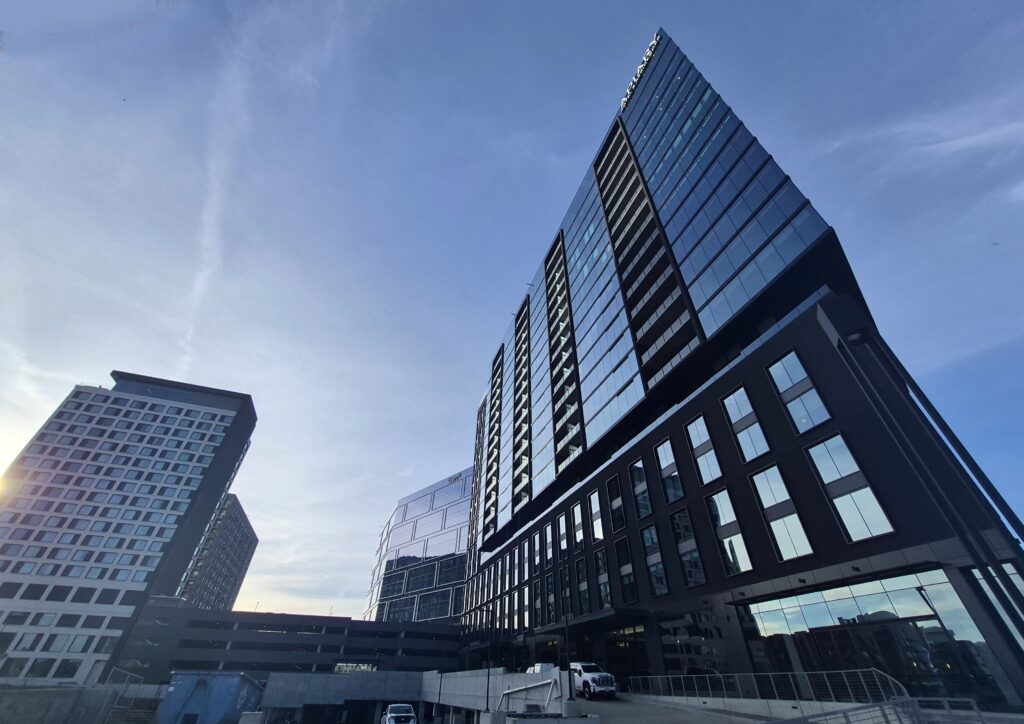
Like Hamrick, Trevey is skeptical that office conversions will add much to affordable housing available in Colorado.
“It’s going to create inventory, but it won’t be cheap to create,” he said.
“It will support supply, but it will be the market rate sector and the high end of that,” he added.
Senior demand
Meanwhile, in addition to demand for workforce housing in new development areas, Trevey said that opportunity knocks for projects providing senior housing, particularly at market-rate prices.
“Senior demand is more suburban,” Trevey said. “They’ve raised their kids, don’t need to own a home anymore, but they want to stay where they’ve raised families.”
He added that he doesn’t like to use the term “senior” for its connotation of older and slower, preferring “active adult.”
“They’re okay with renting and okay if it’s not (priced) attainable,” Trevey said.
He added that he sees a market for more attainably priced product for seniors, as well.
Meanwhile, market specialists noted that another trend is tightening supply and potentially driving up prices at the lowest end of the market.
Hamrick and other experts note that as new units come online, renters qualified for more expensive properties gravitate to newer, lower-priced ones that reflect the market’s concessions. That, in turn, drives prices on the most affordably priced units upward.
Hamrick said that he views the current legislative environment in Colorado as discouraging for investors and less likely to encourage a level of development that could lower rental prices.