







Denver Pavilions is at a crossroads. Here are a few visions for its future
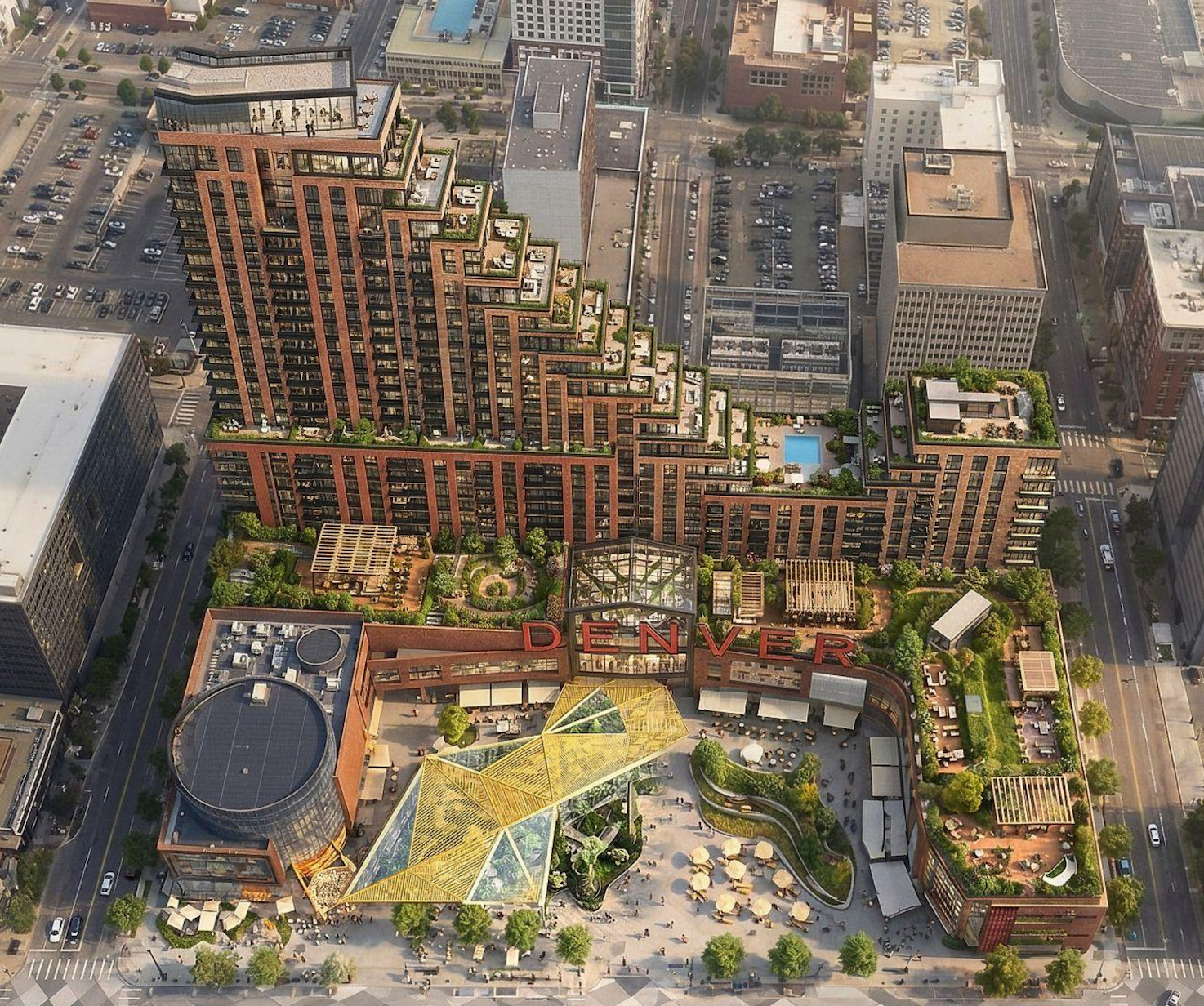
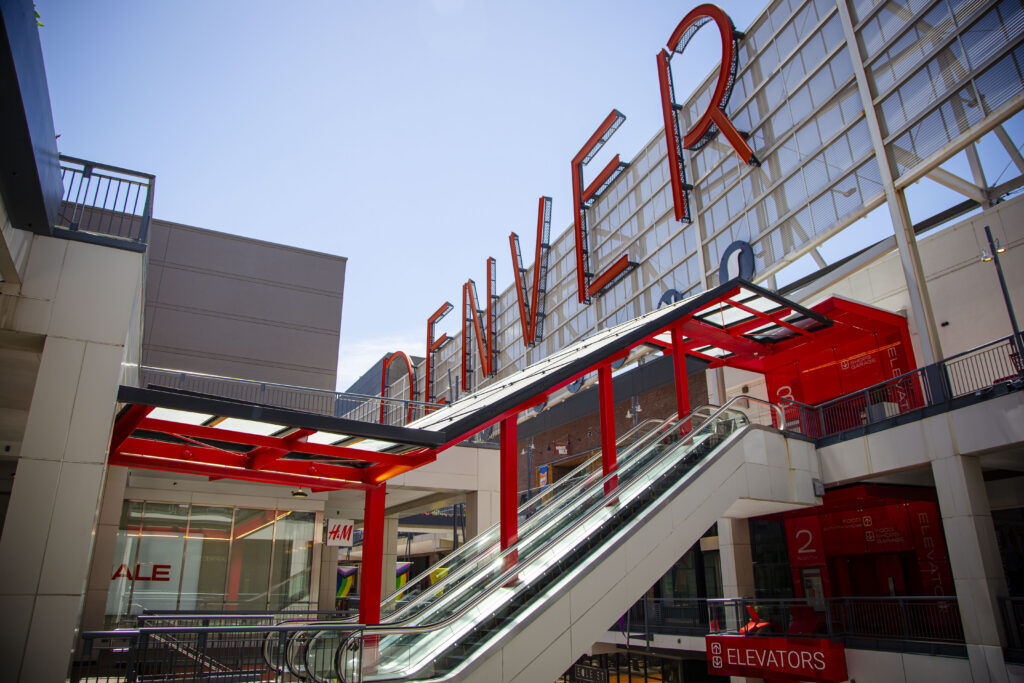
Denver Pavilions, the shopping mall city leaders rushed to save before it went into bankruptcy, has become a major beacon of hope for the future of downtown. But what exactly can be done with the two blocks it spans? And what parts of it are worth saving?
These are some of the biggest questions facing the Denver Pavilions — and sparking conversation amid urban planners.
The shopping center in the heart of Upper Downtown is in a unique position to see redevelopment after the Denver Downtown Development Authority (DDDA) bought the mall and the surrounding parking lots last year, putting the entire two blocks under the same ownership for the first time in decades.
Its new owners brought in an Urban Land Institute panel of national real estate experts to Denver for a week in April, which found the mall’s design to be largely “obsolete” and suggested tearing down a majority of it to build a revenue generating park. They also suggested two residential towers.
Now, a big question is whether any developer will take up their advice or if it’s even practical in this economy.
A few local architects and urban planners who have worked on major projects known for shaping the heart of the city have also come up with their own independent studies, showing what they believe downtown needs to bounce back on its feet for the long run.
There’s “winter gardens,” food halls, tourist-viewing decks and a super-tall skyscraper for housing. Other ideas include an outdoor amphitheater or a rooftop park filled with basketball and pickleball courts.
Either way, experts told The Denver Gazette there’s no one easy solution to fix the Pavilions — and thus downtown as a whole.
Architects who worked on Union Station see similar potential with Pavilions
City leaders have touted the Denver Pavilions as the next Union Station, citing the major restoration in 2014 that helped transform Lower Downtown into a dining, office and residential hot spot.
While downtown overall has struggled with high office vacancy numbers following the pandemic, LoDo has far outperformed the Central Business District where the Pavilions is located.
For every five floors of office space, more than two are empty in Upper Downtown, according to data from CBRE. In LoDo, less than one floor is.
The quasi-governmental organization acts as a financing tool by using the new tax revenues generated by the Union Station project it helped fund more than a decade ago. It has stretched its powers to cover the rest of downtown and seeks to fund gaps in potentially lucrative projects for the city’s tax base that lenders won’t fully cover. The Pavilions purchase was unique as the DDDA completely funded its acquisition and is now in charge of operating the mall until it finds another investor.
So, what do some of the architects who have worked on Union Station’s revitalization and The Crawford Hotel see as the best path forward?
JNS Architecture and Interior Design — the Denver-based firm credited for working on Union Station, Dairy Block and The Ramble Hotel in RiNo — conducted an independent study imagining the site completely from scratch.
It would require the demolition of the mall, with the valuable underground parking garage being the only thing left intact, though JNS’s architects said they may do future concepts contemplating keeping parts of the mall.
The examination was done as a thought exercise for the architects and wasn’t commissioned for any developer.
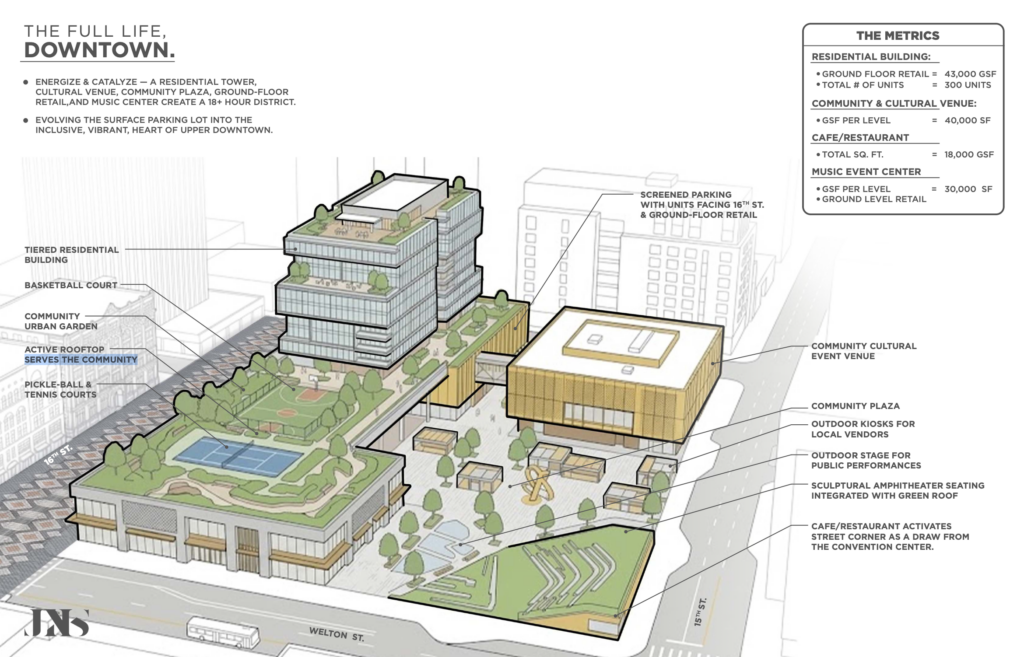
The study found the site needs to be a better connector between Denver’s famous 16th Street and the Colorado Convention Center.
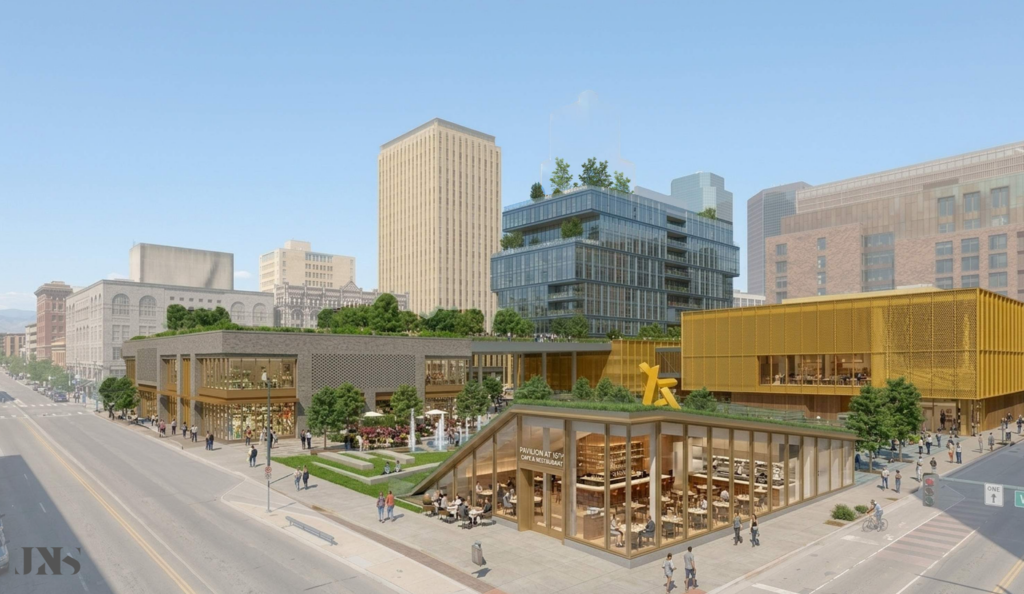
Their team imagined an outdoor space filled with business kiosks on a community plaza, a new cultural venue and event meeting space, a restaurant and cafe facing 15th Street with an outdoor amphitheater built on its sloped roof. The plan also included 300 units of housing, ground-floor retail on 16th Street and a rooftop park with an urban community garden and/or pickleball, tennis and basketball courts.
“One of the big things about the Pavilions is it did turn its back to 15th Street,” said Nicole Nathan, principal at JNS Architecture and Interior Design. “That move really created sort of a dead spot there.”
Visitors coming to the convention center are often looking for spots to eat and hang out. The team wanted to create an iconic restaurant spot at the corner of Welton and 15th Street with the outdoor amphitheater, so people can easily spot it when they walk out, said Jovina Amor, associate principal at JNS.
“Even if they were not quite sure what they were going toward, it was just something that would be lit up in the night and activated in the day so that it could automatically draw in people from the convention and other meeting areas,” she said.
Bringing in residents will be “critical” to support any retail in the area, Nathan said. But getting financing for a huge tower — let alone two — like ULI suggested in its panel will be incredibly difficult.
There’s still a lot of empty offices downtown, construction costs are high and a lot of new apartments flooded the market and absorption was slower than expected, she said.
They wanted something more “attainable.” A smaller building might be better suited for a spot surrounded by several office-to-apartment conversions.
“We wanted to create a residential piece that had the kind of density that would be supportive of this idea or this concept, but not so much that one developer couldn’t bite it off,” she explained.
The idea also centers around creating more opportunities to hang out with people, similar to some of the ideas tossed around from ULI, whether it’s at the cultural center or the rooftop park overlooking 16th Street’s iconic diamondback pavers.
Denver Pavilions could become a hub for farmers’ markets, art installations, live music and more.
“It’s a way to engage a mixed variety of people and different ages and different kinds of lifestyles,” Nathan said. “Having a place that you could go and play during the day would be super fun.”
Creating an ‘urban living room’
One big sweeping idea won’t fix the Pavilions immediately, said Joshua Brooks, partner at urban development firm Sasaki.
The Pavilions needs to have a mix of retail, entertainment, cultural, residential and tourist appeal built over time, he said.
“Focusing on the intersectionality between things is where magic happens,” Brooks said.
Sasaki, who worked as consultants to create downtown’s 20-year master plan for the city, had identified the spot as a huge potential to catalyze downtown. The 2025 Downtown Area Plan notes the parking lots are ideal for infusing housing into the business district and the neighborhood could use a tourist attraction.
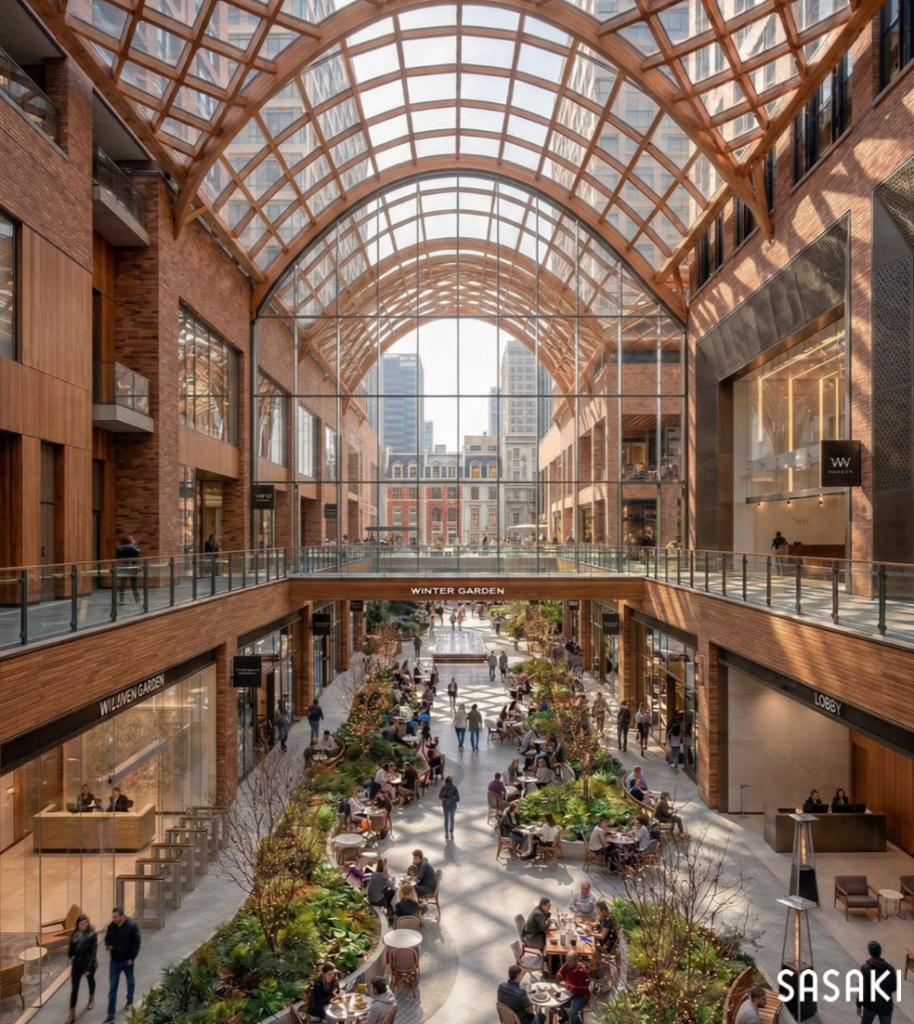
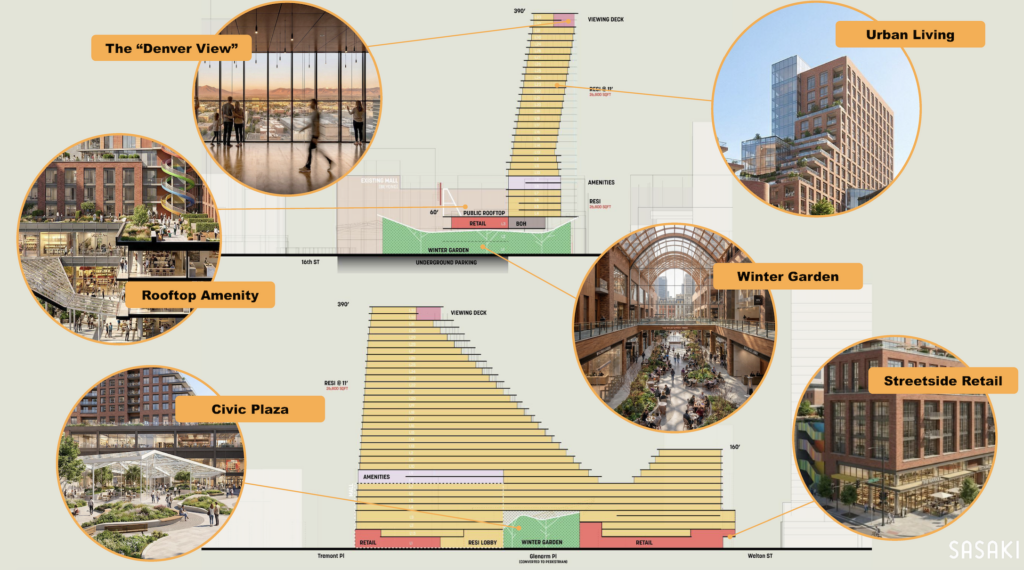
Sasaki created their own plan for the Pavilions featuring a tourist sightseeing deck, a massive residential complex and plenty of indoor and outdoor community space.
Their idea includes keeping most of the mall intact.
While the ULI panel suggested only keeping the movie theater building, Sasaki’s study suggested tearing down the Pavilions’ retail buildings at the center to open up Glenarm Plaza and turn it into a public courtyard similar to the one in front of Union Station.
“It’s an unsustainable kind of mentality to just tear down so much,” Brooks said about ULI’s recommendation.
He also said creating a park at the site would compete with, rather than complement, Civic Center Park and Skyline Park.
Denver has parks and sidewalks, he explained, but needs more of something in between where people can meander about while being surrounded by commercial activity. It should be an “urban living room” instead of an “urban backyard,” he said.
Sasaki’s idea suggested transforming the alley on Glenarm Place into an indoor “winter garden” and shopping destination similar to the Prudential Center in Boston and other winter gardens in Canadian cities like Toronto and Calgary. It would be a destination people can visit all year and would also connect better with the convention center’s activity.
“There’s a lot of cities that have colder climates that have this great network of public indoor spaces,” Brooks said. “And Denver doesn’t really have that.”
Another visitor draw could be an iconic viewing deck where tourists would get 180-degree views of the Rocky Mountains and the city skyline to drive up foot traffic.
The most important component, though, is bringing in residential. The study suggested a 33-story residential complex spanning both lots and creating 1,000 new units.
“The importance of residential density, particularly in the downtown environment, can’t be understated or overstated enough,” he said.
While financing could be a struggle, Brooks said the DDDA should “use everything at their discretion” to help make it happen. The ripple effects from bringing in more housing could spur a massive return on investment, spanning an increased sense of safety, an improved office market and more businesses attracted to downtown.
“The beauty of the DDDA money, and that tool in and of itself, is if properties are strategically added to the mix and the increment that can be captured on top of those, it can truly become even more money,” he said.
Balancing today and the future
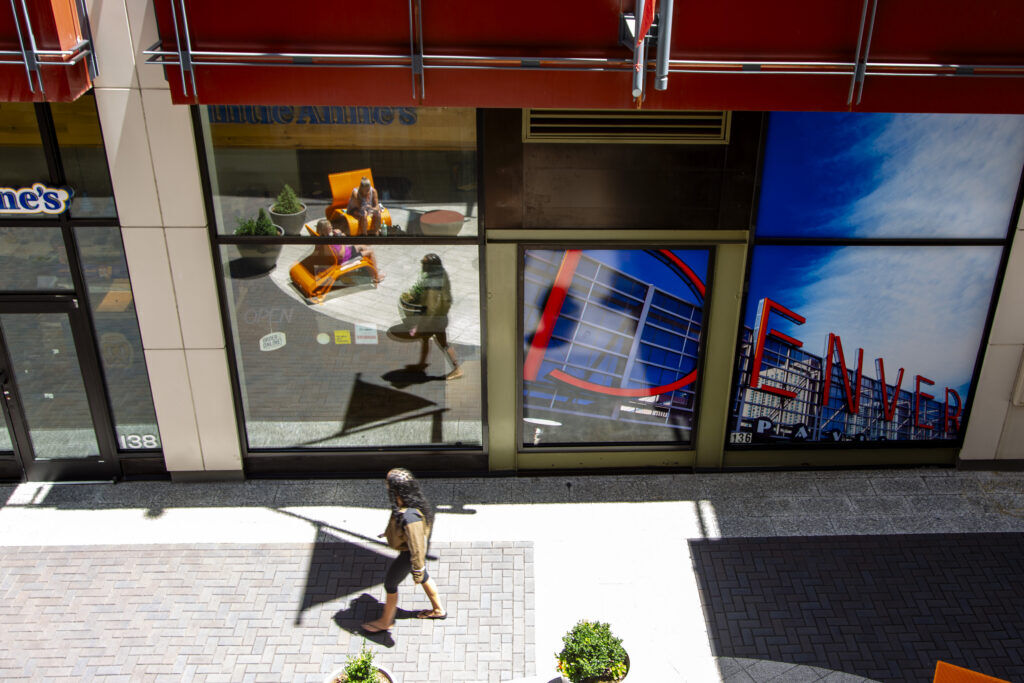
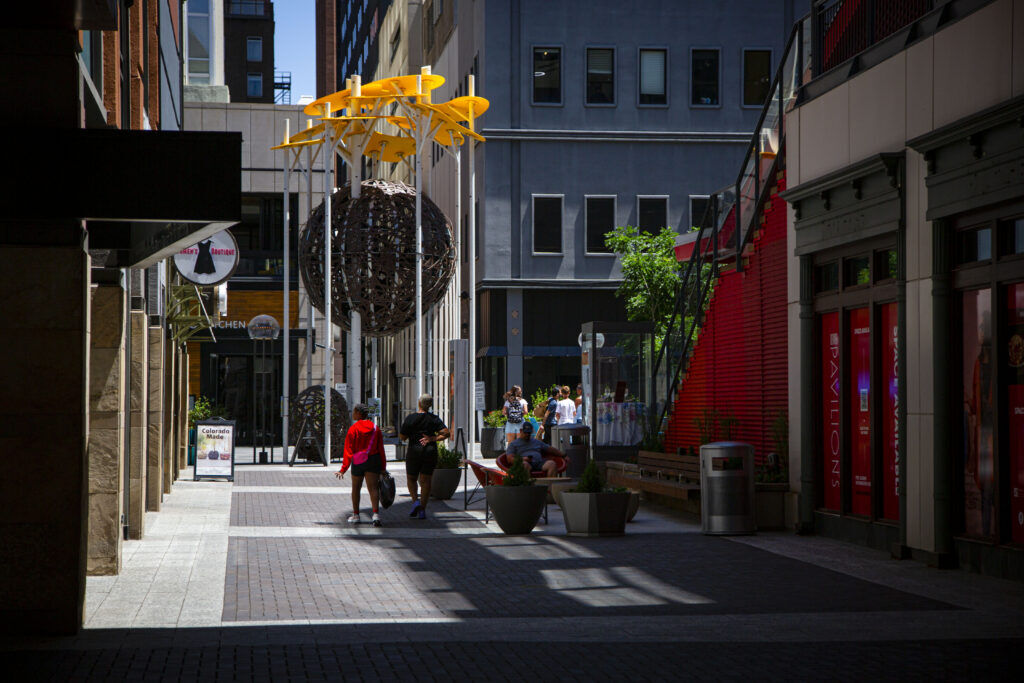
The Denver Pavilions is still a major draw in Upper Downtown today, said Bill Mosher, Denver’s chief projects officer and top city official working with the DDDA.
“We are not going to fence it off and tear buildings down and have it sit vacant,” he said. “That’s the worst thing we can do. We have very valuable businesses.”
When the DDDA acted to buy the mall, Mosher said he was first focused on the mall’s 40% vacancy rate. Now, he’s shifted more toward prioritizing the 60% of space filled with businesses trying to make money and bringing people in.
It may not be ideal, but it’s not nothing.
City leaders want the Pavilions to continue being an asset for as long as possible and the DDDA has poured $2.7 million into repairing and upgrading the facility, including installing new art. The mall still has leases to uphold and Mosher said they’re in conversations to sign new ones.
The DDDA is also staying flexible to any feasible ideas from developers, though current economic conditions both locally and nationally have made it more difficult.
“We are not going to dictate this,” Mosher said. “This has got to be a market response.”
If a huge company wanted to build its own corporate headquarters downtown and bring 2,000 jobs to the city, Mosher said it would be hard not to be interested in an offer like that. A hotel connected to the Pavilions? Sure. There are many potential uses at the site, just not many realistic ones a buyer would be willing to risk their money on.
Mosher said many real estate investors and developers he speaks with are waiting to see how several of downtown’s residential conversions perform, how construction costs shift and what downtown and 16th Street will look like over time.
“We can’t do this in a vacuum. We need to do it at a time and in a place where people are expressing interest in confidence,” Mosher said. “And I don’t have interest in confidence right now in new construction.”
Yet, the main goal is to get the surface parking lots behind the mall developed. That’s where the biggest potential is, he said.
If someone comes in with an idea connecting the lots with the Pavilions, they’re willing to consider it. It’s also OK if the parcels stay separate.
“We could do standalone deals. I think we’d prefer to end up with an integrated, two-block, cool place,” Mosher said. “But that’s complicated and very expensive.”