







Denver’s Baker Historical Neighborhood Association cooks up walking tour
Tour offers architecture and funds for elementary school
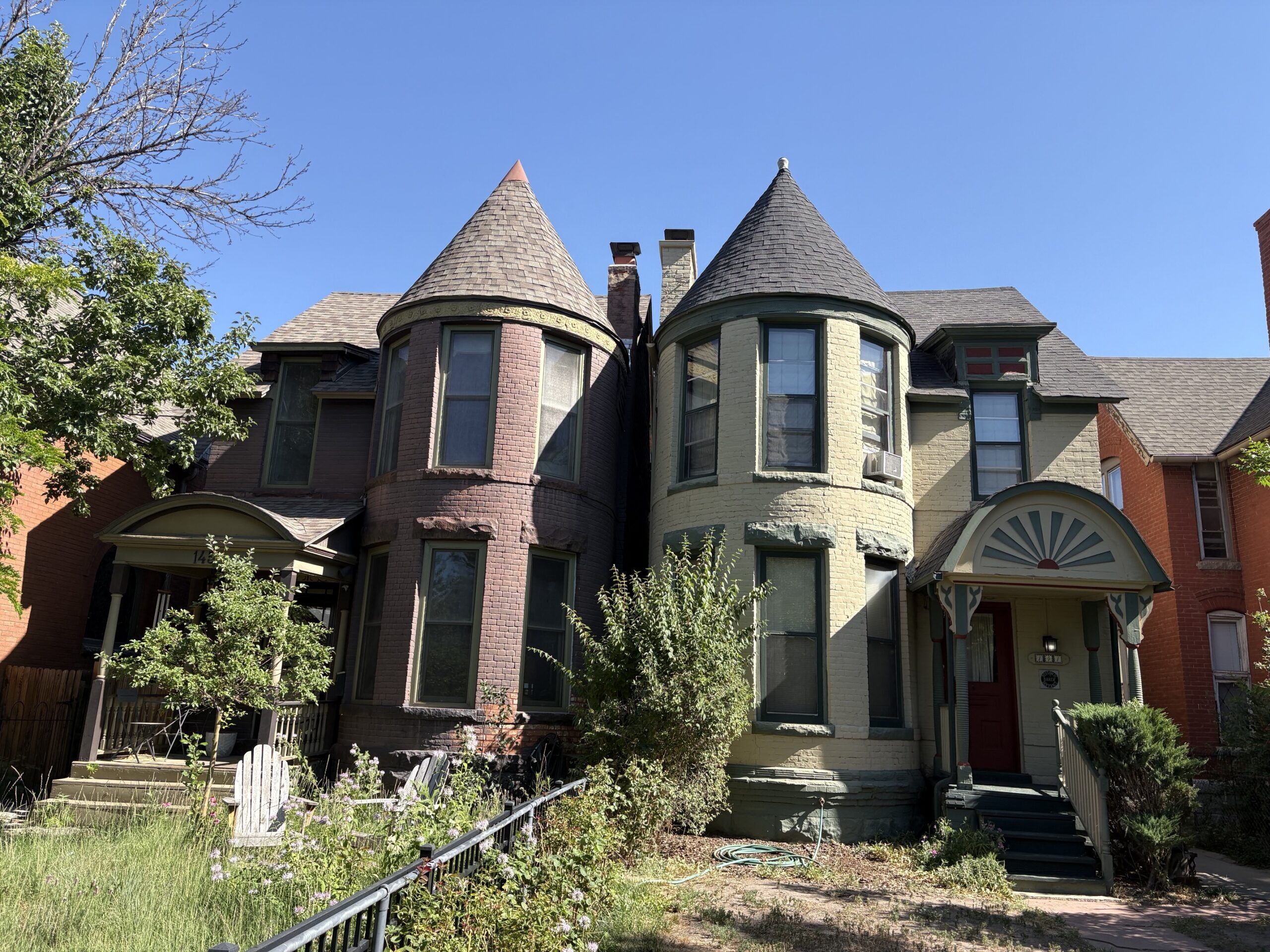
Kevin Henderson is chairing his sixth Baker Neighborhood Historic Association tour and currently is up to his elbows in a total renovation of his own 1889 Queen Anne house in the Baker neighborhood known for abundant Victorian architecture.
In fact, half the buildings in the historic district were built in the Queen Anne style typified by colorfully painted exteriors with elaborate gingerbread work, fish scale shingles, gables, turrets and stained-glass windows.
But Baker is an eclectic historic district. In addition to Queen Anne homes, the walking tour from 11 a.m. to 3 p.m. on Saturday, Aug. 8, also features an array of other architectural styles.
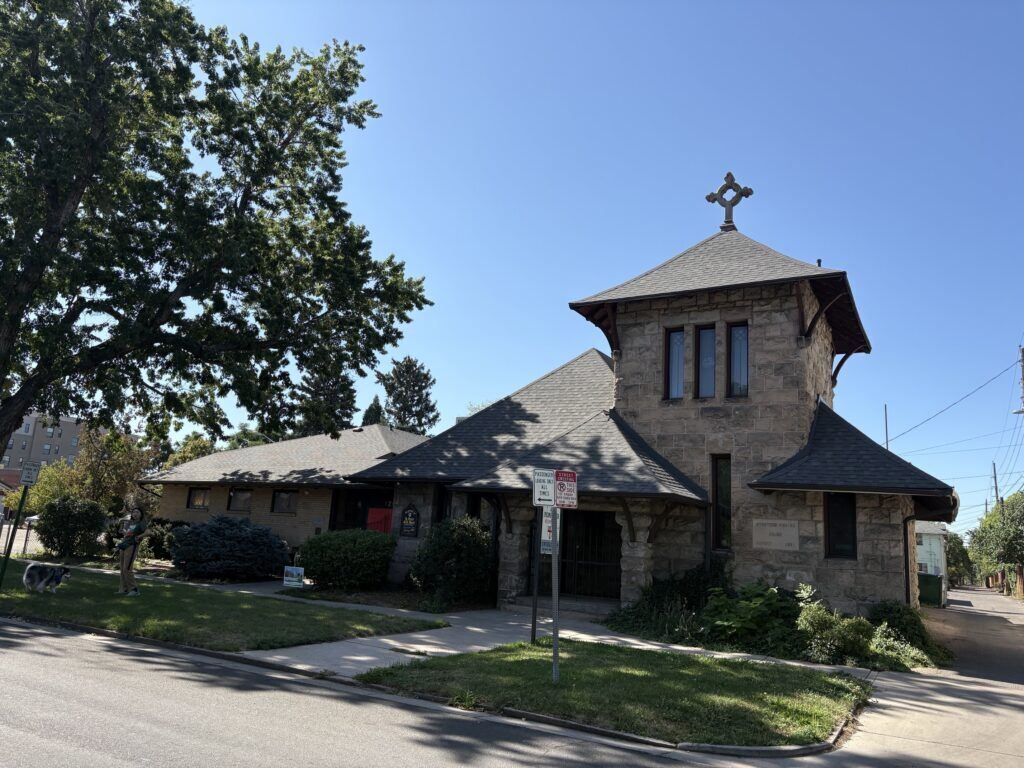
The tour showcases an Art Deco fire station, a Collegiate Gothic elementary school, a rare Second Empire home, a Hobo Craftsman bungalow, a midcentury modern showroom and an English Cottage-style stone church. A highlight is a mercantile built circa 1880 and reimagined beginning in 2013 as a modern residence with a spectacular rooftop view of the Mile High City.
An architectural smorgasbord
The Baker neighborhood also contains Dutch Colonial, Classic Cottage, Shingle style, Denver Squares with Classical Revival elements, Craftsman bungalows, Colonial Revival and Gothic Revival structures. Many of the sidewalks are sandstone slabs still in excellent condition more than a century after installation.
Located south of downtown Denver, the Baker Historic District’s boundaries are formed by Lincoln Street, 6th Avenue, the South Platte River and Mississippi Avenue. Though largely intact, the Baker Historic District remains relatively off the radar.
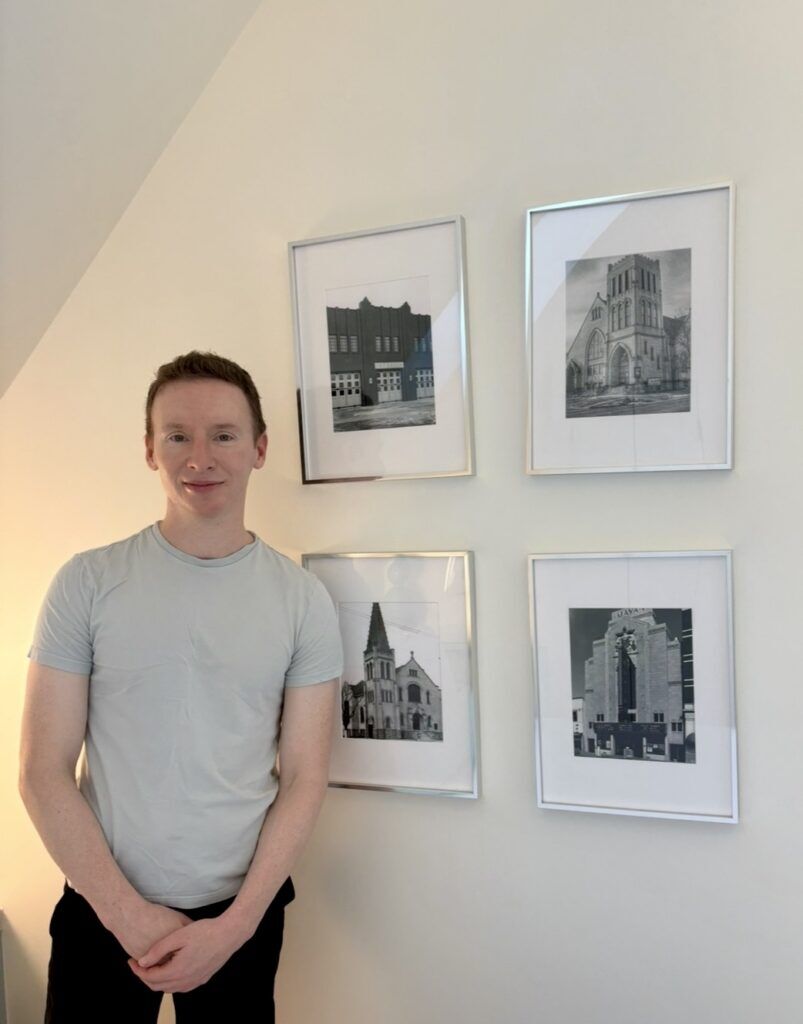
“Baker is going through gentrification, but the core Bohemian charm is still here,” Henderson said. “People drive by on Broadway or Sixth Avenue and don’t even know all this is here.”
The tour intends to change that. Alison Salutz serves as director of education and community impact for Historic Denver, where she’s worked the past nine years.
“Baker is such a great example of a vibrant neighborhood full of historic homes. A district since 2000, it features homes from the 1870s and 1880s that demonstrate the range of backgrounds of their builders,” Salutz said.
Waking tours reveal Denver’s past
“The Baker Walking Tour is a wonderful way to experience the neighborhood. Walking tours provide insight that might otherwise be missed and help us understand Denver’s past,” Salutz said. “The density of the Baker neighborhood makes it a great tour. There are so many buildings to explore and a diversity of architectural styles that can best be experienced on foot.”
The Historic Denver website provides an overview of the Baker Historic District: “This is a historically middle-class neighborhood in the South Side, an area annexed by Denver in 1883, consisting of more than 20 tightly interwoven residential subdivisions. The earliest development dates from the 1870s and includes a few wood-frame worker houses on the south end of the district. Late 1880s streetcar service stimulated growth until the Silver Crash of 1893.”
The prominent Denver architect William Lang, who designed the Molly Brown House, designed 39 homes in the Baker neighborhood. Marshall Pugh, another celebrated Denver architect, also designed homes in the district.
Baker’s checkered past helped preserve the present charm
“This was a multiuse neighborhood since its founding,” Henderson said. “The developers wanted a mixed community. The houses closer to Broadway tend to be larger for wealthier, upper-middle-class, bourgeois people. But the same developers, as they moved west toward the Western boundary of the South Platte River, the houses get smaller and were more for working-class people and that was intentional, by design. The idea was to have a variety of people from different classes, different socioeconomic backgrounds and I still think that resonates today in Baker.”
Having observed the redevelopment of Denver in recent years, Henderson notes that Baker has an advantage springing from a disadvantage.
“Unlike other neighborhoods where I’ve seen a lot of change with development, Baker — because it was the red-light district — didn’t have a lot of investment in development. In the mid-20th century, people did preserve and renovate old, historic houses. And — really importantly — in the year 2000, Baker became a historic district. With that comes special challenges of keeping houses up to date but also has special protections to make sure that historic buildings in the district are preserved and the district maintains character over time.”
Henderson noted that not all of the Baker neighborhood falls within the historic district.
“But a big chunk does,” he said.
A physician’s life-saving care for a condemned building
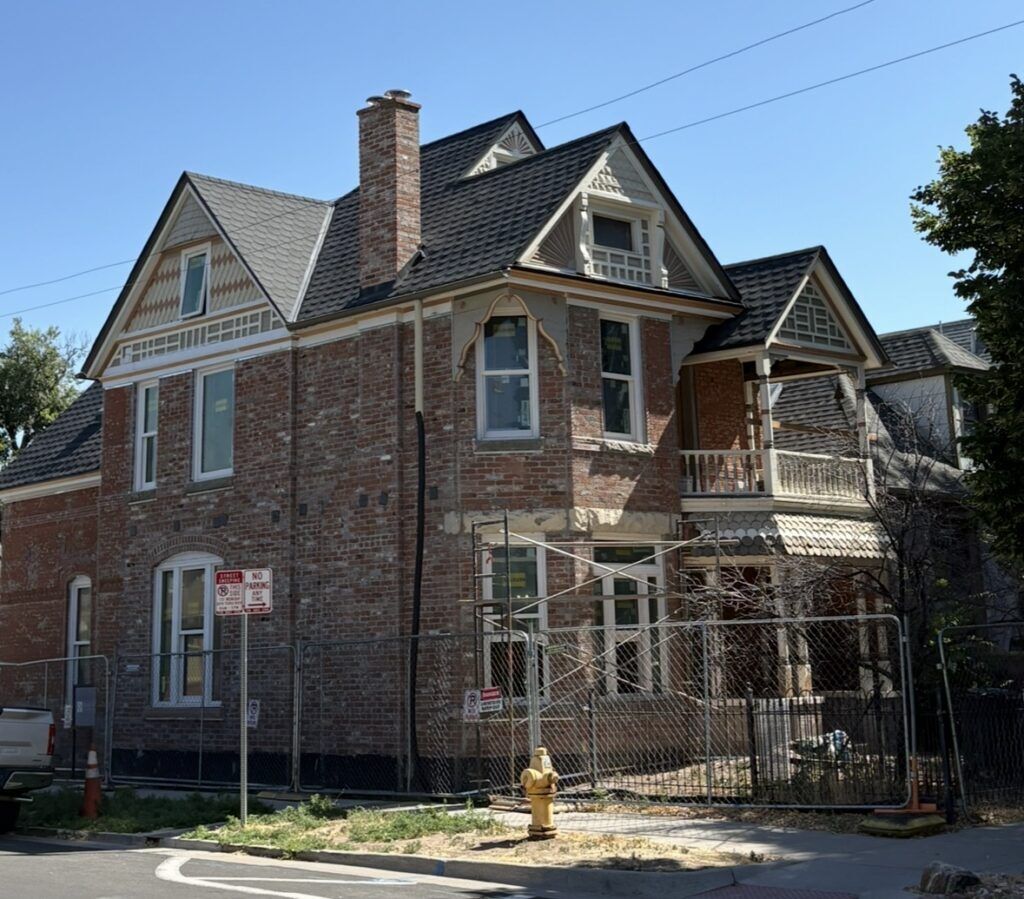
One stop on the tour demonstrates what a visionary can do with a historic property. Chris Horton, a physician working in geriatrics, cares for elderly people and old buildings. He restored an 1880 building that had been condemned.
“No other properties I looked at interested me as much as my current home. I had always thought it would be cool to convert an old commercial space,” said Horton, a transplant from Missouri. “I spent about 1.5 years in planning and design and approval from the city and about 1.5 years of construction.”
His planning and patience paid off. His home, both historic and contemporary, is sleek and singular.
“I believe that construction from older buildings was built to last, which is not always the case with new construction now,” Horton said. “We were actually able to save and reuse the floor joists between the floors and roof as they were in great condition.”
Horton replaced wood-over-dirt with concrete floors. The façade of Horton’s home, handsome with red brick and black trim, presents as a stately historic structure.
“I think it’s great to combine old and new. I would hate to see a lot of historic buildings demolished,” he said. “In my case, I was able to salvage a lot of old construction and incorporate it into the new structure. All the external walls were preserved except for some updating in the front and the back is new because the walls were practically falling in.”
A visionary’s views
Inside, Horton’s home is open, modern and artful. A secret garden provides a Zen sanctuary at the back, but the highlight is his rooftop space with enviably expansive views of the foothills and Front Range to the west and downtown Denver’s skyline to the north.
“I was mostly interested in this particular property due to the views and the unique exterior. As soon as I closed, I put a ladder on the roof of the adjacent building to get on the roof of my home to confirm my suspicion of the incredible views,” Horton said.
“I have enjoyed living in the Baker neighborhood since I moved to Denver in 2001. I really enjoy the diversity and convenience to downtown, freeways and mountains,” he added. “It is also great to be able to walk to shops and restaurants on Broadway.”
Horton, happy to open his home for the event, is himself a fan of architectural tours.
“I love touring homes to see how creative people can be and discover new design ideas,” he said
Tour benefits historic elementary school
The tour benefits the neighborhood association and the Denver Center for International Studies (DCIS) at Fairmont Elementary School, a hub of the urban neighborhood. Built in 1924, the school with elaborate masonry, Gothic arches, handsome wood paneling and historic murals serves as the tour check-in site.
“All guests check in at the school, and the PTA helps. We donate a portion of the tour proceeds to the school,” Henderson said. “After our last tour, the principal and the students worked on a sustainability theme and created a community garden for the kindergarten-through-fifth-grade school.”
In an era in which loneliness has been proclaimed an American epidemic, Henderson said the Baker neighborhood promotes connection and community.
“This tour helps. One thing I love about my neighborhood in addition to the houses and the history and the architecture which I’m definitely attracted to, but what I love so much about this place is I walk it all the time and ride my bike and I see people I know,” he said.
“Our neighborhood association does a great job. It’s all volunteer-based. We use this tour to help fund our association, and it’s pretty active. We do volleyball in the park once a week. We put on ice cream socials. There’s a Halloween parade down Broadway and we have a float,” Henderson added.
The Baker neighborhood envelops lots of businesses, and the association collaborates to spin the wheels of commerce.
“There’s a lot of community engagement and involvement I enjoy while the neighborhood association works with local businesses,” said Henderson. “The new soccer stadium will be at the very southern tip of our neighborhood and eventually the new Bronco stadium will be just north of this area, abutting our borders. Our neighborhood association plays an important function representing residents when working with commercial businesses on how best to harmonize this being a living community and neighborhood but also supporting the businesses around us.”
Historic Denver also offers walking tours
If you can’t make the tour on Aug. 8, Henderson regularly leads Historic Denver’s tours of the Baker neighborhood.
“About 10 years ago, I was a walking tour docent for Historic Denver and they asked me to create a tour for Baker. I researched the neighborhood, and I host the tour once a month during good weather months,” Henderson said.
“I just really love these beautiful old historic neighborhoods that have charming character reflected in the architecture,” Henderson said. “I love architecture. I love history. It’s fun to walk by and see the outsides of these historic places, but what’s special about our tour on Aug. 8 is that we can bring people inside. It’s so interesting to see what people have done with old architecture. Anyone who loves architecture and design, history and old houses will enjoy our tour.”
IF YOU GO
Baker Historic District tour from 11 a.m. to 3 p.m. Saturday, Aug. 8. Advance tickets $20 available online at www.bakerhometour.com or $25 the day of the event at Denver Center for International Studies at Fairmont, 520 W. 3rd Ave. Attendees must check in at DCIS to receive a tour map and materials before beginning the self-paced tour. For more information, to purchase tickets, become a sponsor or volunteer, visit www.bakerhometour.com or [email protected]. The tour is designed to be walkable, but visitors can choose to drive from location to location. Beware of restricted parking in the neighborhood. Tour organizers advise parking at the school or the church.