







Elbert County takes transmission dispute with Xcel to court
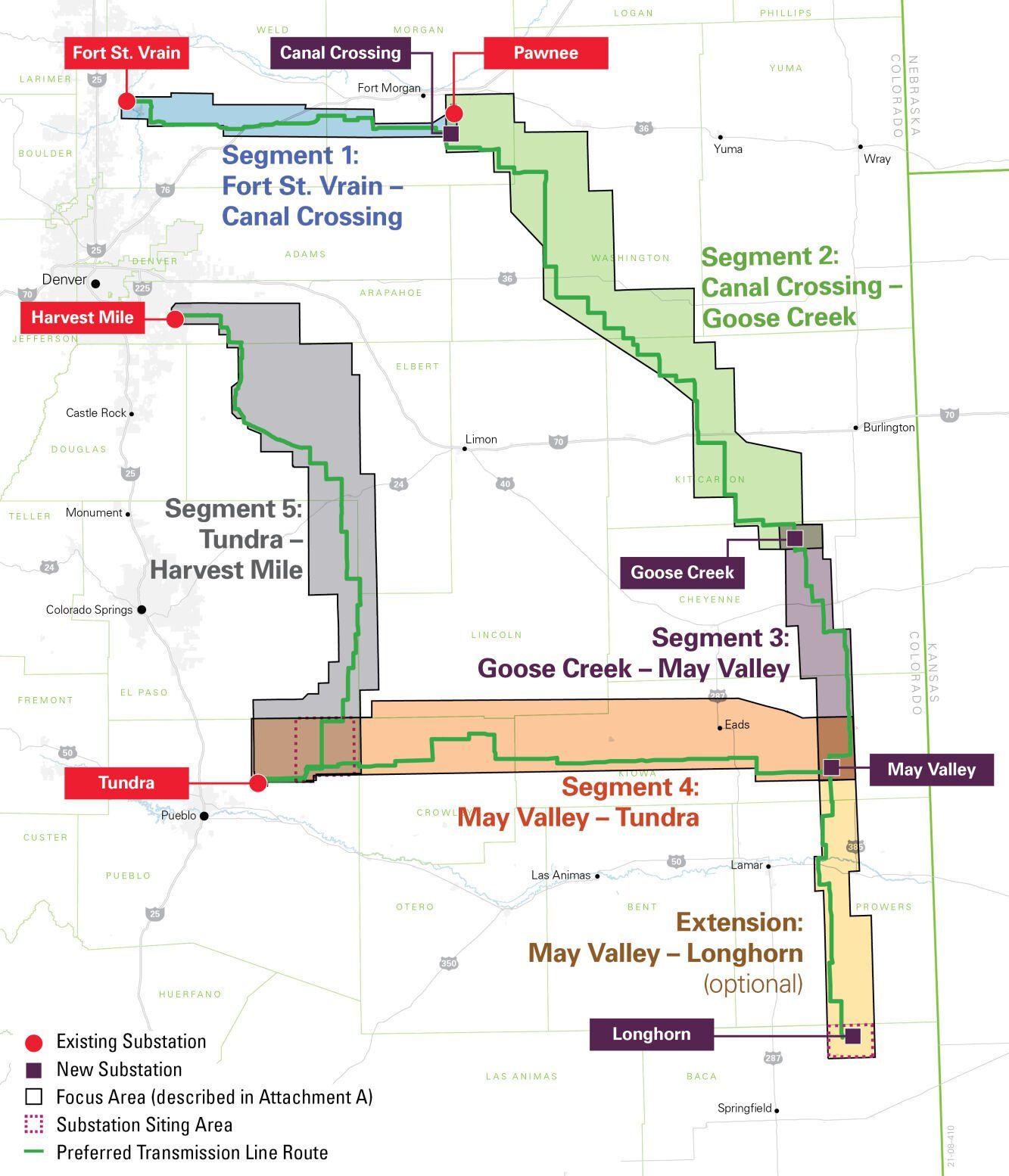
Elbert County filed a lawsuit in Elbert County District Court to challenge the state’s approval of Xcel Energy’s preferred route for a major transmission line, marking the latest escalation in a dispute over how much weight local land-use decisions should carry when they conflict with statewide transmission needs.
The Thursday court filing comes after Elbert County denied Xcel’s permit applications last year. The county raised concerns about impacts to economic development zones as well as increased wildfire risk and effects on scenic corridors and nearby communities. Xcel appealed that denial to the PUC, which sided with the utility and cleared the way for construction on the preferred route.
The Power Pathway is a $1.7 billion investment in 550 miles of new transmission lines across 12 counties that Xcel says will strengthen the state’s electric grid and deliver wind and solar energy from eastern Colorado to the Front Range.
Xcel said it “collaborated with the Elbert County community for four years, addressing questions, concerns and acquiring land rights.” The company added that it “adjusted the project’s location by 50 miles to accommodate community wishes while keeping project costs low for our customers.”
Elbert County argues that the route would impose significant local impacts while providing no direct infrastructure benefits to the county, according to the lawsuit.
Xcel’s own project documents show that Segment 5 is a through-transmission line connecting the new Sandstone Substation in Pueblo County to the Harvest Mile Substation in Arapahoe County, with no new substations planned in Elbert County. Xcel has said the project will still generate important tax revenue for the county, cities, fire districts and school districts even though it does not provide electric service directly to Elbert County residents.
In its petition, the county argues the commission failed to properly enforce requirements that Xcel consult with the local government and present reasonable alternative routes before a local denial can be overturned.
The county maintains that viable alternatives existed, including routes farther east and a previously studied Highway 125 alignment, but says Xcel refused to meaningfully explore them despite repeated requests dating back to 2023.
The county contends the PUC failed to give appropriate weight to local findings on land-use compatibility and community impacts. It also claims the commission exceeded its authority by reinterpreting the county’s zoning rules regarding colocation and economic development zones.
The county maintains that it supports the broader goals of the Power Pathway project but opposes the specific route Xcel selected.
In a September statement, the Board of County Commissioners said it would “use our best efforts on behalf of our citizens to defend the County’s decision to deny the location of a major transmission line proposed by Xcel Energy through the heart of Elbert County, as the location did not consider the substantial impacts to Elbert County citizens.”
In a June 10 statement, the county said the PUC’s decision sent a signal to other local governments about the limits of local input on major utility projects. Xcel denied sending any formal communications to that effect.
The case also brings attention to the Colorado Electric Transmission Authority, or CETA. Created by the legislature in 2021, CETA has the authority to develop transmission projects, issue revenue bonds and exercise eminent domain. While CETA has not been directly involved in this segment, its powers position it as a potential “developer of last resort” if alternative routes are pursued or if new transmission needs emerge from growing large-load demand.
The petition asks the district court to review the PUC’s decisions and ultimately prevent construction on the route the county rejected.