







Facelift coming to Red Rocks’ dressing rooms

Red Rocks Amphitheatre is getting a $35.1 million facelift next year to improve the backstage and dressing room areas for performers who entertain some 1.7 million concertgoers annually.
The money comes from the Vibrant Denver Bonds approved by voters in November.
“The backstage updates have been contemplated for more than a decade,” said Brian Kitts, a spokesman for the amphitheatre. “It’s just taken that long to find the funding.”
The Vibrant Denver Bond offering approved by voters in November earmarked $35.1 million for the expansion project that will see the construction of a multi-story structure, partially intended to solve accessibility issues by performers.
Denver issued a Request for Qualifications for architectural and engineering design services late last month. The deadline to submit bids is June 3. Construction is expected to begin in November 2027 and run through May 2028, which coincides with the off-season for concerts at the popular venue.
The RFQ centers on improvements to the backstage area, particularly the below-ground dressing rooms and easier access to the stage by performers. Red Rocks will sacrifice a small staff parking lot for the construction site. The new building will have a parking garage for performers to use and dressing rooms at the stage level.
The Vibrant Denver Bond initiative created a $950 million fund for projects to be completed between 2026 and 2031. Of the total, 25% — or about $237 million — is earmarked for city facilities, including Red Rocks Park & Ampitheatre.
Red Rocks attracted more than 1.7 million concertgoers during 2025, making it the most popular amphitheater, according to the industry trade publication Pollstar. The open-air space, which has a seating capacity of 9,525, was carved from sandstone rocks toward the end of the 1930s.
Changes over the years have improved conditions for people with disabilities, including adding more areas for concertgoers who use wheelchairs. Some of the modifications were prompted by litigation alleging violations of the Americans with Disabilities Act. Little has changed backstage and underground, where the performers relax in well-appointed dressing rooms and bide their time before going on stage.
“The current backstage area certainly has some deficiencies,” Tad Bowman, venue director for Red Rocks, said at a Denver City Council committee hearing earlier this year. “It is not at all ADA-compliant.”
Moving from the downstairs dressing rooms means navigating two steep ramps to reach the stage.
“I have seen some of the performers up there who have a hard time getting back and forth,” Bowman said.
As the RFQ spelled out: “With current dressing rooms located below grade, access to the performance stage is difficult for many users. A primary justification for the new expansion is to bring performer amenities to stage level, ensuring full ADA compliance and providing an inclusive, equitable environment for all performers and staff regardless of physical ability.”
“There’s nothing ADA compliant about those ramps,” said Sparky Nielsen, senior operations manager at Production Services International, a Denver company that provides sound, lights and video for venues and musical festivals. He has been doing shows at Red Rocks since the 1970s. “It’s two ramps. You have to go up and turn and go back.”
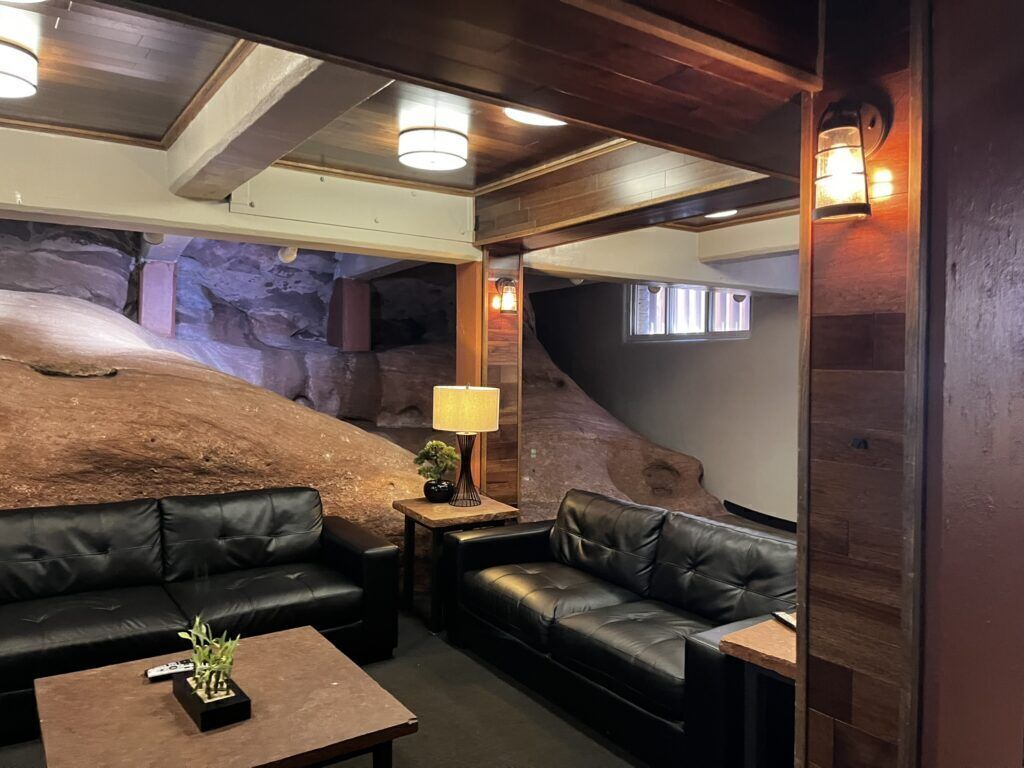
Of the four existing underground dressing rooms, the biggest two have the performer sharing space with the same jutting sandstone rock that makes the venue so eye-catching.
“It’s charming, but it’s probably never been practical,” said musician Chris Daniels, who founded the Colorado-based band Chris Daniels & The Kings in 1984 and has performed at Red Rocks over the years. “Now that people are paying attention to the needs of performers beyond just ‘here’s the stage, here’s your dressing room,’ but [also addressing] access and accessibility, it probably makes sense. It’s probably about time.”
The dressing room reserved for the headliner measures about 660 square feet, while the opening act gets 276 square feet. Both of those rooms have lounge areas and bathrooms, while two smaller dressing rooms nearby lack any facilities. Additional dressing rooms are located in the adjacent north tower.
Kitts said the city has not surveyed performers about what amenities they would like to see added at Red Rocks.
“But there’s a general understanding of industry standards concerning backstage operations involving kitchen, bathroom and load-in/logistical operations — things Red Rocks may have been lacking due to age and circumstance. A number of promoters, agents, artists and artist management folks have been asked for general input and feedback, too.”
More than 150 companies have expressed an interest in the project, judging by how many have downloaded the RFQ issued by the Denver Department of Transportation & Infrastructure.
The RFQ includes a 2018 feasibility study conducted by Short Elliott Hendrickson that envisioned a 22,253-square-foot, five-story building that would address the issues. Because of the slope of the site, two of the five stories would be below grade: one for parking and the other for kitchen and dining areas. The first floor, at ground level, would be dedicated to storage and other purposes. The second level would house smaller dressing rooms and the third level the larger dressing rooms.
The RFQ does call for the construction of a five-level building and requires the use of the red sandstone that is seen throughout Red Rocks.
The feasibility study was meant to steer planning, but none of the budget, building size or other specifications have been finalized and won’t be until the next phase of the planning is completed, Kitts said.
“There is $39 million in bond money approved for the expansion, but that was an estimated need that may be supplemented,” Kitts said. “Beyond those bond dollars, nothing is confirmed.”
In addition to the new building, according to the RFQ, the company chosen for the project will need to renovate the existing backstage areas, including modernizing the HVAC, plumbing and electrical systems. A rehearsal space for bands, as well as a recording studio, are also possible additions.
City Councilman Kevin Flynn served on the Arts & Culture Venues subcommittee, one of five subcommittees created to explore how the Vibrant Denver Bond monies would be earmarked. Flynn visited Red Rocks on May 14 and toured the backstage area. He likened the space to what would be considered Class C in a commercial office building because of its lack of amenities.
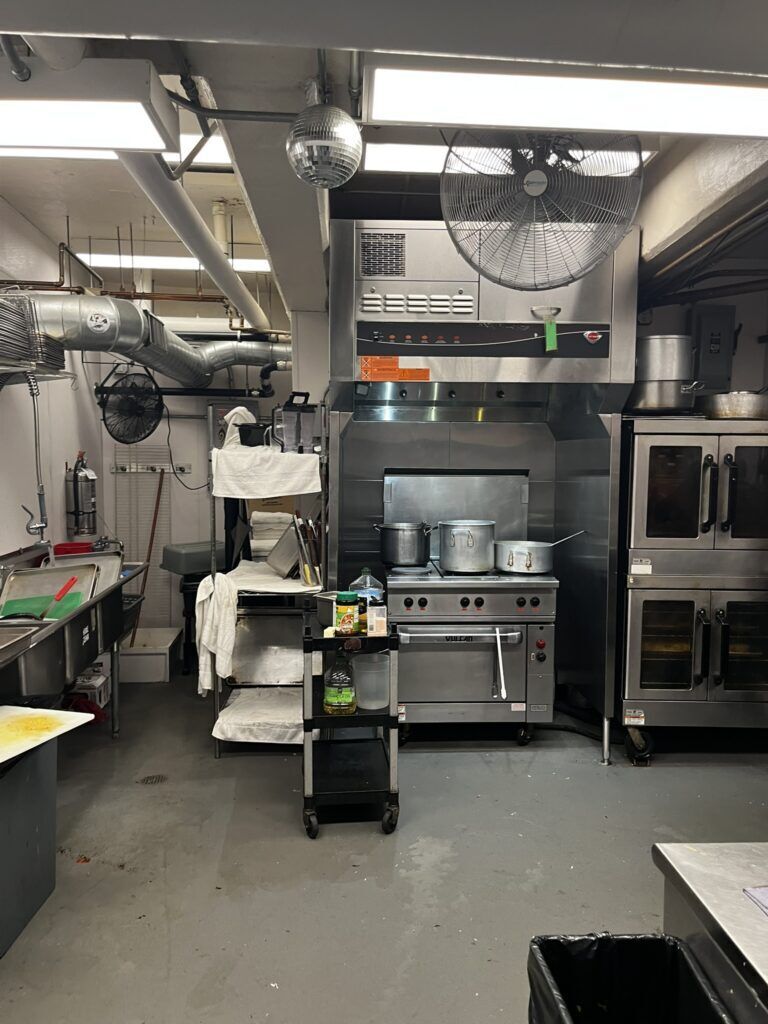
“The kitchen is not ventilated. It’s pretty primitive, and it’s due for an upgrade,” he said. “But the point of it is, at least in my view, and the view of most of the people on the committee, as I recall, was that Red Rocks is one of our biggest money-makers as far as cultural venues. The revenue that we derive at Red Rocks helps to subsidize and fund a lot of other projects. For instance, it helps make the renovation of the Loretto Heights theater in my district feasible.”
Red Rocks generated $37.8 million in net revenue for the city in 2024, which supports general operating costs, venue operations and culture programming for Denver Arts & Venues.
Improving the amenities at Red Rocks will help ensure the venue continues to attract national touring acts, Flynn said.
Among the project goals spelled out in the feasibility study is improving the experience for the performer. That includes coming up with a better way to unload equipment. The existing system calls for semi-trucks to park downhill and the gear loaded onto flatbed trucks and then driven up a special outdoor ramp to reach stage level. The process takes multiple trips.
The RFQ does not address this specifically, but pointed out that the logistics for performers and crew “is inefficient and physically demanding” because they must be driven to the backstage area and enter through a staff door. The new building will give them direct access via a parking garage to their dressing rooms.
Putting the dressing rooms at stage level also will eliminate the need to haul wardrobe cases containing a performer’s costumes from down the hill, up the outside ramp and then down two ramps to the dressing rooms below ground.
“A big show might have eight, 10 full-size wardrobe cases,” Nielsen said, “and they all have to go to the dressing rooms.”