







GUEST COLUMN: When higher ed addresses real needs, Colorado wins

As a resident of Gunnison for more than two decades, I have heard the same story told in different ways. A hospital administrator explaining why they pay travel nurses three times the going rate just to keep the lights on. A school superintendent is describing the rural district that’s been without a permanent math teacher for two years. A tech company founder who built their business in Colorado but can’t find the engineers to grow it here.
According to the Colorado Talent Pipeline Report and the Colorado Department of Education, our state is short more than 10,000 nurses, nearly 7,800 teachers and an estimated 30,000 tech workers and engineers. Real patients without care. Real students without teachers. Real communities without the engineers to sustain them. The question isn’t whether the gaps are real; it’s what higher education is doing to close them.
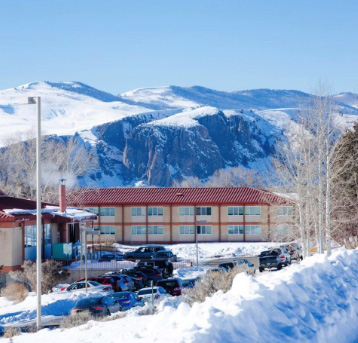
Western Colorado University turns 125 this year. I raise that not to celebrate, but because 125 years of asking a single question, “what does Colorado need?” has taught us something about what the answer requires. In 1901, when Gov. Orman signed the bill creating Western, the people of Gunnison didn’t wait to be asked. They danced in the streets, donated 40 acres, planted 550 trees and got to work building a teacher college, because that’s what their community needed to grow.
That founding instinct is the right model for higher education today: ask what a region needs, build it and measure success by what students actually go on to do. It worked for teacher colleges generations ago, and it works just as well today for health care, technology and environmental science. The urgency is greater now, and the accountability has to match it.
At Western, we’ve tried to live that in real terms. Nursing had been one of our most requested majors for years. Students wanted it, the community needed it and now we’ve built a program from scratch in partnership with Gunnison Valley Health, which is specifically designed to train and retain nurses in rural areas.
The first CNA cohort has already graduated, and our bachelor’s degree in nursing enrolls its first class this fall. When Colorado’s billion-dollar outdoor economy lacked serious business leadership, we launched the nation’s first MBA focused on the outdoor industry. To meet the growing national demand for skilled engineers and computer scientists, we established the Paul M. Rady School of Computer Science and Engineering.
To continue supporting our community’s upward mobility, we created the Gunnison Valley Promise, which began with a conversation with community leaders about how to keep our young people from leaving the region and support the families living here. Every graduate of Gunnison and Crested Butte high schools can now attend Western tuition-free, regardless of income. It’s a workforce strategy as much as it is financial aid. Instead of trying to import talent, we are growing our own.
That’s what the residents of Gunnison understood when they planted those 550 trees. A university isn’t an amenity. It’s infrastructure. We’re a small school on the Western Slope, where the elk population outnumbers our students. And we’ve been embedded here for 125 years by design. Walk into a rural classroom, a company in the outdoor industry or an engineering firm building Colorado’s energy future, chances are you’ll find a Western graduate. While we receive less than 2% of the state’s higher education funding, the return on that investment shows up across Colorado.
Colorado’s higher education system is under real pressure right now, and we should take a page from the residents of Gunnison, who in 1901 didn’t wait to be asked — they saw what was needed and built it. We have the same opportunity today. The workforce gaps are documented, the model exists and the only question is whether Colorado is ready to invest in the institutions already doing the work. In Gunnison, the trees are still growing.
Brad Baca is the 15th president of Western Colorado University in Gunnison, where he has spent more than two decades helping build an institution defined by access, purpose, and student success.