Vince Bzdek: ‘The biggest undertaking by mankind in the history of the world’

Shortly after the D-Day invasion started 80 years ago this week, Supreme Commander Dwight D. Eisenhower — walking the Normandy beaches with his son 2nd Lt. John Eisenhower — said this: “If I didn’t have air supremacy, I wouldn’t be here.”
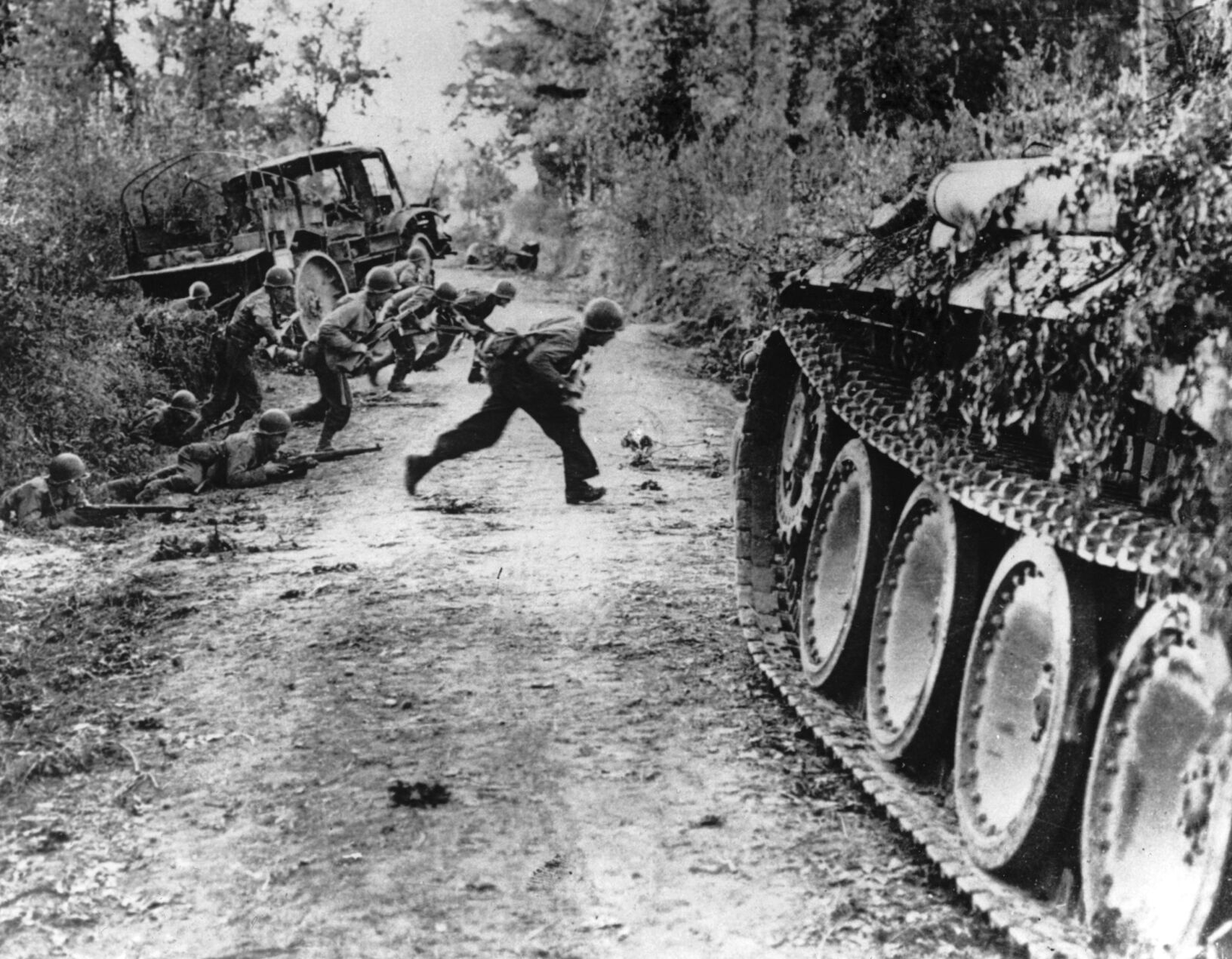
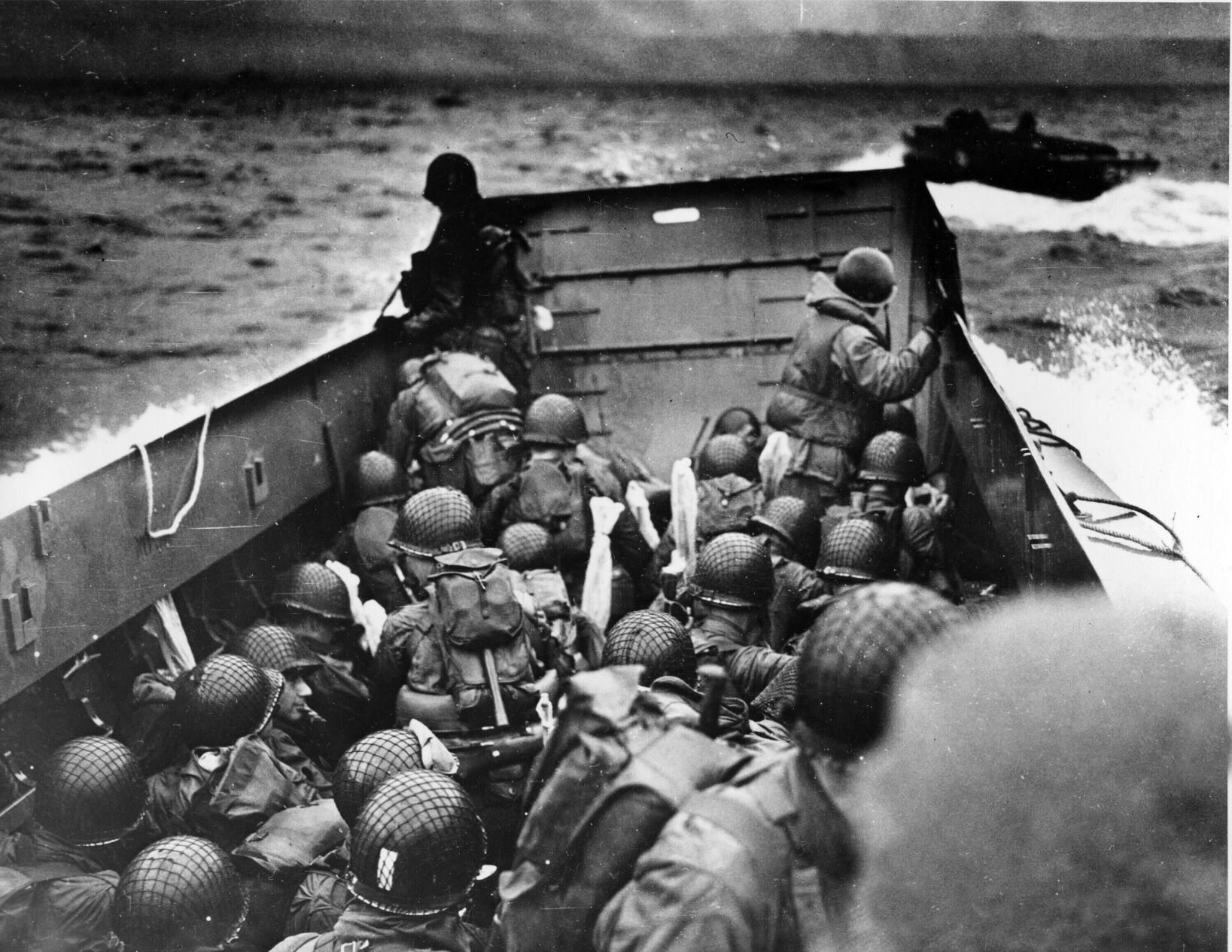
That statement somewhat contradicts the single “Private Ryan” image most people hold in their heads of Allied grunts storming ashore onto Utah, Omaha, Gold, Juno and Sword beaches under a hail of gunfire in the greatest amphibious operation in history.
But D-Day was so much larger than that, and it started a year and a half before June 6, 1944, when American and British bombing runs began to take the Luftwaffe out of the fight.
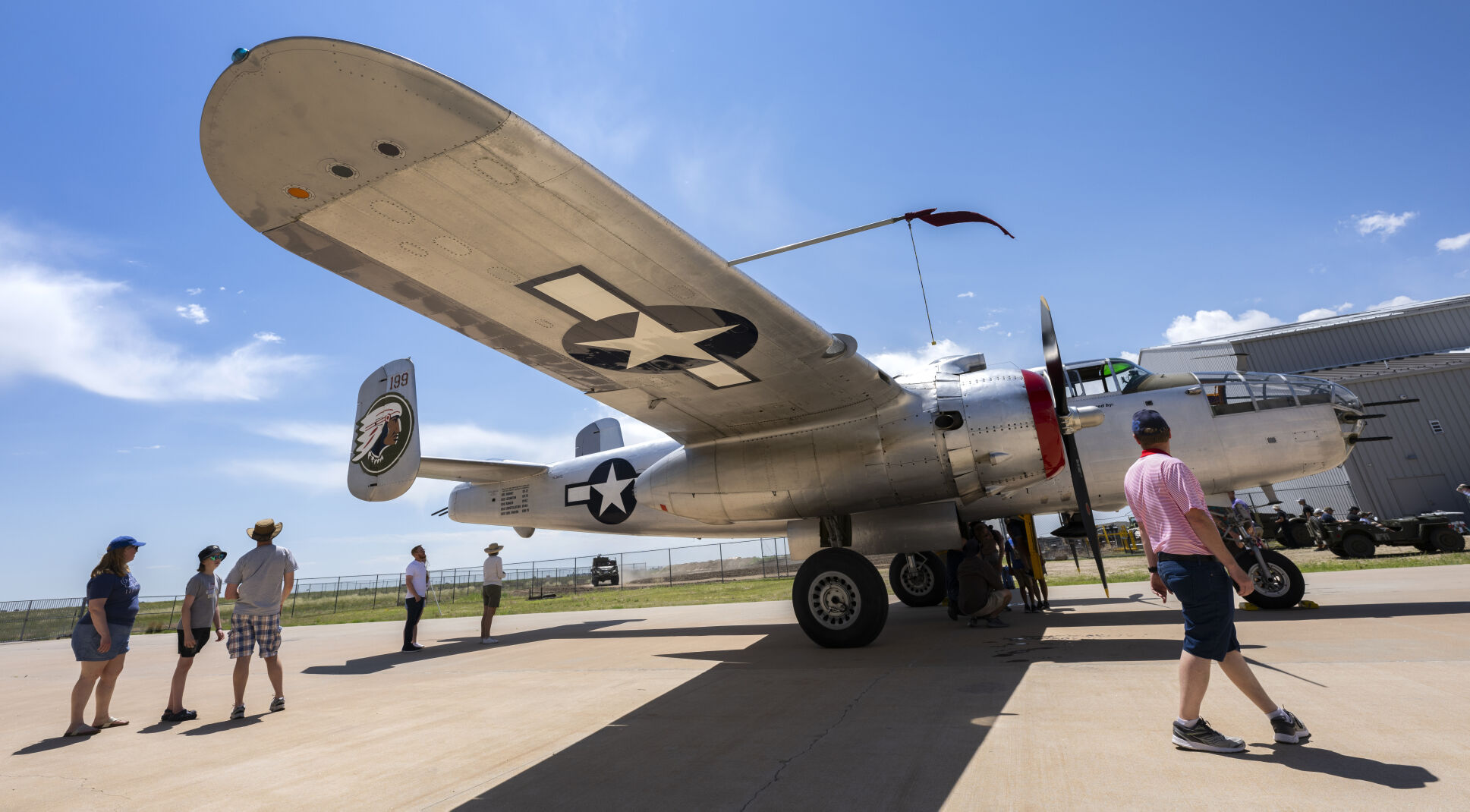
“You could make the case that the D-Day Invasion was the biggest undertaking by mankind in the history of the world,” said Gene Pfeffer, historian and curator at the National Museum of WWII Aviation in Colorado Springs. Pfeffer served 30 years in the Air Force before retiring as a colonel.
How big exactly? That first day saw 160,000 GIs scamble onto the beaches, escorted there by nearly 7,000 naval vessels, including battleships, destroyers, minesweepers, escorts and assault craft. More than 25,000 paratroopers also landed behind enemy lines that day, 11,590 allied planes flew sorties, and soldiers brought 50,000 vehicles ashore and 100,000 tons of military gear. By D-Day+30, 1 million soldiers were ashore, and 60 days after that, 3 million Allied troops were in France.
But long before that day, in February of ’44, the Allies launched Operation Argument, an all-out bombing campaign to decimate Germany’s aviation industry and the Luftwaffe so Allied warbirds would own the skies on D-Day.
Heavy bombers from the Eighth and Fifteenth Air Forces hammered aircraft, engine, and ball-bearing plants by day, and British RAF bombers attacked by night.
In one week, the USAAF flew nearly 4,000 heavy bomber sorties and dropped more than 20 million pounds of bombs on industrial and military targets. This is when the “Bloody 100th,” featured in the stirring new TV series “Masters of the Air,” first began earning its nickname: Americans lost more than 200 heavy bombers, with about 2,600 casualties in that one week. The operation was later renamed as “Big Week.”
But Big Week operations cost the Luftwaffe a third of its available fighters and a fifth of the Luftwaffe’s irreplaceable veteran fighter pilots.
“With all due respect to my good buddies in the Army and Navy who very bravely did things on D-Day,” said Pfeffer, “the real critical thing that made D-Day work was air.”
Vice President Kamala Harris underscored that point at Air Force Academy graduation Thursday. The cadets in the class of 2024 will build on historic excellence, Harris said, including the foundation for victory America’s pilots built ahead of D-Day. “It was our pilots, our planes and our air crews that knocked the enemy from the sky,” she said.
At one point in 1943, the Ford plant at Willow Run, Mich., churned out a B-24 Liberator bomber every 63 minutes. American factories, the so-called “arsenal of democracy,” produced about 300,000 planes during the war.
After Operation Argument, Eisenhower asked the U.S. and British air forces to start targeting transportation. So shortly before D-Day, another huge bombing campaign was launched “to drop tunnels, bridges, roads, railyards, and everything like that to inhibit the ability of the Germans to reinforce, and to camouflage where exactly the invasion was going to occur.”
As the date for the invasion got closer and closer, other planes came into play. Fighter bombers started attacking German air fields and German garrisons.
And then “every aspect of air power was brought to bear on D-Day:” B-17 Flying Fortresses, B-24 Liberators, D-47 Thunderbolts, P-51D Mustangs, P-38 Lightnings, F4U-1A Corsairs, SBD-3 Dauntlesses and the British Lancaster bombers as well as British fighters like the Typhoon and Spitfire.
Three air forces took of the brunt of the fighting.
The 8th Air Force, home of the Bloody 100th, had 1,000 bombers and 800 escort fighters.
The 9th Air Force, which was a tactical air force that supported the army once the invasion began, had another 1,000 medium bombers and another almost 1,000 fighters.
The British Royal Air Force had a 1,000 bombers plus a swarm of Typhoons and the Spitfires. They flew at night, because they didn’t have enough fighters to properly support daylight bombing.
“The Germans had no concept of the amount of aluminum the allies could put in the air,” Pfeffer said. “They just didn’t understand it. In many ways, we overwhelmed them.”
On D-Day itself, because of the success of the prior mission to eliminate the German Air Force, the Allies put up 13,000 sorties. The German Luftwaffe put up 300 sorties. That’s how much the German Air Force had been decimated by the time of the invasion itself.
I asked Pfeffer about all the factors that led to the enormous success of the invasion that day, despite more than 10,000 Allied casualties and 4,114 confirmed dead. D-Day marked the beginning of the end of World War II.
“Why did it work?” I asked.
This is his list:
1) Overwhelming air superiority.
2) “The wonderful planning that went into it. It’s just mind-boggling the kinds of plans” they put together years before the invasion.
3) The logistics operation. “Think of keeping supplied 3 million men that you’d landed on the other side of that North Sea, and you gotta provide them with guns, beans, gas.”
4) Winning the Battle of the Atlantic. “Germans were using submarines to try to shut down shipping between the United States and Canada over to Britain. That fight went on a long time and really wasn’t won until February of ’43. Until you won the Battle of the Atlantic you couldn’t do all this logistics stuff.”
5) Individual heroism of the kids we put ashore. “I’m mean you’re talking about kids 17-22, they were kids. Their heroism was amazing.”
I asked Gene if visitors who come by the museum know what D-Day was really all about now.
“I would say they know it was an event,” Pfeffer said. “They know it was an important event.” But they think things like “Saving Private Ryan,” which is a very good movie, tell the whole story. “It’s very localized to one or two days of the D-Day experience. They have no concept of this bigger, overall thing unless they are history nuts like me.”
“We try to explain that story to them. Part of our chore is to broaden them a little bit and show them the immensity of this thing.”
They try to show them, in other words, that it was the biggest undertaking in the history of mankind.