At University of Colorado, first-year experiences varied from alienation to free-for-all

On Aug. 17, 2020, residence halls on the University of Colorado Boulder campus bustled with the life that had left them. Amid students and families carting bedding, clothes and towels, in the freshman move-in day were expectations for the year to come, and it would be a year like no other.
Gone this move-in day were the welcoming parties, the open doors, and the music blasting as students arrived. Instead, students trickled in with a piece of paper documenting a negative COVID-19 test, which spoke more about the year to come than everything packed into the carts of necessities.
It was a year when the usual everyday activities became foreign. There was no hustling to classrooms, but instead Zoom classes in their childhood bedroom or from a dorm room.
Once a gathering place and somewhere to unwind between classes or on the weekend with friends, the food halls were grab-and-go and nearly barren. Masks also became a deterrent to a standard social life: Even familiar faces were difficult to recognize, and familiarizing yourself with new ones seemed nearly impossible.
Soon enough members of the class of 2024 would face a broad range of experiences, from individual fears to out-of-control mayhem in an isolation dorm meant to protect the campus from the virus.
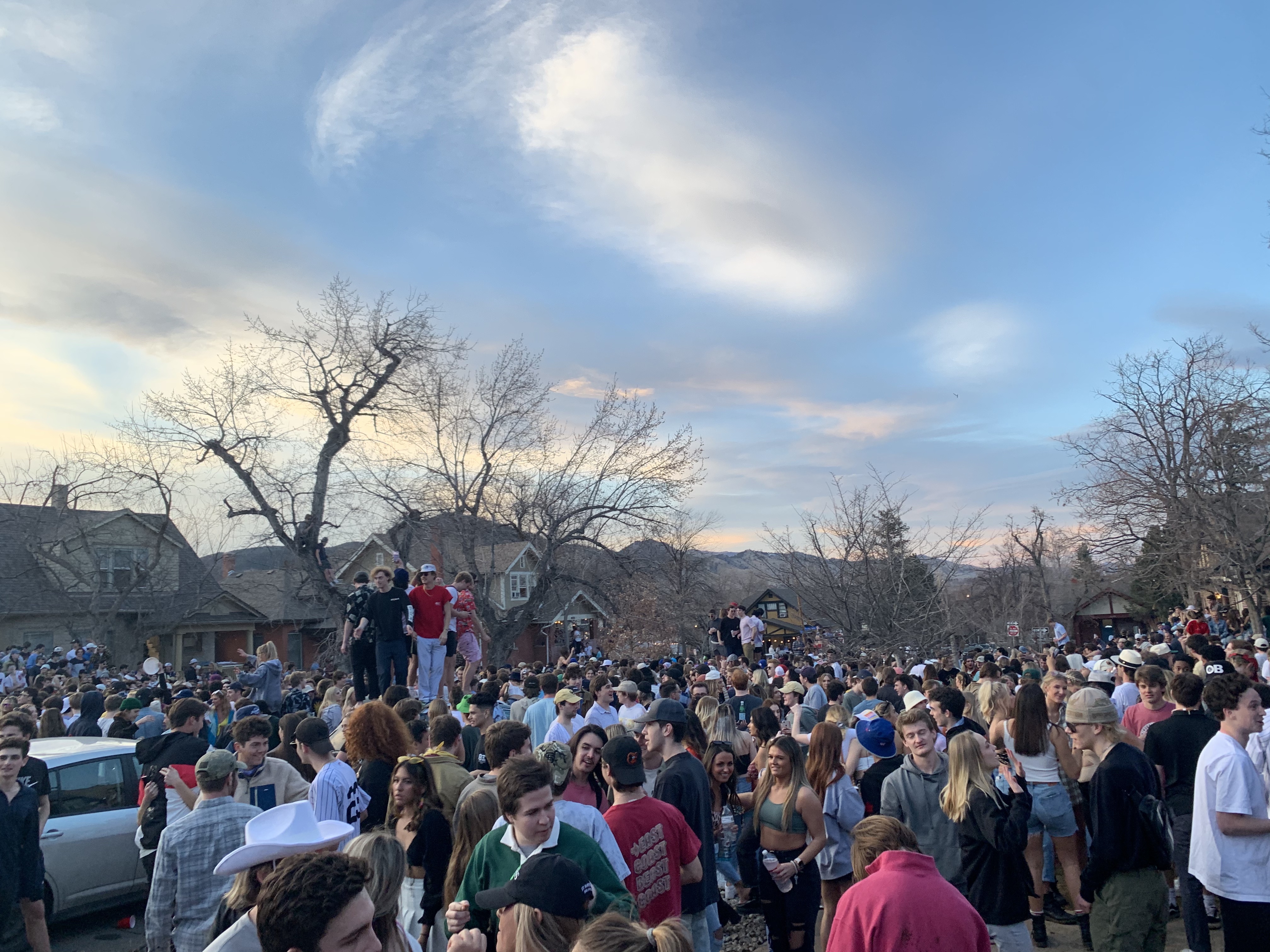
In March, hundreds gathered on University Hill for a situation that quickly turned from party to riot. The group, which included some students, did not wear masks or attempt to social distance. Many were seen on social media flipping cars and resisting police that were attempting to dissolve the riot.
Some students provided The Denver Gazette with an outward glimpse of what was happening under the nose of university officials in the so-called isolation dorms on Boulder campus.
Put simply, isolated students made the most of being unsupervised.
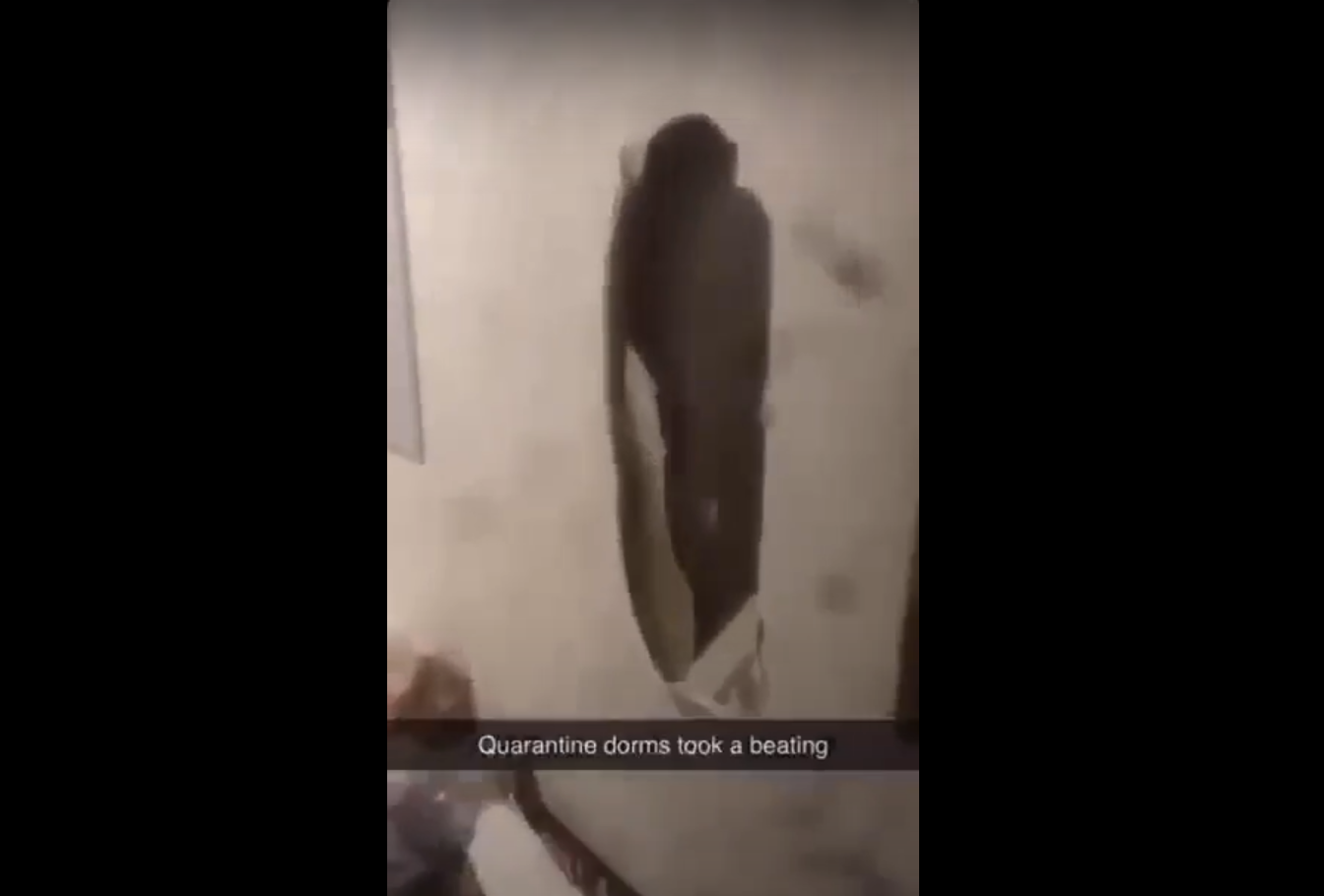
Human-sized holes in the walls of dorm hallways and slip-and-slides made out of trash bags and oil were just a taste of what occurred in Darley North and Reed Hall.
“I just felt trapped, felt very trapped in the dorms.”
Hays Gott realized his freshman year might prove disastrous shortly after moving into Darley South dorms. As the semester got underway, university officials decided to use the adjacent Darley North to isolate students infected with COVID.
What he saw in the so-called “iso” dorm astonished him. Boxes of food from the university were delivered to a common area in a first-come, first-served manner with no supervision over who took the numbered boxes.
“They would bring in racks of all this food, and like put it by their doors,” Gott said, leaving ill students or others who were slow to pick up their food feeling forgotten. “ And then there was like the issue of everybody literally just trashing the Iso dorms. Cause no one was there. (There was) a giant hole in the wall and food everywhere.”
Word got around that the isolation dorms might have the closest lifestyle to a traditional freshman year.
“They said it was a blast,” Gott said. “They said literally everybody was just playing, like blasting music, drinking. There were no Resident Assistants on, exactly; … everybody could like, associate, you know, because there, you all have it.”
University officials dispute the characterization, saying that the dorms were monitored regularly, but several students told The Denver Gazette it was free range to party.
“You’re literally talking about thousands of kids who’ve just been socially deprived for an entire year and expect college to be a certain way and they want to, like, fulfill that,” Gott said.
Gott, who wasn’t in an isolation dorm, whiled away the hours in his room, dealing with rules and regulations from university officials.
“They were like, ‘Try not to breathe in the elevator.’ I’m like, are you kidding me? That’s, like, nine floors of my building,” he said.
Exasperated, he broke CU rules and lived off campus.
“I just felt trapped, felt very trapped in the dorms,” Gott said. “I feel like there was a limit to what I could and couldn’t do.”
Gott moved into an apartment off campus after telling the school he was moving back in with his parents in Colorado Springs. He was even able to get a refund on his dorm expenses for the second semester.
“It all worked out for the better and they still don’t know I’m here. I feel like there’s nothing they can do now,” he said.
Being off campus improved Gott’s first year. In his new home away from home, he found himself looking at the upsides.
“People’s relationships, whether that be with their family or just people that are close to them, definitely strengthened,” he said. “I feel like people also spent much more time alone and you kind of got in touch with themselves.”
“They broke a window, ran down the hall naked and smashed something else”
Across campus in Reed Hall, students reported a similar free-for-all .
A freshman from Smith Hall, Peter Duffield spoke about his experience in Reed after he was herded in the along with other freshmen who received positive COVID tests.
Duffield said every day around noon people would drop off food for isolated students.
“They’d just bring a big cardboard box with breakfast food like cereal, apples. It had C4C food and then, like, Hot Pockets,” he said.
Being from Smith Hall, an honors dorm, Duffield was used to a quiet living arrangement. Nothing prepared him for what would transpire in the isolation dorm. While he was bedridden with COVID symptoms, he fully observed the raucous atmosphere.
“I walk in, and there’s five dudes in togas, like bed sheets, saying, ‘We’re going to get drunk tonight, come see us,’ but that’s the day I had really bad symptoms,” he said.
He recalled one of the students in togas was suspended the next day. “They broke a window, ran down the hallway naked and smashed something else,” he said.
In addition, Duffield’s room was located near the exit door, so he saw everyone who came and went.
“There was a homeless guy that would dress in a hazmat suit, and he knocked on my window to let (him) in. He had a hazmat suit with a little CU logo so I’m like, he’s just picking up trash because we have people that dressed just like him picking up trash,” he said.
It wasn’t until later that Duffield found out the man was homeless and just entered to steal the students’ leftover food. Shortly after, the whole dorm received an email from the university saying to not let anyone in without a key card.
“There was a Slip and Slide in the dorm”
Curtis Springer, another student who was moved into Reed Hall after a positive COVID test, recalled more outlandish stories.
Springer had similar issues with the food. “It was just this big box; it’d be like cold tomato soup, cold tater tots and, like, a sandwich,” he said.
“There was nothing really stopping anybody from taking your food, so there were a lot of times I’d walk to get my food and it’s just gone,” Springer said. “They’d open the boxes, take all the good stuff, so I didn’t eat very much in the isolation dorms.”
The food was far from restaurant quality, but that was the least of the worries, he said.
“There was a lot of people who just … partied and didn’t really care if you were sick,” he said. “They’d be running up and down the hallways at, like, 3 a.m. screaming while you’re trying to sleep.
“It wasn’t the best time.”
Springer said students were able to easily obtain alcohol by having other non-isolated students pass it through their windows.
The only form of regulation that Springer knew of was police shining flashlights through basement windows.
“It wasn’t regulated; we had nobody watching us, ever,” Springer said. “If you went to the top floor, police aren’t allowed to come into the building because everybody has COVID and RAs aren’t allowed in the building.”
“There was a Slip and Slide in the dorm made out of plastic garbage bags and they, like, sprayed a bunch of water and oil on it, then a bunch of people were going down the Slip and Slide,” Springer said.
Similar to Darley North, Reed Hall was a first-year college student’s dream: a dorm without university or police regulations.
University officials, for their part, stated they were aware of the issues, but monitoring a residence hall infested with COVID was not easy, said Daniel Easton, associate director of student conduct.
According to Andrew Sorensen, the media relations spokesperson for CU, the isolation locations were monitored regularly.
“When violations of student conduct were found, they were assessed and handled according to the student code of conduct,” he said.
As the year went on, Sorensen said he believed the University was able to give more support and resources to the students in the isolation spaces. But isolation was just part of the broader attempt at mitigating COVID-19.
According to Sorensen, the university administered more than 181,000 COVID tests over the fall and spring semester and performed more than 27,000 diagnostic tests.
There was also wastewater monitoring, mask distribution and contact tracing. CU also launched the “Protect Our Herd” campaign, which sought to educate students and slow the spread of the virus.
Overseeing student life
Easton said following new COVID rules was about as charming as making them.
“My role specifically in the office is to oversee the student conduct process. … It includes things like our infectious disease policy for this past year,” he said.
He said the culture shift that students and staff went through for a campus to operate during a pandemic was tough.
“How do we provide a good education so you can make better decisions around how you socialize?” he asked.
Traditional avenues for blowing off steam were gone. No football games or tailgates. No days at Farrand Field. No chatting while walking to class.
The need for social life among students could be painful at times, as evidenced by the block party-turned-riot on March 6. An estimated 800 people attended the party on University Hill and when the event turned violent, the result was extensive property damage and injury to three police officers.
“Through the investigations to date, not all referrals were CU Boulder students. These included some of the most extreme attacks on law enforcement. Several referrals were also received without information or supporting evidence. The university will continue to investigate and hold students accountable as investigations are completed,” the university announced in a May 19 update on the incident.
No one wants to suspend anyone, he said, but the university did its best to keep the health of the community at the forefront.
“We suspended about 45 students last semester for hosting large social gatherings,” Easton said. “We felt that suspension was warranted because they’re knowingly putting other people at risk.”
CU Boulder saw a significant decrease in freshman enrollment for 2020. According to an article in CU Boulder Today, total freshman enrollment fell by 11.1%, while total enrollment is only down 1.6%.
Has this been the perfect year? No. But for the class of 2024, this year has brought about an unrivaled achievement: a global pandemic that they have survived. The students said they hoped their remaining years will bring less turmoil and chaos, and that the prospect of a return to the not-yet-seen “normal” college experience reverberates through them.
This article has been updated to clarify that many of the participants in the March 6 riot were not CU students.