







Ford and Xcel collaborating on plan to fund 30,000 EV chargers for commercial fleet vehicles
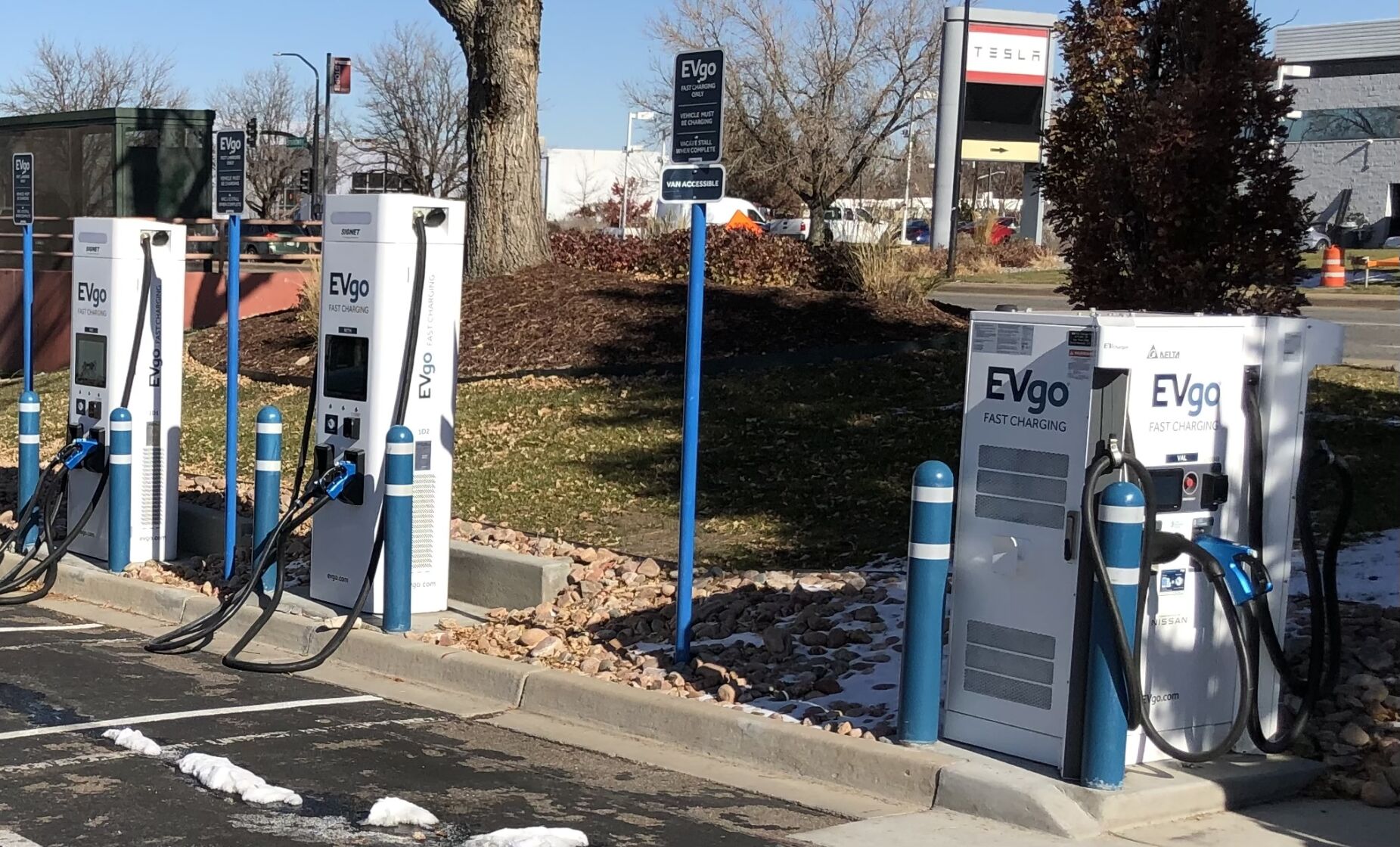
Ford Pro, Ford Motor Company’s commercial vehicle division, and Xcel Energy are collaborating to deploy 30,000 business fleet electric vehicle charging ports in Xcel’s service territories across the U.S. by 2030, according to a release from Xcel.
The program will be starting in Colorado and Wisconsin in early 2024. Xcel officials said that over the next six years, the company will be looking for opportunities to expand into other states the company serves, including Michigan, Minnesota, New Mexico, North Dakota, South Dakota and Texas
The “30×30” initiative is part of Xcel’s broader electric vehicle supply infrastructure program to promote commercial EV adoption. The program will cover most up-front costs for the chargers and installation will be covered by Xcel for selected business fleet customers.
Ford will provide post-installation customer service and support, as well as chargers ranging in capacity from direct current to 240 kilowatts.
The company will also offer software and in-vehicle telematics that monitor use and performance that interfaces with the charging system to optimize charging and help reduce the economic impact of time-of-use charging costs, according to the release.
“The integrated software and hardware solutions work with non-Ford vehicles too. It pulls in data from the vehicles, chargers, and sometimes the grid to analyze both ends of the EV equation to help fleet managers optimize how, when and where EVs are charged,” said Ford Pro spokesperson Britta Farrow in a statement to The Denver Gazette. “Together, software sends businesses utility reimbursement reporting, important for home-based drivers. It also helps save on energy use and cost by helping businesses avoid peak rate hours and schedule charging efficiently.”
But the Ford Pro software and telematics will not be covered by Xcel’s up-front coverage, said Farrow. Those services will be offered to Xcel’s business customers who want to optimize their charging programs.
“Ford Pro and Xcel Energy are pioneering a whole new way to scale EV charging infrastructure,” said Amanda Rome, executive vice president at Xcel Energy, in the release. “Ford Pro is a trusted provider in fleet electrification, scaling charging infrastructure for fleets with smart vehicle, charging and software solutions.”
Business fleet customers will have to agree to installing telematics sensors on fleet vehicles and agree to share the data with Xcel during the evaluation phase, and the minimum number of charging ports to be installed is four. Customers will have to have a minimum fleet of four on-road fleet vehicles that provide routine service, according to a marketing matrix from Xcel.
“We know electrification can be complex for businesses,” said Ted Cannis, Ford Pro CEO, in the release. “We’re focused on helping them make that transition at the right time in the right way that’s best for their business. We know that may require new ways of working to encourage and support adoption.”
Xcel’s plans are subject to utility regulatory approval, and non-subsidized costs may be incurred for things like line extensions that might be required for the charging station. Those potential costs are discussed during the evaluation phase.
Some of the cost of these, and other Xcel programs, are billed to ratepayers or individual customers. Xcel could not provide an overall estimate of the cost of the 30×30 program.
“Consistent with approvals from our regulators, Xcel Energy provides various programs to support our customers transportation electrification needs,” said Xcel spokesperson Lacey Nygard in a statement to The Denver Gazette. “These programs include education and outreach as well as infrastructure, and the costs of programs are paid for by ratepayers or individual customers, depending on the program and as approved by regulators.”
Xcel doesn’t have a specific target for the number of commercial charging stations for Colorado at this time, Nygard said, noting that costs will vary based on location and project size, as well as regulatory approval.
“This initiative covers all of Xcel Energy’s service areas,” Nygard said. “Overall, though, our goal is to install 30,000 charging ports by 2030 in the areas we serve.”
The costs of the program are expected to come down as the network expands, he said.
“As more electric vehicles plug into the grid, the fixed costs of providing electric service are spread out further, which puts downward pressure on electric rates that customers pay,” Nygard said. “Downward pressure on rates means that the new load from EVs more than supports customer programs and utility infrastructure necessary for the EVs and the electric system.”

