Construction on Colorado quantum campus launches ‘America’s response’ to beat China
It's the first major investment into the region's quantum industry since being named one of the nation's 12 key tech hubs.

On a stretch of land along Highway 72, Mountain West quantum leaders pointed out the empty spot with views of the foothills and downtown Denver as the future place where the U.S. will become a global leader in the budding supercomputer industry.
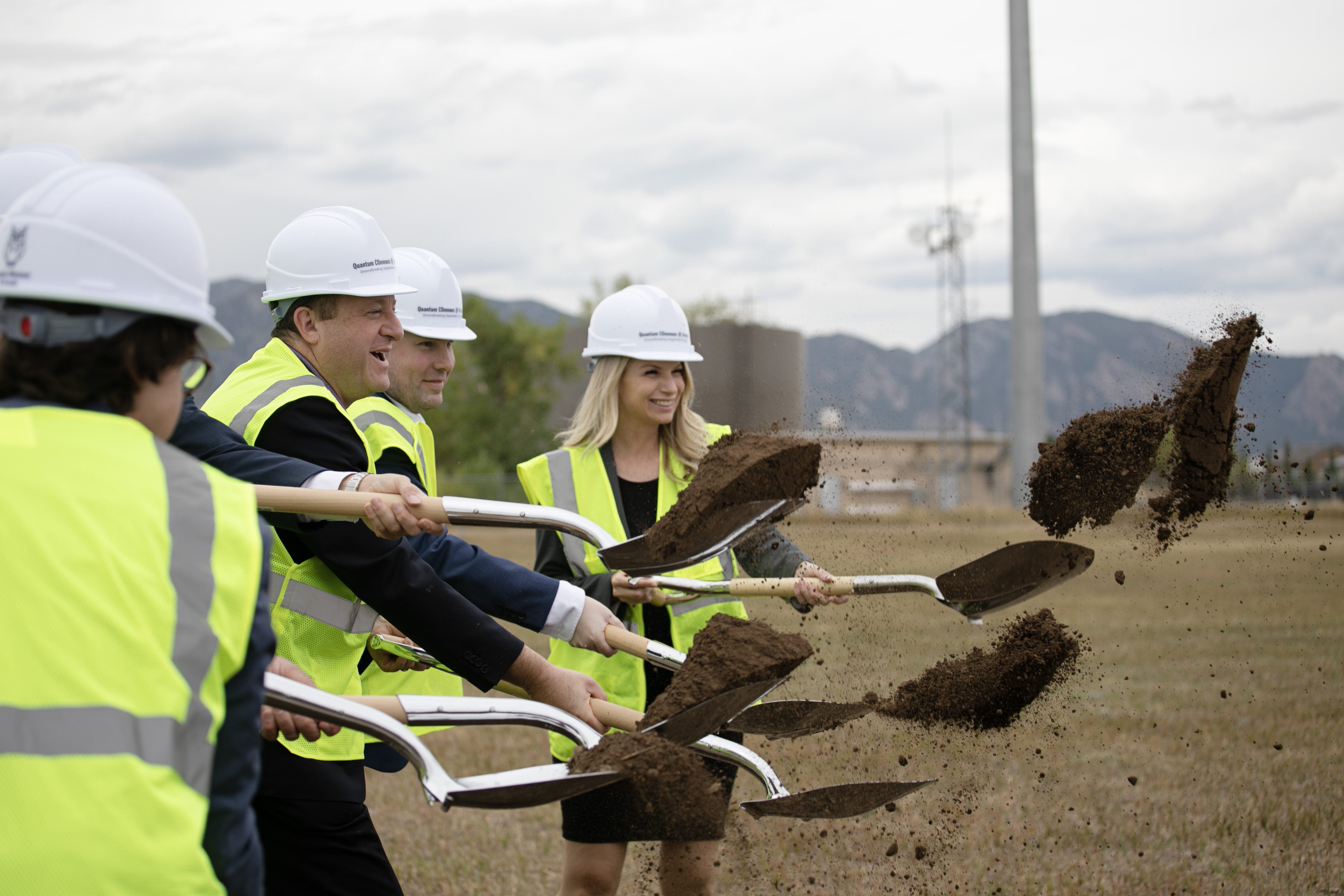
Before the shovels ceremoniously went into the ground to mark the construction of a 70-acre quantum campus, officials — from the federal to local levels — remarked how America has fallen behind China in investing in the technology.
But that’s changing, they said.
On Monday, industry professionals and politicians celebrated the groundbreaking of Quantum Commons, a 70-acre technology campus in Arvada to help scale quantum computing technology for the marketplace.
It’s the first major investment of a quantum facility since the Biden Administration named the Mountain West region — centered in Colorado and includes Wyoming and New Mexico — as one of 12 key American tech hubs in July, beating out Illinois’ quantum industry for the coveted accolade.
Quantum computing is a rising technology of supercomputers designed to solve problems most classical computers would take years to compute.
Its uses could span from artificial intelligence to helping cure diseases or combating climate change. But the technology is incredibly expensive to develop and its implementation in the marketplace is still minimal.
U.S. officials are worried that China, the nation’s geopolitical and economic rival, is investing much more toward developing quantum tech for the marketplace.
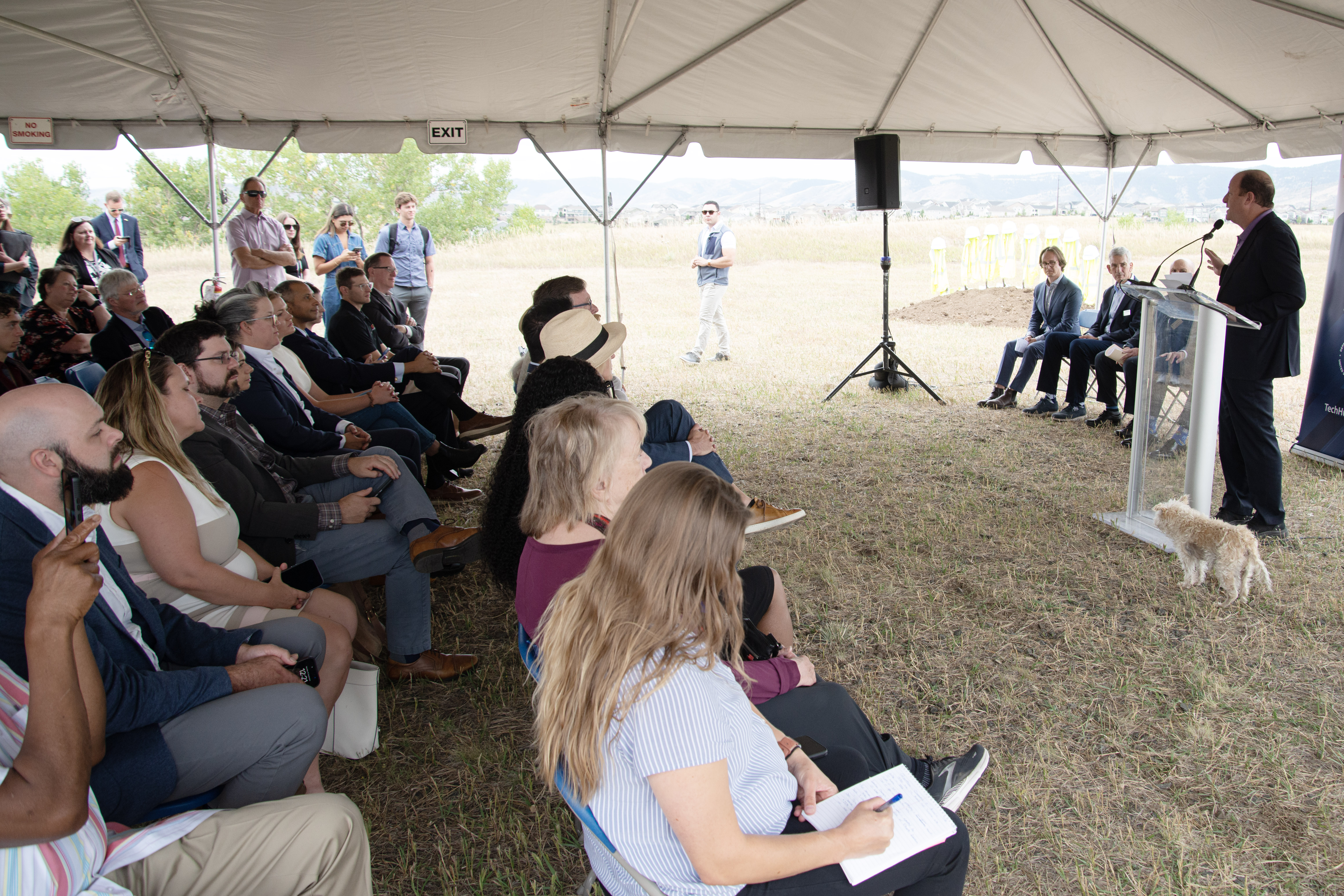
Deputy Secretary of Commerce Don Graves visited the groundbreaking and highlighted how the White House is focused on a “place-based strategy” to develop emerging technologies.
“It’s not a guarantee that investments in tech are going to spread to every community,” Graves said.
The tech hub program was designed to stimulate local economies with assets they already have to make the U.S. more competitive in certain industries, such as quantum, he added.
Colorado’s quantum hub is expected to attract nearly $2 billion in private investment and create 10,000 new jobs, mostly in technical trades.
“It’s a vital engine of innovation, of global competitiveness and of creation that will not only safeguard this community’s economic future, it will help write the next chapter of this country,” Graves said.
Now the work begins, local leaders have said since federal officials picked Colorado as the nation’s top quantum hub to invest in.
The state’s tech hub received more than $100 million in federal and state grants. A lot of it will go toward supporting the Quantum Commons in Arvada, designed to be an industry-focused version of Silicon Valley’s Stanford Research Park.
“The Quantum Commons at Arvada is the realization of America’s response to this century, defining race,” said Zachary Yerushalmi, CEO of the Elevate Quantum, the nonprofit representing the tech hub.
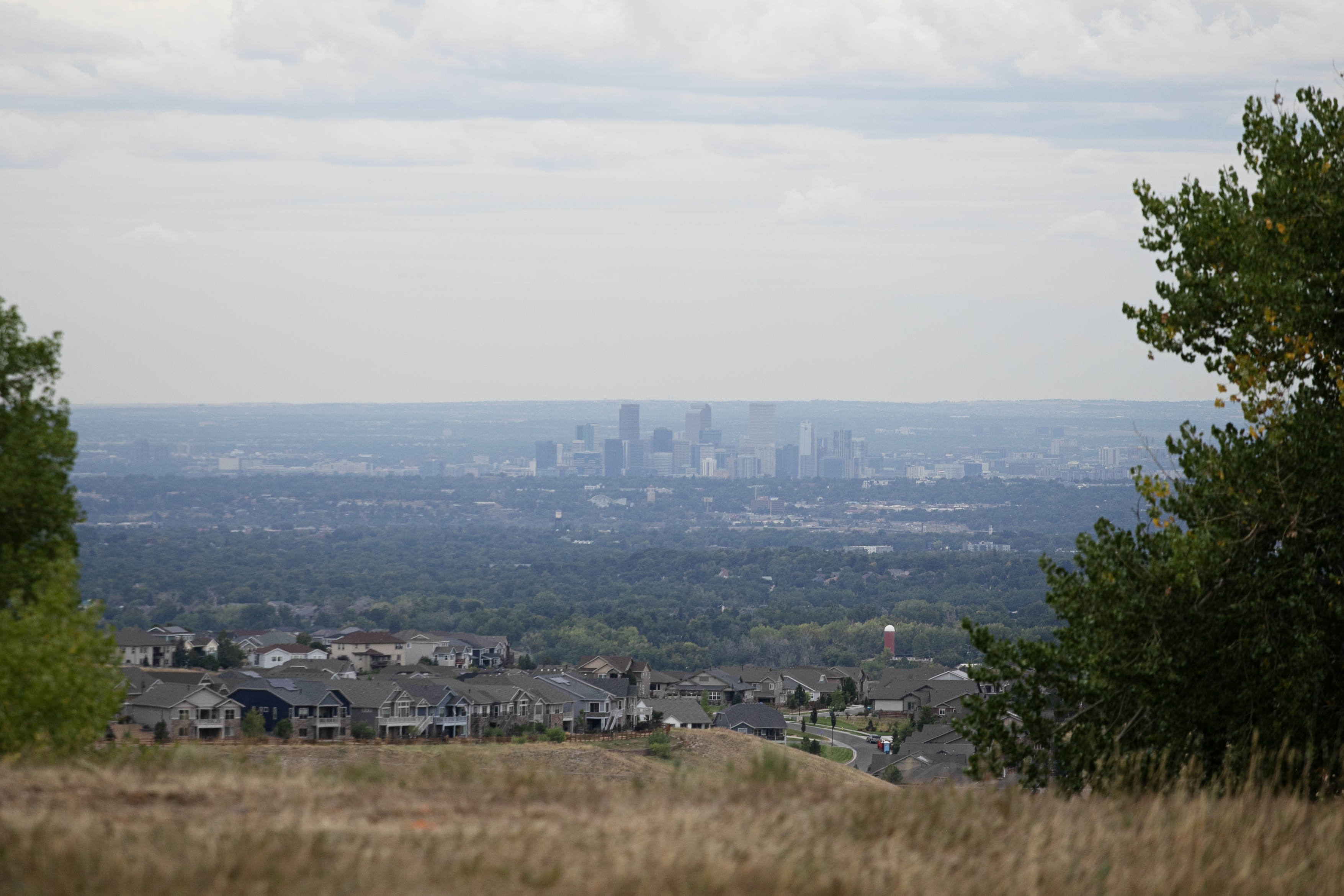
The lab campus is owned and will be operated by the Colorado School of Mines.
Corban Tillemann-Dick, CEO of Denver-based Maybell Quantum Industries, recalled the first time he visited the 70-acre site and someone remarked to him that the moment “felt like Oppenheimer standing on the mesa.”
About half of the $41 million federal tech hub funding will supply the campus’s equipment, as well as $22 million of Colorado’s matching $74 million tax credit activated by the Biden administration’s designation, Gov. Jared Polis said.
The funding will also help invest in a sister quantum incubator in Boulder, building off the work and study done at the University of Colorado Boulder.
Quantum Commons is intended to turn quantum ideas into quantum products.
“We’re going to build off of the science defining innovation of CU Boulder and we’re going to combine that with all the ingredients you need to realize the quantum revolution,” Yerushalmi said.
The site will be a place to design, build, test and deploy quantum theories at “unprecedented scale and speed,” he added.
It’s set to be completed by 2026.
Plans call for a 10,000-square-foot building first at the Arvada campus for prototyping and manufacturing, and a 17,000-square-foot lab with open access for budding quantum startups to help reduce the need for investor funds.
And that’s only 5% of what could fit on the 70 acres of land along Highway 72, Yerushalmi said. The campus is also designed to attract quantum companies in the U.S. or based out of American ally countries to expand their operations to Colorado.
“There’s space to grow in every sense,” he said.