







Colorado ‘construction defects’ bill signed into law by Gov. Jared Polis to boost condo building
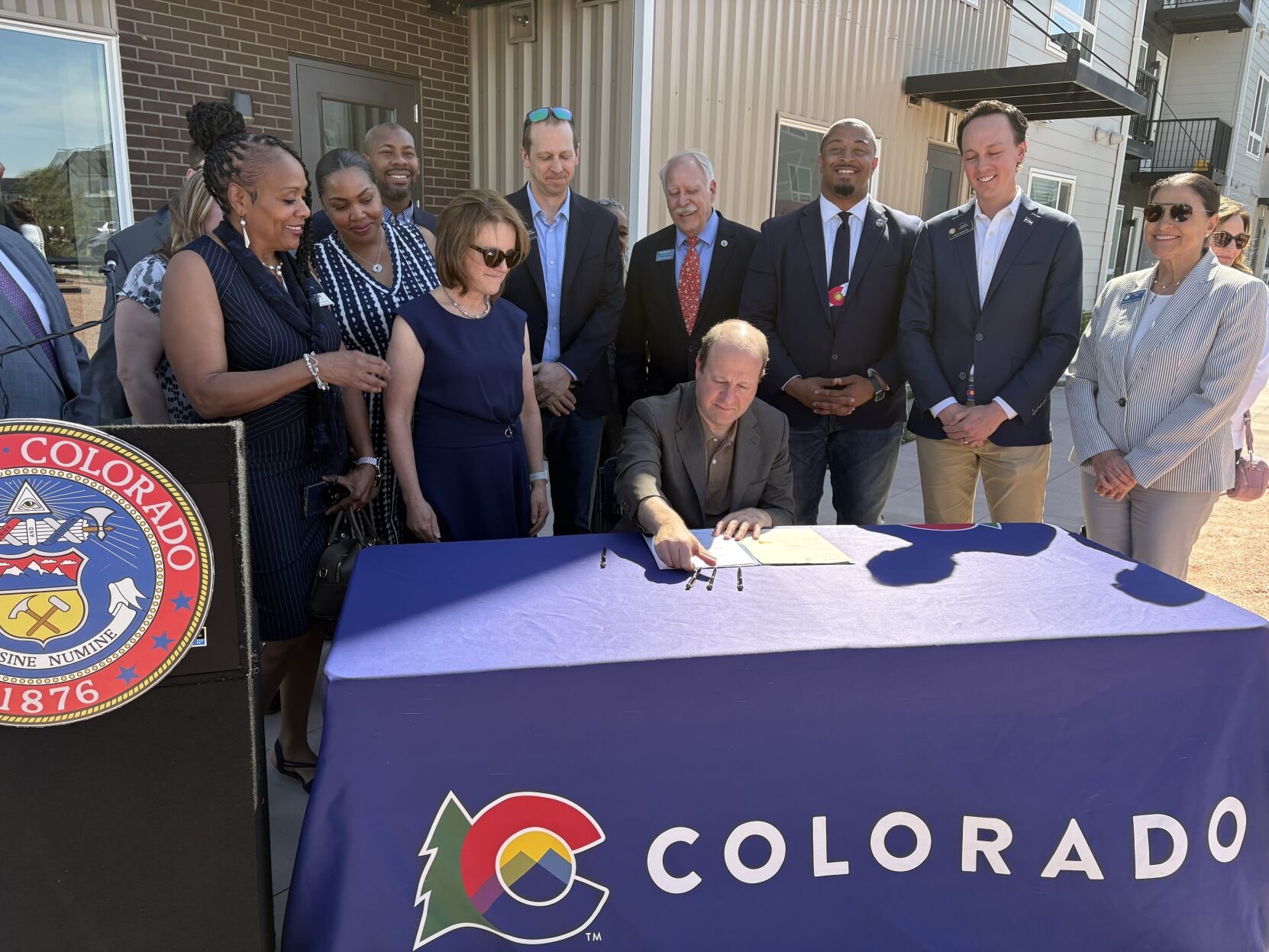
Gov. Jared Polis on Monday signed the first major bill of his administration that sponsors hope would unclog the state’s longstanding logjam regarding the construction of affordable, middle-market multi-family housing, specifically condos and townhomes, and, thereby directly promote home ownership.
Past efforts by the governor had mostly focused on rental housing and zoning.
This year, House Bill 1272 aims to jumpstart the affordable condo market, which backers say has died off in Colorado due to “construction defects” litigation.
This bill puts Colorado more in line with other states that see condo construction and protects homeowners from legitimate defects, Polis said.
“There’s no silver bullet” for dealing with Colorado’s housing crisis, but, the governor added, the new law puts a critical piece in place.
“I’m very hopeful” that five years from now, Polis said, there will be condos in the $250,000 to $300,000 range that people can afford to buy, which puts them on the path to start building build wealth.
The 2001 Construction Defect Action Reform Act had set up a process for homeowners to sue builders when they find defects, which can range from serious issues, such as cracks in the foundation or HVAC problems, to smaller problems, such as defective cabinetry and leaks.
A report last September from the free-market think tank Common Sense Institute said that “insurance costs for condominiums surged to 5.5% of a project’s hard costs, more than 233% higher than multifamily rental home projects, which had insurance costs as low as 1.1% to 1.65% of project hard costs.” Insurance costs are tied to lawsuits over construction defects, supporters of changing the law have argued.
HB 1272 was the years-long work of Rep. Shannon Bird, D-Westminster, who, in the past year alone, held more than 90 meetings to try and bring together homebuilders and contractors, realtors, insurance companies, business groups, numerous city and county governments, as well as trial lawyers who represents clients dealing with construction issues.
Bird was joined on the bill by Speaker Pro Tem Andrew Boesenecker, D-Fort Collins, Senate President James Coleman, D-Denver, and Sen. Dylan Roberts, D-Frisco. The lawmakers also acknowledged the rigorous work of the Colorado Association of Realtors and its lobbyists, Jason Hopfer and Karen Wick.
During Monday’s signing ceremony, Polis noted that previous housing legislation from 2024 on “transit-oriented” communities could include condos and townhomes, although acknowledging there was no path forward to building them until HB 1272.
‘A chance for families to cultivate roots’
Bird said previous efforts focused on those who had to deal with construction defects or with homebuilders, but this law is for prospective homebuyers. The bill, she said, is for the new professional recruited to come to Colorado who now wants to put down roots in a community — and for the long-time resident who has never been able to think about buying a first home.
Yes, apartments are being built, but that doesn’t help people invest in a community, Bird said.
“Homes build community, homes build people’s participation in civics, and it makes people committed to our state,” she said.
Roberts noted the need for affordable housing for the mountain communities, whether for ski resort towns or remote areas. The one issue that unites every community is housing, he said, adding that applies to teachers, police officers and others who want to put down roots. With more affordable, middle market homes, more families will be able to stay in the communities in which they work and live, he said.
Tyrone Adams of the Colorado Association of Realtors said this is not just a legislative victory — it also embraces a vision of hope for many Coloradans.
“This is a chance for families to cultivate roots,” Adams said.
Among HB 1272’s most significant changes is the creation of a “Multifamily Construction Incentive Program” to limit the grounds for which a construction defect can be claimed against participating builders.
The program provides a warranty against defects or damage. That warranty is one year for workmanship and materials, two years for plumbing, electrical, and materials, and six years for significant structural changes inspected by a third-party inspector. The Department of Local Affairs will manage the program.
The law requires a third-party inspection during construction that results in a certificate of occupancy. It also provides for various remedies in case a defect is discovered.
In addition, the law requires 65% of homeowners in a homeowners’ association to agree to construction defects legislation, up from 50%, and to ensure monies paid for a defect claim go toward repairing the defect.
HB 1272 won a 31-4 vote in the Senate and a 61-3 vote in the House. All the “no” votes in both chambers came from progressive Democrats.
The construction defects issue has stymied condo construction in Colorado for at least the past 15 years.
Affordable condos, currently priced at around $400,000, are considered the entry point for young professionals, families and seniors looking to downsize.
However, the affordable condo construction market in Colorado has all but vanished.
The Common Sense Institute reported in 2023 that since 2018, 14 new apartments were built for every new condo. Before 2009, one new condo was built for every 1.25 apartments constructed.
The report also said the number of condo developers has dropped from 146 to 23 over the last 15 years. Homebuilders have cited the cost of defect litigation and the high cost of liability insurance, which can add up to $40,000 per unit.
The less expensive liability insurance provided by regulated property and casualty insurers, a market that vanished after changes in state law in 2010, is not guaranteed to return anytime soon. However, Commissioner of Insurance Michael Conway believes the market is ready for change.
In March, he told a House committee that there was little competition among insurance companies for construction defects liability insurance. That meant fewer multifamily homes were being built, Conway said.
“I firmly believe that House Bill 25-1272 will lead to increased competition in the construction defects liability insurance market,” Conway said.
He said the market will be more attractive to insurance companies and will increase competition among insurers in the Colorado market, which could put “downward pressure” on insurance premiums.