
CU Boulder scientists may have solved Chaco Canyon puzzle by putting their heads together — literally

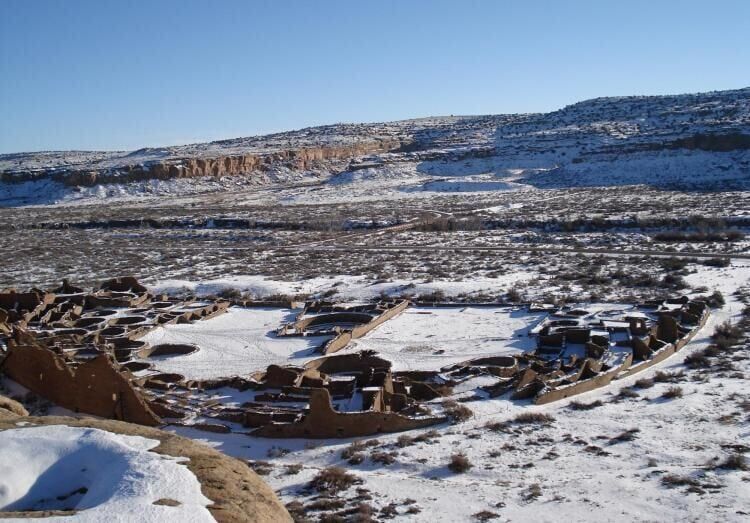
For decades, archaeologists have wondered how exactly ancient inhabitants of the Four Corners region transported over 200,000 heavy timbers around 50 miles to Chaco Canyon — located in present-day Chaco Culture National Historical Park — before horses and carriages made their way to the new world.
Recently, a pair of CU Boulder researchers think they may have found the answer — quite literally by putting their heads together.
In the summer of 2020, Rodger Kram, associate professor emeritus of integrative physiology, and James Wilson, then a CU undergrad biochemistry major, began training with tumplines, which are head straps that allow the wearer to bear the weight of a lifted object primarily on their back, rather than using the more laborious over-the-shoulder carry. The tumpline, common amongst sherpas in modern-day Nepal, was also found on ceramic effigies recovered near Chaco Canyon.
After weeks of training, the two researchers successfully carried a 130 pound ponderosa pine log 15 miles on a Boulder forest road.
“Some people baked sourdough bread during COVID. Instead, we carried sand and heavy logs around using our heads,” Kram said in a CU Boulder Today article. The pair detailed their findings in a Feb. 22 study, describing the feat and why it may be the most likely explanation for the site’s remarkable architecture.
At its peak, which started in the mid 800s and lasted around 300 years, the main city in the national historic site could have served as the ceremonial and commerce capital of a vast network of ancient roads and cultures, according to the National Park Service. Many of the ‘great houses’ built at the time, requiring the timber in question, contained hundreds of rooms and were up to four stories tall.
CU Boulder scientists may have solved Chaco Canyon puzzle by putting their heads together — literally

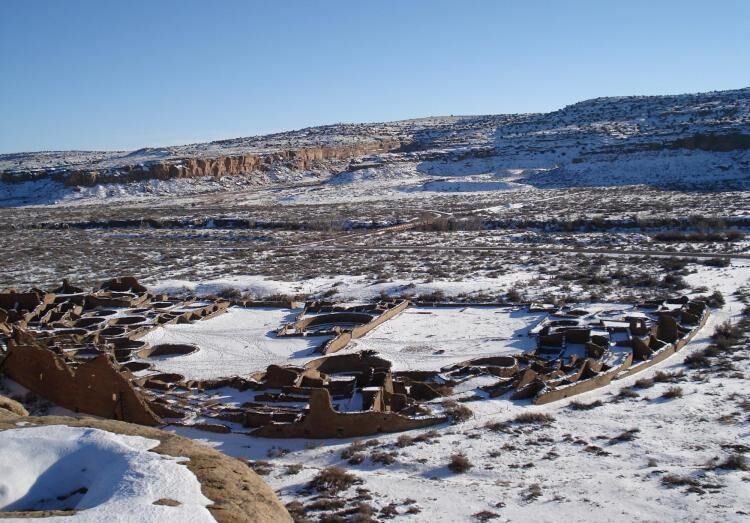
For decades, archaeologists have wondered how exactly ancient inhabitants of the Four Corners region transported over 200,000 heavy timbers around 50 miles to Chaco Canyon — located in present-day Chaco Culture National Historical Park — before horses and carriages made their way to the new world.
Recently, a pair of CU Boulder researchers think they may have found the answer — quite literally by putting their heads together.
In the summer of 2020, Rodger Kram, associate professor emeritus of integrative physiology, and James Wilson, then a CU undergrad biochemistry major, began training with tumplines, which are head straps that allow the wearer to bare the weight of a lifted object primarily on their back, rather than using the more laborious over-the-shoulder carry. The tumpline, common amongst sherpas in modern-day Nepal, was also found on ceramic effigies recovered near Chaco Canyon.
After weeks of training, the two researchers successfully carried a 130-pound ponderosa pine log 15 miles on a Boulder forest road.
“Some people baked sourdough bread during COVID. Instead, we carried sand and heavy logs around using our heads,” Kram said in a CU Boulder Today article. The pair detailed their findings in a Feb. 22 study, describing the feat and why it may be the most likely explanation for the site’s remarkable architecture.
At its peak between 1200 to 850 B.C., the main city in the national historic site could have served as the ceremonial and commerce capital of a vast network of ancient roads and cultures, according to the National Park Service. Many of the ‘great houses’ built at the time, requiring the timber in question, contained hundreds of rooms and were up to four stories tall.