







Colorado secures $12 million grant to cut methane, cap some oil and gas wells
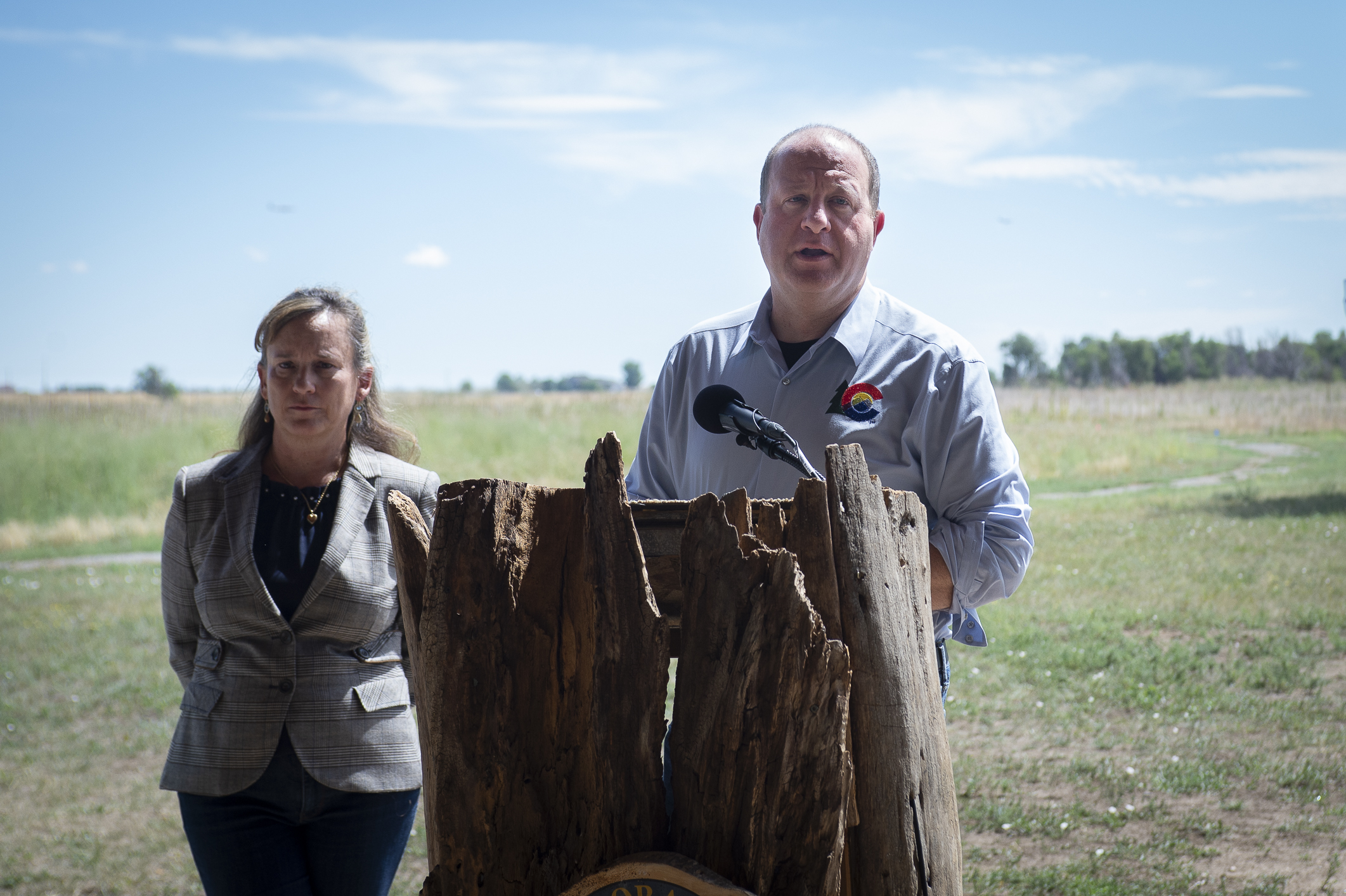
Gov. Jared Polis announced on Friday that Colorado has secured a $12.6 million grant to reduce methane emissions across the state.
Colorado’s Energy & Carbon Management Commission (ECMC) will use the funding from the U.S. Environmental Protection Agency (EPA) to cut methane and other greenhouse gas emissions through voluntary and permanent plugging, remediation, and reclamation of marginal oil and gas wells on non-federal lands.
“Now we will get some more old wells plugged,” Polis said Friday at a press conference at Barr Lake State Park in Commerce City. “Colorado is a national leader in reducing emissions and protecting our air quality, and these grants will strengthen this work and move us closer to our climate goals. Everyone deserves access to clean air, and we appreciate the Biden-Harris administration’s partnership in these efforts,”
The grant is part of the EPA and Department of Energy’s Methane Emissions Reduction Program, which received $350 million from the Inflation Reduction Act to reduce methane emissions from low-producing well sites and improve air quality for surrounding communities in 14 states, including Colorado.
“We want to thank the EPA and DOE for supporting this important work in Colorado,” ECMC Interim Director Aaron Ray said. “This federally funded program will improve local air quality, reduce methane emissions, and create benefits for disproportionately impacted communities in our state. This program also aligns with other efforts in Colorado to improve oil and gas permitting processes, strengthen our financial assurance requirements, and facilitate the development of projects that support the State’s climate and energy goals.”
The ECMC estimates there are 49,000 plugged and 33,000 unplugged abandoned wells across the state.
The program will prioritize wells known to be high methane emitters and those located close to disproportionately impacted communities.
Polis lauded cooperation with the state’s oil and gas industry, pointing out that the sector has surpassed its emissions reduction targets — emphasizing measures already implemented, including banning methane flaring, enhancing leak detection, and actively monitoring, measuring, and reducing emissions.
Brad Crabtree, assistant secretary for the DOE’s Office of Fossil Energy and Carbon Management, said one of the biggest challenges is the complexity of the U.S. oil and gas industry.
“We have some of the largest oil and gas companies in the world, but we also have hundreds of small and medium-sized producers,” he said.
Many of these smaller producers operate marginal conventional wells, some yielding as little as 15 barrels of oil per day.
However, despite their low output, Crabtree said they can be responsible for some of the greatest methane emissions.
Capping marginal wells could benefit the well owners, as Crabtree said they can, over time, become liabilities.
“This program will allow them to cap these wells and focus their time and resources on the assets that are higher producing, so everybody’s winning from this program,” he said.
“We know that methane is a major contributor to climate change, and as we work at the state level to improve public health and protect our climate, we really are able to help achieve our goals more quickly because of this federal investment from the Biden Harris administration bipartisan infrastructure law and inflation Reduction Act,” Polis said.