




Mountain lion pee could help protect goats on Colorado peak

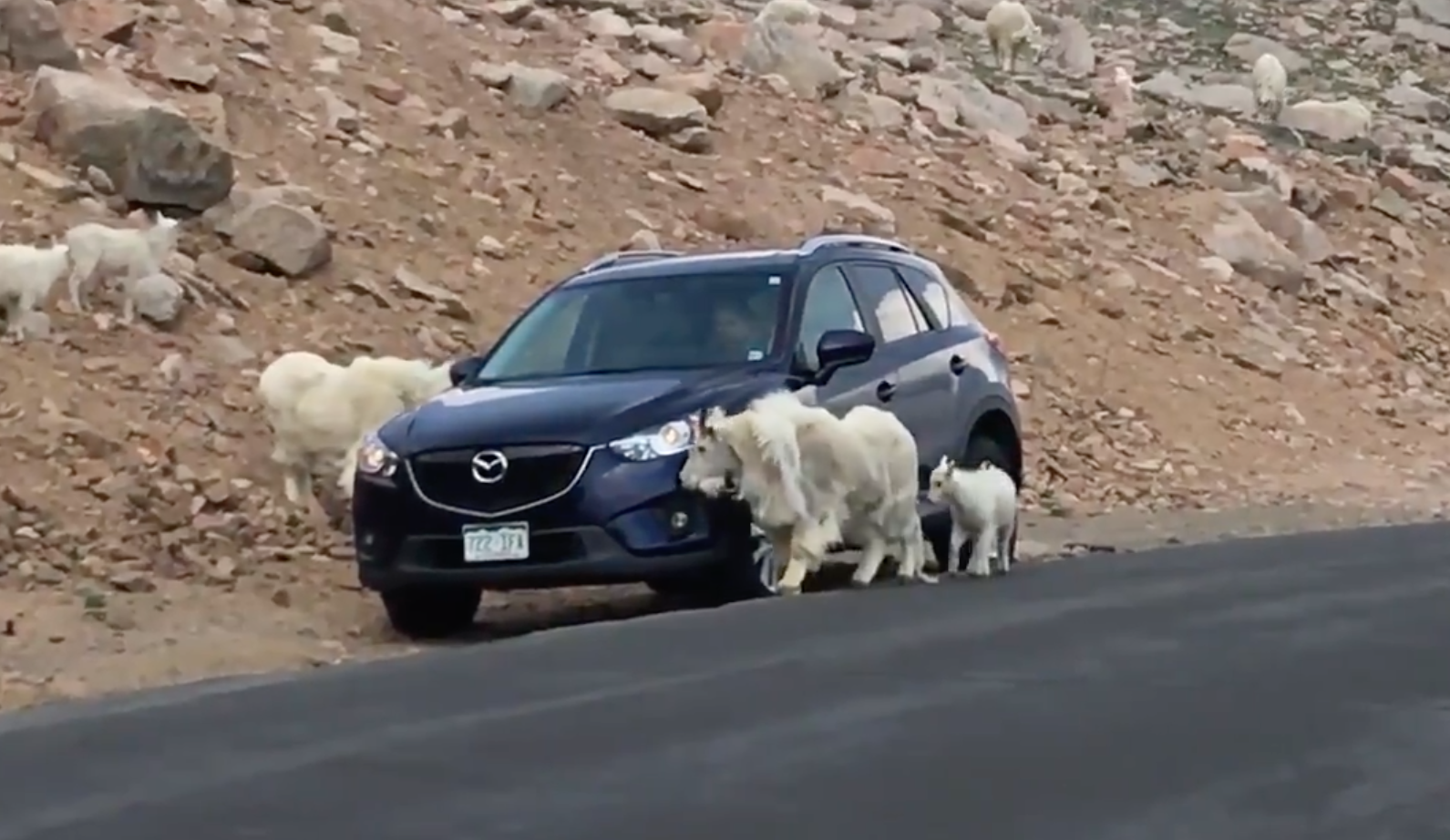
Those that have been to the top of Colorado’s Mount Evans already know how common it is to spot mountain goats on the peak. They’re commonly seen on the roads and in parking lots, dodging humans and vehicles while on a mission to lick the salt off of tires. This creates an obvious problem, as wildlife and humans are put in close proximity, increasing the potential of a dangerous interaction.
According to a recent report from 9News, researchers at Denver Zoo think they may have found a creative solution to this problem – lion pee. While the salt on tires tends to draw goats to the peak, researchers hope the scent of the urine from the apex predator will drive them away.
Goats are attracted to the salt because this salt is packed with essential nutrients, often collected on tires during travel in places that use salt to prevent slick roads in the winter. Oddly enough, the salt in human urine can also be problematic when it comes to attracting goats to hiking trails, in one case resulting in goats being airlifted out of a national park due to their urine-driven aggression toward humans.
Now, you might think that mountain lion urine could be hard to come by – surely, a pull on taxpayer dollars. Well, that’s not quite the case.
Researchers (and you) can purchase 64 ounces of mountain lion urine directly on Amazon for $109, with free shipping included. The urine even comes in a bottle with a spray nozzle for easy squirting. “Harness the power of nature’s communication system,” reads a message from the seller, PredatorPee, established in 1986.
Will mountain lion urine be the answer when it comes to preventing negative human-goat interactions on top of the heavily trafficked 14,271-foot Mount Evans? We’ll have to wait and see.
If you happen to have a goat interested in your salty tires while in Colorado, do not attempt to approach the animal. While these goats may seem friendly, they’re still wild animals and could lash out, causing injury or harm – something that could result in the animal being euthanized. Let the animal do its thing and watch from a safe distance, knowing that researchers are working on finding a solution to the problem.
STAY INFORMED: Sign-up for the daily OutThere Colorado newsletter here
Get OutThere
Signup today for free and be the first to get notified on new updates.