




EDITORIAL: An unhappy 100th for the Colorado River Compact
The historic Colorado River Compact was 100 years old on Thursday, as The Gazette noted in a report observing the occasion. And if you’ve never heard of that groundbreaking agreement divvying up water from the West’s most identifiable river, you’re undoubtedly not alone.
The compact and the river it governs — and, for that matter, water in general in the arid West — are easy to take for granted. Outside the world of politics, water policy is a dull subject. Most residents along the Front Range, across the state and in the six other states that signed the compact a century ago — probably don’t realize what an epic challenge it has been to secure the water that comes out of the taps in their homes.
We cannot afford to take it for granted, however, and the crisis facing the Colorado River in particular is emblematic of the West’s overall water struggle.
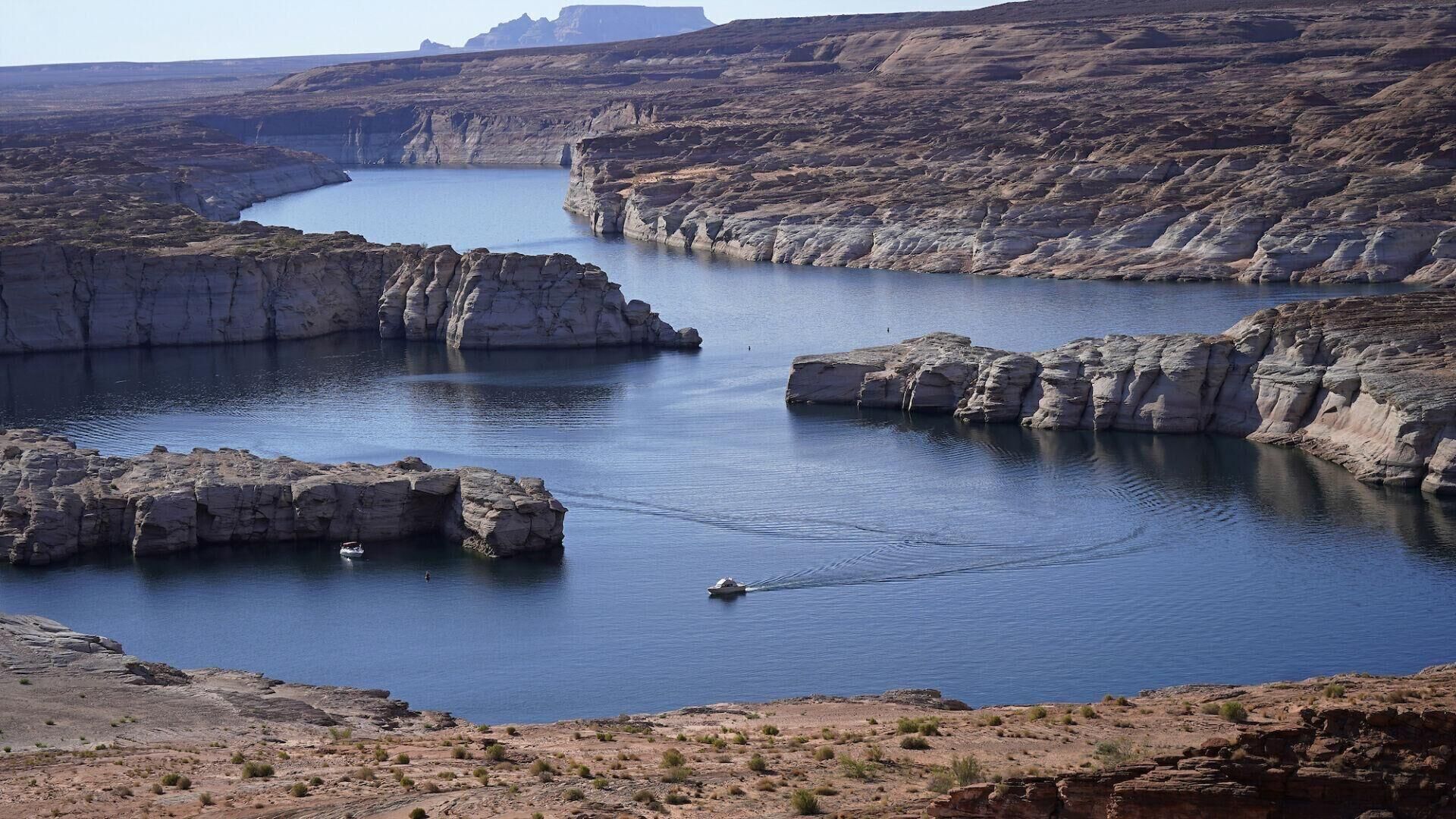
As The Gazette’s report reminded us, our state’s defining river today is in greater peril than it has been at any time in history amid the West’s explosive growth and a 23-year drought that has limited the river’s flows year after year.
The river now serves more than 40 million people with water for residential and agricultural use as well as through electricity generated by the Glen Canyon and Hoover dams. Compact members Colorado, New Mexico, Utah and Wyoming are in the Colorado River’s Upper Basin, and Arizona, California and Nevada are in the Lower Basin. It is the Lower Basin states with their burgeoning populations that are feeling the most critical shortage. Today little water makes its way to Mexico, where the Colorado River ends its run and empties into the Sea of Cortez.
What’s being done about it?
The U.S. Department of Interior recently called for more cooperation between the compact’s members because water levels down river in Lake Mead and Lake Powell are so low that power generation may have to be curtailed. The Interior Department’s Bureau of Reclamation recently announced a new program to pay farmers in Lower Basin states up to $400 for each acre-foot of water they don’t use.
Yet, conservation efforts alone seem like half-measures that inevitably lead to diminishing returns. As we asked here recently, what if we started putting more water into the Colorado River Basin instead of ratcheting down ever further how much is taken out of it? Increase supply, in other words, instead of futilely trying to curb demand. Some are taking up that challenge.
Arizona’s state government is laying plans with Mexico for a jointly developed desalination plant that would turn seawater into fresh water along the Arizona-Mexico border, where the Colorado River empties into the Sea of Cortez. That has the potential to lower water use downstream and leave more up river in Upper Basin states.
There’s also great potential in new technology enabling water reuse, which is not so much a form of conservation as it is turning old water into new. Israel recycles and reuses nearly 90% of its water and Spain over 30%, a water expert recently wrote in a Gazette commentary.
That kind of innovative thinking is what’s needed to give the compact, and the river itself, a new lease on life.
Get OutThere
Signup today for free and be the first to get notified on new updates.
PREV
PREVIOUS

Monument Christmas tree seller to hand out gifts, food to Ukrainian refugees in Poland, Ukraine
This Colorado Santa is making a special trip from Monument to Ukraine in December. For the last two-dozen Novembers and Decembers, Max Hatfield has moseyed down the street to his Christmas tree lot off Lake Woodmoor Drive. Beginning the day after Thanksgiving, Hatfield will sell six species of trees in the lot that sprawls in […]
Efforts ongoing to revive ski area in southern Colorado, with 'final hurdle' seen for lift
The effort to revive an abandoned ski area in southern Colorado has shifted to a new organizational plan, with one focus unchanged: to get a chairlift running again. Panadero Ski Corp., the nonprofit committed to the old resort base in Cuchara, recently stated its “final hurdle” as the electrical control system. The group has expressed […]