




Hope hops: Colorado zoo helps in long effort to save imperiled toad

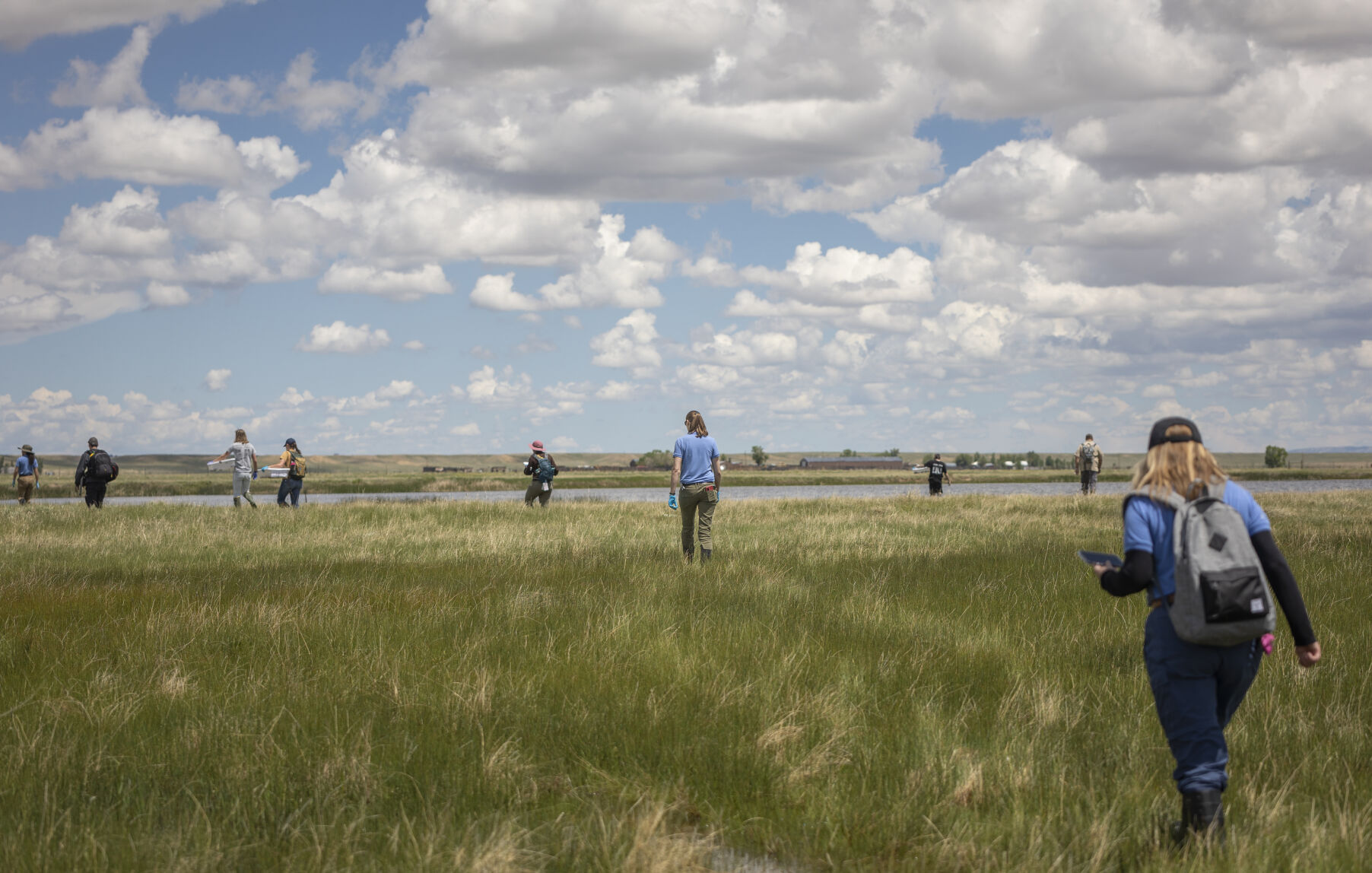
One morning last week, a team of scientists and conservationists in long, rubber boots embarked into a wetland of southern Wyoming, armed with containers of toads.
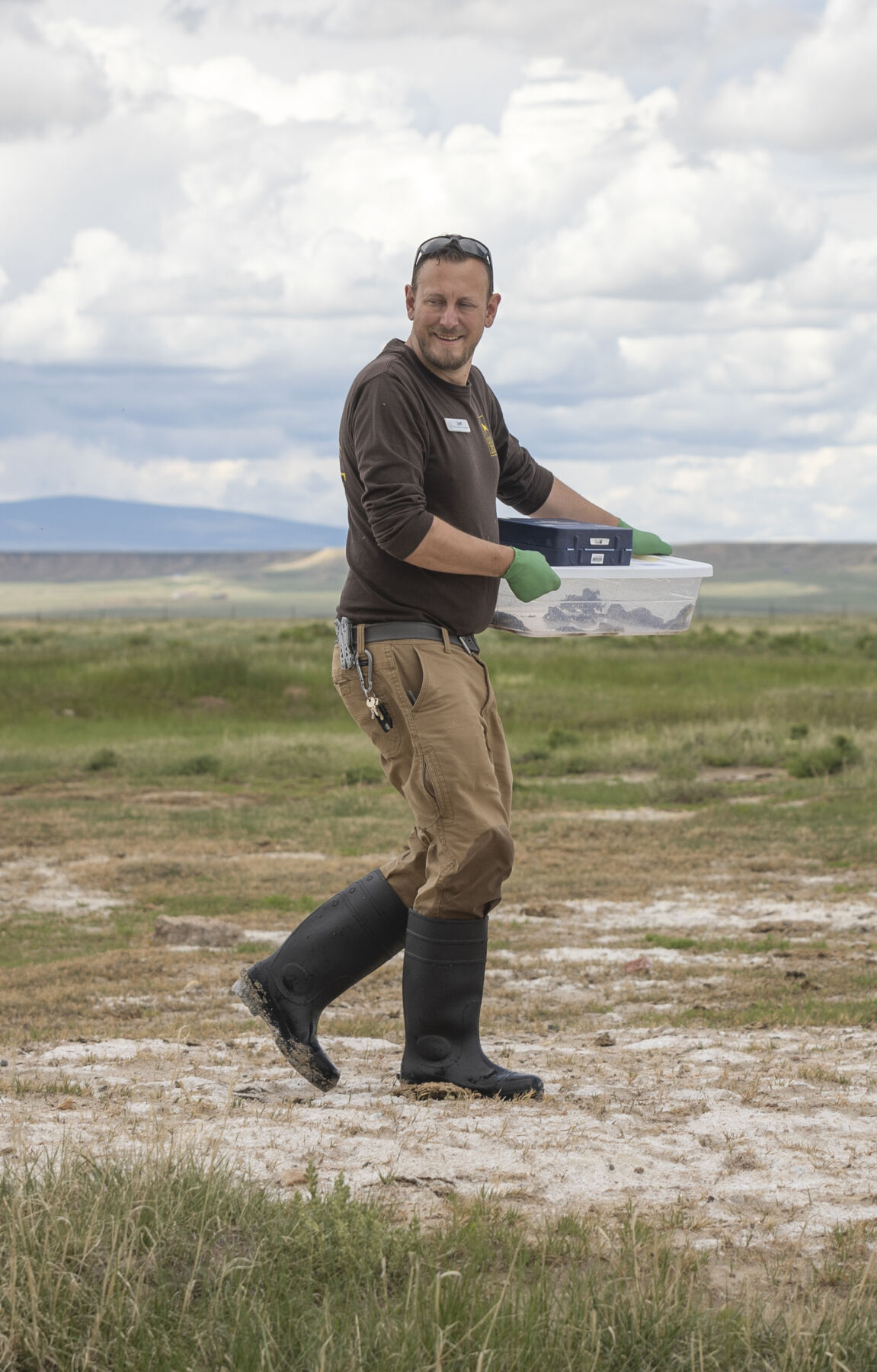
They included Jeff Baughman, representing Colorado Springs’ Cheyenne Mountain Zoo. Like the others, he was careful where he stepped.
“There might be toads from the previous season out there that survived,” he said.
Keeping the Wyoming toad alive is the goal.
The morning marked an annual, early summer tradition for Cheyenne Mountain Zoo and several other facilities tasked with raising the tiny, imperiled creature. June is typically when members of the Wyoming Toad Recovery Team converge at the Mortenson Lake National Wildlife Refuge outside Laramie, Wyo., to release toads to their only known North American home in the wild where they once flourished.
Cheyenne Mountain Zoo provided more than 200 growing toads last week — the latest among 41,629 tadpoles and 1,151 adults counted previously over the past 26 years involved in the effort.
In a first, the zoo provided “headstart” toads that had lived in the mountainside facility for two years.
“Up until this point, we’ve only done 1-year-old toads,” said Baughman, who has been the zoo’s project coordinator since 2008.
The idea was to bring more mature toads to the habitat, he said — toads more ready to spawn a new generation.
“Our goal is for them to actually breed as soon as they’re released,” Baughman said. “So if they do get predated or killed by some other natural event, they’ll at least have the opportunity to reproduce.”
New ideas have always been part of the long-going attempt to bring the species back from the brink of extinction.
The species is Bufo hemiophrys baxteri, named for the University of Wyoming professor credited with discovery in 1946. From there, George Baxter spent more than 30 years monitoring the toads.
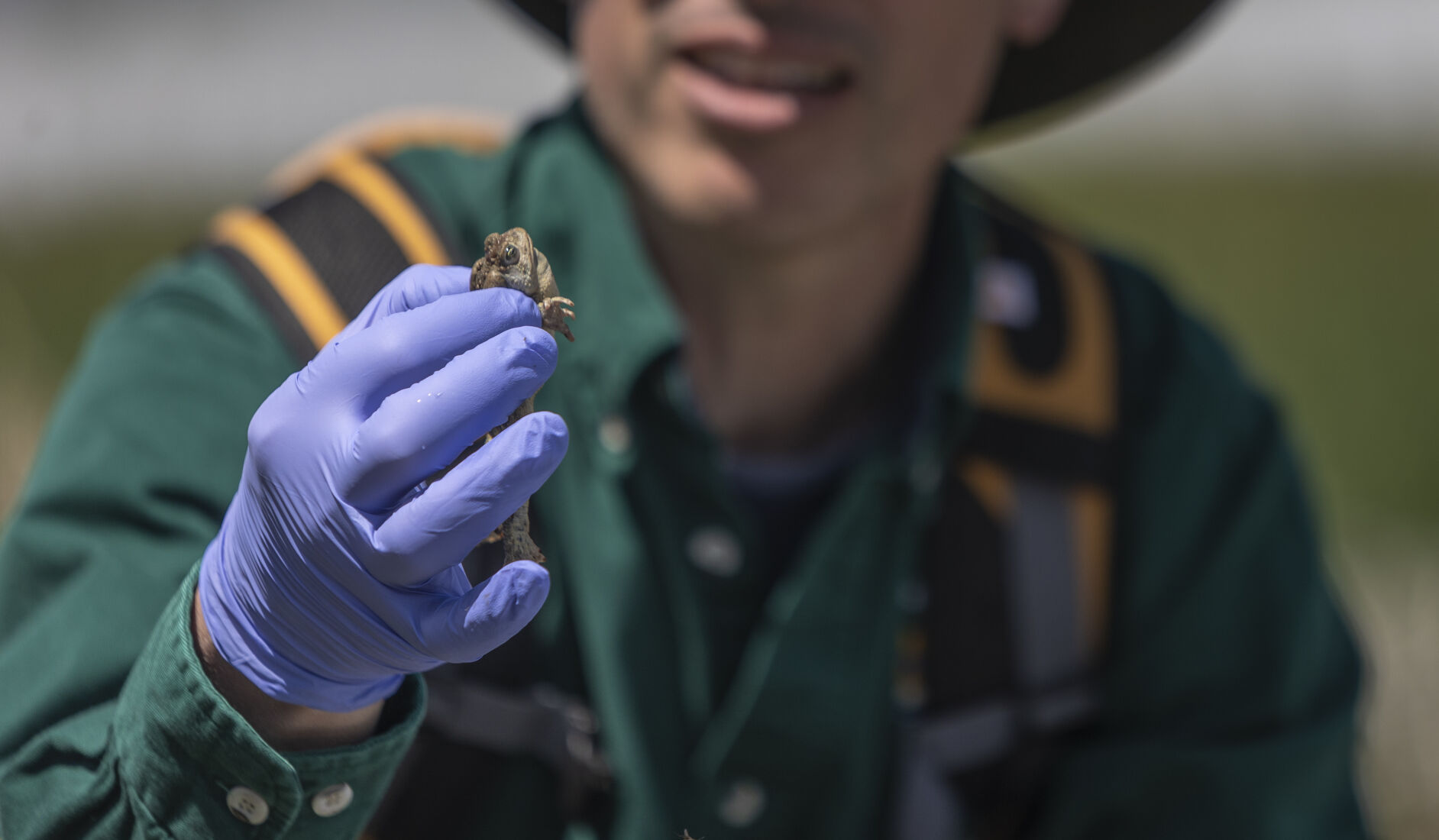
Their size made them somewhat difficult to spot around lake shores and marshes; they average about 2 inches in length, smaller than other toads. Other characteristics made them impossible to miss: beady eyes, greenish brown, warty and spotted and, most unusual, their heads topped with a bony ridge called fused cranial crests.
Here they hopped in the Laramie Basin, a one-of-a-kind animal known as a “glacial relic.”
“As the glacier receded 10,000 years or so ago, this population remained,” Baughman said.
The long line of their mouths appeared to be in a constant frown — a sad, fitting expression for the fate observed by Baxter.
By the mid-1970s, he found them to be almost entirely gone. He sounded the alarm for federal wildlife officials; the Wyoming toad was listed as endangered in 1984.
Officials got to work on a recovery plan, published in 1991. That outlined the task of what would become the Wyoming Toad Recovery Team, which would initially struggle to grow the population that was barely hanging on.
That recovery plan identified potential culprits: the spread of pesticides, the increase of predators such as pelicans and raccoons. The 1991 document also noted the Wyoming toad loss was in line with “nationwide declines in amphibians.”
“Unfortunately at that time, the chytrid fungus was not discovered yet,” Baughman said.
The chytrid fungus has been linked to amphibian loss across the world. It’s believed the fungus attacks the Wyoming toad during underground, wintertime hibernation, attacking the skin and organs responsible for breathing and absorbing water.
Along with the fungus, researchers continue to find habitats destroyed or altered by development and climate change. It’s all to blame for putting 30% of the world’s amphibian species at risk, according to the U.S. Geological Survey.
The U.S. Department of the Interior has called this “a problem of global importance,” with amphibians playing crucial roles at the center of the food chain. As the department has put it: “Loss of amphibians means a loss in biodiversity and healthy ecosystems.”
The Wyoming toad, for example, feeds on bugs that would otherwise proliferate and potentially change plant life. Simultaneously, the toads serve as food for birds and other mammals.
That helps explain the urgency of the Wyoming Toad Recovery Team.
Beyond that, “it is so important in a long-running program like this to recognize the knowledge that we are gaining is invaluable,” Baughman said. Many other amphibians are threatened by the chytrid fungus, he noted, “so anything we can do today to find out how to better other programs or other species, it’s very worth all the effort.”
At Cheyenne Mountain Zoo, the effort has gone on inside moss-lined, temperature-controlled containers. For hibernation, the temperature drops to 38 degrees. After 35 days, temperatures slowly rise back to 70 degrees.
Males and females eventually awake to an audio track recorded at the Laramie Basin: a serenade of mating calls. Eggs are not laid in the form of a blob like other amphibians, but instead in a strand — “like a string of pearls,” Bauman said.
The toads and their offspring are bound for the native land come summer. The Department of the Interior noted success in 2020, reporting Saratoga National Fish Hatchery had the best breeding season for the toads in its history. The facility reportedly released 18,000 toads in various stages of life, and the Interior marked the year as a sixth straight year of breeding in the wild.
“We’ve seen an increase in survivorship, but there’s still die-off unfortunately,” Baughman said.
“The fungus is not going away anytime soon,” he added. “Our goal is to get as many animals out there as we can in hopes that they become resilient or adapt to the fungus.”
And so as much as there is celebration on release days, there is also uncertainty.
Baughman and the team are due back in a few weeks to release tadpoles. As he carefully walks across the land, he’ll look for a symbol of hope from the “head-start” toads previously released — something like a string of pearls.

Get OutThere
Signup today for free and be the first to get notified on new updates.
PREV
PREVIOUS

Social Security update: Direct payment worth $914 arrives in 18 days
Recipients of the Social Security Administration’s Supplemental Security Income program will receive their second June payment, worth up to $914 for individual filers, in 18 days. The payment will go out on Friday, June 30, and it will be the second of two checks for the month of June. The first was sent on the […]

9-year-old falls off tube, drowns in Colorado creek
A 9-year-old boy died in a tubing accident on Sunday while tubing with his family on Boulder Creek, according to a news release from the Boulder Police Department (BPD). First responders were dispatched to Boulder Creek at approximately 4:53 p.m., in response to a 911 call that a child had fallen off of his tube […]